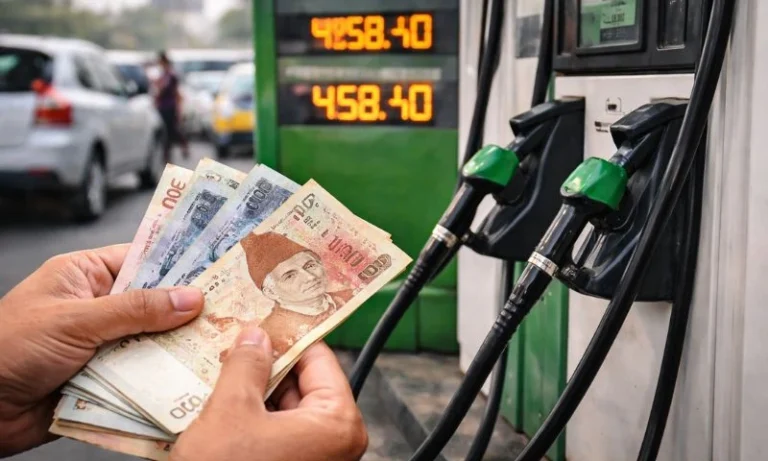
As petrol prices in Pakistan surge to record levels, new official data reveals that a significant portion of what consumers pay at the pump is not the actual fuel cost but taxes, levies and profit margins.
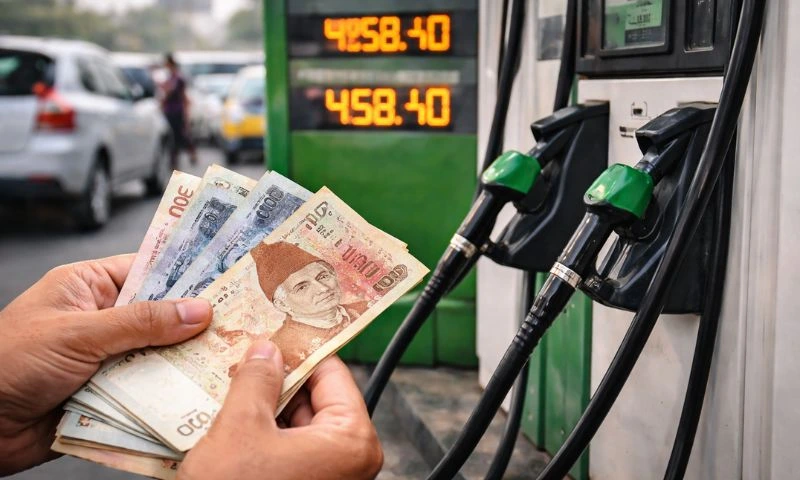
According to government documents, Pakistanis are paying around Rs211.26 per litre in taxes and margins alone, which accounts for nearly 46% of the total petrol price of Rs458.41 per litre.
This revelation comes just days after the government increased petrol prices by Rs137.23 per litre and diesel by Rs184.49 per litre amid rising global oil prices.
Petrol Price Breakdown Shows Nearly Half Goes to Taxes
The official pricing structure highlights how the final petrol price is built up.
Out of Rs458.41 per litre:
- Rs247.15 is the ex-refinery price
- Rs211.26 is made up of taxes, levies and margins
This means almost half of what consumers pay does not go toward the actual fuel itself.
The largest component is the petroleum levy, which stands at Rs160.61 per litre, followed by Rs24.12 in customs duty and Rs2.5 under a climate support levy.
Additional costs include:
- Rs7.52 inland freight margin
- Rs7.87 profit for oil marketing companies
- Rs8.64 commission for petrol pump dealers
Diesel Carries Lower Tax Burden but Higher Price Impact
In contrast to petrol, diesel has a much lower tax component but remains more expensive overall.
Consumers pay about Rs59.12 per litre in taxes and margins on diesel, which accounts for around 11.36% of the total price.
The ex-refinery price of diesel stands significantly higher at Rs461.23 per litre, explaining why its overall price has reached Rs520.35 per litre.
Unlike petrol, diesel does not currently include a petroleum levy, but it still carries customs duties, freight margins and profit components.
Global Oil Crisis Driving Local Prices Higher
The sharp increase in fuel prices is closely linked to global developments.
International oil markets have been disrupted due to the ongoing conflict in the Middle East, which has pushed prices upward and forced import-dependent countries like Pakistan to pass on costs to consumers.
Pakistan imports a large portion of its fuel, making it highly vulnerable to global price shocks.
What This Means for Consumers
The data highlights why fuel prices feel disproportionately high for consumers. Even if global oil prices stabilise, a large portion of petrol cost will still come from domestic taxes and margins.
For an average car owner using 20 litres weekly:
- Around Rs4,200 of the bill goes toward taxes and margins
- Only about Rs4,900 reflects the actual fuel cost
This structure means any increase in taxes or levies can significantly impact final prices.
Ripple Effect on Inflation and Cost of Living
High fuel costs combined with heavy taxation are expected to push inflation further.
Fuel directly impacts:
- Transport costs
- Food supply chains
- Electricity generation
Economists warn that rising fuel costs will continue to increase the price of essential goods, placing additional pressure on households already dealing with high inflation.
Policy Debate Over Fuel Taxes Intensifies
The breakdown has reignited debate over fuel taxation in Pakistan. Critics argue that high petroleum levies are being used as a major revenue source for the government, adding pressure on consumers. Pakistan’s economy relies heavily on taxation for revenue generation, which makes fuel levies an important but controversial tool.
Supporters, however, say reducing taxes would widen the fiscal deficit and limit government spending on development and subsidies.
A Structural Issue Beyond Just Price Hikes
The latest data shows that Pakistan’s fuel pricing issue is not just about rising global oil prices but also about domestic taxation policies.
With nearly half of petrol cost made up of taxes and margins, any meaningful relief for consumers would require structural changes in how fuel is priced. For now, however, consumers continue to bear the combined burden of global oil shocks and domestic fiscal policies.