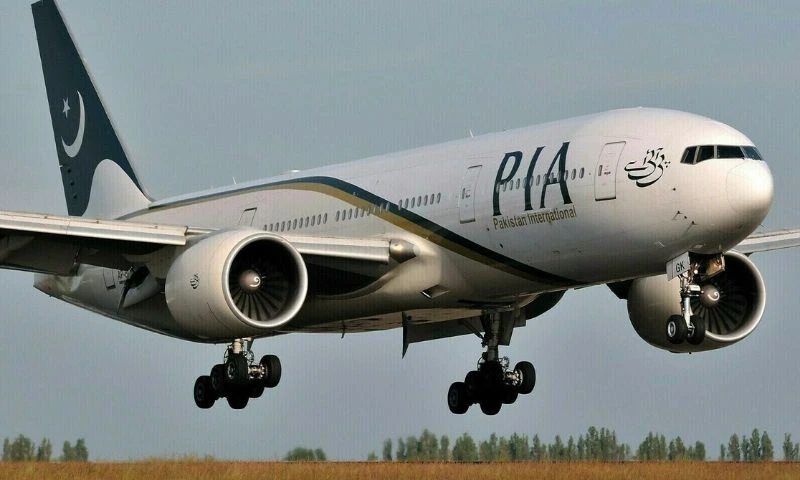
Pakistan International Airlines (PIA) has temporarily suspended flights to the United Arab Emirates, Bahrain, Kuwait and Qatar as security concerns escalate following military actions in the Middle East. The national carrier said the suspension will remain in place until airspace reopens safely, reflecting intensified tensions after a major escalation between Israel and Iran.
The disruption affects key routes between Pakistan and the Gulf, impacting citizens, business travellers and expatriate workers who rely on PIA’s connections for personal and professional travel.
Why Flights Were Suspended
The decision came after Israel and the United States carried out attacks on Iran. In response, Iranian authorities reportedly launched retaliatory strikes on regional bases, prompting concerns about civil aviation safety in nearby airspace. PIA confirmed it suspended flights until Sunday evening or until the reopening of the respective airspaces.
Pakistan Airports Authority (PAA) emphasised that the country’s own airspace remained fully operational and safe for all flights, and no restrictions had been placed on PIA operations from within Pakistan. However, uncertainty over air corridors in the Gulf region led the airline to take a cautious approach.
A Notice to Airmen (NOTAM) issued by Iranian officials temporarily closed Tehran’s civil airspace between 11:30 and 17:00 Pakistan Standard Time (PKT), although this window usually sees limited east-west transit traffic. This added to PIA’s decision to suspend services on several Gulf routes.
Rerouting and Safety Precautions
PIA said it has rerouted flights to Saudi Arabia to avoid what it referred to as “conflict hit zones”. This means passengers bound for the suspended destinations are being provided alternative routing options where possible, prioritising safety and access to secure airspace.
The airlines reiterated that protecting passengers and crew remains its top priority. In a statement, officials stressed the importance of avoiding areas where risk to civil aviation is uncertain.
Read More: Israel Launches Pre-Emptive Attack on Iran as Explosions Reported in Tehran
Economic and Social Impact
The suspension comes as a blow to Pakistan’s travel and expatriate community. The UAE, Bahrain, Kuwait and Qatar host large numbers of Pakistani workers who frequently travel home. Business tourism and commerce between Pakistan and the Gulf have also gained momentum in recent years.
Temporary flight disruptions can lead to cancellation and rescheduling headaches, added costs, and uncertainty for travellers at short notice. For many, alternative airlines such as Emirates, Qatar Airways or Gulf Air may step in to fill the gap temporarily, but availability and cost could become issues, especially during peak travel times.
Context of Regional Tensions
The halt in PIA flights highlights how international military escalation can disrupt civilian life far beyond conflict zones. The recent attacks in the Middle East, which heightened fears of escalation between global powers, led governments and aviation authorities worldwide to reassess air traffic over sensitive regions.
Iran’s temporary closure of its own airspace for civil flights underscores broader regional tensions. While Pakistan itself remains peaceful and its interior airspace safe, the proximity to conflict hubs means precautionary measures are necessary until stability is restored.
Read More: Istanbul Talks at a Crossroads: What Could Go Wrong if US–Iran Negotiations Fail
Officials continue to monitor developments closely. Flights are expected to resume once Gulf airspace is declared secure again and authorities confirm standard transit corridors are fully operational.