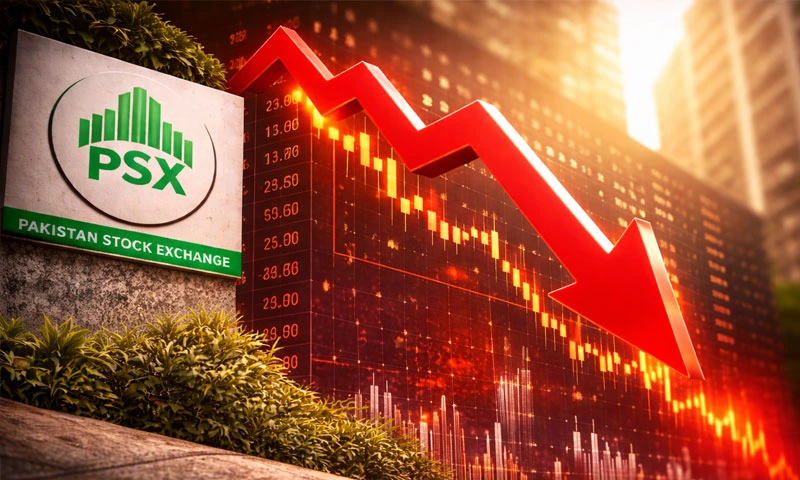
Pakistan’s benchmark stock index, the KSE-100, closed sharply in negative territory on Wednesday, plunging 1,632.25 points from its previous close amid sustained selling pressure and weak investor sentiment. The Pakistan Stock Exchange (PSX) finished the session at 166,626 points, reflecting heightened market volatility and cautious trading behaviour among investors.
The market session began with optimism as the index even hit an early high of 168,191.64 points, but that momentum did not last. Increasing sell orders, particularly in heavyweight sectors including oil and gas, banking and cement stocks, pushed the market downward as the day progressed. Total traded volume remained significant, with 619 million shares exchanged.
Recent Trends Show Deepening Correction
Wednesday’s decline is part of a prolonged correction phase at the PSX. Earlier in the week, the index had seen sharp losses including a drop of over 5,400 points and a 1,432-point decline during a previous session. Analysts at brokerage firms have described this period as a market correction rather than a sustained bear market. Mohammad Sohail, CEO of Topline Securities, said the recent sell-off “appears to be driven by above-average foreign selling, concerns linked to policy uncertainty, soft corporate earnings, and unwinding of stock futures.”
Markets have been volatile in recent weeks, with intense swings from gains to heavy losses. Earlier sessions saw the index gain more than 1,500 points early in trading before reversing sharply, illustrating how mixed investor sentiment remains. Such fluctuations highlight the ongoing risk aversion among traders.
Why the Market Is Under Pressure
Multiple factors have contributed to the recent PSX downturn. Rising global commodity prices, particularly oil, increase input costs for businesses and dampen profitability expectations. Rising imports and widening current account deficits also affect macroeconomic confidence, leading investors to re-allocate capital away from equities. Markets across Asia remain sensitive to external economic data and trade policies, which feed into local equity performance.
Foreign investor participation has also been subdued, with net selling in recent sessions. When foreign capital exits emerging markets like Pakistan, liquidity drops and selling pressure increases. A slowdown in corporate earnings results and muted economic growth projections add to caution among institutional and retail investors.
Historical performance shows that the KSE-100 index has weathered varying cycles of growth and downturns over decades, reflecting how markets respond to macroeconomic shifts and global shocks. The benchmark index reached record highs in previous years but remains vulnerable to external and internal risk factors.
What It Means for Investors and Economy
For investors, a sharp drop in the KSE-100 signals caution and heightened risk, potentially leading to more conservative strategies focused on defensive stocks or fixed-income alternatives. For the broader economy, persistent volatility at the PSX may impact confidence in the financial sector and can signal broader concerns about investment flows and economic stability.
Economists say that for recovery to be sustained, clearer policy direction, stabilization in foreign exchange markets, and stronger corporate performance data will be essential to rebuild confidence and encourage renewed inflows into Pakistan’s equity markets.