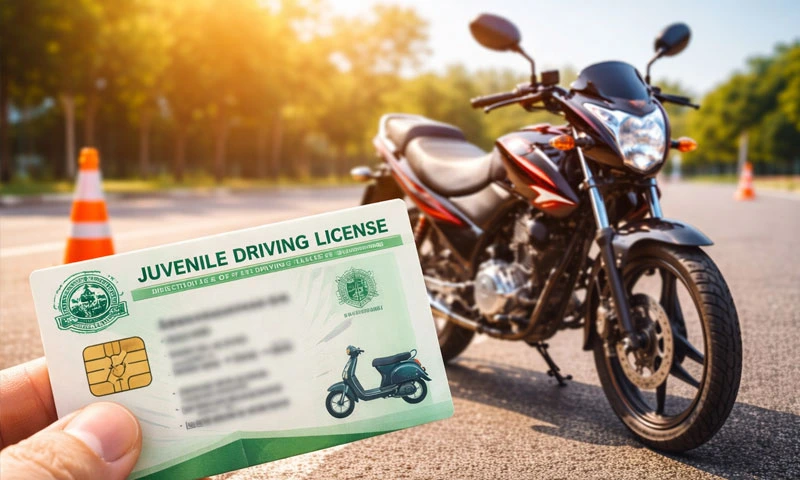
The Punjab government has begun issuing driving permits to teenagers aged 16 to 18 across the province, a major shift in road traffic policy aimed at regulating underage riders and promoting safer mobility on public roads. Authorities have set the fee at just Rs500 for each permit, opening a legal pathway for teens to ride motorcycles under specified conditions.
Under the new regime, applicants must pass both a road test and a sign test to qualify for the permit. They must also provide guardian consent in the form of a stamped paper along with Form B (birth registration form) to show proof of age and identity.
What the Permit Allows and Restrictions Imposed
Sponsored by the provincial government, the permit enables teenagers to legally ride motorcycles up to 125cc engine capacity. Larger motorcycles are not permitted under this category. Electric bikes will also face restrictions based on similar displacement and speed criteria. Once a permit holder turns 18, the juvenile permit will automatically expire, and the rider must obtain a regular driving licence to continue riding.
Why the Policy Was Introduced
Until this policy, the official minimum age for a driving licence in Pakistan, including Punjab, was 18 years, as stipulated under the Motor Vehicles Ordinance and related licensing regulations. Anyone below the age of 18 riding a motorcycle was technically an unlicensed driver, even if they learned to ride at a younger age.
In late 2025, the Punjab Assembly and its Standing Committee on Interior approved the Motor Vehicles Amendment Bill 2026, recommending significant revisions to the Motor Vehicles Ordinance to formally permit minors aged 16 to 18 to operate motorcycles under strict rules and supervision. This includes issuing a special Juvenile Driving Permit that allows young riders to be legally and safely integrated into the traffic system.
Traffic authorities and lawmakers say the new policy is a response to a long-standing reality: many teenagers already ride motorcycles informally and without documentation, often leading to unsafe conditions and legal conflicts. The Juvenile Driving Permit aims to bring these riders into a structured regulatory framework.
Safety and Enforcement: What Changes
Officials have emphasised that the new permit is not a free pass. Teen riders must comply with safety standards, including helmet use and adherence to traffic laws, to ensure safer streets. Many expect schools and colleges to partner with authorities in road safety awareness campaigns, while some traffic police units plan supervised training and guidance for young riders.
Moreover, authorities hope that formalising teenage riders will reduce unlicensed and unsafe riding, which has been a source of accidents and enforcement issues in the past. Parents and experts also see this as an opportunity to instil responsible riding habits from a young age.
Public Reaction and Road Safety Impacts
The shift has generated mixed reactions. Some parents and road safety advocates support the move as a balanced approach that recognises reality while promoting safer behaviour. Others have expressed concerns about whether teenagers have the maturity to handle motorcycles responsibly.
Traffic police officials stress that education and enforcement will play a central role alongside the permit system, aiming to reduce accidents and keep young riders safe on Punjab’s roads.