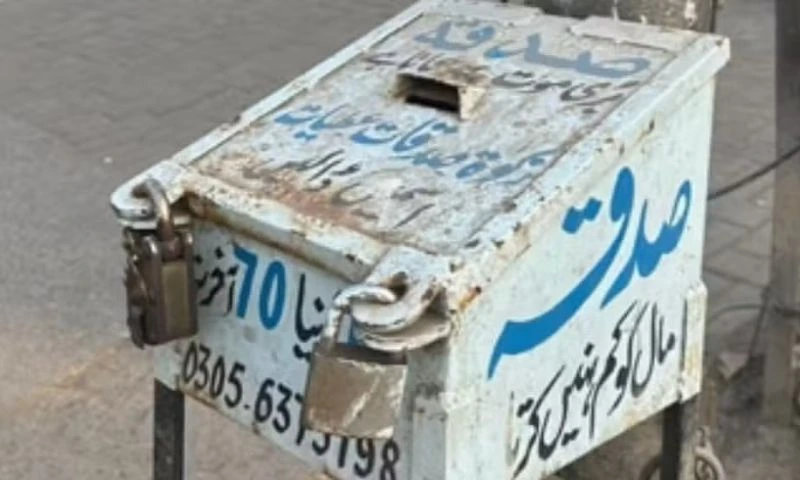
Despite a major crackdown on illegal charities in Punjab, anonymous donation boxes continue to appear across the province, raising serious concerns about unregulated funds being channelled into unknown networks. These so-called “nameless donation boxes” have escaped official action, even after the Punjab Home Department listed 89 banned organisations and unregistered charities. Citizens are now left wondering who benefits from the cash collected in these boxes.
The donation boxes, often padlocked and chained to street corners, markets, intersections, shopping malls and near banks, offer no information about the owners or recipients. Observers say this lack of transparency makes it impossible to know where the funds end up or who is collecting them.
A senior home department officer acknowledged that the anonymous boxes remain widespread. He said the department had made progress in squeezing illicit and unregistered charities, but it cannot fully identify the owners of the donation boxes until all seminaries (madaris) are registered with the home department. Once madaris are registered, authorities plan to trace ownership of the boxes through them.
‘Silent Routes’ of Funding Undermine National Action Plan
Experts warn that the proliferation of these anonymous boxes operates as “silent routes” of funding, bypassing the law and undermining the core objectives of Pakistan’s National Action Plan (NAP), which aims to dismantle financial networks that contribute to instability and extremism.
Founder of the Civil Services Legacy Guide and former civil servant Yawar Mehdi described the situation in stark terms. He said that although the Punjab government banned many illicit charities, the anonymous donation boxes remain hidden in plain sight, effectively blind-spotting authorities and bypassing legal frameworks.
Mr Mehdi issued a serious warning about the consequences of leaving these channels untouched. He said: “The blood of martyrs and the loss of thousands of lives to domestic unrest will remain a grave concern for the state as long as these silent routes of funding stay open.”
To counter this, Mr Mehdi proposed that the federal government issue emergency directives to provincial authorities, including interior ministers and chief ministers. He urged that all anonymous and illegal donation boxes be seized and brought under state custody, overseen by divisional commissioners, deputy commissioners and district police officers, with transparent records of every rupee collected.
“If the state does not close these unregulated financial channels today, future generations will never forgive the silence of those in power,” he added.
Government Response and Registrations
The home department has repeatedly emphasised efforts to regulate charity collections. Registered donation boxes now include clear information on the organisation’s name, registration codes and contact details. These details help donors verify legitimate entities and improve transparency.
However, officials stress that full regulation remains incomplete without mandatory registration of all seminaries. Once this step is completed, authorities believe they will be better equipped to identify the owners of all donation boxes operating in public places across Punjab.
The situation highlights a larger challenge in regulating charitable funding, safeguarding public donations, and ensuring that funds are not diverted to unlawful or extremist causes.