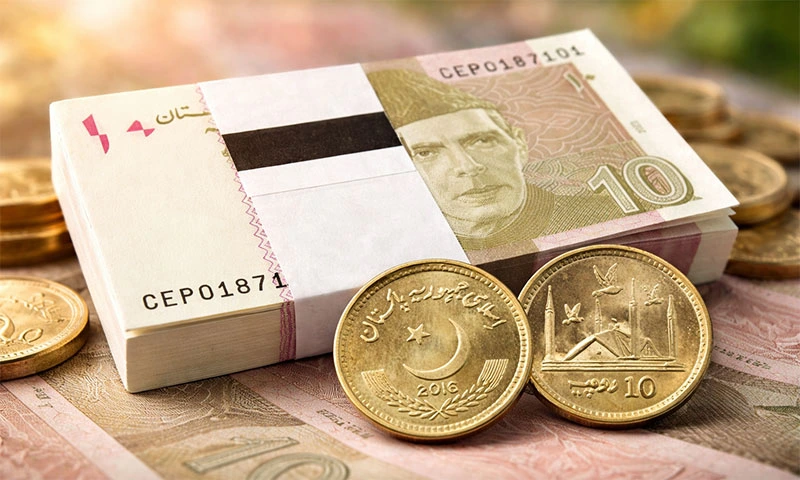
The federal cabinet is reviewing a plan to phase out the Rs10 banknote and replace it with a coin in a cost-saving measure that could benefit Pakistan’s economy. A high-level committee led by the finance minister presented a detailed currency management report to the cabinet, suggesting coins may be more efficient than paper notes. The proposal has drawn attention due to its potential to save billions of rupees over the long term.
According to the report, prepared jointly by the State Bank of Pakistan (SBP) and the Security Printing Corporation of Pakistan, the average lifespan of a Rs10 note is a short six to nine months. In contrast, a Rs10 coin can remain in circulation for 20 to 30 years. Because the Rs10 denomination accounts for more than a third of all notes printed annually, its frequent replacement places significant strain on currency production costs.
Massive Cost Savings Expected
Officials estimate that shifting from notes to coins for this denomination could save between Rs40 billion and Rs50 billion over the next decade. That is because the current annual cost of printing, replacing and managing Rs10 notes stands at an estimated Rs8 billion to Rs10 billion every year. While the initial cost of minting coins is higher, they do not require frequent replacement and offer far greater durability.
A committee recommendation expects the SBP to gradually stop printing Rs10 notes over a three-year transition period under the legal framework of the State Bank Act. During this period, the number of coins in circulation would steadily increase to meet demand.
Why This Matters for Pakistan’s Economy
The Rs10 note features in countless daily transactions, from bus fares to small purchases at markets and tea stalls nationwide. Its short lifespan means frequent reprinting, which increases pressure on printing facilities and administrative overheads. If coins replace notes, recurring printing costs will fall sharply and long-term savings could strengthen Pakistan’s currency management system.
Experts also say this measure aligns with broader currency management and sustainability goals. Coins reduce long-term operational expenses and help in streamlining cash handling logistics for banks and merchants alike. Several countries including the United Kingdom, Canada and Australia have already transitioned lower-denomination notes to coins, citing similar benefits.
Public Awareness and Transition Challenges
Public adaptation to coins remains a consideration. The Rs10 coin was first issued by SBP in 2016, but it has not always gained widespread acceptance among the public. Many consumers continued to prefer notes even though coins are legally valid tender. As coins become more prominent, awareness campaigns may be needed to ensure smooth public acceptance.
Next Steps
The federal cabinet will review the report and decide whether to formally approve the phase-out of the Rs10 note. If approved, the transition is expected to begin soon, gradually reducing dependence on the worn-out paper notes and leveraging long-lasting coins to improve currency efficiency and reduce recurring costs.