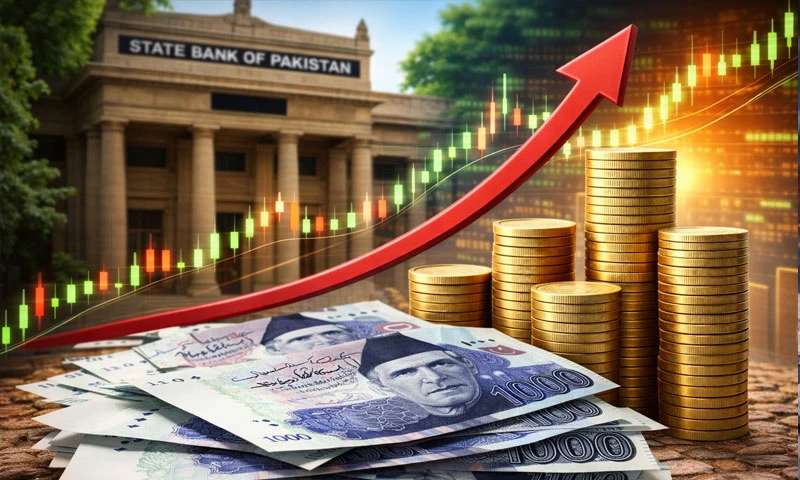
Pakistan’s central bank has decided to keep the key policy rate unchanged at 10.5 percent, a move that signals caution amid geopolitical tensions and lingering inflation risks. While the decision helps maintain economic stability, experts say it creates clear winners and losers across the economy, affecting borrowers, savers, investors, and businesses differently.
Why the State Bank Held the Rate
The Monetary Policy Committee of the State Bank of Pakistan (SBP) opted to maintain the policy rate at 10.5 percent, citing risks to inflation and uncertainty in global markets, particularly due to tensions in the Middle East that could push energy prices higher.
SBP Governor Jameel Ahmad said the decision was taken to maintain price stability while supporting economic recovery. According to the central bank, inflation has eased but remains sensitive to global commodity prices and domestic demand. Headline inflation stood at around 5.6 percent in late 2025, but core inflation remains higher at about 7.4 percent, indicating persistent price pressures.
The central bank expects Pakistan’s economy to grow between 3.75 percent and 4.75 percent in FY2026, driven by stronger domestic demand and industrial activity.
However, analysts warn that rising oil prices due to geopolitical tensions could push inflation back up in the coming months.
Who Benefits from the Decision?
1. Banks and Financial Institutions
Banks are among the biggest beneficiaries of relatively high interest rates. Higher policy rates typically translate into stronger profit margins on lending and government securities.
Financial analysts note that banks earn significant returns by investing in government treasury bills and bonds. When interest rates remain elevated, those investments generate higher yields, boosting banking sector profitability.
2. Savers and Fixed-Income Investors
People who keep money in savings accounts, term deposits, or national savings schemes also benefit. Higher interest rates allow depositors to earn better returns on their savings, protecting purchasing power against inflation.
For pensioners and conservative investors who rely on fixed-income returns, the SBP’s decision helps maintain stable income.
3. The Pakistani Rupee and External Stability
Economists also say a relatively high policy rate helps support the currency and control inflation. Maintaining positive real interest rates is part of Pakistan’s commitments under its IMF-supported economic program, which encourages cautious monetary policy.
Higher interest rates can attract foreign portfolio investment into local bonds and help stabilize the rupee.
Who Faces the Biggest Disadvantages?
1. Businesses and Industrial Borrowers
Businesses that rely on bank financing face the biggest challenge when rates stay high. Loans for working capital, expansion, or new projects remain expensive.
Industry groups argue that borrowing costs above 10 percent discourage investment, particularly for small and medium enterprises.
2. Consumers and Homebuyers
Higher interest rates also make consumer financing, auto loans, and mortgages more expensive. This reduces demand for big-ticket purchases such as cars and homes.
In Pakistan, the housing and automobile sectors are particularly sensitive to interest rate movements.
3. Government Debt Costs
While high rates support macroeconomic stability, they also increase the government’s debt servicing costs. Pakistan already spends a large share of its budget on interest payments, and elevated borrowing costs can strain fiscal resources.
What Experts Expect Next
Many economists believe the central bank may hold the rate steady for several months to observe inflation trends and global developments. Analysts surveyed by Reuters earlier expected the SBP to maintain the rate at 10.5 percent due to uncertainty over energy prices and inflation outlook.
If inflation remains under control and external risks ease, gradual rate cuts may return later in the year to support investment and growth.
For now, the SBP appears to be prioritizing economic stability over rapid stimulus, a balancing act that continues to shape Pakistan’s recovery path.