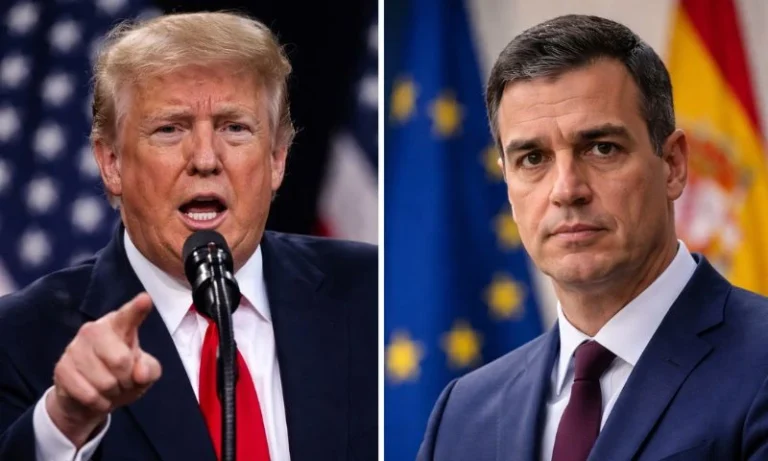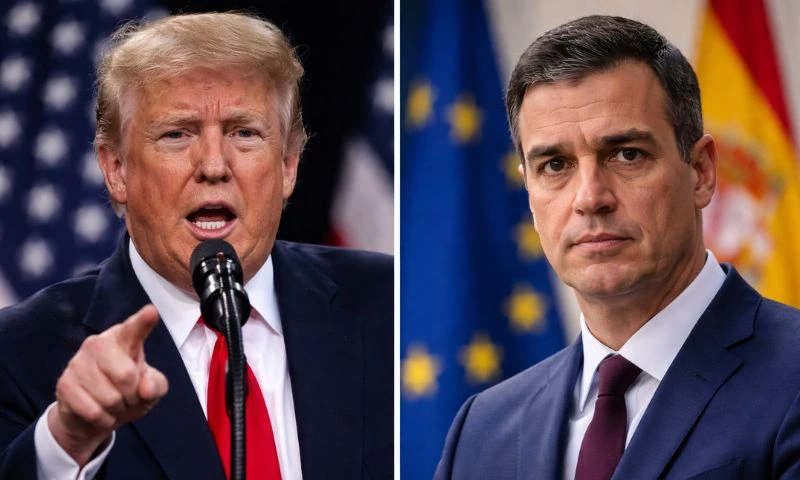
A diplomatic dispute has erupted between the United States and Spain after US President Donald Trump threatened to cut off all trade with Spain over its stance on the ongoing conflict involving Iran. The controversy emerged after Madrid refused to allow US forces to use joint military bases on Spanish soil for operations linked to the conflict.
Speaking during a meeting at the White House with German Chancellor Friedrich Merz, Trump criticized Spain’s decision and warned that Washington could sever trade ties. He told reporters, “We’re going to cut off all trade with Spain. We don’t want anything to do with Spain.”
The remarks have intensified tensions between two NATO allies at a time when the Middle East conflict is expanding and reshaping global diplomacy.
Dispute Over Military Bases and Iran Conflict
The dispute began when Spain declined a US request to use two jointly operated military bases in southern Spain, located in Rota and Morón, for operations connected to strikes against Iran. Spanish officials said such military activity must comply with international law and should be authorized by the United Nations.
Spanish Foreign Minister José Manuel Albares emphasized that Spain remains a committed member of NATO but would not allow its territory to be used for military action that lacks a clear legal framework.
The decision came as the conflict involving the United States, Israel and Iran intensified across the Middle East, raising fears of a wider regional war.
Spain’s position reflects broader caution among several European governments regarding direct military involvement in the escalating crisis.
Read More: Oil Prices Surge 10% as Iran Conflict Threatens Key Supply Routes, Analysts Warn $100 Oil Possible
NATO Spending Disagreement Adds Pressure
The dispute between Washington and Madrid is also linked to ongoing disagreements about NATO defense spending. The United States has been pushing allies to increase military spending to 5 percent of their gross domestic product.
Spain has resisted the target, saying it plans to keep defense spending around 2.1 percent of GDP. Spanish Prime Minister Pedro Sánchez has argued that raising military spending to 5 percent would be “disproportionate and unnecessary.”
Trump has repeatedly criticized NATO members that fail to meet US expectations for defense spending, accusing them of relying too heavily on American military protection.
Questions Over Feasibility of Trade Threat
Despite Trump’s strong rhetoric, analysts note that implementing a full trade cutoff with Spain could be complicated. Spain is a member of the European Union, meaning trade agreements with the United States are negotiated collectively by the EU rather than by individual member states.
This legal framework makes it difficult for Washington to impose unilateral trade restrictions on Spain alone without broader negotiations with the EU.
Spain has also pointed out that it remains a major ally in NATO and contributes to European defense and security missions.
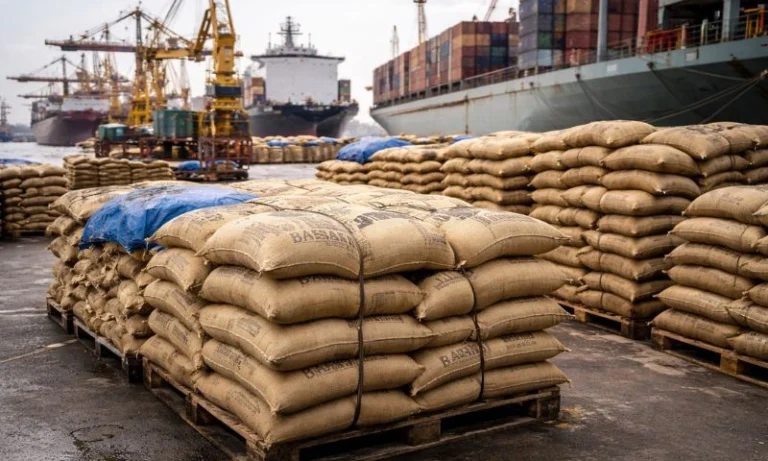
In 2025, Spain recorded a trade surplus of about $4.8 billion with the United States, highlighting the economic stakes involved in any potential dispute between the two countries.
Read More: Strait of Hormuz Closure Sparks Global Shipping Crisis and Higher Costs
Growing Rift Among Western Allies
The episode highlights growing tensions among Western allies over military strategy, defense spending and the widening Iran conflict. European leaders have stressed the need for diplomatic solutions while seeking to avoid deeper military escalation.
Experts say disputes like this could test the unity of NATO at a time when global security challenges are intensifying.
For now, Spain has signaled that it will not change its position despite the threat of economic retaliation. Officials in Madrid insist their decisions are guided by international law and the need to avoid further escalation in an already volatile region