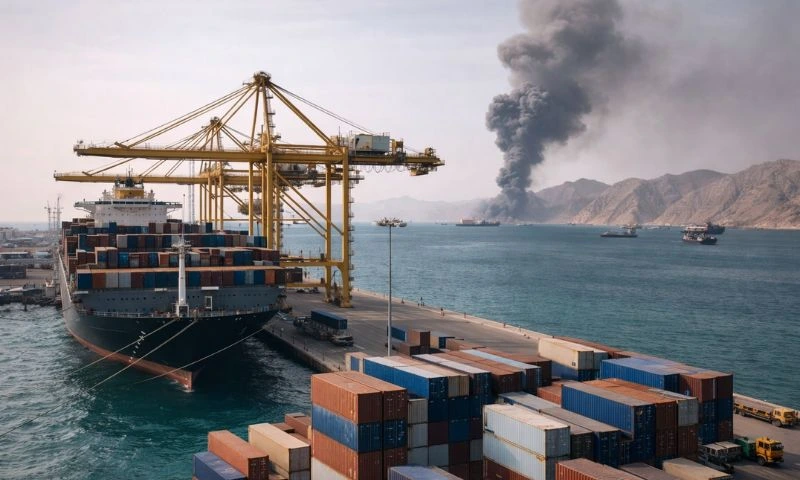
The escalating conflict in the Middle East has led to the closure of the Strait of Hormuz, a strategic maritime corridor critical for global energy and trade. This development is triggering major concerns among shipping companies, trade bodies and exporters, particularly in Pakistan, where a significant share of commerce and energy supplies depends on uninterrupted Gulf access.
Global Trade at Risk
The Strait of Hormuz, linking the Persian Gulf to the Gulf of Oman, is one of the world’s most essential shipping routes. Nearly 25 percent of the planet’s crude oil supply and large volumes of liquefied natural gas pass through this narrow channel each day. Its effective closure amid rising hostilities around the Gulf has alarmed maritime firms and economic stakeholders.
Shipping giants and logistics partners have taken precautionary steps to protect crews and cargo amid heightened threats. Reports show that several major carriers have introduced war-risk and contingency surcharges, while others have suspended bookings and export cargo movement to Gulf destinations.
Read More: Oil Prices Surge 10% as Iran Conflict Threatens Key Supply Routes, Analysts Warn $100 Oil Possible
Impact on Pakistani Trade and Ports
Pakistan’s trade ecosystem is particularly vulnerable due to its heavy reliance on Gulf routes for both exports and imports. The Pakistan Ships’ Agents Association (PSAA) warned that disruptions in Gulf services will likely push freight and insurance costs higher, slowing down the movement of goods. Mohammad A. Rajpar, PSAA Chairman, said that Pakistan’s trade “will suffer delays and additional costs” due to suspended services and shipping constraints.
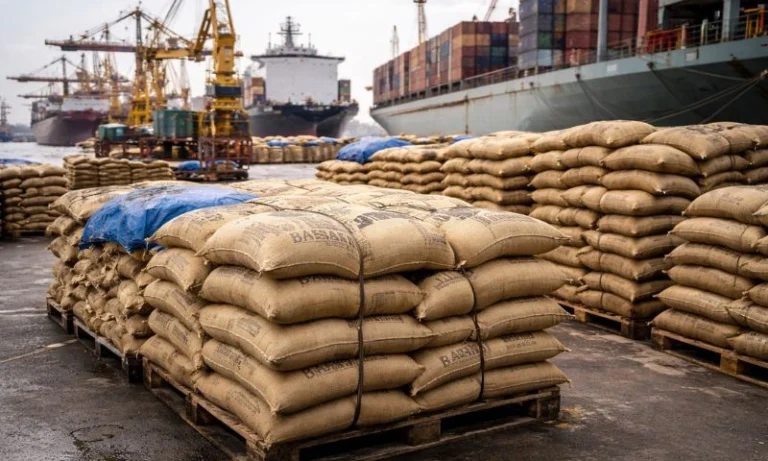
At the Karachi Gateway Terminal Limited (KGTL), authorities announced the temporary halt of new export bookings destined for Gulf ports. Operators stated that until security conditions improve, major markets in the United Arab Emirates, Iraq, Kuwait, Qatar and eastern Saudi Arabia will not be served via normal Gulf routes.
Shipping Lines Respond to Risk
Several global carriers have altered sailing plans due to the crisis. Hapag-Lloyd imposed booking stops for container cargo moving to the Gulf from Africa and other regions, introducing contingency surcharges that can reach $1,500 per standard container and $3,500 for reefer or special units.
Maersk, a leading global shipping line, took the extraordinary step of pausing Trans-Suez services that pass through the Bab el-Mandeb Strait, rerouting them around the Cape of Good Hope to ensure safety. This shift is expected to add days to transit times and increase fuel consumption costs.
DP World temporarily paused operations at Jebel Ali Port as a precautionary measure, while MSC (Mediterranean Shipping Company) suspended bookings for cargo destined for the Middle East until the security situation stabilizes.
Read More: PIA Suspends Flights to UAE, Qatar, Kuwait and Bahrain After Middle East Tension
Economic and Energy Concerns
Experts warn that prolonged closure of the Strait of Hormuz could lead to severe disruptions in global energy markets. With Pakistan importing over $5.7 billion worth of crude petroleum annually, mainly from Saudi Arabia and the UAE, and total petroleum imports exceeding $10 billion, the implications could be severe for the nation’s energy security.
The Federation of Pakistan Chambers of Commerce and Industry (FPCCI) said freight costs could rise by up to 300 percent, marine insurance premiums will continue climbing due to war-risk classification, and transit times to markets in the European Union, United Kingdom and United States could increase by up to 20 days. Such cost pressures threaten the competitiveness of Pakistani textile and manufactured exports.
FPCCI President Atif Ikram Sheikh urged policymakers to adopt emergency measures to protect Pakistan’s fragile economy, stressing that the conflict’s spillover into trade and shipping could erode recent economic gains.
Global Market Repercussions
The Gulf conflict has already pushed crude prices higher worldwide, with oil markets reacting sharply to geopolitical instability. Higher freight, insurance and rerouting costs are expected to feed into inflation in importing nations. Global supply chains could also face prolonged disruptions if the Strait remains closed. Analysts warn that the world economy remains on edge as hostilities escalate with no clear resolution in sight.