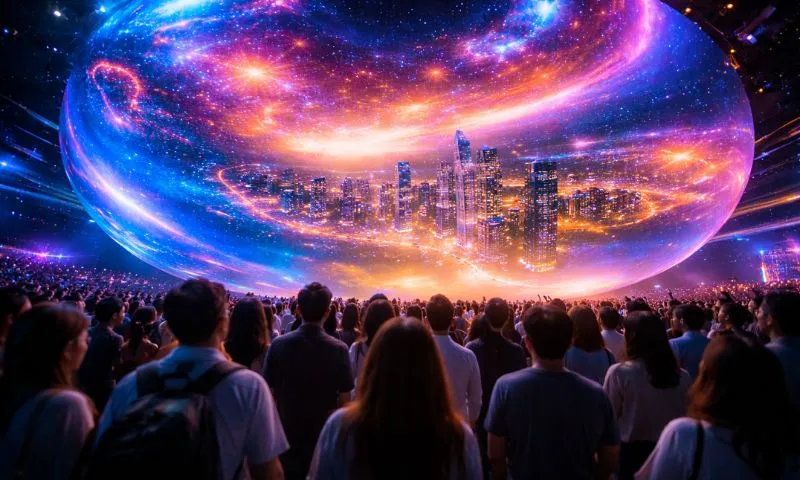
A new generation of immersive entertainment venues is taking shape around the world, with massive dome and sphere structures promising to redefine how audiences experience music, sport and storytelling.
The trend is being led by projects like the Sphere in Las Vegas, a futuristic venue wrapped in a giant LED exterior and equipped with cutting-edge audio and visual technology. Developers say such venues are designed to create fully immersive experiences that go far beyond traditional cinemas or concert halls.
These structures use high-resolution wraparound screens, spatial audio systems and even sensory effects to place audiences “inside” the experience rather than just watching it.
One industry expert says these spaces aim to blur the line between reality and performance, offering something audiences “cannot get at home”.
A new frontier for concerts, sport and storytelling
The Sphere has already hosted major concerts and events, showcasing what this technology can do. Its interior screen, one of the largest in the world, surrounds viewers entirely, creating a 360-degree environment.
Supporters say such venues could transform not only live concerts but also sports broadcasting and film screenings. Instead of watching a match on a flat screen, audiences could feel as if they are inside the stadium.
Companies are now racing to replicate the model. Rival firms are developing similar dome-style venues in cities across the United States, hoping to tap into growing demand for immersive entertainment.
Experts believe the appeal lies in offering something unique in an era where streaming has made traditional content easily accessible at home.
“People are looking for experiences,” one analyst said, pointing to how large-scale venues can attract audiences willing to pay premium prices.
High costs and uncertain future
Despite the excitement, questions remain about whether the model is financially sustainable.
The Las Vegas Sphere reportedly cost billions of dollars to build, making it one of the most expensive entertainment venues ever created. High production costs for content tailored to such spaces add another layer of financial pressure.
There are also concerns about how widely this model can expand. While major cities may support such large-scale projects, smaller markets could struggle to justify the investment.
Critics argue that while the technology is impressive, its long-term success will depend on consistent, high-quality content that justifies the ticket price.
Still, momentum continues to build. Developers are betting that immersive venues represent the next step in live entertainment, much like cinemas once replaced theatre for mass audiences.
As these giant domes and spheres begin to spread, the question is no longer whether they will exist, but whether they can reshape the future of how people experience entertainment.