Work-life balance in 2026 is no longer a soft perk or a motivational slogan. It has become a structural shift in how societies organize work, time, and wellbeing across the West and throughout South Asia.
The pressure behind this change is measurable. A 2025 global workplace study by Gallup found that over 40 percent of employees worldwide experience daily stress linked to work, while disengagement remains high despite economic recovery in several regions. Employers learned a costly lesson: burnout directly reduces productivity, retention, and innovation.
Hybrid work remains the most visible change. By late 2025, many global firms formally ended rigid office mandates. Instead, they adopted outcome-based models that focus on results rather than hours. In Europe, four-day workweek pilots in the UK and Germany showed stable or improved productivity, encouraging broader adoption in 2026.
The South Asian context adds another dimension. In countries like Pakistan, India, and Bangladesh, hybrid work created new access rather than convenience. Professionals working in tech, finance, design, and customer support now earn global incomes without relocating. Freelancing and remote employment expanded rapidly, with South Asia emerging as one of the fastest-growing remote talent regions by 2025.
Yet flexibility comes with tension. Long hours remain common in South Asia due to time-zone overlap with global clients. Many workers report improved income but blurred personal boundaries. This reality has sparked new conversations around mental health, rest, and sustainable workloads, topics once considered taboo.
Governments also stepped in. “Right-to-disconnect” laws, first introduced in France, gained attention globally. While not yet widespread in South Asia, large employers increasingly introduce internal policies limiting after-hours communication to reduce burnout.
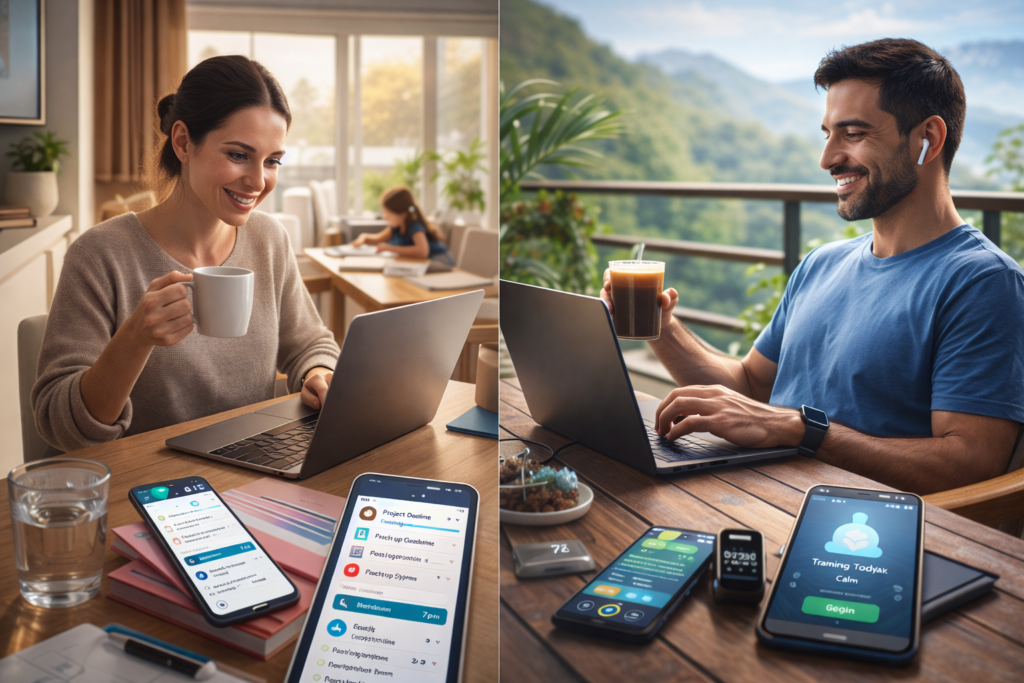
Lifestyle patterns shifted alongside work. Rising urban rents and commute costs pushed professionals to relocate to smaller cities or suburban areas. Co-working spaces replaced offices, and cafés doubled as informal work hubs. Families gained flexibility, but routines required renegotiation.
Mental health now anchors the conversation. Companies expanded wellness programs after data showed lower sick leave and higher retention among employees with access to counseling and mental-health days. In 2026, acknowledging stress feels less like weakness and more like responsibility.
Work-life balance today is not about working less. It is about control. People want flexibility, predictability, and time that belongs to them. In 2026, balance is no longer optional. It is essential.