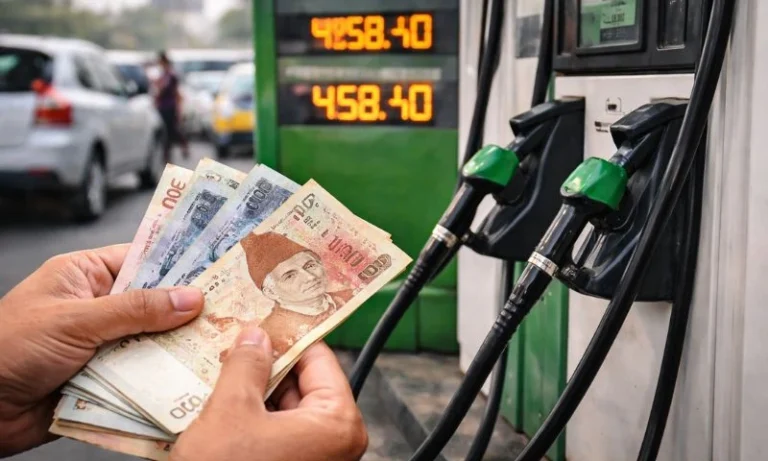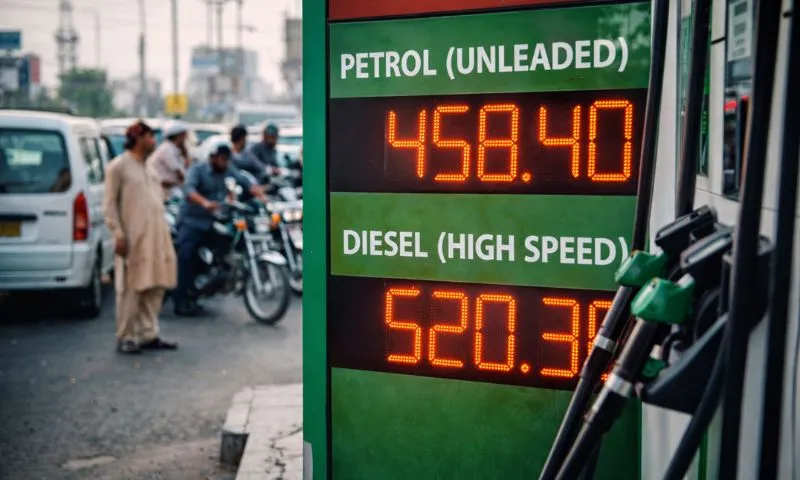
Fuel prices in Pakistan have surged dramatically after the government withdrew its blanket subsidy on petroleum products, pushing petrol prices up by more than Rs130 per litre to around Rs458.40, while high-speed diesel has climbed to approximately Rs520.35 per litre.
The increase represents one of the steepest hikes in recent years, with petrol rising by about 42.7% and diesel by nearly 55%, according to market estimates. The move comes as global oil prices surge due to escalating tensions in the Middle East, particularly disruptions linked to the Iran conflict.
Subsidy Ends, Real Prices Passed to Consumers
The government had been artificially controlling fuel prices by absorbing rising international costs through heavy subsidies. However, officials confirmed that continuing this policy had become financially impossible.
Finance Minister Muhammad Aurangzeb acknowledged that over Rs129 billion had already been spent to keep prices stable in recent weeks. He said, “Since the resources are limited… there was no way to continue with a blanket subsidy.”
Petroleum Minister Ali Pervaiz Malik also defended the decision, stating, “It was inevitable to raise the prices due to the international market prices going out of control.”
With the subsidy removed, Pakistan’s fuel prices are now directly linked to global oil markets, meaning any further international increase will immediately impact domestic consumers.
Read More: Fuel Crisis Deepens in Pakistan: Petrol, Diesel Hike Expected as LPG Prices Jump 34%
Immediate Impact on People as Transport Costs Surge
The immediate impact of the fuel hike will be felt in everyday commuting and household expenses.
For example, a motorcyclist using 10 to 12 litres per week will now spend an additional Rs1,300 to Rs1,600 weekly. Car owners, depending on usage, could see their monthly fuel bills rise by Rs10,000 to Rs20,000.
Public transport fares are expected to increase within days. Bus operators, rickshaw drivers and ride-hailing services typically pass on fuel cost increases quickly, which will directly affect students, office workers and low-income groups.
For households already struggling with inflation, this means reduced spending power and difficult choices between fuel, food and other essentials.
Prices of Food and Essentials Set to Rise
The fuel price increase is expected to trigger a second wave of inflation through higher logistics costs.
Pakistan’s supply chain is heavily dependent on diesel-powered transport. With diesel now above Rs520 per litre, the cost of transporting goods has increased sharply.
This will likely lead to:
- Higher vegetable and fruit prices due to increased transport costs from farms to cities
- Rising flour and wheat prices as distribution becomes more expensive
- Increased cost of packaged goods and groceries
Retailers and wholesalers are expected to pass these costs onto consumers, meaning the real impact of the fuel hike will be felt more strongly in the coming weeks.
Businesses and Economy Under Pressure
Industries and businesses will also come under pressure as operational costs increase.
Transport companies and freight operators will raise delivery charges, which will impact manufacturers, retailers and exporters. Small businesses, especially those dependent on daily logistics, may struggle to absorb these costs.
For example:
- Delivery services may increase charges or reduce coverage
- Small factories may cut production to manage rising expenses
- Retail shops may increase prices or reduce inventory
Economists warn that such pressures could slow economic activity and reduce profit margins across multiple sectors.
Inflation Risks Grow
Economists say the fuel price hike will contribute significantly to inflation, which is already a major concern in Pakistan.
Higher fuel prices increase the cost of almost everything in the economy, from transportation to electricity generation and manufacturing.
This could lead to:
- Higher Consumer Price Index levels
- Increased cost of living for urban and rural households
- Greater financial pressure on fixed-income groups
The State Bank and economic planners may also face new challenges in controlling inflation while maintaining growth.
Global Crisis Behind the Price Shock
The surge in fuel prices is closely tied to global developments, particularly the ongoing conflict involving Iran, the United States and Israel.
Oil shipments through the Strait of Hormuz have been disrupted, tightening global supply. Nearly 20% of the world’s oil passes through this route, making any instability highly impactful.
As global oil prices rise, import-dependent countries like Pakistan face immediate consequences, as they rely heavily on fuel imports from the Middle East.
Read More: Oil Price Hits $107 as Trump Signals More Strikes on Iran
Shift Toward Targeted Subsidies
To offset the impact, the government has announced a shift from blanket subsidies to targeted relief.
Officials say support will focus on:
- Motorcyclists and low-income commuters
- Public transport sector
- Small farmers
However, experts argue that targeted subsidies may not fully compensate for the broader economic impact, especially as inflation spreads across multiple sectors.
A Price Hike With Long-Term Consequences
The current fuel price surge is not just a temporary adjustment but a structural shift in how energy prices are managed in Pakistan.
With subsidies removed and global uncertainty continuing, fuel prices may remain volatile, creating long-term challenges for both policymakers and the public.
For millions of Pakistanis, this is more than just a price increase. It is a direct and lasting impact on their daily lives, purchasing power and economic stability.