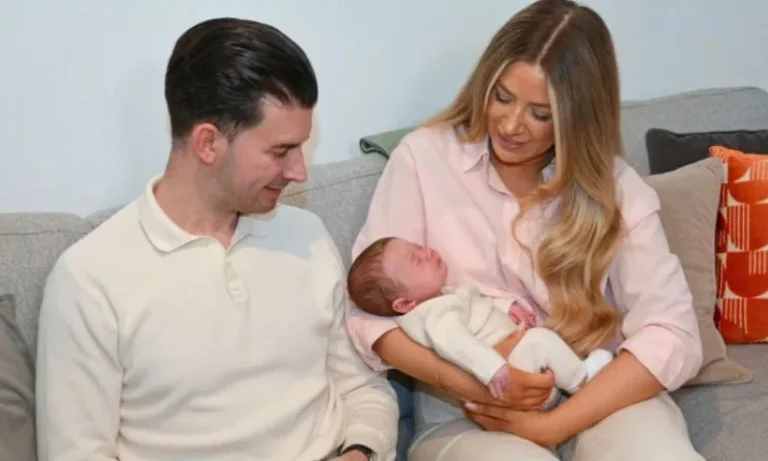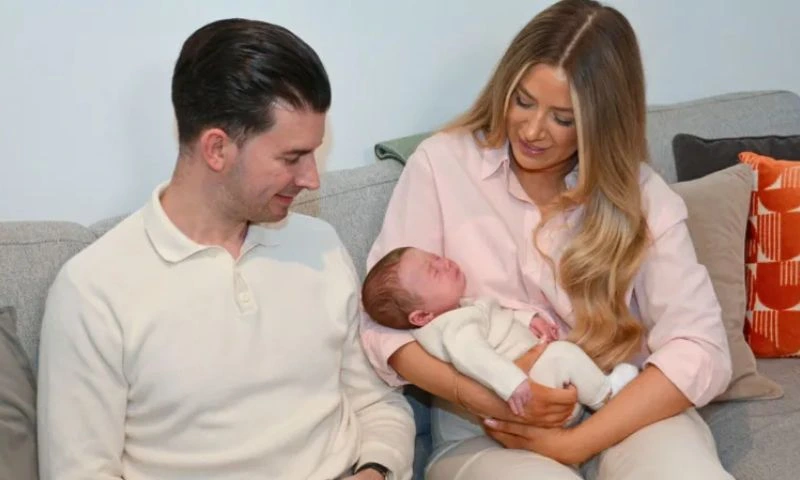
In a major medical milestone, a baby boy named Hugo has become the first child in the United Kingdom to be born to a mother who received a womb transplant from a deceased donor. The historic birth was confirmed by multiple reliable news sources, signalling a new chapter in reproductive medicine and offering fresh hope to women with uterine infertility.
Grace Bell, a woman born with Mayer-Rokitansky-Küster-Hauser (MRKH) syndrome, a condition where the uterus is missing or underdeveloped, welcomed Hugo at Queen Charlotte’s and Chelsea Hospital in London. Hugo was born weighing around 3.09kg (6lb 13oz) in December 2025 after his mother underwent fertility treatment. The pregnancy resulted from IVF and embryo transfer after the transplant, a journey Bell described as “simply a miracle.”
A Journey That Defied Odds
Bell was told at age 16 that she could not carry a child due to her condition, making Hugo’s arrival particularly emotional. The womb transplant itself took place in June 2024 at The Churchill Hospital in Oxford as part of a research programme supported by Womb Transplant UK. This operation involved implanting a womb retrieved from a deceased donor, chosen specifically for the transplant research.
Only a handful of babies worldwide have been born after womb transplants from dead donors. Most womb transplant births globally involve organs donated by living relatives, usually close family members. Hugo’s birth places the UK among a small group of countries where this type of transplant-assisted birth has succeeded.
Bell and her partner, Steve Powell, have expressed profound gratitude to the donor’s family, saying their selfless decision gave them “the biggest gift, the gift of life.” To honour the clinical team, they gave Hugo the middle name Richard after Professor Richard Smith, the clinical lead at Womb Transplant UK whose work played a key role in the procedure’s success.
Scientific and Ethical Implications
This birth underscores how far reproductive medicine has advanced in recent years. Womb transplantation remains a complex and emerging field with both medical and ethical considerations. Women without functioning wombs have traditionally relied on surrogacy or adoption to start families. Uterus transplants — both from living and deceased donors — provide an alternative for those who wish to carry their own child.
Globally, about 25 to 30 babies have now been born from womb transplants using deceased donor organs, with many more born from living donor transplants. The UK’s achievement confirms that deceased donor wombs can successfully support pregnancy and childbirth, expanding possibilities for future treatments.
The Road Ahead
While still a specialised procedure not currently covered under standard NHS organ donation programmes, womb transplants may become more widely available as research continues and success rates improve. Bell and Powell’s experience highlights both the medical breakthroughs and emotional impact such procedures can have on families.
For countless women facing uterine infertility, Hugo’s birth represents a beacon of hope and a reminder of the strides being made in medical science.