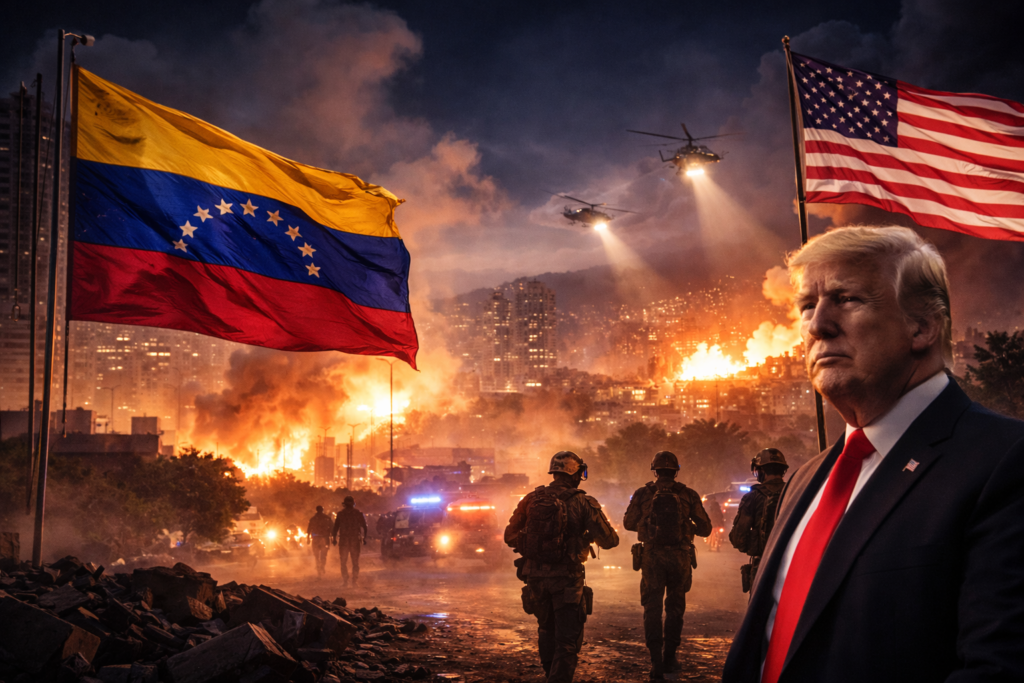
Venezuela has been plunged into one of the most severe political and security crises in its modern history following US military action near the capital Caracas and extraordinary claims from Washington that President Nicolás Maduro and First Lady Cilia Flores were captured and taken to the United States.
The developments have sharply escalated tensions between the two countries and triggered widespread concern across Latin America and the international community.
JUST IN: 🇻🇪🇺🇸 Close up video of Nicolás Maduro being escorted out of a plane by US authorities in New York.
— BRICS News (@BRICSinfo) January 4, 2026
What unfolded overnight
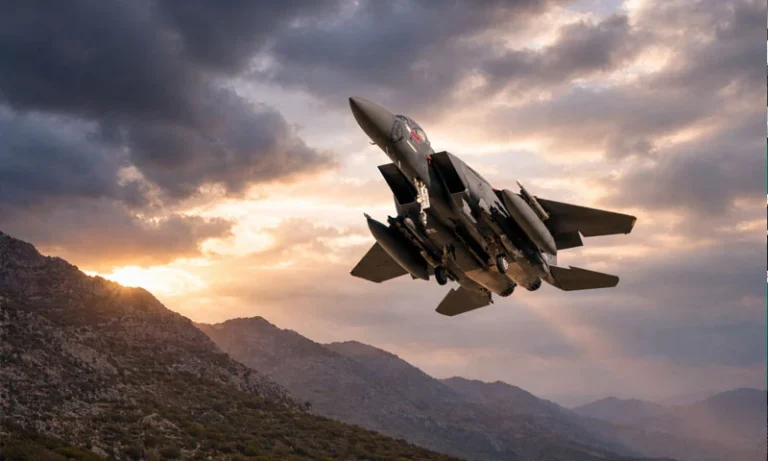
In the early hours of January 3, 2026, explosions and intense military movement were reported in Caracas and surrounding regions. Venezuelan authorities said multiple locations were hit, describing the incident as direct foreign military aggression. Security alerts were raised nationwide, and movement was restricted in parts of the capital as the situation rapidly deteriorated.
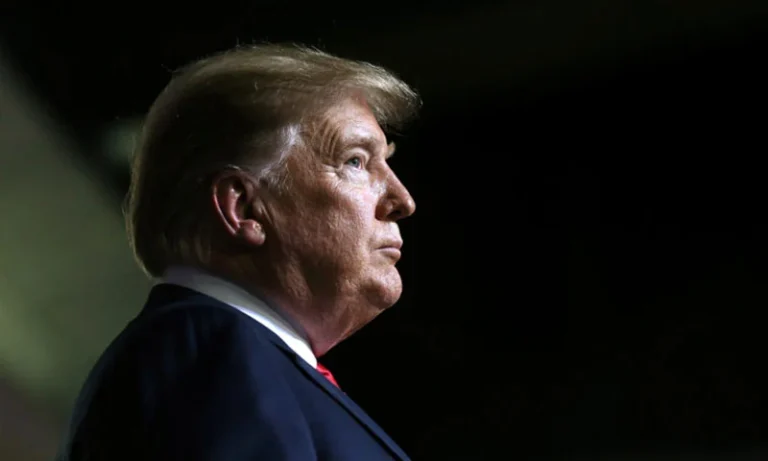
Shortly afterward, US political leadership dramatically escalated the situation. Former US President Donald Trump publicly stated that American forces had carried out a large-scale operation inside Venezuela, claiming that Maduro and Flores had been detained and flown to the United States, where they would face legal proceedings.
The US is bombing Venezuela in an actual unprovoked attack. Many excuses will be given over the next days: Narco-terrorism; Hezbollah, Hamas, Iran and others “operating” in Venezuela; democracy promotion backed by the Nobel Peace Prize etc. pic.twitter.com/qhiVq0OOZu
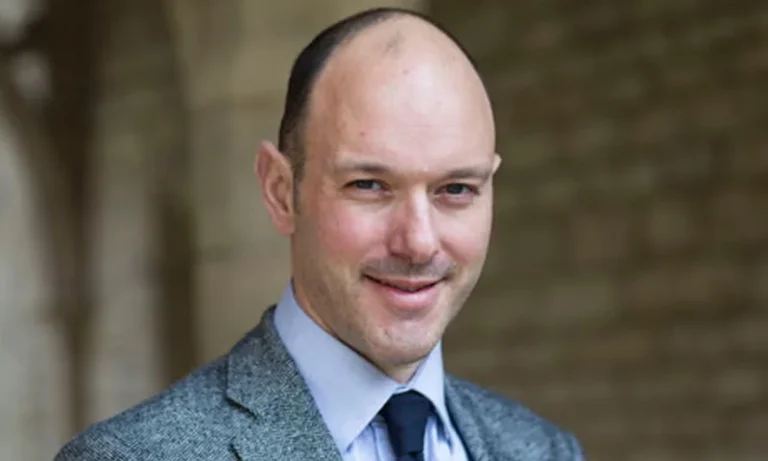
— Glenn Diesen (@Glenn_Diesen) January 3, 2026
The US justification
According to US statements, the operation was linked to long-standing criminal accusations against Maduro, including allegations involving narcotics trafficking and links to armed groups—claims that have been raised by US authorities for years. Trump framed the action as a decisive step to enforce accountability, though no detailed legal documentation or congressional authorization was immediately made public, fueling debate within the United States over the legality of the operation.
Trump also went further, announcing that the United States would temporarily oversee Venezuela’s political and administrative system until a new government is established—an announcement that stunned diplomats and legal experts worldwide.
Venezuela’s response
Venezuela’s leadership has categorically rejected the US claims, calling the events an illegal attack, an abduction, and an attempted regime change. Officials insist the country’s sovereignty has been violated and accuse Washington of fabricating or exaggerating claims to justify intervention.
Emergency measures were announced, and senior officials urged the population to remain calm while warning that Venezuela would resist any foreign-imposed authority.
Casualties and damage: what is known
Early reports suggest that people were killed and injured during the overnight strikes, though exact numbers remain unclear and vary across accounts. Venezuelan officials have spoken of fatalities and civilian harm, while US statements have focused on the scale of the operation and said American personnel were injured but not killed.
Independent verification remains limited, and analysts caution that all casualty figures should be treated as provisional until further confirmation is available.
Regional and global fallout
The developments sparked immediate international reaction. Cuba strongly condemned the US action, describing it as an act of state terrorism, while reactions across Latin America have been sharply divided—reflecting deep political splits over Venezuela’s leadership.
International concern has focused heavily on sovereignty, international law, and precedent, with growing calls for emergency discussions at global forums, including the United Nations.
Wider impact beyond Venezuela
The crisis has also disrupted regional travel and commerce. Heightened security measures and airspace restrictions led to widespread flight cancellations and delays across parts of the Caribbean and northern South America, affecting thousands of passengers.
What happens next
Several critical questions remain unresolved:
Governance in Caracas: Venezuelan institutions say they remain in control, but the balance of power is uncertain amid conflicting claims.
Legal battle ahead: If Maduro is indeed in US custody, the case is expected to trigger a major legal and diplomatic confrontation over jurisdiction and international norms.
Risk of escalation: Analysts warn that further military action or retaliatory measures could destabilize the region and deepen an already volatile crisis.
While many details remain contested, one reality is clear: US–Venezuela relations have entered an unprecedented and dangerous phase, with consequences that could reshape regional politics and global debates on intervention and sovereignty.