Dubai has long marketed itself as one of the safest and most stable cities in the Middle East. For decades, investors, expatriates, and tourists viewed the emirate as a neutral hub where business, luxury tourism, and global finance could thrive regardless of regional turmoil. However, recent events in the Gulf have begun to challenge that perception.
The escalation of the 2026 Iran conflict has brought the reality of regional instability directly to the United Arab Emirates, including Dubai, forcing analysts and investors to reassess the emirate’s long-standing reputation as a safe haven.
Iranian Strikes Bring Chaos to the UAE
The turning point came in late February when Iran launched missile and drone attacks against several Gulf states following strikes on its territory by the United States and Israel. The United Arab Emirates became one of the targets of the retaliatory attacks.
According to reports, Iran launched hundreds of missiles and drones toward the UAE, some of which reached areas near major cities including Dubai and Abu Dhabi. Debris from intercepted projectiles caused damage to buildings and injured civilians.
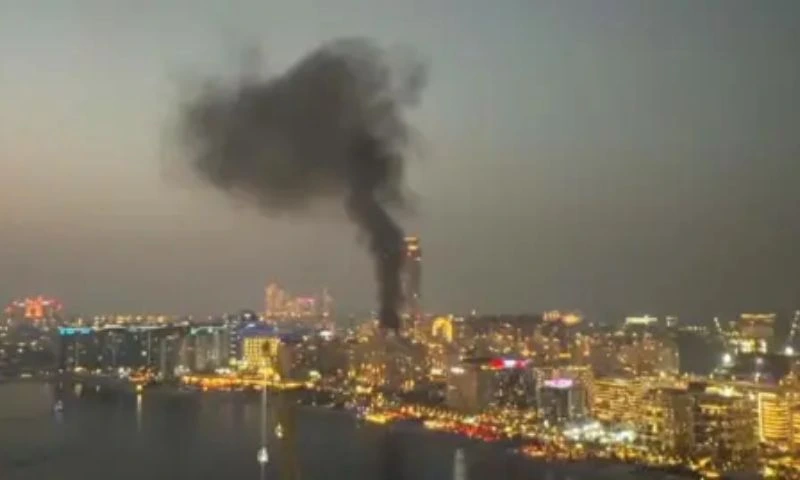
In Dubai, damage was reported near well-known landmarks such as the Palm Jumeirah area and around major infrastructure including airports and ports. The conflict also forced temporary airspace closures and flight disruptions across the Gulf region.
For a city that built its global brand around stability, the attacks represented a symbolic shock.
Read More:Dubai’s Super-Rich Pay $200,000 to Escape Gulf War
Dubai’s “Safe Haven” Reputation Under Pressure
For years, Dubai positioned itself as a neutral financial center and gateway between East and West. The Dubai International Financial Centre alone hosts hundreds of banks, hedge funds, and investment firms.
But the conflict has exposed a key vulnerability: Dubai’s prosperity is closely tied to regional stability. When tensions escalate in the Gulf, investors and businesses immediately reassess risk.
Recent reports suggest that the attacks have shaken investor confidence and raised questions about whether the city can maintain its traditional image as a secure refuge for global capital.
Read More: Iranian Airstrikes Shake Dubai’s Reputation as Safe Tourism Haven
Real Estate and Investment Sentiment Wavers
Dubai’s property market, which has experienced a dramatic boom fueled by foreign investment, is now facing uncertainty. Analysts warn that the emirate’s real estate sector depends heavily on international buyers and expatriate residents. When geopolitical risk increases, property demand can weaken quickly.
Several reports indicate that investor confidence has already been shaken following the attacks, with some property indices showing declines and international buyers delaying purchases. This could become a serious issue because the UAE’s construction boom has relied heavily on continuous foreign investment to sustain new developments.
Tourism and Aviation Disruptions
Dubai’s tourism sector is another pillar of its economy that has been affected by the conflict. Drone incidents and regional airspace closures have disrupted flights and forced airlines to cancel or reroute services across the Middle East. Tens of thousands of flights have been affected, creating the most severe aviation disruption in the region since the pandemic.
Hotels and tourism businesses have also reported cancellations as travelers reconsider visiting the Gulf during the ongoing crisis. For a city that relies heavily on international visitors, even a temporary drop in tourism can have major economic consequences.
Read More: UAE Airports Reopen with Limited Flights Following Conflict Disruptions
A Reminder of Regional Realities
Dubai’s transformation from a small Gulf trading port into a global megacity is often cited as one of the most remarkable economic success stories of the modern era. Yet the recent crisis highlights a broader reality. No matter how advanced or prosperous a city becomes, it cannot fully isolate itself from the geopolitical environment around it.
Dubai’s skyscrapers, luxury resorts, and financial districts symbolize economic ambition. But the events of 2026 show that regional conflicts can still reach even the most carefully constructed hubs of stability.
Whether Dubai can restore investor confidence and maintain its reputation as a global safe haven may depend not only on its economic policies but also on the future stability of the Gulf region itself.