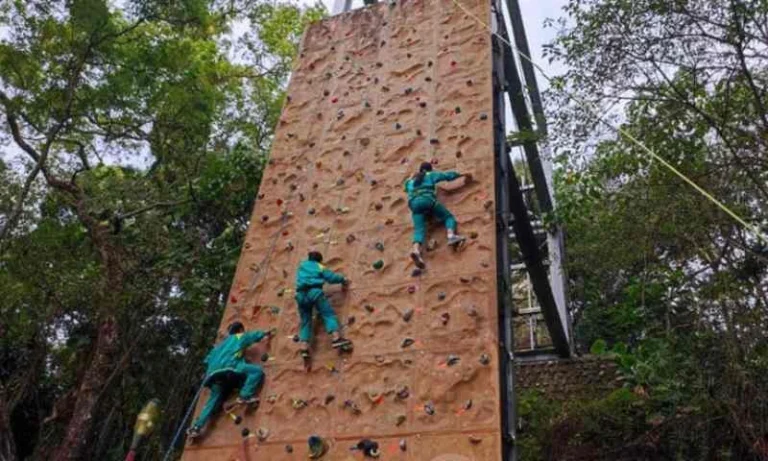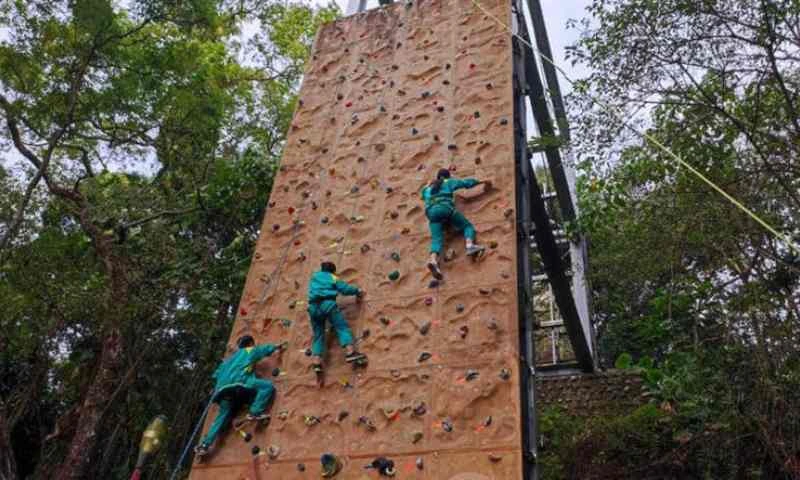
A unique educational experiment in Taiwan has drawn international attention after a high school introduced a rule requiring students to scale a 12-meter rock-climbing wall before they can receive their graduation certificates. The policy, introduced by Shu-Chi Senior High School in Hsinchu County, aims to build resilience, confidence and problem-solving skills among students. The unusual requirement quickly went viral online, with videos and photos of students tackling the climb being widely shared on social media.
The school’s rock-climbing wall is not part of a typical gym class. It was installed as part of a broader physical education and character-building program that school leaders say prepares students for real-world challenges. Principal Lin Chien-Yu explained that the climb is meant to stimulate personal growth. “We want students to be brave enough to take on life’s obstacles,” he said in an interview featured in local media. “Conquering the climbing wall shows them they can push past fear and reach new heights.”
Students at Shu-Chi have varied reactions to the requirement. Some enjoy the challenge and see it as a fun way to stay fit, while others find it intimidating. Despite the mixed feelings, most students recognise that the experience teaches perseverance, patience and strategic thinking. Teachers supervise the activity closely and ensure safety gear and trained spotters are always present.
Experts in education and child development have praised the idea for promoting physical activity and mental resilience. According to the World Health Organization, adolescents should engage in at least 60 minutes of moderate-to-vigorous physical activity daily to support healthy growth. Activities like rock climbing provide cardiovascular exercise, muscle strength development and enhanced coordination, qualities that benefit students well beyond high school.
Rock climbing is increasingly embraced by schools globally as a tool for promoting confidence and teamwork. In the United States, several high schools have added climbing walls to their physical education facilities, with educators noting improvements in student engagement and confidence. These programs often pair climbing with discussions on goal-setting and overcoming fear.
Taiwan’s initiative is seen by many as an innovative blend of physical education and character building. While not all schools have adopted similar graduation requirements, many institutions have begun incorporating alternative physical challenges into their curricula. For example, schools in Europe and North America sometimes include outdoor adventure activities such as hiking, kayaking or ropes-course challenges to encourage leadership and resilience.
Parents and students alike have shared photos and videos of the compulsory climb on social platforms. Some teens post clips of themselves successfully reaching the top of the wall, while others share humorous footage of peers struggling but ultimately completing the task. These posts have drawn supportive comments from users around the world, many saying the requirement sounds “fun” and “empowering.”
Critics argue that not all students may be comfortable with climbing, but the school maintains that participation is safe, supervised and designed to be inclusive. By combining physical challenge with emotional growth, Shu-Chi Senior High School hopes to equip its graduates with confidence and life skills that extend far beyond the classroom.