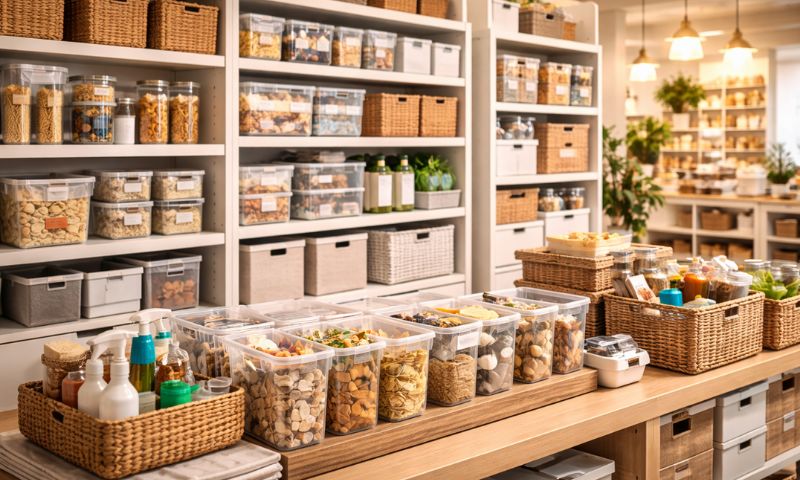
A decade ago, “organizing” meant a quick weekend cleanup. Now it looks like a full lifestyle: labeled bins, matching containers, color-coded closets, and drawers designed like mini-systems. The rise is not just aesthetic. It reflects how people live, shop, and work and how much “stuff” modern life produces.
One sign is the money. Multiple market trackers estimate the home organization products market sits around $13–$14 billion in 2024, with steady growth projected in the years ahead. Even if exact numbers vary by methodology, the direction is consistent: people keep spending on shelves, boxes, drawer dividers, and storage solutions.
A second sign is the entertainment economy built around tidy spaces. Netflix describes Get Organized with The Home Edit as a show where professional organizers “edit, categorize and contain” clutter for both celebrities and everyday clients. The premise turns a private problem into a watchable transformation. It also turns organization into something aspirational like fashion or home décor.
Social media poured fuel on that shift. Instagram accounts dedicated to organization and “restock” routines have turned everyday tasks into satisfying visuals. The goal is not only “clean.” It is controlled, styled, and repeatable, an aesthetic that looks good on camera and feels reassuring in real life.
Then came the pandemic, which pushed millions indoors and forced people to confront their spaces. A Washington Post report captured the mood in 2020 with a blunt line from author Gretchen Rubin: “People are feeling their spaces right now.” When home became the office, classroom, gym, and social hub, clutter stopped being background noise. It became the daily environment.
But the obsession isn’t only emotional. It is also practical. Modern consumption makes disorder easier than ever. Online shopping delivers quickly, and small purchases accumulate. Homes, especially urban apartments, often lack storage. Families keep more devices, cables, toys, and packaging than previous generations did. Organization becomes a coping strategy for a high-volume lifestyle.
Research also helps explain why the “mess” feels heavier than it looks. Princeton researchers studying attention have argued that visual clutter competes for focus and can “tire out” cognitive functions over time. In plain terms: too many visible items can make it harder to lock in on one task. That idea has become part of the popular case for organizing—especially for people juggling work and home life in the same rooms.
Another driver is the rise of professional organizing as a paid service. Several industry reports now frame professional organizing as a growing market, with forecasts that project strong growth through the next decade. Even if forecasts differ, the concept itself is telling: people now outsource order the way they outsource cleaning, catering, or design.
The “KonMari” era also shaped the story, not just through products but through language. Marie Kondo’s framing keeping what “sparks joy” became cultural shorthand, repeated across business and lifestyle media. That phrasing gave people permission to reduce clutter without guilt. It also turned decluttering into identity work: a way to curate life, not just a closet.
Yet the most important reason the trend sticks is simpler: home organization offers visible wins. You can open a drawer and see progress. You can turn chaos into a system within hours. In an era where many problems feel slow, expensive, or out of reach, organizing provides fast feedback.
That’s why home organization became more than cleaning. It became a culture of control—part design, part routine, part self-management. And as long as modern life keeps producing more stuff than space, the obsession will likely stay.