Pakistan is experiencing an unusually active influenza season this winter, with a noticeable rise in flu cases across major cities. Health experts say this surge is not a brand-new disease but a known virus showing genetic drift that spreads more rapidly than typical seasonal patterns.
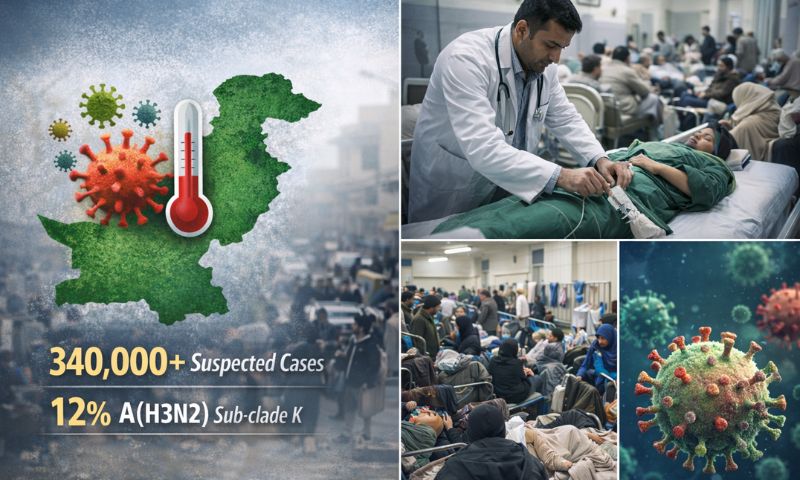
According to the country’s National Institute of Health (NIH), between epidemiological weeks 44 and 49 (October–November 2025), Pakistan recorded 340,856 suspected influenza-like illness cases. Around 12 percent of tested samples were confirmed as Influenza A(H3N2), driven by a variant known as Sub-clade K.
This H3N2 strain has also been reported globally, especially in the South-East Asia region, where it accounted for about 66 percent of all Influenza A cases by late 2025. The World Health Organization (WHO) confirms that influenza activity has risen since October in the northern hemisphere, including Pakistan.
Medical specialists in Pakistan warn that the flu season’s early start and wider spread make it feel harsher than usual. Typical symptoms being reported include high fever, severe cough, sore throat, headache, muscle pain, fatigue and, in some cases, shortness of breath — symptoms more intense than common cold infections.
Despite media talk about “super flu,” health officials stress there is no evidence this strain causes more severe disease than past seasonal flu viruses. What is unusual is how early and broadly cases are appearing this year. Dr. Rana Safdar, a local infectious disease expert, tells Dawn News that while the current strain differs genetically from the one used in the 2025–26 vaccine, “the vaccine will still reduce the risk of severe illness and hospitalization.”
Officials are also urging caution because winter weather because of the cold, foggy mornings and close indoor contact can help respiratory viruses spread more easily. High-risk groups, including young children, the elderly, and people with conditions like diabetes or lung disease, are advised to take extra precautions.
Already, hospitals and clinics in Punjab and Sindh report higher than normal patient visits for flu-like symptoms, showing the seasonal wave is well underway.
Public health advice emphasizes vaccination, frequent handwashing, healthy diets, and avoiding unnecessary antibiotic use. These simple measures can significantly reduce the severity of illness and prevent hospital overload.