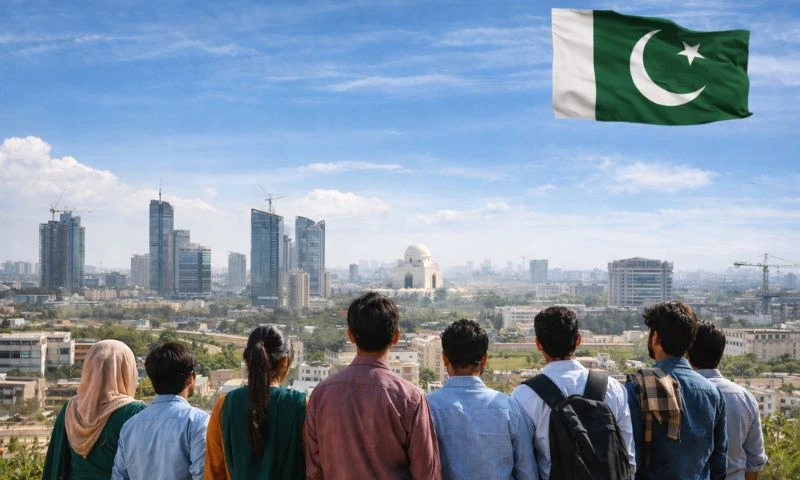
Pakistan faces a critical economic test as it seeks to harness the energy of its young population. According to World Bank Group President Ajay Banga, the country must generate up to 30 million new jobs over the next decade. Without this expansion in employment, Pakistan risks social instability and rising migration — as millions of young people enter the workforce each year.
Banga discussed these challenges during an interview with Reuters in Karachi, underlining that job creation has to be a national priority. “Job creation is the North Star,” he said, pushing for policies that go beyond short-term fixes and focus on sustained, long-term outcomes.
A Youth Surge That Demands Jobs
Pakistan’s population is set to continue growing fast, with more people entering working age each year. To convert this youth bulge into a dividend — not a burden — the World Bank says the economy must add roughly 2.5–3 million jobs per year over the next decade.
Such rapid job growth is no easy task. The World Bank’s Country Partnership Framework (CPF) with Pakistan — a 10-year development plan — will see around USD 4 billion per year in combined public and private financing, half of it steered by the International Finance Corporation (IFC) to unlock private sector investment.
The Bank noted that 90% of jobs in Pakistan are generated by the private sector, not the public sector. This makes private investment, credit access, and a business-friendly climate essential to expanding employment.
Focus on Business and Reform
Experts agree that job growth will stem from reforms that turbocharge business activity. Expanding opportunities for small and medium enterprises (SMEs), boosting access to finance, and improving infrastructure can help businesses hire more workers. Globally, SMEs already provide a backbone for employment, accounting for around 90% of businesses and more than half of all jobs, according to the World Bank.
World Bank officials also advocate reforms to strengthen human capital — including education, skills training, and gender inclusion — to better prepare Pakistan’s youth for modern jobs. Countries such as Bangladesh have boosted job growth by linking education, policy, and private investment, showing how coordinated growth can lead to better outcomes.
Risks Without Change
Banga warned that if job creation lags, Pakistan could see increased illegal migration or internal unrest as young people struggle to find opportunities. This aligns with broader global concerns: economists note that hundreds of millions of young adults worldwide may lack employment in the coming decade unless governments act.
Pakistan’s leaders are already working to accelerate economic reform, human capital development, and private sector growth. But with millions of jobs still needed each year, the message from the World Bank is clear: the future depends on jobs.