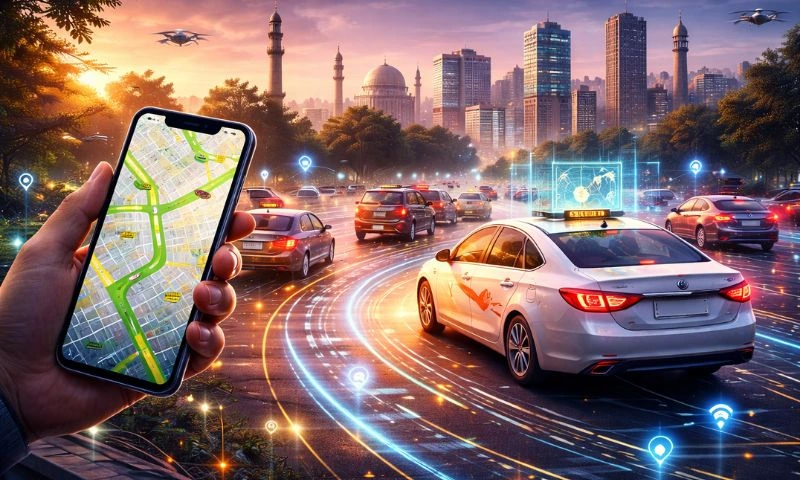
Ride hailing and mobility platform Yango has said that its AI powered routing system helped commuters in Pakistan save more than 0.8 million hours in 2025, highlighting the growing role of artificial intelligence in tackling urban congestion.
According to a report published by Dawn, Yango shared data indicating that its advanced routing algorithms reduced travel time for riders across major cities by suggesting faster and more efficient routes. The company said the savings were achieved through real time traffic analysis and predictive modeling that adjusts routes dynamically based on road conditions.
AI at the Core of Urban Mobility
Yango explained that its routing system uses artificial intelligence to process traffic data, road closures, weather patterns and historical ride information. The platform’s technology evaluates thousands of route combinations within seconds and guides drivers through the most time efficient paths.
The company said that in Pakistan’s densely populated cities, where traffic congestion remains a daily challenge, even small route optimizations can lead to substantial cumulative time savings over the course of a year.
Urban transport experts have long argued that smart mobility solutions can help reduce delays in megacities. According to global mobility studies by institutions such as the International Transport Forum, AI driven traffic systems can improve travel time reliability and lower congestion costs when implemented at scale.
Read More: Electric Rides & Hybrid Power: Pakistan’s 2026 Car Lineup Preview
Benefits for Riders and Drivers
Yango noted that reduced travel time benefits both passengers and drivers. Riders reach their destinations faster, while drivers can complete more trips in a day, potentially increasing earnings.
The company stated that its AI model also enhances safety by avoiding accident prone routes and high risk traffic zones where possible. By continuously learning from traffic trends, the system adapts to evolving patterns in each city.
Yango operates in multiple Pakistani cities and competes in a market that includes other ride hailing platforms. The integration of AI in routing reflects a broader trend in the global mobility sector, where companies increasingly rely on data driven optimization.
Pakistan’s Digital Transformation
Pakistan’s digital ecosystem has expanded rapidly in recent years. Smartphone penetration and mobile broadband usage have increased, enabling technology platforms to reach a wider user base. The Pakistan Telecommunication Authority has reported steady growth in mobile internet subscribers, which supports app based services such as ride hailing.
Experts say AI adoption in transport is part of a larger digital transformation. Intelligent transport systems can reduce fuel consumption and emissions by minimizing idle time in traffic, which also supports environmental goals.
Read More: Motorways Crackdown Begins: Unsafe Cars Denied Entry Nationwide
Looking Ahead
Yango said it will continue investing in AI research and local adaptation of its routing systems. The company aims to further enhance trip efficiency and user experience in Pakistan.
As urban centers grow and congestion intensifies, technology driven solutions may play a critical role in shaping the future of mobility. With claimed savings of 0.8 million hours in 2025 alone, AI powered routing is emerging as a significant tool in improving commuter experience in Pakistan.