

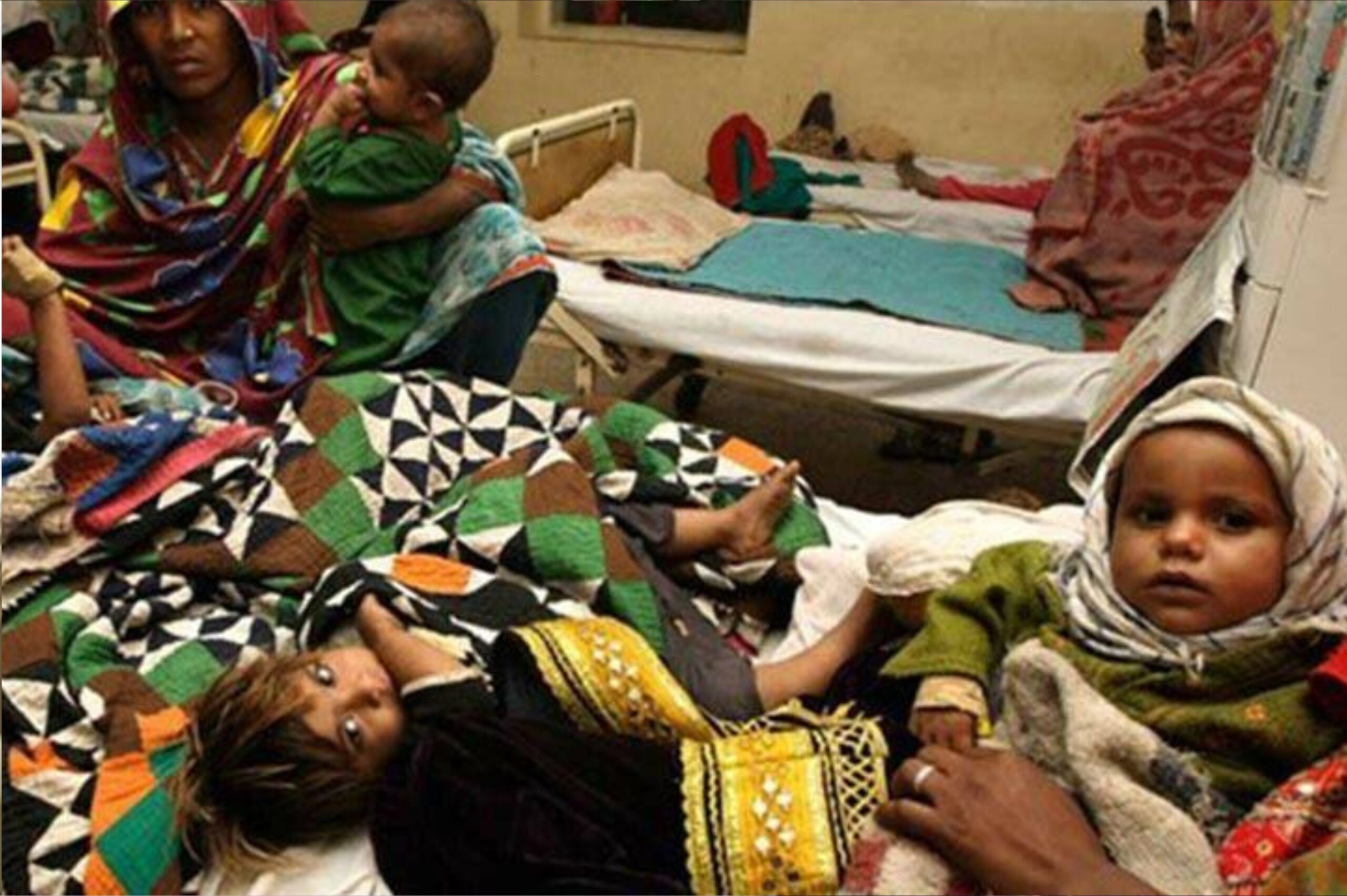
A measles outbreak in the rural village of Jan Mohammad Mehar in Dherki, located in Sindh’s Ghotki district, has claimed the lives of three children and left at least ten others hospitalised, health authorities and local residents report. Families in the village say the outbreak has sparked fear and urgency, especially in areas where routine vaccinations have been irregular or incomplete. Sick children showed typical symptoms including high fever, rash, cough, and eye irritation, prompting an urgent appeal for medical support and vaccination campaigns in the community. The deceased children Amir Ali, Bismillah, and Hazuran Bibi were among several young patients rushed to health facilities in recent days, but medical teams struggled to contain the rapid spread of the disease among under-vaccinated children. Concerned parents say limited access to regular healthcare services and gaps in immunisation coverage have made villages like Jan Mohammad Mehar highly vulnerable to vaccine-preventable diseases. Health officials acknowledged the outbreak is part of a larger pattern of increased measles activity across Sindh province. Surveillance teams are reportedly assessing vaccination coverage and planning targeted responses, but residents stress that more immediate action is needed, including door-to-door immunisation and emergency vaccination camps to try to halt further spread. Measles is one of the most contagious infectious diseases known, spreading easily through coughing and sneezing, and can be particularly deadly for children under five who are not fully immunised. Vaccination remains the most effective defence: global data show that high routine coverage can prevent large outbreaks and significantly reduce deaths from the virus. Despite a safe and cost-effective vaccine being widely available, many parts of Pakistan still struggle with achieving the 95 % coverage needed to prevent sustained transmission. Pakistan has a long history of measles outbreaks linked to gaps in routine immunisation. Earlier in 2025, other parts of Sindh recorded dozens of measles-related deaths and over a thousand confirmed cases, highlighting ongoing public health challenges in reaching every child. National health authorities, in partnership with organisations like the World Health Organization (WHO) and UNICEF, launched a nationwide measles-rubella vaccination campaign in late 2025 targeting millions of young children. It was aimed at closing immunity gaps and reducing vulnerability to future outbreaks. Experts emphasise that while emergency responses such as outbreak investigations and vaccination drives are vital, strengthening routine immunisation systems and addressing barriers to vaccine access remain key to preventing similar tragedies. Community education, improved healthcare outreach, and better monitoring could help ensure that children receive two recommended doses of the measles vaccine, lowering the risk of severe illness and death.
DIB Pakistan Joins Hands with Zindigi to Expand Shariah-Compliant Banking
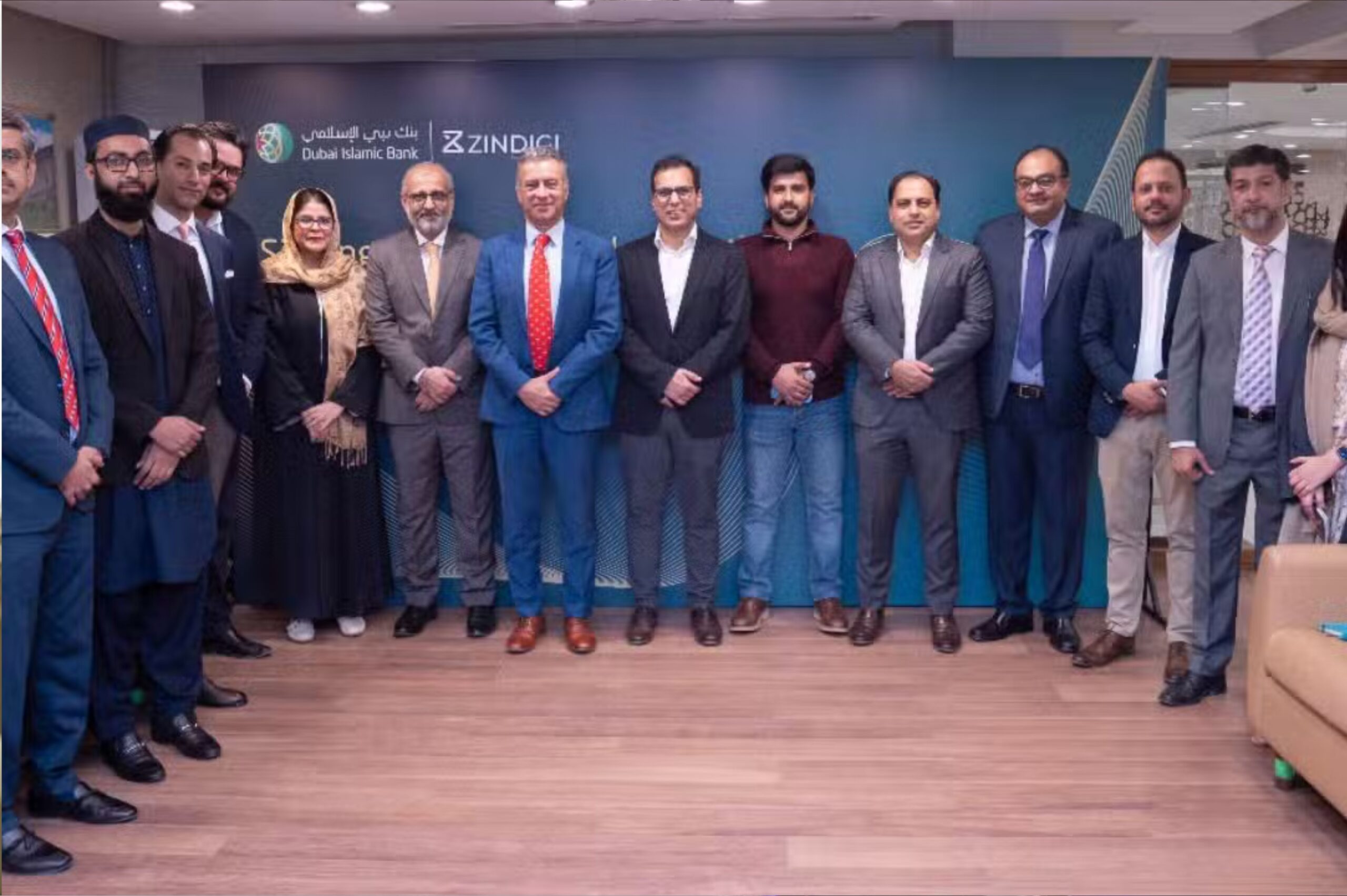
Karachi, December 29, 2025 — Pakistan’s digital banking landscape took a notable step forward as Dubai Islamic Bank Pakistan announced a strategic partnership with Zindigi, the digital banking platform owned by JS Bank, aimed at expanding Shariah-compliant and technology-driven financial services across the country. Under the agreement, DIB Pakistan will provide a Current Account facility for Zindigi, allowing users to operate the account directly through the Zindigi app. This integration means customers can access Islamic banking services seamlessly within a fully digital environment, without the need for physical branch visits. The move reflects a broader shift in Pakistan’s banking sector, where digital-first solutions are increasingly being adopted to meet the needs of a young, mobile-savvy population. Speaking at the signing, DIB Pakistan CEO Muhammad Ali Gulfaraz described the collaboration as a natural extension of the bank’s commitment to innovation and ethical finance. He noted that partnering with a fast-growing digital platform like Zindigi allows DIB to extend its reach while maintaining Shariah principles and customer-centric values. Industry observers see this as part of a wider trend among Islamic banks to integrate with fintech and neobank-style platforms to remain competitive. Zindigi’s Chief Officer, Noman Azhar, said the partnership introduces a fully Shariah-compliant offering within Zindigi’s ecosystem, giving customers greater choice in how they manage their finances. He emphasised that faith-aligned banking should be accessible, transparent, and digitally seamless especially at a time when consumers are increasingly looking for alternatives that match both their values and lifestyle. The collaboration is designed as a scalable and future-ready platform, with plans to expand into additional digital financial products over time. Analysts suggest this could include payments, savings, financing, and other value-added services tailored to underserved and digitally inclined segments of the population. Pakistan has seen rapid growth in branchless banking and digital wallets over the past few years, driven by smartphone penetration, regulatory support, and demand for convenient financial access. By combining DIB Pakistan’s expertise in Islamic banking with Zindigi’s digital infrastructure, the partnership aims to accelerate financial inclusion while strengthening trust in digital Islamic finance. As competition intensifies in Pakistan’s fintech space, collaborations like this are increasingly viewed as essential for banks seeking relevance in a fast-evolving market. The agreement underscores a shared ambition to modernise banking in Pakistan by blending compliance, innovation, and accessibility and it signals how traditional financial institutions and digital platforms are reshaping the future of money management in the country.
The Story Behind 2025’s Most Unusual Word of the Year
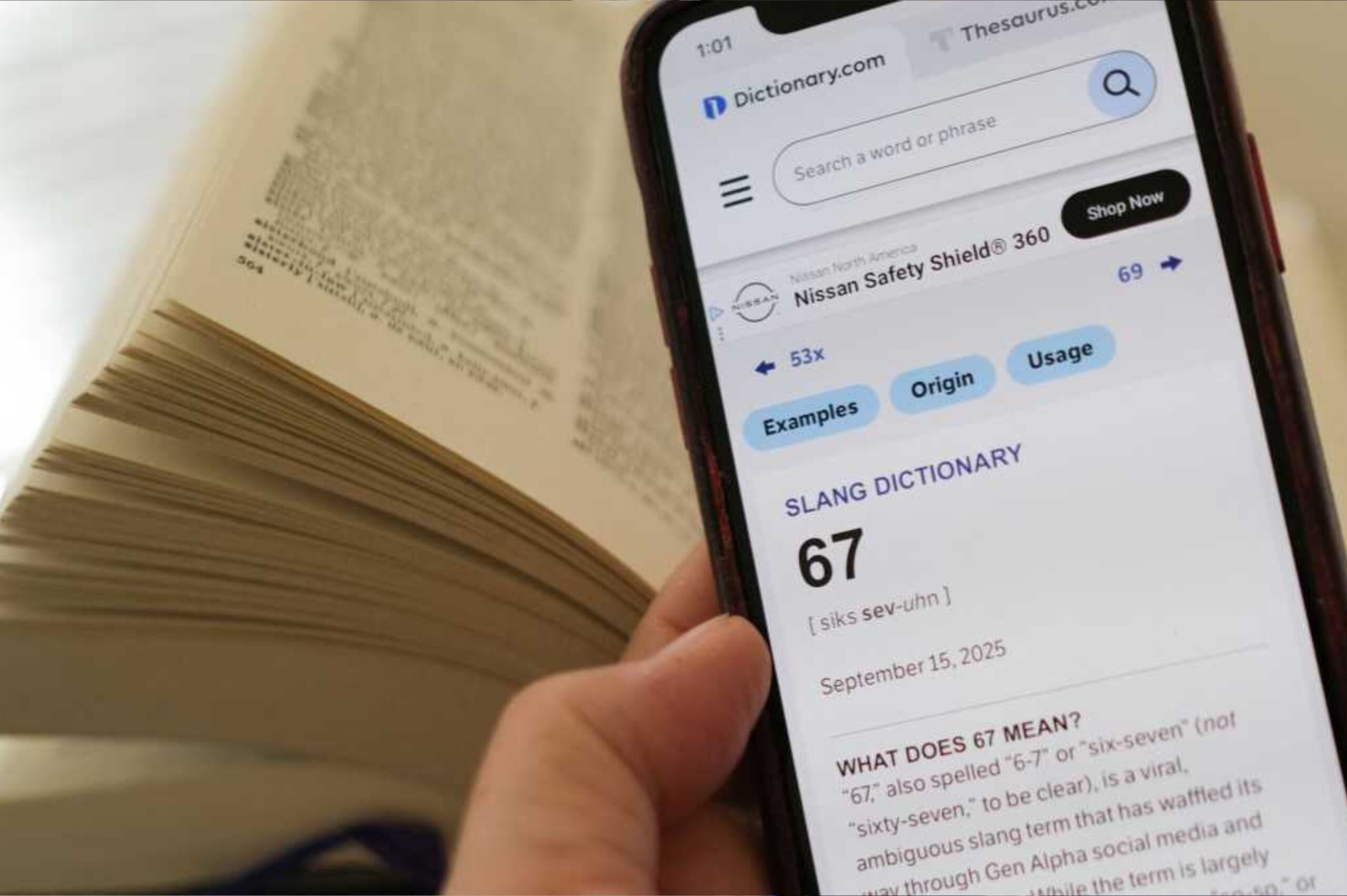
Each year, dictionaries and linguists highlight a word or phrase that captures the spirit of the time — and for 2025, that title belongs to a simple, seemingly innocuous number: “67.” What started as an obscure slang term on youth social platforms evolved into a cultural phenomenon that linguists now say reflects how young people think, feel, and communicate today. Originally circulating on platforms like TikTok, Instagram, and X, “67” became shorthand among teenagers and Gen Z users for a vibe that’s hard to pin down with a single word. It’s not just about the literal number; it embodies a kind of ambiguous mood, often used to signal a feeling that’s “sort of right, sort of off,” or to caption moments that feel odd, existential, or ironically imperfect. This flexible use helped the term spread quickly beyond niche communities into mainstream social feeds, meme culture, and everyday texting. Linguists studying digital communication noticed that “67” was being deployed in ways similar to past internet-born terms: as an emotional shorthand, a mood label, and a playful in-joke that invites shared understanding without explicit definition. The term’s rise was so notable that major dictionaries began tracking its usage frequency throughout 2025. By analyzing billions of public social posts, lexicographers observed surges whenever viral videos or cultural moments leaned into the “67 mood” from awkward family gatherings to surreal celebrity moments. Critics and commentators have had fun speculating about why “67” resonated so widely. Some see it as a reaction to an era marked by mixed signals and fast-changing trends: a number that encapsulates everything and nothing at the same time. Others likened it to previous words of the year that captured collective emotion during periods of uncertainty and transition. Teen culture, in particular, embraced “67” precisely because it’s open-ended — a Rorschach test of feeling, shaped by context, tone, and personal interpretation. Educators and language experts note that this isn’t the first time numbers have crossed into linguistic territory. Think of how “404” became synonymous with error and absence long before smartphones dominated communication. But few numerical memes have achieved the lexical staying power of “67” in defining a full year’s digital expression. While some may dismiss “67” as just another fleeting internet fad, its journey from obscurity to official recognition suggests something deeper about how language evolves online. It’s a reminder that modern vocabulary isn’t just written in dictionaries. It’s lived, shared, and remade every day through the social platforms where people connect.
AI Crisis Planner: Why OpenAI Is Paying Millions for Preparedness Leadership
OpenAI is turning heads once again and not just for its advances in artificial intelligence, but for one of the most eye-catching job postings in recent tech history. The AI leader is advertising a new senior role with a salary of up to $555,000 (about AED 2 million) per year, drawing attention not only for the hefty compensation but also for the intense responsibilities that come with it. According to OpenAI’s leadership, the role will be critical in preparing the company for worst-case scenarios in a rapidly evolving digital world. The job in question isn’t your typical executive position. OpenAI is hiring a Head of Preparedness and Partnerships, a specialist tasked with leading efforts to plan for and respond to large-scale AI cyberattacks, unexpected adversarial use of AI, and other digital catastrophes. The role blends high-level strategy with real-world crisis readiness, and requires someone who can think both creatively and practically about catastrophic risk. It sits at the intersection of AI safety, cybersecurity, and global partnerships, making it one of the most nuanced leadership roles in tech today. CEO Sam Altman himself has commented on the challenge, noting that the job will be “stressful” and demanding, even for seasoned professionals. He emphasised that the position is about preparing for hard things before they happen, and that spotting and mitigating emerging threats is now central to OpenAI’s mission alongside inventing groundbreaking technologies. The company has explicitly said that it wants someone who can build bridges with governments, NGOs, and industry peers to coordinate responses to scenarios that could range from targeted attacks on AI infrastructure to broader threats to data integrity and public safety. Industry watchers see this hiring move as part of a broader trend in tech where companies are investing early in crisis readiness and resilience planning. With AI adoption accelerating across sectors, the potential risks—whether from hackers weaponising models or unforeseen system failures—have become front-page concerns. Google, Meta, and Microsoft have all established AI safety boards and protocols in the past few years, but few have had a role quite as focused and well-paid as OpenAI’s new preparedness chief. The hefty salary reflects not just the qualifications needed but also the urgency the company places on preparedness. Recruiting someone who can operate under high pressure, manage complex stakeholder relationships, and foresee threats that don’t yet exist will be no easy feat. The position is expected to attract candidates with deep experience in national security, cybersecurity, and risk management, with some speculation that leaders from government and defence sectors could make strong contenders. While the compensation may grab headlines, the broader implication is that AI organisations are beginning to treat risk management and preparedness as core pillars of their operations—not just technical novices, but board-level priorities. As AI systems become more woven into daily life, the people preparing for what could go wrong will be just as important as those building what goes right.

XPENG Enters Pakistan: Official Prices Revealed for G6 SUV and X9 Electric MPV
Pakistan’s electric vehicle landscape continues to expand as Tesla Industries, the group behind brands like GuGo GiGi and the recently introduced AION UT and AION V, has officially launched XPENG in the local market. The Chinese EV manufacturer has entered Pakistan with two all-electric models: the XPENG G6 SUV and the XPENG X9 MPV. The official prices were announced during the PakWheels New Wheels Expo, marking XPENG’s first formal step into the country’s rapidly growing EV segment. The XPENG G6 will be offered in three variants to cater to different performance and range preferences. The rear-wheel-drive Standard Range version has been priced at Rs. 14.5 million, while the Rear-Wheel-Drive Long Range variant comes in at Rs. 15.5 million. For buyers seeking higher performance, the All-Wheel-Drive Performance variant is priced at Rs. 18.5 million. All prices are ex-factory. To make ownership more flexible, Tesla Industries has introduced two booking and delivery plans for the G6. Customers opting for a faster 45-day delivery will need to pay 40 percent of the vehicle’s price upfront, whereas those choosing a 90-day delivery option can secure their booking with a 20 percent payment. Alongside the G6, the company has also introduced the XPENG X9, a fully electric premium MPV aimed at buyers looking for space, comfort, and long-range capability. The X9 will be available in a single top-spec variant, the Long Range 2WD Pro+, with an ex-factory price of Rs. 28.5 million. The booking structure for the XPENG X9 mirrors that of the G6, with 40 percent required for 45-day delivery and 20 percent for 90-day delivery. Tesla Industries has noted that the announced prices are introductory and may be revised in the future, depending on market conditions and demand. With this launch, XPENG becomes one of the latest global EV brands to enter Pakistan, further intensifying competition and offering consumers more premium electric mobility options than ever before.

Imad Wasim Confirms Divorce as Sania Ashfaq Makes Explosive Allegations
Pakistan all-rounder Imad Wasim has officially confirmed his divorce from wife Sania Ashfaq, bringing an end to a marriage that lasted more than six years and had largely remained away from public controversy until now. The announcement, shared through a brief statement on social media, asked fans and the media to respect the privacy of both families as they navigate a deeply personal chapter. Soon after Imad’s confirmation, Sania Ashfaq also broke her silence, sharing a candid message that quickly reignited public debate. In her statement, she alleged that the involvement of a third party played a decisive role in the breakdown of the marriage. Without naming anyone directly, she described the experience as emotionally devastating and said she chose to speak out only to reclaim her voice after months of silence. View this post on Instagram A post shared by Imad Wasim (@imadwasim) >The contrasting tones of the two statements have fueled widespread discussion online. While Imad’s message remained measured and restrained, Sania’s remarks struck a raw and emotional note, resonating with many social media users who praised her honesty and courage. Others urged restraint, calling for empathy toward both individuals and reminding audiences that divorce stories often carry complexities unseen by the public. Imad Wasim and Sania Ashfaq were married in 2019, and the couple share children together. Over the years, they maintained a relatively low profile, occasionally appearing in family photos but largely keeping their private life away from headlines. That discretion is why the public nature of the recent revelations has surprised many fans. Following Sania’s statement, social platforms were flooded with mixed reactions. Some fans expressed disappointment, while others emphasized that personal relationships should not be judged through fragments shared online. Analysts and commentators also highlighted how public figures often face amplified scrutiny during personal crises, especially in South Asian societies where celebrity marriages are closely followed. View this post on Instagram A post shared by @sannia_ashfaq2 Imad, who has been active in domestic and franchise cricket, has not commented further beyond his initial post. Those close to the situation say both parties are focused on co-parenting and protecting their children from unnecessary exposure. As the story continues to unfold, many voices are calling for compassion and maturity in public discourse. While celebrity divorces often invite speculation, observers note that the real impact is felt behind closed doors, far from trending hashtags and comment sections.
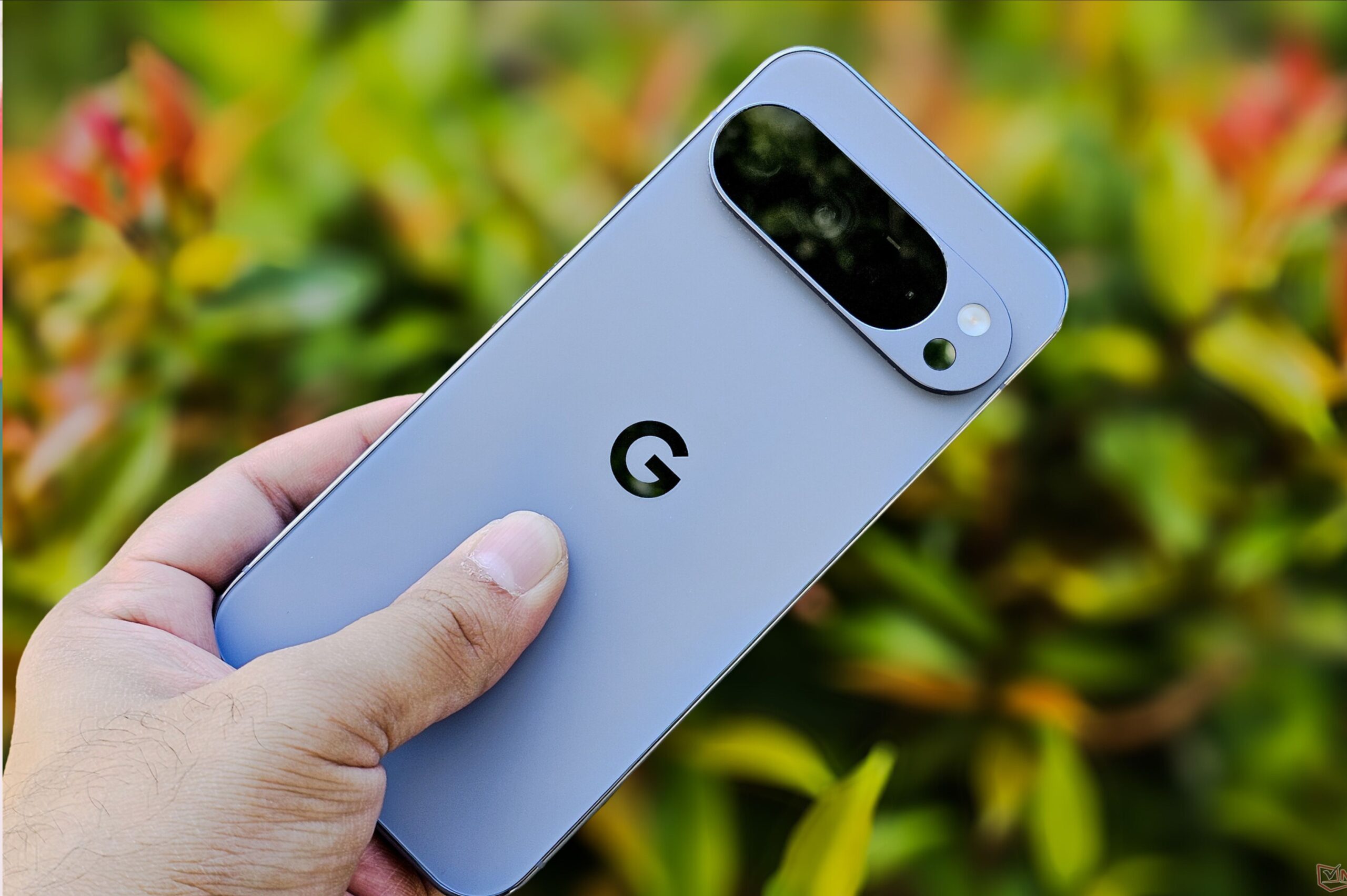
Google Rushes Out Emergency Update for Millions of Pixel Phones
Google has rushed out an urgent software update for more than a million Pixel smartphones, triggering widespread attention among users and security experts alike. The unexpected patch, which began rolling out rapidly across supported Pixel models, signals a rare emergency response from Google outside its normal monthly update cycle, highlighting the seriousness of the issue it aims to fix. The update affects several recent Pixel devices and was delivered quietly, without a detailed public changelog at first. Many users noticed the patch only after receiving a sudden system notification, prompting speculation across tech forums and social media. Cybersecurity analysts say the speed of the rollout suggests the update addresses a high-risk vulnerability that could potentially allow attackers to compromise devices remotely if left unpatched. This emergency release comes on the heels of Google’s already extensive December Android security update, which tackled dozens of vulnerabilities across the platform. The surprise nature of the new patch indicates that additional flaws were either discovered late or escalated in severity, forcing Google to act fast. While Google has not publicly confirmed whether the issue was actively exploited, experts stress that such rapid responses are usually reserved for threats considered critical. Pixel users had already been reporting a mix of software stability problems in recent weeks, including camera glitches, app crashes, and inconsistent performance following beta updates. While it remains unclear whether those bugs are directly connected to the emergency patch, many users say their devices feel more stable after installing the update. Online discussion boards are now filled with advice urging Pixel owners not to delay installation. Security professionals are once again reminding smartphone users that software updates are not just about new features, but about protecting sensitive data. Phones today store everything from banking credentials to personal conversations, making them attractive targets for hackers. Delaying updates, even briefly, can expose users to risks that evolve faster than most people realize. Google’s handling of this situation also reflects a broader trend in the tech industry, where companies are increasingly forced to respond in real time to emerging threats rather than relying solely on scheduled updates. As mobile operating systems grow more complex, surprise patches may become more common — especially when user safety is on the line. For Pixel owners, the message is simple: install the update as soon as it appears. While emergency patches can be inconvenient, they are often the strongest line of defense against unseen digital threats.
Thousands of Flights Cancelled as Powerful Winter Storm Hits America
A powerful post-Christmas winter storm system has disrupted travel across large parts of the United States, grounding flights, snarling highways, and prompting weather warnings as millions of Americans attempted to return home after the holidays. The storm, fueled by a rapidly intensifying weather pattern often described as a “bomb cyclone,” brought a dangerous mix of heavy snow, ice, strong winds, and plunging temperatures, particularly across the Midwest, Great Lakes, Northeast, and parts of the East Coast. Air travel has been among the hardest hit. More than 1,500 flights were cancelled in a single day, with thousands more delayed as major airports struggled with snow-covered runways, poor visibility, and staffing disruptions. Airlines warned passengers to expect ongoing delays as crews worked to reposition aircraft and manage the ripple effects of earlier cancellations. Social media was flooded with frustrated travelers sharing images of packed terminals, long security lines, and overnight airport stays, while others posted videos of snow-lashed planes and whiteout conditions. On the ground, travel conditions were equally treacherous. Several states issued advisories urging drivers to stay off roads unless absolutely necessary. Parts of the Great Lakes region and Northeast experienced heavy snowfall totals, while areas farther south faced freezing rain and ice accumulation that made roads slick and power outages more likely. Emergency responders reported an uptick in weather-related accidents, and officials warned that icy bridges and sudden drops in visibility posed serious risks. Meteorologists explained that the storm’s intensity was driven by a sharp clash between Arctic air and warmer Atlantic moisture, causing the system to strengthen rapidly. Forecasters cautioned that even as the main storm moves eastward, lingering lake-effect snow and strong winds could continue to affect travel into the coming days. Some coastal areas also faced flooding concerns as storm surge and heavy rain combined with high tides. The timing of the storm amplified its impact. Post-holiday travel typically sees one of the busiest periods of the year, and many families found themselves forced to delay returns to work or school. Airlines encouraged passengers to rebook early, while authorities urged people to monitor forecasts closely and prepare for rapidly changing conditions. Despite the disruptions, weather agencies stressed that preparation remains key. Keeping emergency kits in vehicles, allowing extra travel time, and heeding local advisories can significantly reduce risk. As winter settles in, officials warned that this storm may be a sign of a volatile season ahead, with more extreme weather events likely in the weeks to come.
