

Airline safety watchdog AirlineRatings.com has released its Top 25 Safest Full-Service Airlines and Top 25 Safest Low-Cost Airlines for 2026, selecting the rankings from a pool of 320 global carriers it continuously monitors. Announcing the latest list, AirlineRatings.com chief executive Sharon Petersen said travellers should be cautious about interpreting airline safety rankings too rigidly, noting that the difference between the world’s safest airlines has become extremely small. She explained that the gap separating the top performers is narrower than ever before. Less than four points separate airlines ranked first through 14 in the full-service category, while the top six are divided by just 1.3 points. According to Petersen, this level of parity means traditional league-table rankings can sometimes distort reality. She said grouping airlines into performance tiers may now offer a clearer picture of safety standards, stressing that every airline in the Top 25 represents the highest level of global aviation safety. Claims that one airline is significantly safer—or more dangerous—than another, she added, are both misleading and sensationalist. How the rankings were determined Petersen said the core assessment framework remains largely unchanged from previous years. The methodology evaluates incident rates relative to total flights, fleet age, history of serious incidents, pilot training standards, and compliance with international safety audits. However, one major adjustment was made for 2026: greater weight has been given to turbulence management. Turbulence remains the leading cause of in-flight injuries worldwide, prompting AirlineRatings.com to place added emphasis on whether airlines participate in the IATA Turbulence Aware programme or similar systems, as well as the results of independent onboard safety audits. She also highlighted transparency as a critical factor, saying airlines that openly share safety data and operational practices score more strongly in the assessment. Top 25 Safest Full-Service Airlines for 2026 EtihadCathay PacificQantasQatar AirwaysEmiratesAir New ZealandSingapore AirlinesEVA AirVirgin AustraliaKorean AirSTARLUXTurkish AirlinesVirgin AtlanticANAAlaska AirlinesTAP Air PortugalSASBritish AirwaysVietnam AirlinesIberiaLufthansaAir CanadaDelta Air LinesAmerican AirlinesFiji Airways Key changes in the full-service rankings Petersen noted that 2026 marks the first time a Gulf carrier has secured the top position, with Etihad taking the number-one spot. She said Etihad’s rise was driven by a combination of factors, including a young fleet, advancements in cockpit safety—particularly around turbulence mitigation—a crash-free operational history, and the lowest incident rate per flight among all ranked airlines. The carrier also participated in an independent onboard safety audit and demonstrated strong cabin-level turbulence management. Two airlines—STARLUX and Fiji Airways—appear on the list for the first time. Petersen said STARLUX’s inclusion is particularly notable given its relative youth, adding that its safety culture, transparency, and reputation among established global airlines set it apart. Singapore Airlines also returned to the list after being excluded in 2025 following a serious turbulence-related incident. After on-site visits to the airline’s safety and training facilities and extensive discussions with its operations team, AirlineRatings.com said it was satisfied with the carrier’s corrective actions and reinstated it for 2026. Top 25 Safest Low-Cost Airlines for 2026 HK ExpressJetstar AirwaysScootflydubai (now classified as full-service for future rankings)EasyJet GroupSouthwestairBalticVietJet AirWizz Air GroupAirAsia GroupTUI UKVuelingNorwegianJetBlueFlyNASCebu PacificJet2Ryanair (Ireland and UK)Spring Airlines ChinaTransavia GroupEurowings GroupVolarisWestJet GroupGOLSKY Airline Chile Notable developments in the low-cost category Discussing the low-cost rankings, Petersen highlighted several significant shifts. Spring Airlines China became the first Chinese airline ever to appear in an AirlineRatings.com safety ranking, while airBaltic made a substantial jump into the top 10. HK Express retained the top position for a second time, a result Petersen attributed to its modern fleet, exceptionally low incident rate, and an almost flawless onboard safety audit. She added that Hong Kong’s strict incident-reporting requirements make the airline’s safety record particularly meaningful. What the rankings really show Petersen emphasized that every airline on the 2026 list recorded some form of incident in the past two years, ranging from tail strikes to engine shutdowns and onboard fires. However, she noted that incident rates per flight remain remarkably low—between 0.002 and 0.09—underscoring the overall strength of modern aviation safety. She concluded that in today’s aviation environment, where serious accidents are increasingly rare, safety is no longer defined by isolated events but by consistency, safety culture, adaptability, and effective risk management across millions of flights.
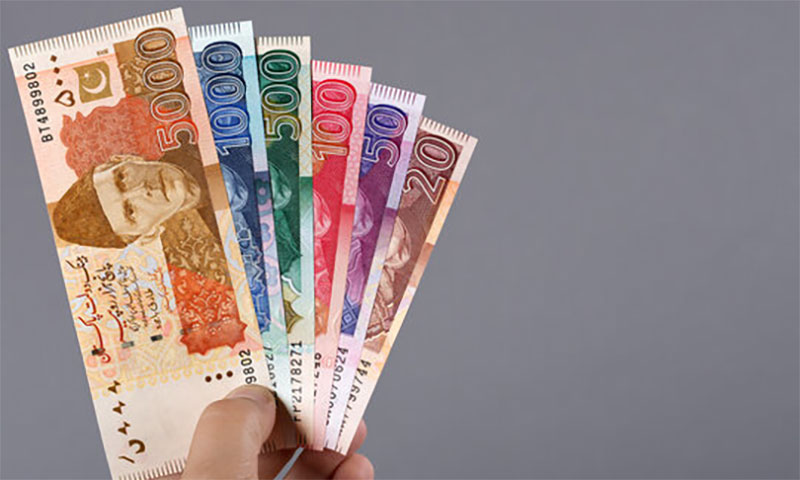
New Look for Pakistan’s Currency: What’s Changing in Rs100 to Rs5,000 Notes? – Copy
The federal government has initiated a major overhaul of Pakistan’s paper currency, formally approving the redesign of several high-value banknotes as part of a broader effort to modernize the country’s monetary system. The decision was finalized during a federal cabinet meeting held in Islamabad, presided over by Prime Minister Shehbaz Sharif, where the finance ministry presented a detailed briefing on the scope and objectives of the proposed changes. According to officials familiar with the discussions, the State Bank of Pakistan has already begun work on the new banknote designs, aligning them with contemporary global standards. International specialists have also been brought on board to ensure the notes incorporate advanced security and design features used by leading economies. The redesigned series will cover Rs100, Rs500, Rs1,000, and Rs5,000 denominations, representing the most significant visual update to Pakistan’s currency in years. The emphasis, officials said, is not just aesthetic but also functional. Enhanced security elements, including modern security threads and upgraded anti-counterfeiting features, will be embedded into the new notes. These measures are intended to curb the circulation of fake currency and reinforce public trust in Pakistan’s financial system. Beyond security, the new designs aim to project a stronger national identity. The cabinet was informed that the banknotes will highlight Pakistan’s geographical and regional diversity, alongside notable historical and cultural landmarks from across the country. The proposed designs will also carry symbolic messaging. Social themes such as women’s contribution to national progress and the growing impact of climate change are expected to be reflected, signaling a shift toward more inclusive and forward-looking currency imagery. Before the redesigned notes are issued to the public, the federal cabinet has set up a dedicated committee to review the proposals in detail and oversee the final stages of the process.

Immigrant Visas on Hold: What the US Visa Pause Means for Pakistan and Other Countries
The United States has temporarily halted the issuance of immigrant visas for citizens of 75 countries, including Pakistan, as part of a sweeping review of immigration policy ordered by President Donald Trump. The suspension took effect on January 21, according to the United States Department of State. In a statement released on Thursday, the State Department said the move is linked to an ongoing assessment of whether immigration pathways are aligned with the administration’s emphasis on economic self-reliance. Officials said the review aims to ensure that new permanent residents do not become dependent on public assistance programs in the United States. As part of the policy, immigrant visa processing for applicants from countries identified as “high-risk” has been paused. While applicants may continue to file paperwork and appear for scheduled interviews, no immigrant visas — which grant permanent residency — will be issued until the review is completed. The State Department said the pause will remain in place until authorities are satisfied that immigration screening mechanisms adequately prevent what it described as excessive reliance on welfare benefits by incoming migrants. No specific timeline was provided for when visa issuance may resume. Among the affected countries are Pakistan, Afghanistan, Bangladesh, Iran, Iraq, Egypt, Nigeria, Somalia, Russia, Brazil, and Thailand, along with dozens of others spanning Asia, Africa, the Middle East, Europe, and Latin America. Officials clarified that the suspension does not apply to tourist, student, or other non-immigrant visas. Previously approved immigrant visas will also remain valid, and dual nationals applying with passports from countries not included in the list are exempt from the freeze. The move reflects a broader tightening of US immigration policy under Trump’s second term. Since returning to office, the administration has reinstated and expanded enforcement of the “public charge” rule, a provision of US immigration law that allows officials to deny entry to individuals deemed likely to depend on government benefits. Trump pursued similar measures during his first presidency, including travel restrictions on several Muslim-majority countries — policies that faced extensive legal challenges before being upheld in revised form and later overturned by former president Joe Biden. The visa pause comes as immigration enforcement within the United States has also intensified. The agency Immigration and Customs Enforcement has expanded operations across multiple states, drawing public and political scrutiny. Tensions escalated last week after a US citizen, Renee Good, was fatally shot during a federal operation in Minneapolis, triggering protests and renewed debate over enforcement practices under the current administration.
New Look for Pakistan’s Currency: What’s Changing in Rs100 to Rs5,000 Notes?
The federal government has initiated a major overhaul of Pakistan’s paper currency, formally approving the redesign of several high-value banknotes as part of a broader effort to modernize the country’s monetary system. The decision was finalized during a federal cabinet meeting held in Islamabad, presided over by Prime Minister Shehbaz Sharif, where the finance ministry presented a detailed briefing on the scope and objectives of the proposed changes. According to officials familiar with the discussions, the State Bank of Pakistan has already begun work on the new banknote designs, aligning them with contemporary global standards. International specialists have also been brought on board to ensure the notes incorporate advanced security and design features used by leading economies. The redesigned series will cover Rs100, Rs500, Rs1,000, and Rs5,000 denominations, representing the most significant visual update to Pakistan’s currency in years. The emphasis, officials said, is not just aesthetic but also functional. Enhanced security elements, including modern security threads and upgraded anti-counterfeiting features, will be embedded into the new notes. These measures are intended to curb the circulation of fake currency and reinforce public trust in Pakistan’s financial system. Beyond security, the new designs aim to project a stronger national identity. The cabinet was informed that the banknotes will highlight Pakistan’s geographical and regional diversity, alongside notable historical and cultural landmarks from across the country. The proposed designs will also carry symbolic messaging. Social themes such as women’s contribution to national progress and the growing impact of climate change are expected to be reflected, signaling a shift toward more inclusive and forward-looking currency imagery. Before the redesigned notes are issued to the public, the federal cabinet has set up a dedicated committee to review the proposals in detail and oversee the final stages of the process.
