


Strength training is having a moment, but the most useful plan for beginners is also the simplest: two days a week, repeated long enough to become routine. Major guidelines agree that adults should do muscle-strengthening activities at least two days per week, alongside weekly aerobic movement. The health case is strong. A 2022 systematic review and meta-analysis linked resistance training to a lower risk of all-cause mortality, with the biggest benefit seen at roughly about 60 minutes per week. A 2024 American Heart Association scientific statement also notes that adults who report doing resistance training show around 15% lower risk of all-cause mortality compared with those who report none. For beginners, frequency matters because it drives consistency. As Harvard Health reports, “Two days a week of full-body training can produce measurable changes in muscle strength,” says Katie Granito. That’s the core logic behind a two-day split that actually sticks: you train the whole body twice, keep sessions short, and leave recovery space. The 2-day beginner split (A/B), 35–55 minutes each Day A (Squat + Push focus) Squat or goblet squat Dumbbell or machine chest press (or push-ups) Row (cable/band/dumbbell) Hip hinge (Romanian deadlift or hip hinge drill) Plank or dead bug Optional: farmer carry or light cardio finisher Day B (Hinge + Pull focus) Deadlift pattern (trap bar, kettlebell, or hip hinge) Lat pulldown or assisted pull-up Overhead press (dumbbells or machine) Split squat or step-ups Glute bridge/hip thrust Side plank or Pallof press Aim for 1–3 sets of 8–12 reps per move. Use a load that feels challenging near the end while form stays clean. The Mayo Clinic advises a level heavy enough to fatigue muscles after about 12–15 reps for a set. Rest a day between sessions, and add weight gradually as reps become easier. ACSM guidance also supports 2–3 days per week for novice lifters. If you want the plan to last, keep the first month “easy enough to repeat.” Two days is not minimal. It’s strategic.
PSL 11 May Feature Player Auction — What Fans Need to Know
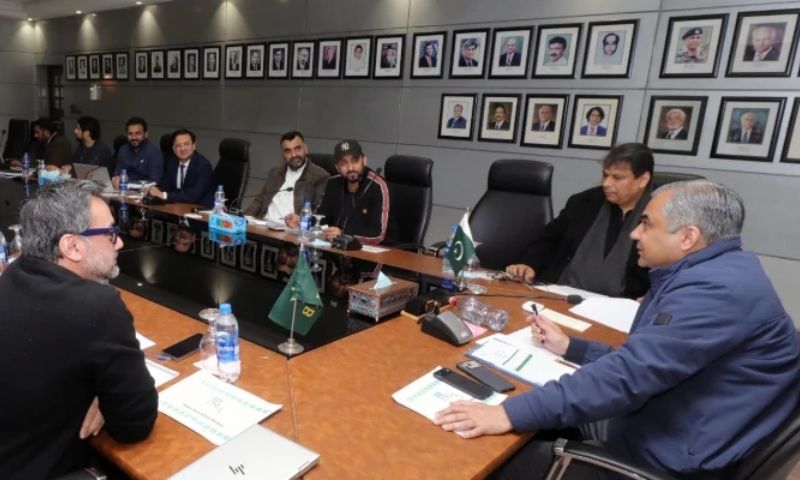
Pakistan Super League (PSL) 11 is shaping up to be one of the most transformative seasons in the league’s history. On January 16, 2026, Pakistan Cricket Board (PCB) Chairman Mohsin Naqvi proposed a players’ auction system for PSL 11, signalling a potential shift from the traditional draft model used in previous seasons. Naqvi floated the idea during a PSL Governing Council meeting at the National Cricket Academy (NCA) in Lahore. The proposal aims to add excitement and fairness to player selection. If adopted, franchises could bid on top cricketers much like they do for team franchises. Under Naqvi’s proposal, the auction would allow franchises more freedom in choosing players. Sources from the PCB meeting said he also urged franchise owners to increase player remuneration, arguing that rising team valuations should be matched by higher pay for talent. The discussion is part of wider preparations for PSL 11, which will be held from March 26 to May 3, 2026, with the league expanding from six to eight teams. The latest deadline confirms the size and scale of the new season as franchises prepare both on and off the field. This season’s expansion reflects PSL’s growing commercial strength. At the auction held on January 8, 2026, two new franchises — Hyderabad and Sialkot — were sold in Islamabad for a combined Rs3.6 billion. The Hyderabad franchise was bought by FKS Group for Rs1.75 billion, while OZ Developers secured the Sialkot team for Rs1.85 billion, making it the most expensive franchise in PSL history. Even as Naqvi’s proposal gains attention, discussions continue on how best to implement the change. A hybrid recruitment system — described as a “drauction” combining draft and auction elements — is under consideration to balance tradition with innovation. PSL CEO Salman Naseer has also weighed in publicly, hinting that direct player signings, purse increases, and auction possibilities are all being reviewed. He noted that “local players are the ones who create real value for the PSL, so they should be remunerated accordingly.” However, franchises remain divided. Some favour retention of the draft for competitive balance, while others believe auctions could unlock greater commercial potential and help new teams compete on equal talent footing. As PSL 11 draws nearer, the PCB’s auction proposal could redefine how teams build squads and how players are valued. Cricket fans worldwide are watching closely as Pakistan’s marquee T20 league enters a bold new chapter.
PIA’s New Cargo Deal with Garuda Indonesia: A Game-Changer for Pakistani Exports
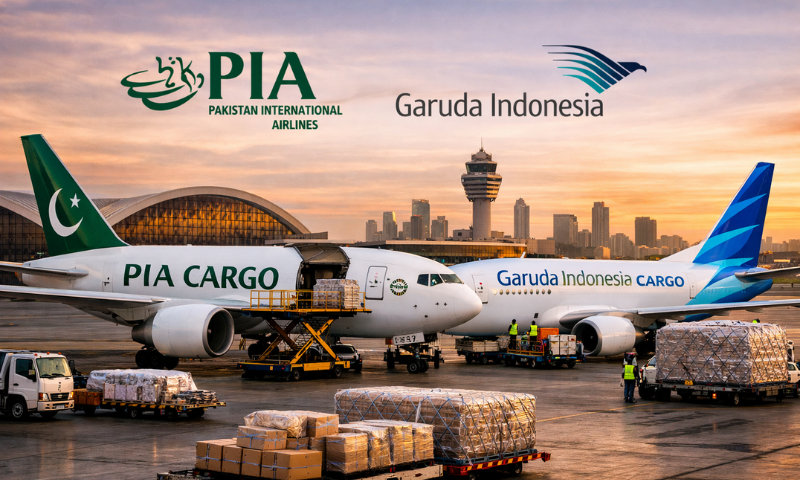
Pakistan International Airlines (PIA) has taken a bold step to strengthen Pakistan’s air cargo network. On January 16, 2026, PIA signed a Cargo Special Pro-Rate Agreement with Garuda Indonesia, the national carrier of Indonesia, aimed at enhancing export access to key global markets. Under the new arrangement, Pakistani export cargo will travel through major air hubs such as Jeddah and Kuala Lumpur before reaching Jakarta and other international destinations. From there, goods can be forwarded to major commercial centres across the Asia-Pacific, including Sydney, Melbourne, Singapore, Hong Kong and Bangkok. The agreement is effective from January 2026 through July 2027, providing a stable window for exporters to plan shipment schedules and access competitive freight services. It also promises predictable cargo rates and uninterrupted air freight links to markets that have been challenging for Pakistani exporters due to logistical bottlenecks. A PIA spokesperson said the deal is part of the national carrier’s broader strategy to expand Pakistan’s export footprint and support the country’s economic growth. They noted that streamlining air cargo access makes Pakistani products more attractive to buyers in distant markets. Garuda Indonesia, a major member of the SkyTeam airline alliance with connections to more than 140 destinations worldwide, brings critical global reach to the partnership. This cooperation with PIA adds to both airlines’ expanding networks and reinforces Southeast Asia’s role as a central export corridor. Industry analysts highlight that air freight plays a vital role for exporters who rely on speed and reliability, especially for perishable and time-sensitive goods. By tapping into Garuda’s established routes, Pakistani businesses may see lower logistical costs, fewer delays, and greater options for reaching buyers. This cargo deal comes at a time when Pakistan is working to revitalize export-led growth in multiple sectors. Experts say improved air connectivity can help manufacturers and exporters compete more effectively in global markets. They also note that such agreements can bring wider economic benefits, from job creation in logistics and freight forwarding to increased foreign exchange earnings through enhanced trade volumes. In recent years, PIA has pursued similar partnerships with international airlines to broaden its cargo network, including agreements with Air China, Saudia, Turkish Airlines and others. If implemented well, this Garuda partnership could mark a turning point for Pakistan’s export strategy by linking local producers to thriving markets across the Asia-Pacific with greater ease than ever before.
U19 World Cup Toss Snub: India and Bangladesh Skippers Skip Handshake
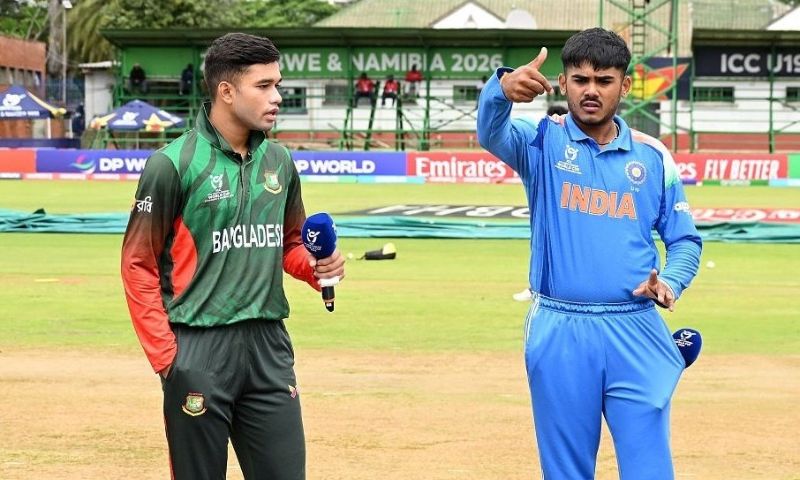
A moment meant to be routine at the ICC U19 World Cup 2026 drew attention for all the wrong reasons. During the Group A match between India and Bangladesh on January 17, 2026, India captain Ayush Mhatre and Bangladesh vice-captain Zawad Abrar did not exchange a handshake at the coin toss. Abrar was standing in for Bangladesh skipper Md Azizul Hakim Tamim, who was absent due to illness. The skipped handshake broke with cricket tradition and immediately sparked debate online. Handshakes at the toss are typically a sign of goodwill before a contest. But in this case, neither Mhatre nor Abrar reached out to each other, and the images quickly circulated on social media, highlighting a rare breach of etiquette in junior international cricket. The incident did not occur in isolation. Relations between the Board of Control for Cricket in India (BCCI) and the Bangladesh Cricket Board (BCB) have recently been under strain. The tension stems from off-field issues, including developments around the Indian Premier League (IPL) 2026 and Bangladesh’s qualifying status for the upcoming Men’s T20 World Cup later this year. Earlier this month, the Kolkata Knight Riders released Bangladesh fast bowler Mustafizur Rahman from their IPL 2026 squad after a BCCI directive. The decision followed growing calls in India to remove the pacer amid reports of attacks on minority communities in Bangladesh. This led to sharp criticism within Bangladesh’s cricketing circles. In response, the BCB wrote to the International Cricket Council (ICC) urging it to consider shifting Bangladesh’s T20 World Cup matches from India to Sri Lanka, citing security concerns. Meanwhile, the Bangladesh government has suspended the broadcast of the IPL within the country. With less than three weeks to go before the T20 World Cup begins, the uncertainty around Bangladesh’s participation remains. The team is scheduled to play its group stage fixtures in Kolkata and Mumbai should they compete. Skips or snubs in cricket aren’t new. Similar moments in recent years, like the Asia Cup 2025 handshake controversies, show how political tensions sometimes creep into sport (though fact checks later clarified some reports were false). Still, when captains don’t shake hands, fans and pundits react. Many argue that gestures like handshakes offer a simple reminder that, regardless of rivalry or geopolitics, cricket remains a sport played in mutual respect.
Prince William’s Bold Plan for Change Wins Hearts Across the UK
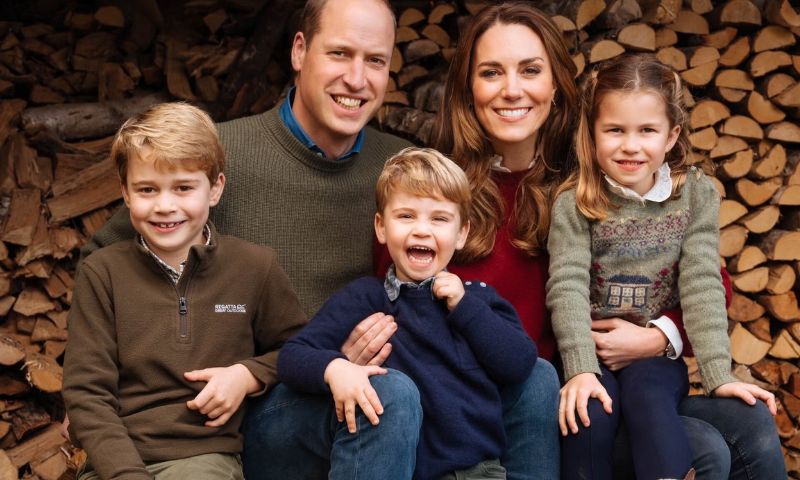
Prince William, the Prince of Wales, has captured the hearts of Britons with a bold vision for the future of the British monarchy. A fresh YouGov poll shows that his push for change has helped him become the most popular royal in the United Kingdom. Roughly 74–77% of Britons view William and his wife, Princess Catherine, positively, eclipsing all other senior royals in public favour. The future king’s popularity stems from his promise to modernize the monarchy. “Change is on my agenda,” William told Canadian actor Eugene Levy in a recent TV interview. He said he wants to “create a world in which my son is proud of what we do… a world and a job that actually does impact people’s lives for the better.” William’s message differs from the royal tradition of cautious stability. Experts note his willingness to rethink how the monarchy operates in the 21st century. He has signalled intentions to reduce outdated restrictions on land ownership and review land rental charges for charities and grassroots organisations. These practical changes aim to make the institution more relevant and financially efficient as Britain faces slow economic growth. Part of William’s evolving strategy includes refocusing royal priorities. He plans to streamline the number of working royals and examine royal expenses to promote transparency, a move that could reshape how the monarchy spends taxpayer funds. But experts warn that drastic cuts to public appearances by royal family members could weaken the monarchy’s connection with the public. Beyond structural reform, William’s personal commitments have strengthened his appeal. The Prince launched Homewards, a long-term plan to tackle homelessness across the UK through permanent and affordable housing initiatives. Such real-world engagement has helped him build a reputation as a future king who cares about everyday challenges. His candid voice on personal and family challenges has also resonated. William shared that balancing royal duties with protecting his family amid health battles including his father King Charles III’s illness and his wife’s recovery was deeply personal and sometimes overwhelming. Analysts say William’s blend of modern outlook and traditional duty explains his widespread support. His approachable public image, coupled with a clear plan for change, gives many Brits confidence that the monarchy can evolve without losing its core identity.
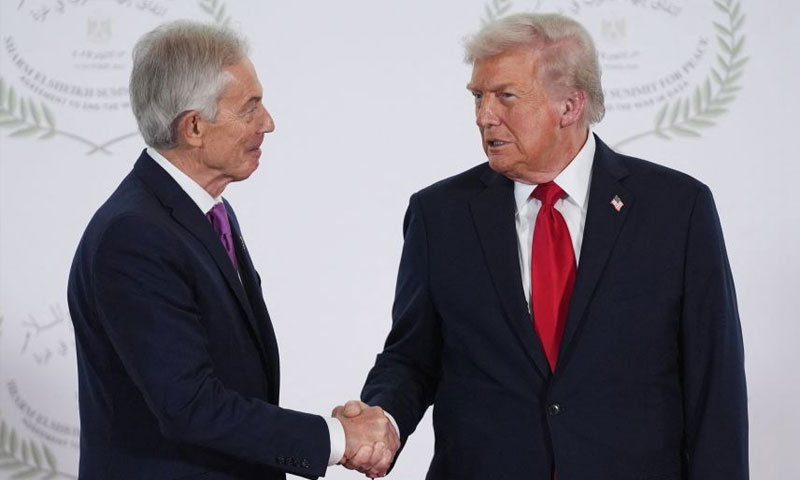
Gaza After the War: Trump Assembles US-Led Board, Appoints Blair and Military Chief
US President Donald Trump has appointed former British prime minister Tony Blair to a prominent role in a new US-backed plan for post-war Gaza, while naming a senior American military officer to lead a proposed international security force in the devastated Palestinian territory. The White House said on Friday that Trump had finalized the membership of a newly created “Board of Peace,” a body dominated by Americans that will oversee Gaza’s reconstruction, governance planning, and economic revival following more than two years of intense Israeli bombardment. Trump, who has declared himself chair of the board, said its mandate will include governance capacity-building, regional diplomacy, reconstruction planning, investment attraction, and large-scale capital mobilisation for Gaza. Alongside Blair, the board includes Trump’s son-in-law Jared Kushner, US Secretary of State Marco Rubio, and Trump’s longtime associate and special envoy Steve Witkoff. Other members named to the board are Ajay Banga, billionaire financier Marc Rowan, and Robert Gabriel, a close Trump aide serving on the National Security Council. Blair’s controversial return to Middle East diplomacy Blair’s appointment is likely to prove contentious across the Middle East, where he remains a divisive figure due to his role in the 2003 US-led invasion of Iraq. Trump acknowledged last year that Blair’s involvement would need to be “acceptable to everybody.” After leaving office in 2007, Blair spent several years working on Israeli-Palestinian diplomacy as a representative of the Middle East Quartet, which included the United Nations, the European Union, the United States, and Russia. Parallel Palestinian governance talks in Cairo The US announcement came as a Palestinian technocratic committee intended to help govern Gaza held its first meeting in Cairo. The gathering was attended by Kushner and international envoys, including Nickolay Mladenov, who has been appointed as a high representative to liaise between the Palestinian committee and Trump’s Board of Peace. Gaza native Ali Shaath, a former deputy minister in the Palestinian Authority, has been selected to head the governing committee. Members said they hope to travel to Gaza in the coming weeks to begin on-the-ground work, security permitting. Security force to replace Hamas policing Trump also named Jasper Jeffers, a US Major General from Central Command’s special operations forces, to lead a newly proposed International Stabilisation Force. The force is expected to provide security in Gaza and help train a new local police service intended to replace Hamas-run security structures. Jeffers previously oversaw monitoring of a ceasefire between Israel and Lebanon in late 2024, a role that involved managing periodic violations linked to Hezbollah activity. US officials said Washington is seeking international partners to contribute troops, with Indonesia emerging as an early volunteer. However, diplomats cautioned that persuading countries to deploy forces may prove difficult unless Hamas agrees to fully disarm. Ceasefire strains and Israeli strikes The announcement came as Israel’s military confirmed fresh strikes on Gaza on Friday, citing what it described as a “blatant violation” of the ceasefire declared in October. The strikes occurred despite US statements that the Gaza plan had moved into a second phase, shifting focus from halting hostilities to disarming Hamas. Advisory board and regional tensions Trump also announced a secondary executive advisory board, which will include Blair, Witkoff, Mladenov, and Hakan Fidan. Israel has rejected any Turkish role in the security force, citing President Recep Tayyip Erdogan’s sharp criticism of Israel’s actions in Gaza. Senior representatives from Egypt, Qatar, and the United Arab Emirates—all key regional mediators—will also sit on the advisory body. The UAE normalised relations with Israel in 2020 under the US-brokered Abraham Accords. Despite strained relations with the United Nations, Trump also named Sigrid Kaag, the UN’s humanitarian coordinator for Gaza, to the board.

From Safe Haven to Strategic Asset: Gold’s Outlook for 2026 Explained
Gold prices have entered 2026 at record levels, reinforcing the metal’s role as a global safe haven amid persistent geopolitical uncertainty, shifting monetary policy expectations, and strong institutional demand. Market analysts and major financial institutions broadly agree that gold still has room to rise this year, though they caution that volatility is likely to remain a defining feature of the market. Spot gold climbed above $4,600 per ounce in January, extending a powerful rally from 2025. The surge has pushed several leading banks to revise their forecasts, with some now projecting that gold could approach — or even breach — the $5,000 per ounce mark before the end of 2026. Where gold prices could head Among the most optimistic forecasts, J.P. Morgan expects gold prices to average around $5,055 per ounce by the fourth quarter of 2026, citing sustained investor demand and supportive macroeconomic conditions. HSBC has also stated that gold could reach $5,000 per ounce in the first half of 2026, though it warns that price swings may be sharp and frequent, with a wide trading range likely throughout the year. Meanwhile, Morgan Stanley projects gold prices to rise toward $4,800 per ounce by late 2026, supported by easing global monetary conditions and continued buying from central banks. While forecast levels vary, the overall consensus suggests that prices are likely to remain elevated through most of the year, with further upside possible if current trends persist. Key drivers behind the rally Analysts point to several interconnected factors driving gold’s strength: First, geopolitical and political uncertainty continues to boost safe-haven demand. Ongoing conflicts, fragile regional stability, and election-related risks in major economies have encouraged investors to seek protection in gold. Second, interest rate expectations remain a crucial driver. Anticipation that major central banks — particularly the U.S. Federal Reserve — may cut interest rates later in the year has lowered the opportunity cost of holding non-yielding assets like gold, making the metal more attractive. Third, central bank demand has provided a strong structural support. Many central banks, especially in emerging markets, have continued to add gold to their reserves as part of long-term diversification strategies, reinforcing demand even at high price levels. Finally, investment flows, including inflows into gold-backed exchange-traded funds (ETFs), have added momentum to the rally. Institutional investors have increasingly treated gold as a strategic hedge rather than a short-term trade. How long can the rally last? Based on current forecasts, analysts believe gold could continue to show strength through most of 2026, with key price milestones potentially reached in the first or second half of the year. However, few expect a straight upward move. Several institutions caution that price corrections are possible, particularly if geopolitical tensions ease, inflation proves more persistent than expected, or central banks delay or scale back rate cuts. A stronger U.S. dollar could also weigh on prices by making gold more expensive for non-U.S. buyers. Despite these risks, gold’s overall outlook for 2026 remains constructive. With prices already at historic highs and multiple global banks projecting further gains, gold is likely to retain its appeal as a hedge against uncertainty and financial market stress. While the pace of gains may slow and volatility may increase, analysts broadly agree that gold is expected to remain well supported throughout 2026, with the possibility of new record levels if global economic and political risks intensify.
