


The International Cricket Council has officially confirmed that Scotland will replace Bangladesh at the ICC Men’s T20 World Cup 2026, after the Bangladesh Cricket Board declined to participate under the tournament’s published match schedule. The decision was formally announced on Saturday, ending weeks of uncertainty surrounding Bangladesh’s participation. The ICC said Bangladesh would no longer compete in the tournament after the BCB refused to send its team to India, citing security concerns, despite repeated assurances from the governing body. Scotland have been drafted into Group C, where they will join England, Italy, Nepal and the West Indies. The tournament is scheduled to begin on February 7. In its official statement, the ICC said it had rejected the BCB’s request to relocate Bangladesh’s matches from India to Sri Lanka — a co-host of the tournament — after determining that there was no credible or verifiable security threat to the Bangladesh team. The ICC said the decision followed an extensive engagement process lasting more than three weeks, during which it held multiple rounds of discussions with the BCB through video conferences and in-person meetings. “As part of this process, the ICC reviewed the concerns raised by the BCB, commissioned and considered independent security assessments from internal and external experts, and shared detailed security and operational plans,” the statement said. According to the ICC, these plans covered federal and state-level security arrangements, as well as enhanced and escalating protocols for teams, officials and supporters. The assurances were reiterated at several stages, including discussions involving the ICC Business Corporation Board. “The ICC’s assessments concluded that there was no credible or verifiable security threat to the Bangladesh national team, officials or supporters in India,” the statement added. Given these findings and the proximity of the tournament, the ICC said it was not feasible to amend the event schedule. The board also cited broader implications for governance and consistency in global events. Following an ICC board meeting on Wednesday, the BCB was given a 24-hour deadline to confirm whether Bangladesh would travel to India as scheduled. When no confirmation was received within that timeframe, the ICC proceeded with its established governance and qualification procedures to identify a replacement team. Scotland were selected as they are the next-highest ranked T20I side to narrowly miss out on direct qualification. They are currently ranked 14th in the ICC T20I rankings, ahead of teams such as Namibia, the United Arab Emirates, Nepal, the United States, Canada, Oman and Italy. With this decision, Bangladesh will miss the ICC Men’s T20 World Cup 2026, while Scotland earn a late entry into the tournament through ICC’s official replacement process.
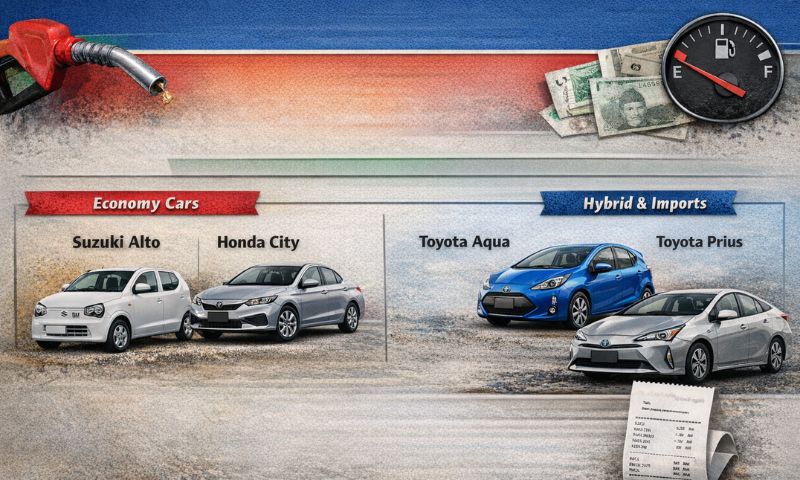
Want Lower Fuel Bills? These Cars Deliver the Best Average on Pakistani Roads
Pakistanis are feeling the impact of expensive fuel every time they refill. In the latest official rate cycle, petrol (Premier Euro 5) was listed at Rs 253.17 per litre (effective January 16, 2026), keeping pump prices elevated for daily commuters. That matters because even small mileage gaps add up fast. At Rs 253.17/litre, a driver covering 1,000 km a month would spend about Rs 21,097 in a 12 km/l car. A 24 km/l car brings that down to about Rs 10,549. That is a saving of roughly Rs 10,500 per month, before you even count traffic delays and idling. Fuel efficiency also connects to the bigger economic picture. State Bank–reported import data shows Pakistan’s petroleum group import bill was about $1.18 billion in December 2025. And Pakistan’s wider dependence on imported oil remains a key pressure point. A Reuters report, citing trade and shipping data, noted Pakistan imported 137,000 barrels per day of crude in 2024, with oil imports around $5.1 billion that year. Which cars deliver strong mileage in Pakistan right now? Mileage varies by traffic, tyres, maintenance, and driving style. Still, Pakistan’s most-searched models cluster into two groups: 1) Local small cars (lower purchase price, decent efficiency) Suzuki Alto: about 16–18 km/l (city) and 20–22 km/l (highway). Honda City: about 12–14 km/l (city) and 16 km/l (highway). 2) Hybrids and efficient imports (higher entry cost, big mileage payoff) Toyota Aqua (hybrid): about 24–30 km/l (city) and 20–28 km/l (highway). Toyota Prius (hybrid): about 26–31 km/l (city) and 24–31 km/l (highway). Daihatsu Mira (varies by trim/condition): listed ranges are wide, at 18–33 km/l (city) and 23–35 km/l (highway), so buyers should verify real-world figures before deciding. A quick checklist before you buy “for mileage” Verify real-world averages with a full-tank method on your own route. Prioritize hybrids if your driving is mostly stop-and-go city traffic. Check tyre pressure, plugs, filters, and oil. These small fixes often lift average. Don’t shop on claims alone. Even popular models can underperform if neglected.
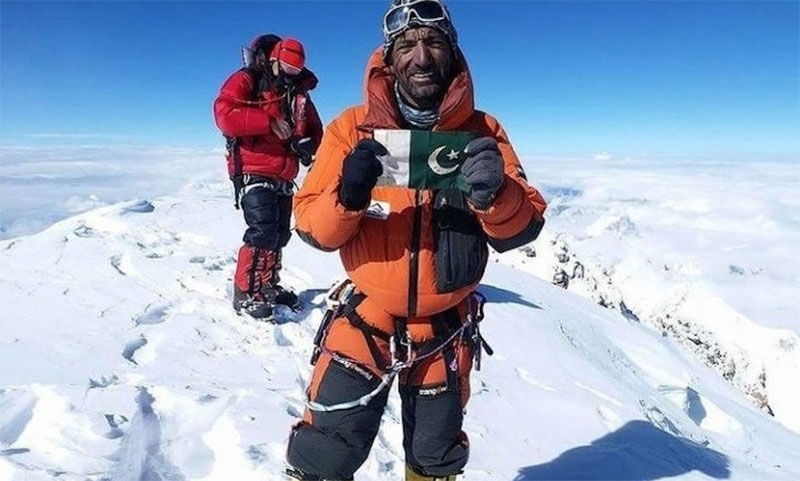
Ali Sadpara’s Last Climb: Winter K2 Tragedy Takes Centre Stage at Sundance
A haunting new documentary revisiting one of mountaineering’s most devastating tragedies — the fatal 2021 winter climb of K2 that claimed the lives of legendary climbers Muhammad Ali Sadpara and John Snorri — has captured international attention after premiering at the 2026 Sundance Film Festival in the United States. Directed by award-winning filmmaker Amir Bar-Lev, the film offers a stark and deeply personal account of one of the most dangerous seasons ever recorded on K2, the world’s second-highest mountain. The documentary explores the high-stakes race to conquer what mountaineers long considered the sport’s final unclaimed achievement — the first winter ascent of K2. The film centres on the expedition involving Snorri and the father-son duo of Ali Sadpara and Sajid Sadpara, who set out to summit K2 during winter, when extreme cold, violent winds, and technical challenges make survival uncertain. That season proved deadly, claiming multiple lives and exposing fractures within modern mountaineering culture. The Last First: Winter K2 chronicles the climbers’ final push toward the summit and the tragic events that followed, including the disappearance of Ali Sadpara and Snorri during their descent. Their deaths sent shockwaves through the global climbing community and reignited debate about risk, responsibility, and ethics in extreme alpinism. Beyond the tragedy itself, the documentary examines deeper issues shaping the sport today — including the pressures of commercial expeditions, the influence of social media and influencer culture, and long-standing inequalities between climbers from the Global South and those who have traditionally dominated mountaineering narratives. Sajid Sadpara, who survived the climb after being forced to turn back and later took part in search operations for his father, attended the film’s premiere in Park City, Utah. Addressing the audience, he shared emotional details about the expedition’s strategy and the moment his father and Snorri went missing during their descent. Festival organisers described the film as a powerful exploration of the immense dangers of winter climbing on K2 and a meditation on the evolving identity of high-altitude mountaineering. Bar-Lev, whose previous work includes The Tillman Story and Long Strange Trip, uses the tragedy as a lens to examine how extreme climbing has changed over time. In an interview with Deadline, he reflected on the historical context behind the expedition. “By January 2005, all the world’s tallest mountains — the 14 peaks above 8,000 metres — had been climbed in winter, all except one,” Bar-Lev said. “That mountain was K2, in Pakistan.” “Becoming the first to summit K2 in winter stood as mountaineering’s last great unachieved feat — ‘the last first,’” he added. The film also documents how the original expedition was unexpectedly joined by rival climbers, film crews, and commercial clients, transforming a singular quest into a crowded and high-pressure race — with fatal consequences.

Is Talking to Yourself Normal? A New Study Shows How Common It Really Is
You’re driving alone and narrating your next turn. You’re in the kitchen and telling yourself, “Don’t forget the salt.” Or you’re stressed and whispering, “You’ve got this.” If that sounds familiar, you’re in good company. Researchers describe self-talk as a common human behavior and in many cases, a useful one. A 2025 study in Scientific Reports tracked everyday self-talk in real time using a two-week “ecological momentary assessment.” Researchers collected 12,966 surveys from 208 participants and found people engaged in self-talk 61% of the time in the situations studied. Only 2 participants (about 1%) reported never using it. Psychologists define self-talk as an internal dialogue sometimes silent, sometimes spoken out loud. The American Psychological Association’s dictionary describes it as an “internal dialogue” in which a person directs phrases or sentences to themself. And research reviews link self-talk to higher mental functions like planning, problem-solving, attention, and motivation. Talking out loud can also sharpen focus. Cleveland Clinic notes: “Talking to yourself out loud is perfectly normal. In some cases such as when you’re trying to increase focus it may even be more beneficial.” One reason it works is that language can act like a steering wheel for the brain. You can give yourself instructions, calm nerves, or rehearse what you want to say. Researchers also study “distanced self-talk,” when you use your name or “you” instead of “I.” In the same 2025 Scientific Reports study, people used this distanced style 14.5% of the time in the situations tracked. Performance coaches often recommend it because it can create mental space under stress. The U.S. Human Performance Resource Center explains: shifting from “I” to your name or “you” “reduces chronic worry and improves emotional regulation.” Still, context matters. Talking to yourself in private rarely raises concern. But experts draw a line when self-talk links to hallucinations or a loss of reality testing. Cleveland Clinic warns: “If self-talk is being driven by hallucinations — meaning you think you’re talking to another source — it’s best to seek out mental health services.” For most people, self-talk isn’t a red flag. It’s a tool, one you can shape. Keep it kind. Keep it practical. And if it turns distressing or confusing, get support.

Budget Travel Is Exploding: How People Are Seeing the World for Less
Travel isn’t slowing down. Its shape is simply changing. Today’s travellers are increasingly focused on stretching their budgets without sacrificing experiences. Whether it’s off-peak departures, affordable destinations, or smarter planning, more people are travelling for less money than ever before. The global travel market continues growing strongly, even with economic pressure in many countries. Analysts forecast that the travel industry will expand by around $2.86 trillion through 2028, growing at an 11.1% compound annual rate between 2023 and 2028. That growth is being driven not only by traditional tourism demand but also by a surge in budget-friendly strategies. One major shift is how people pick when they travel. In 2026, travellers are increasingly choosing off-peak dates to avoid high costs, crowds, and inflationary pricing. Routes in the shoulder seasons such as autumn in Japan or spring in Morocco have become new budget favourites because fewer demand spikes mean lower prices for flights and stays. Many travellers now purposely avoid peak travel windows and enjoy more affordable experiences. Destinations themselves are changing in popularity too. A social media-driven trend known as “destination dupes” has seen travellers visiting affordable alternatives with similar appeal to expensive hotspots. For example, flights from the UK to Bosnia and Herzegovina rose 284%, to Montenegro 164%, and to Albania 61% in 2024 as travellers looked for cheaper yet visually rich experiences comparable to pricier Mediterranean resorts. This approach saves travellers hundreds or even thousands of dollars while offering unique travel experiences. Budget tools and booking habits are an essential part of the story. Advanced planning pays off: travellers who book transport for vacations 6–9 months ahead are 56% more likely to secure the cheapest options compared to last-minute bookers. This shows that price-savvy travellers are willing to research and plan early to reduce overall trip costs. Flexible planning also helps with flights. As airlines adjust pricing and demand changes, experts recommend using price alert tools and timing bookings wisely. In 2026, airfares were slightly lower in many markets, with data showing a 3.4% drop in average prices compared to 2025 — making flight deals easier to find for budget travellers. Travel behaviour data also suggests a broader mindset shift: travellers are now prioritising value for money. An industry survey noted that up to 84% of travel experts observe that “value for money” has become travellers’ top concern, often ranking higher than having luxury experiences or first-class perks. This has led people to seek local experiences, budget stays, and authentic cultural trips that cost less but feel richer. In short, budget travel is booming not just because people have to save money, but because they want smarter, more intentional travel. With tools, timing strategies, and flexible destinations, travelling on a budget is becoming mainstream and that trend looks set to grow in 2026 and beyond.
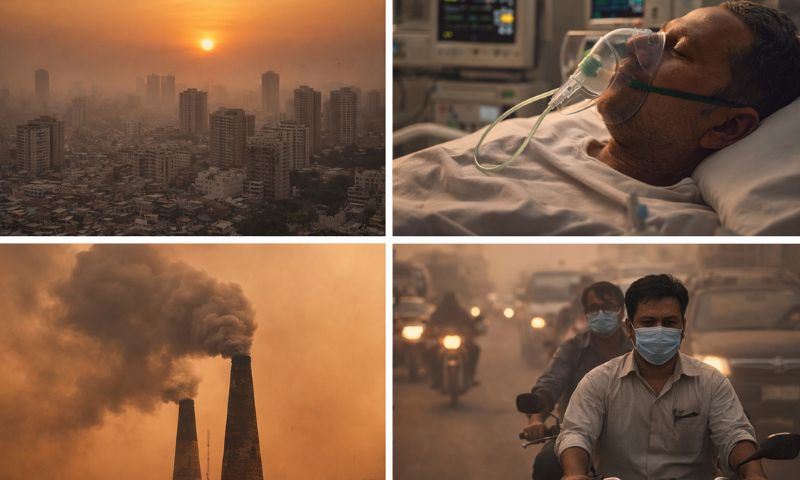
Smog Isn’t “Normal” Anymore: Why South Asia’s Air Is Turning Dangerous
Air pollution used to feel like a seasonal problem—winter smog, traffic fumes, a dusty week. Now it shapes daily life across many cities, especially in South Asia. What makes this crisis different is scale. WHO says 99% of people worldwide breathe air that exceeds its guideline limits. That’s not just a statistic. It explains why more people feel tired, cough more often, and struggle with headaches on “normal” days. It also explains why doctors keep warning that pollution doesn’t only hit the lungs. It affects the heart, brain, pregnancy outcomes, and long-term life expectancy. The numbers behind the fear The latest global health data shows how serious the risk has become. Air pollution caused 8.1 million deaths globally in 2021, making it the second leading risk factor for death, including for children under five. In 2021, more than 700,000 deaths in children under 5 were linked to air pollution—about 15% of all global deaths in that age group. WHO says the combined effects of outdoor and household air pollution link to 6.7 million premature deaths each year. WHO estimates outdoor air pollution caused 4.2 million premature deaths in 2019, and 89% of these deaths occurred in low- and middle-income countries. Even when people don’t “feel sick,” fine particles still harm the body. WHO explains that PM2.5 can penetrate deep into the lungs and enter the bloodstream, raising cardiovascular and respiratory risks. What’s actually in the air? Air pollution is not one thing. It’s a mix of gases and tiny particles. PM2.5 often causes the most damage because the particles are small enough to reach deep into the body. WHO’s 2021 guideline for annual PM2.5 is 5 µg/m³. Cities also face nitrogen dioxide (NO₂) from vehicles and industry, plus ozone that forms in sunlight. These pollutants can trigger asthma, worsen COPD, and increase emergency visits. South Asia’s smog season is becoming a lifestyle season South Asia sits at the center of the global pollution burden. Dense populations, rapid urban growth, brick kilns, traffic, industrial emissions, and crop burning all collide—then winter weather traps it near the ground. Pakistan shows how quickly pollution can disrupt life. In November 2024, Punjab set up a “smog war room” after Lahore’s AQI surged to 1,165, and authorities shut schools in several areas. Reuters also reported that some districts recorded AQI levels as high as 1,900. The hidden cost: years of life lost One of the clearest ways to understand pollution is to measure what it steals: time. A 2025 Pakistan factsheet from the Air Quality Life Index (AQLI) estimates: The average Pakistani could live 3.3 years longer if PM2.5 dropped to the WHO guideline. In Lahore, residents could gain 5.8 years of life expectancy if particulate pollution met the WHO guideline. From 1998 to 2023, average annual particulate concentrations in Pakistan increased 55.7%, cutting life expectancy by about one additional year. A separate Reuters report, citing research on South Asia, said rising air pollution can reduce life expectancy by more than five years per person across the region. Why it feels worse now Air pollution hits harder today for three simple reasons: 1) More exposure, more often Cities keep expanding. Traffic grows. Construction dust rises. People spend more time commuting. 2) Heat makes smog angrier Heat boosts ozone formation and can intensify wildfire smoke. It also raises electricity demand, which can increase emissions when grids rely on fossil fuels. 3) Your body can’t “adapt” to PM2.5 The body can adjust to some discomfort. It cannot build immunity to long-term particle exposure. Fine particles keep causing inflammation and stress inside the body. What you can do today (without pretending it’s all on you) WHO is clear: most pollution sources sit beyond individual control, so policy and enforcement matter most. Still, people can reduce personal exposure—especially on peak-smog days. At home Keep windows shut during peak pollution hours. Use a HEPA air purifier in bedrooms if possible. Avoid indoor smoke (incense, trash burning, smoky cooking). Outside Check air quality before long outdoor time. Reduce outdoor exercise during severe pollution. Wear a well-fitted particulate mask on the worst days. The bigger fixes (the ones that truly change outcomes) WHO highlights steps that consistently work: cleaner energy, cleaner transport, strong vehicle standards, better waste management, and stopping open burning. WHO Director-General Dr Tedros framed the urgency like this: “Current energy concerns highlight the importance of speeding up the transition to cleaner, healthier energy systems.” And WHO’s Dr Maria Neira added: “After surviving a pandemic, it is unacceptable to still have 7 million preventable deaths and countless preventable lost years of good health due to air pollution.” The bottom line Breathing should be automatic. In many places, it now carries risk. The science is not vague anymore. The deaths, the hospital visits, and the life years lost have names and numbers. For South Asia and for Pakistan clean air is no longer only an environmental goal. It’s a public health emergency that shows up in daily routines, school calendars, budgets, and lifespans.
