

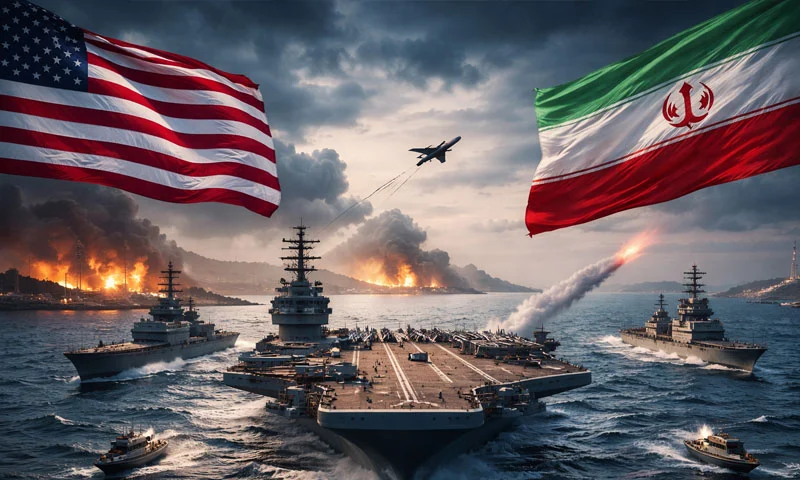
Tensions between the United States and the Islamic Republic of Iran have sharply increased in late January 2026, driven by renewed disputes over Iran’s nuclear program, continued internal unrest within Iran, and growing U.S. military pressure aimed at forcing Tehran back to negotiations. The escalation has raised serious concerns across the Middle East and beyond, with global powers closely watching developments due to their political, economic, and security stakes in the region. The Core Issue: Nuclear Program and Strategic Confrontation At the heart of the current standoff lies Iran’s nuclear program and Washington’s long-standing demand that Tehran permanently abandon any pathway toward nuclear weapons. The United States has reiterated that Iran must return to binding negotiations that impose strict and verifiable limits on its nuclear activities. President Donald Trump has publicly called on Iran to accept a new agreement focused on what he describes as a “no nuclear weapons” outcome, warning that failure to comply could result in military action. This nuclear dispute is not isolated. It is part of a broader strategic conflict that includes regional influence, sanctions enforcement, and long-running mistrust between the two countries following years of collapsed agreements and diplomatic disengagement. Human Rights Concerns and Domestic Unrest in Iran Alongside the nuclear issue, U.S. officials have cited Iran’s internal situation as a key concern. Washington has accused Iranian authorities of using excessive force against nationwide protests, with reports indicating large-scale civilian casualties. American leaders have linked these human rights concerns to their broader pressure strategy, arguing that Iran’s domestic conduct reflects its broader regional and international behavior. Tehran, however, rejects these accusations and views them as interference in its internal affairs. Military Build-Up and Pressure Tactics The escalation has been underscored by a visible U.S. military buildup in the Middle East. The United States has deployed a major naval carrier strike group, centered on the USS Abraham Lincoln, along with additional air and naval assets. Washington describes these deployments as defensive and deterrent in nature, intended to prevent regional instability. However, U.S. officials have also acknowledged that the military presence serves as leverage to push Iran toward negotiations. Iran has interpreted these moves as direct threats. In response, Tehran has conducted military exercises near the Strait of Hormuz and warned that any violation of its territorial waters would be met with force. Trump’s Position and Iran’s Rejection of Talks Under Threat President Trump has repeatedly stated that “time is running out” for diplomacy and that Iran must choose between negotiations and the risk of military confrontation. His administration has also expanded economic pressure, including new sanctions targeting Iranian oil shipments and related entities. Iran’s leadership has firmly rejected the idea of negotiating under coercion. Iranian officials have stated that no meaningful talks can occur in an environment dominated by military threats and economic punishment. Iran’s mission to the United Nations has warned that any U.S. attack would trigger a strong and unprecedented response. Potential Regional Consequences of a Military Conflict Analysts and regional officials warn that a U.S. attack on Iran could have far-reaching consequences. Iran maintains influence through allied groups and armed networks across Iraq, Syria, Lebanon, and Yemen. Any direct confrontation could therefore expand beyond Iran’s borders, increasing instability across the Middle East. The mere prospect of conflict has already heightened anxiety among regional governments, many of which fear being drawn into a wider confrontation. Global Oil Markets at Risk Iran remains a significant oil producer, with output estimated at over three million barrels per day. Rising tensions have already affected global energy markets, as traders factor in the risk of supply disruptions. A major concern is the Strait of Hormuz, a critical chokepoint through which a substantial portion of the world’s oil shipments pass. Any disruption to traffic through the strait could have immediate and severe consequences for global energy prices and economic stability. Reactions of Key Global Stakeholders China and Russia, both of which maintain strategic ties with Iran, have historically opposed unilateral military action by the United States. While neither has indicated support for a U.S. strike, both are expected to resist such action diplomatically and call for de-escalation. Pakistan, which seeks balanced relations with both Washington and Tehran, is unlikely to participate in any military action. However, a regional conflict could still affect Pakistan through economic pressures, energy price shocks, and potential refugee movements. Across the broader international community, calls for restraint and renewed diplomacy have grown louder. Several Gulf states have expressed concern that a full-scale conflict would destabilize the region and undermine economic and security interests. Outlook and Risks Ahead With diplomatic channels strained and military posturing intensifying, the current U.S.–Iran standoff represents one of the most serious escalations in recent years. The situation carries significant risks not only for the Middle East but also for global markets and international security. Whether the crisis moves toward renewed negotiations or further confrontation will likely depend on whether both sides find a way to reduce tensions without appearing to concede under pressure—a challenge that has repeatedly undermined past diplomatic efforts.
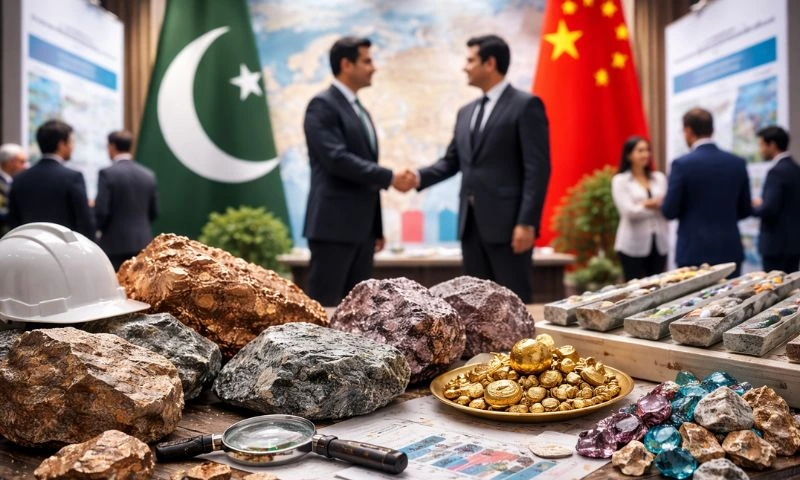
Pakistan Invites Chinese Companies to Pakistan Minerals Investment Forum 2026
Pakistan has formally invited Chinese companies and investors to take part in the upcoming Pakistan Minerals Investment Forum (PMIF) 2026, as the country aims to expand foreign investment in its vast but under-developed mineral sector. The invitation was extended during the Pak–China Mineral Cooperation Forum in Islamabad, where ministers and industry leaders highlighted deepening bilateral cooperation to unlock economic potential. The PMIF 2026 is scheduled for April 8–9, 2026 in Islamabad and will serve as a focused platform for global investors to engage directly with policymakers, regulators and project sponsors in Pakistan’s mining value chain. Minister for Petroleum Ali Pervaiz Malik formally invited Chinese firms and delegates, encouraging them to participate through a country pavilion showcasing mining capabilities, technologies, and equipment. “I extend a formal invitation to all the Chinese companies and delegates present here to participate in the Pakistan Mineral Investment Forum 2026,” Malik said, noting that the forum will support structured engagement with policymakers and industry stakeholders. The federal government underscored the huge potential of Pakistan’s mineral sector, noting that mineral exports could reach USD 6–8 billion annually by the end of the decade through value addition and processing. Planning and Development Minister Ahsan Iqbal said such growth would depend on partnerships that move beyond raw extraction to include downstream value chains, refining and export-oriented industrial clusters. Officials presented Pakistan as richly endowed with strategic resources such as copper, gold, coal, gemstones, rare earth elements and other critical minerals. Still, development of these resources has lagged due to infrastructure gaps, regulatory challenges and limited value-addition capacity. At the cooperation forum, Pakistan and China also launched the ‘Pak–China E-Mining Platform’, a digital initiative designed to boost transparency and ease collaboration between authorities and investors. The platform is intended to improve information sharing, project coordination and efficiency in developing the mineral sector. Chinese Ambassador to Pakistan Jiang Zaidong reaffirmed Beijing’s interest in investing in Pakistan’s mining sector and highlighted China’s strengths in capacity building, technology transfer and sustainable mining practices. He said that long-term cooperation could bring jobs, technology, and development while strengthening industrial linkages. The forum drew participation from more than 70 Chinese companies, over 100 Pakistani firms and about 800 participants, reflecting strong interest on both sides. Government officials emphasised policy stability, regulatory reforms, and facilitation measures to enhance the ease of doing business for foreign investors. The invitation to China at PMIF 2026 signals Pakistan’s push to transform its mineral sector into a major driver of economic growth and export competitiveness, aligning with its broader strategy of attracting foreign direct investment and positioning the country as a key player in the global mining economy.
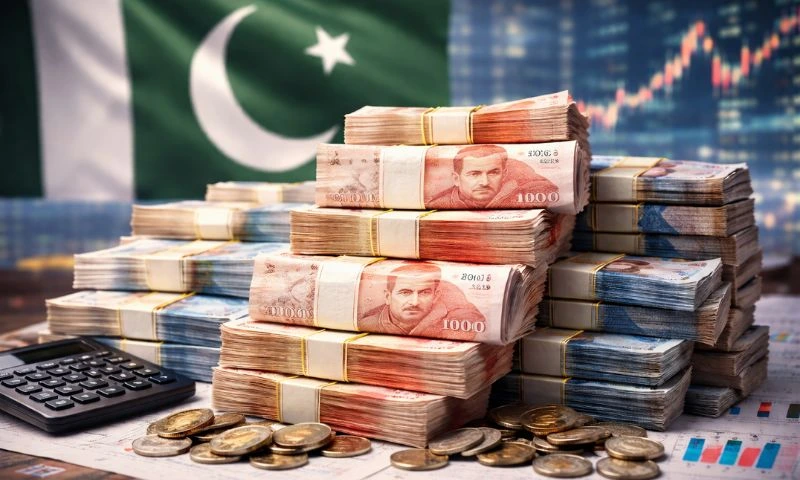
Every Pakistani Now Owes Rs333,000 as National Debt Surges
Pakistan’s debt burden has continued its upward climb, with every Pakistani now owing Rs333,041, according to the latest Fiscal Policy Statement for 2024–25 presented to Parliament. This represents a 13% increase from Rs294,098 per person in the previous year and highlights the growing fiscal pressure on the economy. The debt per person figure is calculated by dividing total public debt by Pakistan’s estimated population of 241.5 million. Between June 2024 and June 2025, total public debt rose from Rs71.2 trillion to Rs80.5 trillion, driven largely by higher interest payments and exchange rate movements, the Finance Ministry said. Public debt as a share of the nation’s economic output also increased. The debt-to-GDP ratio moved from 67.6% in June 2024 to 70.7% in June 2025, exceeding the statutory limit set under the Fiscal Responsibility and Debt Limitation Act (FRDL). Under this law, the federal fiscal deficit should not exceed 3.5% of GDP, but in 2024–25 it reached 6.2%, almost double the permitted level. Economists say rising debt levels reflect structural challenges in Pakistan’s economy. External factors such as a weakening rupee and high interest rates have increased the cost of servicing debt, while domestic fiscal management has struggled to keep deficits within legal limits. According to the State Bank of Pakistan’s data, gross public debt has steadily risen over the past decade, from around Rs36 trillion in 2020 to more than Rs80 trillion by 2025. A 2025 report from the Economic Policy & Business Development (EPBD) think tank also highlighted that Pakistan’s debt burden has jumped from around Rs90,047 per person in 2014 to more than Rs318,000, reflecting sustained growth in borrowing over the past decade. Analysts warn that the high debt load could limit Pakistan’s ability to invest in development and social services. A significant portion of government revenue goes to interest payments, crowding out spending on education, health and infrastructure. Higher debt costs also make the economy vulnerable to global shocks and exchange rate volatility. Despite these challenges, the Fiscal Policy Statement noted that revenue collection remained close to budget targets, while non-tax revenues exceeded expectations thanks to stronger central bank profits and petroleum levy collections. The overall fiscal deficit, including provincial accounts, was contained at 5.4% of GDP, slightly below the original target, the ministry said. Experts suggest that meaningful fiscal reforms are needed to stabilise Pakistan’s debt trajectory. This includes broadening the tax base, rationalising expenditures, and enhancing debt management strategies to ensure sustainability. Without such measures, the rising per-person debt could continue to burden future generations.

The New Social Media Playbook: Why Feeds Are Losing and DMs Are Winning
Social media still runs on scrolling, but the center of gravity is moving. Public posting is no longer the only main event. In 2025, there were 5.66 billion social media “user identities” worldwide, showing the audience is still massive. Yet how people use these platforms is changing fast—and the winners are the formats and spaces that feel faster, more private, and more useful. Short video remains the default language. Platforms now reward content that hooks attention instantly, which keeps TikTok-style video at the center of culture. Pew research also shows the platform mix is shifting: U.S. adults are increasingly using Instagram, TikTok, WhatsApp and Reddit, even as usage changes on X. Among teens, YouTube leads (90%), with TikTok, Instagram and Snapchat still used by majorities—an early signal of what becomes “normal” later. Messaging is replacing the “main feed.” More sharing happens inside group chats and DMs, where posts feel less performative and more personal. That shift also helps explain why WhatsApp keeps growing in the U.S. adult mix. Platforms are adapting by building more tools around private sharing, smaller communities, and repost-friendly content. Social platforms are turning into search engines. People now look up restaurant reviews, travel tips, product comparisons, and “how-to” answers directly inside apps. It’s not just entertainment anymore. It’s discovery. This trend favors creators who make practical, searchable videos—and brands that understand that the comment section now acts like a review page. Reddit-style communities are having a moment. Pew’s 2025 snapshot highlights Reddit’s rise in adult usage. As feeds get noisier, many users prefer niche communities with real conversations and strong opinions—especially for tech, finance, fitness gear, and travel planning. At the same time, the time spent remains huge. DataReportal, citing GWI research, says the typical social media user spends 2 hours and 23 minutes per day on social platforms. That attention is why platforms keep competing so aggressively with new features, AI tools, and creator monetization. This shift isn’t only global—it’s local too. In Pakistan, DataReportal reported 66.9 million active social media user identities in early 2025, about 26.4% of the population, reflecting how quickly digital habits have scaled. In short: the next era of social media looks less like a public stage and more like a mix of short video, private sharing, niche communities, and search-driven content—with attention still as the currency.
