


The Pakistan Super League (PSL) has set the stage for one of its biggest commercial events yet. The auction of the owner-less Multan Sultans franchise, a cricket powerhouse with one of the league’s most passionate fan bases. The Pakistan Super League announced that the Multan Sultans auction will take place on February 9, 2026, in Lahore, just weeks before PSL 11 begins later this year. PSL’s social media channels confirmed the official date, marking a major milestone for the league’s expanding business strategy. The auction follows the expiration of the previous ownership contract with Ali Khan Tareen, who chose not to renew after disagreements with the Pakistan Cricket Board (PCB). This move comes as the PSL enters its 11th season in 2026, a year that will see the league grow from six to eight teams, the biggest expansion since the Multan franchise joined in 2018. The PCB had previously auctioned two new teams Hyderabad and Sialkot in January 2026, securing record valuations and adding significant revenue to the board’s coffers. Unlike the recent expansion franchises, the Multan Sultans are already a decorated team with a strong legacy. The franchise won the PSL title in 2021, and later reached multiple finals, making it one of the most competitive and well-supported sides in the league. That history now makes it a highly desirable asset for investors and cricket enthusiasts looking to enter Pakistan’s premier T20 competition. Reports suggest at least six bidders have submitted technical proposals to compete for the rights, signalling keen interest from a mix of domestic and international groups. One notable contender is former owner Ali Tareen Khan, who has officially filed his bid documents and aims to reclaim the franchise he helped build. Market analysts expect the franchise’s base price to start around PKR 200 crore (approx. Rs2 billion) or even higher, reflecting its established popularity, strong merchandising value, and loyal fan support in South Punjab. If the final bid exceeds these expectations, it could become one of the most lucrative franchise deals in PSL history. The auction’s timing is strategic. Holding it days before the players’ auction on February 11 gives the new owner time to plan squad strategies and management resources before the 2026 PSL draft. With the march toward PSL 11 underway slated to kick off on March 26, 2026. The Multan Sultans auction promises to be one of the season’s most exciting off-field events, blending cricket passion with significant commercial energy.
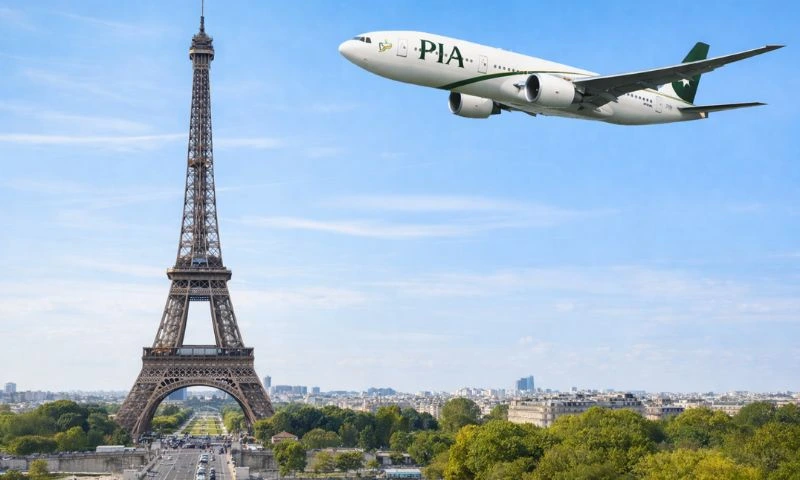
PIA’s Paris Flight Discount: Best Time to Save on Your Ticket in 2026
Pakistan International Airlines (PIA) has launched a special 10 percent discount on airfares for passengers traveling from Paris to various cities across Pakistan this year which is a move aimed at making travel more affordable for overseas Pakistanis, tourists, and business travelers. The national flag-carrier has made the offer available for bookings through its official website, mobile app, authorised agents, or booking offices until February 10, 2026. Passengers can travel on discounted fares during two booking windows: February 1 to March 10, and May 1 to May 15, 2026. A PIA spokesperson said the airline aims to boost travel convenience and strengthen ties between Pakistan and its diaspora in Europe. “The national carrier remains committed to providing passengers with the best travel services while upholding its traditional hospitality,” the spokesperson explained. This promotional offer comes in the wake of significant developments for PIA’s European network. In June 2025, the airline resumed direct flights from Lahore to Paris after a five-year hiatus, with flight PK-733 carrying 276 passengers landing at Paris’s Charles de Gaulle Airport. That route restoration marked a major step in rebuilding PIA’s global connectivity after years of reduced operations due to regulatory challenges and operational restrictions in Europe. The airline also resumed Islamabad–Paris services earlier in 2025, following the lifting of restrictions by European aviation regulators, including the European Union Aviation Safety Agency (EASA). Economists and travel analysts say the discount could help revive demand on long-haul routes at a time when international travel costs remain high worldwide. With France being a major destination for Pakistanis living abroad, especially students and expatriate communities, this offer could ease financial pressure while encouraging family visits, tourism, and business trips. Travel experts also point to the broader trend of airlines offering seasonal promotions to stimulate ticket sales. Earlier, PIA offered discounts on other long-haul flights during festive seasons, such as Ramadan and Eid, when demand traditionally rises. Passengers are advised to book early, as seats under the discounted fare are limited and available on a first-come, first-served basis. Fares vary based on travel dates and cabin class, but the 10 percent reduction applies only to the base fare before taxes and fees. With its discount offer and renewed European routes, PIA appears focused on strengthening its international presence while offering better value to travelers.
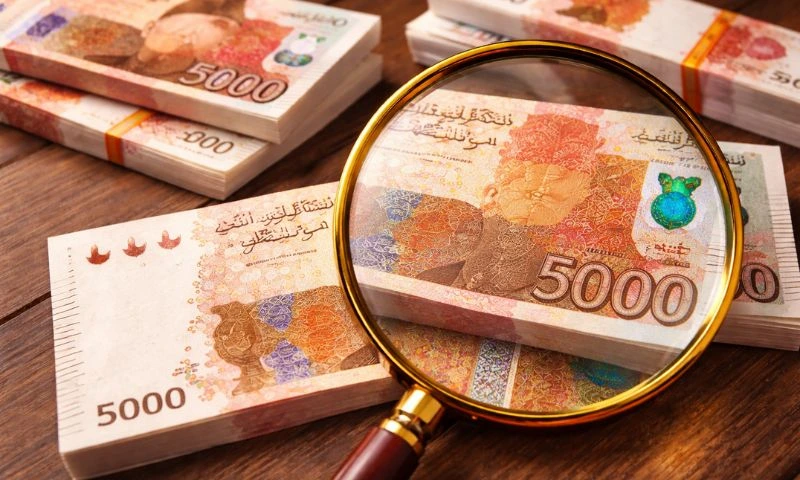
SBP Plans New Currency Designs: What Will the Rs 5,000 Note Look Like?
Reports circulating on social media and in some corners of the market recently sparked anxiety about the future of Pakistan’s highest-value banknote, the Rs 5,000 note. But the State Bank of Pakistan (SBP) moved quickly to put those rumours to rest, clarifying that there is no plan to discontinue the denomination. At a recent session of the parliamentary finance committee, SBP Governor Jameel Ahmad said the central bank has not proposed removing the Rs 5,000 note from circulation. He explained that any such plan would have wide-ranging effects on market liquidity and everyday transactions across the country. “Reports circulating on social media claiming that the Rs5,000 note is being discontinued are fake,” Governor Ahmad told lawmakers, urging people to rely only on official SBP information. The denial comes amid broader discussions about modernising Pakistan’s cash system. The SBP has reportedly finalised new designs for all banknotes from Rs 10 to Rs 5,000 and forwarded them to the federal government for approval. These redesigned notes would include enhanced security features to make them harder to counterfeit and easier to authenticate. In addition to updated paper banknotes, the SBP is said to be exploring the introduction of polymer (plastic) currency notes on a trial basis. Polymer notes are more durable and include advanced security features like see-through windows and holograms, used in many advanced economies. Importantly, though, no official programme has been authorised yet for polymer notes, and the Rs 5,000 note will remain legal tender even after any redesign. According to SBP documentation, denominations including the Rs 5,000 note are currently recognized as valid currency under Section 25 of the SBP Act and will continue to be so unless a formal policy move tells otherwise. This isn’t the first time the fate of the Rs 5,000 note has come under scrutiny. In the past, some politicians and activists have called for the note’s removal arguing that high-value cash can facilitate tax evasion or corruption. But the SBP consistently rejected these proposals, noting that any change must be carefully studied and cannot be undertaken lightly. Economists argue that sudden demonetisation can disrupt economic activity if not handled properly. For example, earlier cases in other countries showed that withdrawing high-value currency without adequate planning can lead to cash shortages and uncertainty. For now, Pakistan’s largest banknote remains safe in wallets and registers across the nation just as it has been since its introduction in 2006 and will continue to be accepted for all transactions.

Inside the Epstein Files: Key Disclosures, Unanswered Questions, and Global Impact
The release of new “Epstein files” has reignited global scrutiny of how Jeffrey Epstein built influence, evaded accountability for years, and maintained contact with powerful circles long after his 2008 conviction. The latest batch, published by the U.S. Department of Justice (DOJ) under the Epstein Files Transparency Act, runs into the millions of pages and includes large volumes of records and media that investigators say are “responsive” to the law’s disclosure requirements. What major disclosures have surfaced so far One of the clearest takeaways is that the documents are not a single “client list” but a sprawling set of case materials: correspondence, logs, investigative paperwork, and other records. Media reviews of the new releases say the material has fueled renewed questions about third-party accountability including whether there is enough evidence to pursue people who enabled or benefited from Epstein’s network, even if they were never charged. Another major development is the political and legal clash over what’s still missing. Advocates for survivors and some lawmakers argue that the DOJ’s release is incomplete and overly redacted, and that additional relevant documents may still be withheld. The DOJ, meanwhile, has said it met its obligations and has pointed to issues such as duplication and responsiveness in what remains unreleased. The disclosures have also triggered real-world fallout beyond the United States. In the UK, newly surfaced reporting around alleged communications has led to calls for investigations and raised broader questions about oversight and ethics illustrating how document dumps can rapidly become political crises in multiple jurisdictions. Separately, earlier unsealed court records (from 2024) again highlighted how public figures can be named in documents without being accused of crimes. That is a nuance repeatedly stressed in credible coverage: being mentioned is not proof of wrongdoing. What could happen next: Based on what authorities and reporting indicate What comes next depends on legal pressure and official review. Major outlets report that Congress and advocates are still pressing for explanations about what was withheld, why it was withheld, and whether further releases are coming. Any additional disclosures are likely to intensify demands for accountability especially around the long-criticized 2007–08 non-prosecution/plea deal era and institutional failures that allowed abuse to continue. Why this will affect lives beyond headlines For survivors, new records can be retraumatizing while also strengthening claims for accountability. For public institutions, the files may drive renewed calls for reforms in prosecutorial transparency, plea-deal oversight, and victim protection. For individuals named in materials, reputational damage can spread quickly even where no criminal allegation is made, making careful, evidence-based reporting essential.

Samsung Galaxy S26 Ultra Renders Leak in All Main Colors
Samsung’s next flagship, the Galaxy S26 Ultra, is shaping up to be one of the most-anticipated Android launches of 2026. Fresh renders showing the smartphone in all four of its main color options have leaked online, giving fans a clear look at what Samsung has prepared ahead of its official Galaxy Unpacked event later this month. According to leaked images spotted from a now-removed Russian retailer listing, the Galaxy S26 Ultra will debut in Black, White, Sky Blue, and Cobalt Violet. These are the colors that align perfectly with previous S Pen accessory leaks, reinforcing their legitimacy. These hues echo Samsung’s style approach from past flagships like the S23 and S24 series, balancing boldness with mainstream appeal. The renders also suggest that Samsung isn’t drastically overhauling the Ultra’s design. Instead, the phone maintains the familiar look fans expect, with subtle refinements likely focused on ergonomics and camera aesthetics. The lack of more “aggressive” shades like Pink Gold or Silver Shadow in the leaked assets could indicate those options will be online exclusives or reserved for special markets. What Else the Leaks Reveal Beyond colors, numerous tipped details are emerging about what the S26 Ultra might offer: Design & Camera: A leaked promotional poster shows a refreshed camera island that borrows stylistic cues from Samsung’s foldables. The phone appears to sport a flat frame with chamfered edges and button placements integrated into the sides. Performance & Hardware: Rumors point to a Snapdragon 8 Elite Gen 5 chipset, paired with a 5,000 mAh battery and support for 60W fast charging. The display is expected to be a 6.9-inch QHD+ Dynamic AMOLED panel with 120Hz refresh rate. Camera Upgrades: Early leaks suggest the main 200 MP sensor will remain but could be supported by redesigned telephoto modules, larger sensors, and enhanced image processing for improved low-light performance and color accuracy. Privacy Display: One of the standout features reportedly making its way to the S26 Ultra is a new Privacy Display layer, which lets users dim the screen from certain angles to protect sensitive information — ideal for public settings. Launch Timeline: Most insiders now expect Samsung to unveil the Galaxy S26 Ultra at Galaxy Unpacked on February 24 or 25, with units hitting shelves around March 11. What This Means for Buyers Rather than a groundbreaking redesign, leaks indicate that Samsung is focusing on evolution over revolution with its 2026 flagship. The Galaxy S26 Ultra promises refined performance, stylistic continuity, and meaningful feature upgrades, all wrapped in a suite of attractive colors that balance personality with sophistication. For users deciding whether to upgrade, the addition of privacy-centric screen tech and possible camera gains could be compelling reasons to consider the S26 Ultra, especially if you’re coming from an older flagship model.

Don’t Miss Out: Forthing Friday REEV Gets Limited-Time Price Cut
Capital Smart Motors (CSM) has announced a limited-time price reduction for the highly anticipated Forthing Friday REEV in Pakistan, giving early buyers an attractive chance to secure the long-range electric SUV at a more affordable launch price. The offer was revealed on February 4, 2026, and is aimed at boosting bookings for the Range-Extended Electric Vehicle before the special pricing window closes. The Forthing Friday lineup includes both Battery Electric Vehicle (BEV) and Range Extended Electric Vehicle (REEV) variants, offering Pakistani buyers flexibility between pure electric and extended-range options. At launch, the REEV model, positioned as the top-trim offering, was set at PKR 10,999,000 (approximately $40,000) under the initial limited-time pricing. This reduced price reflects CSM’s strategy to stimulate early interest in electrified vehicles. A REEV or Range Extended Electric Vehicle is a hybrid design that primarily runs on electric power but uses a small petrol engine as a generator to recharge the battery when needed. This system eliminates range anxiety common with fully electric vehicles, making it especially appealing in countries like Pakistan, where EV charging infrastructure remains limited. The Forthing Friday REEV stands out for its impressive claimed combined range of up to 1,150 km on a full battery and fuel tank, a figure that surpasses many conventional EVs available locally. Its 31.9 kWh battery provides around 600 km of electric-only range before the internal combustion generator kicks in, extending the overall distance. Inside, the SUV features a modern cabin with a 14.6-inch infotainment display, 8.8-inch digital cluster, and connectivity options like Apple CarPlay and Android Auto. Safety and convenience features such as adaptive cruise control, lane keep assist, and a 360-degree camera make it competitive in the premium segment. CSM has been actively showcasing the Forthing Friday REEV and its sibling BEV versions in major malls across Pakistan, including Centaurus Mall in Islamabad, Dolmen Mall in Lahore, and Dolmen Mall in Karachi. These displays offer potential buyers the chance to view the vehicle up close, book early with a reduced price, and even participate in test drives. Automotive analysts say such pricing incentives are crucial during the early stages of EV adoption. They help offset higher initial costs and encourage consumers to consider electrified alternatives in a market traditionally dominated by internal combustion vehicles. With the Forthing Friday, CSM hopes to lead Pakistan’s transition toward cleaner, efficient mobility while also addressing range anxiety concerns with its REEV technology. As the automotive landscape in Pakistan evolves, competitive launch pricing and innovative vehicle technology such as range-extended systems are expected to play a major role in shaping consumer preferences and accelerating EV adoption.
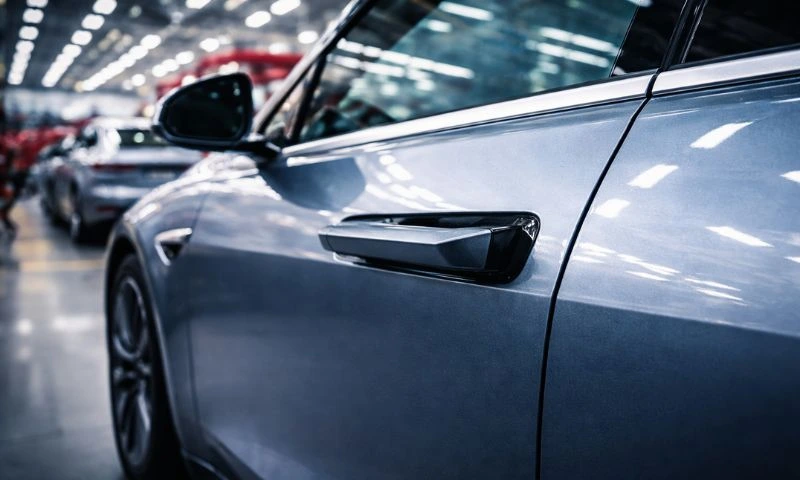
China Bans Hidden EV Door Handles in Global First for Vehicle Safety
China has announced a groundbreaking ban on hidden or retractable door handles on all new passenger vehicles, with rules set to take effect on January 1, 2027 for new models and January 1, 2029 for already approved ones. The decision makes China the first major automotive market in the world to outlaw this popular design feature, largely found on electric vehicles (EVs) and hybrid models. The regulation comes from the Ministry of Industry and Information Technology (MIIT) and is aimed at improving vehicle safety after a number of high-profile incidents in China and globally raised concerns about the reliability of electronic door handles. Under the new rules, every vehicle door — except the tailgate — must include a mechanical release function that can be operated manually both from the inside and outside. Safety Concerns Trigger Change Hidden door handles, sometimes called flush or retractable handles, became a symbol of futuristic EV design after companies like Tesla introduced them to reduce aerodynamic drag and boost efficiency. The sleek handles are activated electronically, typically by a key fob, touchscreen command, or light physical contact. However, safety authorities have raised issues that in power loss or crash situations these handles can fail to operate. One often-cited case involved a Xiaomi SU7 Ultra electric sedan in Chengdu, China, where rescuers were reportedly unable to open the doors after a fatal collision because the electronic handles were unresponsive, delaying rescue efforts. Similar safety investigations are underway in the United States, where the National Highway Traffic Safety Administration (NHTSA) has opened probes into Tesla’s electronic door releases after complaints about difficulty opening them during emergencies. Chinese safety data also show that fully flush handles are far more likely to fail during side-impact tests compared with traditional mechanical handles, a factor that influenced regulators. In addition, automated handles can be less effective in harsh weather or when the vehicle’s battery power drops. Global Automotive Impact As the world’s largest automotive market, China’s standards carry significant weight. Automakers selling in the region may need to redesign vehicles, adding mechanical components or backup systems to satisfy the new rules. Some manufacturers have already begun shifting toward semi-hidden handles or integrating redundant mechanical releases into their designs. Industry analysts say that while the ban directly affects vehicles sold in China, it could influence global safety norms, as many international automakers aim for unified designs across markets. With electric vehicles growing in popularity worldwide, China’s move may spark similar safety reviews in other regions.

AI and Jobs: Blessing or Burden? What experts are warning about
Debate over artificial intelligence and job losses has intensified as business leaders and global institutions issue increasingly blunt assessments of how fast work is changing. Jensen Huang, whose company’s chips power much of the AI boom has repeatedly argued that AI will affect every job, and that workers risk being displaced by other workers who adopt AI faster. In a widely reported remark, Huang said: “Every job will be affected, and immediately. It is unquestionable.” He added: “You’re not going to lose your job to an AI, but you’re going to lose your job to someone who uses AI.” What’s the core fear and what do major institutions say? The concern is not only “job loss,” but job transformation at scale: AI systems automate portions of work (tasks), potentially reducing hiring in some areas while boosting productivity and creating demand elsewhere. The International Monetary Fund has framed the shift as both opportunity and disruption. In a recent policy speech, Kristalina Georgieva said: “On average, 40 percent of jobs globally will be impacted by AI either upgraded, or eliminated or transformed. For advanced economies, 60 percent of jobs will be affected.” In earlier remarks reported widely, Georgieva also warned that: “Your job may disappear altogether — not good — or artificial intelligence may enhance your job…” highlighting that outcomes may vary widely by occupation and country readiness. Meanwhile, the World Economic Forum estimates significant churn in the near term. Its Future of Jobs Report 2023 projected 83 million jobs lost and 69 million created over the following five years (net -14 million), describing broad labor-market “churn” as firms adopt AI and other technologies. Which jobs are most exposed? Across major studies and employer surveys, the most frequently flagged vulnerable areas include: Clerical, administrative, and routine office tasks (data entry, basic processing, scheduling) Some entry-level “white-collar” roles where work is text-heavy and standardized (basic research, templated writing, simple analysis) The WEF’s reporting and explainers repeatedly point to administrative and clerical roles among the fastest-declining categories, while highlighting strong growth in AI-adjacent roles like data and cybersecurity. A more pessimistic warning has come from Anthropic CEO Dario Amodei, who has argued AI could produce severe labor-market disruption and even a low-wage or unemployed “underclass” if policy and industry fail to respond. At the same time, several analyses caution against assuming an immediate “jobpocalypse,” noting that evidence so far is mixed and job effects often show up as task reshuffling rather than instant mass unemployment. So… will AI be a blessing or a burden? What credible sources converge on is this: AI will raise productivity for some workers and firmsThe IMF describes potential growth gains, but emphasizes uneven distribution and the need for preparedness and safety nets. AI will disrupt hiring and entry pathways in some fieldsSome leaders and research warn that entry-level roles are especially sensitive because AI can handle “first draft” work and routine analysis at scale. Outcomes depend heavily on skills, adoption, and policyWEF reporting emphasizes reskilling/upskilling as the central pressure point for companies and workers. In other words: the “blessing vs burden” question is not answered by a single forecast. It depends on how fast workers adapt, how companies redesign roles, and whether governments and employers invest in skills transitions. How workers can use AI to stay employable—based on what experts are actually saying Huang’s most practical point is competition: workers may be displaced by other workers using AI more effectively. The IMF’s guidance stresses preparedness, retraining, and safety nets. From that, a verifiable “best practice” direction emerges: 1) Use AI for “first drafts,” then add human judgment Huang has described using chatbots to produce first drafts and then refining them. This aligns with the most common enterprise pattern today: AI accelerates drafting, summarizing, outlining, and reformatting — while humans verify, contextualize, and decide. 2) Turn AI into a daily “skills multiplier” The IMF notes job postings increasingly demand new skills and that AI shifts skill demand. In practice, workers who win are often those who can: Write precise instructions (prompting) Verify and fact-check outputs Apply domain knowledge (law, finance, medicine, operations) on top of AI speed 3) Build a small, repeatable workflow for your job Instead of “learning AI” as a vague goal, adopt workflows such as: Meeting → summary → action items → follow-up email Dataset/brief → key insights → slide outline Customer messages → response drafts → QA + tone control Those are the types of task-bundles WEF and major employers discuss when they talk about AI changing jobs via tasks, not titles. Tools that are commonly used in AI-enabled work today Below is a practical, work-oriented tool map (not a prediction). Selection depends on role, data sensitivity, and company policy. Writing, research, and summaries OpenAI ChatGPT Gemini (Google) Claude (Anthropic) Office productivity Microsoft Copilot (Word/Excel/PowerPoint workflows) Google Workspace AI features (Docs/Sheets/Slides workflows) Coding and technical productivity GitHub Copilot Cursor / Codeium (AI coding assistants) Design and creative production Canva AI tools (quick design iteration) Adobe Firefly (creative generation in Adobe ecosystem) Automation (non-technical) Zapier / Make (connect apps, automate repetitive steps) Important safety note for real work: experts and institutions repeatedly warn that AI outputs must be checked—especially for legal, medical, finance, and public communications. (This is consistent with the IMF/WEF framing that AI transforms tasks and raises new skill demands.) What to watch next: the risks experts highlight Based on credible reporting and institutional warnings, the key risks discussed publicly include: Inequality widening if high-skill workers gain more while others lose bargaining power Entry-level pipeline disruption, making it harder for young workers to get “starter” experience Reskilling gaps, where workers need training but don’t receive it at scale
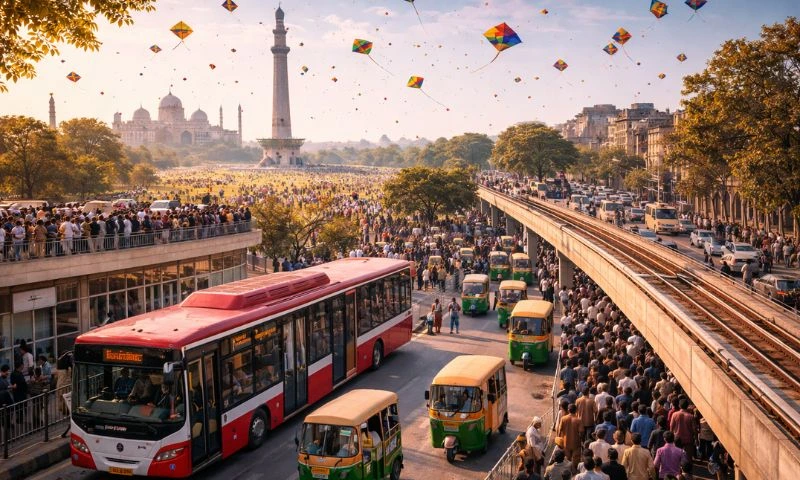
Lahore Braces for Basant 2026 With Free Transport and Festival Vibes
After more than two decades, the colourful spring kite-flying festival Basant is returning to Lahore in 2026 with renewed energy, strict safety measures, and a transport plan ready to keep the city moving. The event will take place from February 6 to 8, and the Punjab government has announced free public transport across Lahore during the festivities. Historically, Basant symbolised the start of spring and filled the skies with colourful kites, drawing crowds to rooftops, parks, and open fields. However, safety concerns and fatal accidents tied to dangerous kite string especially the metal-coated strings led to the festival’s ban for many years. This year’s revival focuses on responsible celebration and crowd management under official regulations. The kite festival is now sanctioned only in designated areas to prevent the tragedies of the past. Free Transport Plan for Festive Crowds To ensure smooth mobility and reduce reliance on private vehicles, the Punjab government has finalised a comprehensive transport plan offering free rides throughout Lahore during Basant 2026. Commuters will be able to use the Metro Bus Service, Orange Line Metro Train, and various feeder buses free of charge from February 6 to 8. Under the plan, dozens of routes across the city will be served by hundreds of buses. A total of 228 buses will operate on feeder routes, while 64 Metro Bus vehicles and the Orange Line Metro Train will provide extensive coverage. Officials estimate that around 516,000 passengers could benefit from these services daily, supported by additional buses from colleges and universities. Private ride-hailing services and Yango-affiliated rickshaws are also expected to offer free short rides to ease congestion. Punjab Senior Minister Marriyum Aurangzeb highlighted that the free transport initiative is not only about convenience but also about environmental protection. She urged citizens to reduce private vehicle use to help decrease traffic congestion and air pollution during the festival days. Authorities are using AI and drone surveillance systems to monitor pollution and enforce regulations to keep the city safe and clean. Safety at the Forefront Beyond free transport, the government has put strict safety measures in place. Public officials have issued a code of conduct for Basant, banning hazardous kite strings and requiring all festivities to follow legal guidelines. Motorcyclists are encouraged to avoid busy roads, as protective measures for them remain part of the safety focus. For years, Lahoris longed to experience Basant’s energy again. Rooftops are booked, kite markets are sprouting, and the city feels alive with anticipation. The combination of cultural revival, free transportation, and enforced safety gives residents a chance to enjoy Basant in a way that honours tradition while prioritising public welfare.

Four Days Off! Punjab Gears Up for Extended Holiday Break
Punjab, Pakistan’s largest and most populous province, is preparing for an extended four-day holiday weekend from February 5 to 8, 2026, as a combination of national and regional observances align to give citizens a rare long break. The official announcement has sparked excitement among residents and families across the region, many of whom are planning short trips, family get-togethers, and cultural celebrations. The provincial government issued an official notification declaring Friday, February 6, and Saturday, February 7 as public holidays. These are set to follow Kashmir Solidarity Day on February 5 and lead into the regular Sunday weekend break, creating a continuous four-day pause in work and studies. Punjab Chief Minister Maryam Nawaz Sharif took to social media platform X to share her hopes that citizens will use the extended break wisely. She wrote that the province will enjoy a long weekend with Kashmir Day on February 5, a provincial Basant holiday on the 6th, followed by Saturday and Sunday. “We hope people across Punjab take this time to relax, recharge and make the most of the break,” she said. The holiday comes at an opportune time, as cultural festivities return to the fore. The Basant festival, a traditional spring celebration known for kite flying and vibrant community events, will coincide with the break. After being restricted for many years due to safety concerns, the festival is being allowed again in limited, regulated formats in parts of the province, offering residents a chance to engage in cultural activities. In Lahore, some authorities have even announced a five-day holiday period from February 4 to 8, which includes Shab-e-Barat before the official four-day break begins. This has added to public enthusiasm, with many expecting schools, offices, and markets to adjust schedules accordingly. The extended holiday reflects broader trends in Pakistan’s public holiday calendar, where national observances and cultural events often shape work and school schedules. The government’s decision aims to give workers and students time to rest, spend with loved ones, and participate safely in seasonal and cultural activities. While most businesses and educational institutions are expected to close during this long weekend, essential services will remain operational to support public needs. Travel agencies and hospitality businesses are also reportedly seeing a rise in bookings, as citizens eye the break for short vacations.
