


Tapmad has announced the launch of Pakistan’s first-ever vertical sports streaming experience, setting a new benchmark for how fans consume live sports on mobile devices. Designed specifically for mobile-first audiences, this industry-first feature allows users to stream live sports seamlessly in vertical mode, offering greater convenience, comfort, and immersion. Driven by its People First, Technology First philosophy, tapmad continues to innovate at the intersection of advanced technology and evolving user behavior. The introduction of vertical sports streaming reflects the platform’s commitment to creating future-ready digital experiences that align with how audiences naturally use their smartphones today. tapmad’s CEO Yassir Pasha said, “As we keep innovating and bringing top-quality experiences to our audiences, this launch reflects our commitment to using cutting-edge technology to strengthen our platform and raise the standard of sports entertainment in the region.” The vertical viewing experience is optimized for on-the-go consumption, enabling smoother access to live action and key moments without the need to rotate screens or compromise viewing quality. By prioritizing intuitive design and user-centric functionality, tapmad enhances accessibility while maintaining premium streaming standards. Commenting on the launch, tapmad COO Aly Rana said, “At tapmad, we put people and technology first. This launch represents a significant step in our mission to innovate, using advanced technology to make sports content more accessible, engaging, and enjoyable for fans across Pakistan.” The launch further strengthens tapmad’s position as a digital innovator and a leader in Pakistan’s growing sports streaming ecosystem. Through continuous investment in advanced streaming technologies and user-focused solutions, tapmad remains committed to delivering premium, accessible, and engaging sports content to audiences nationwide.
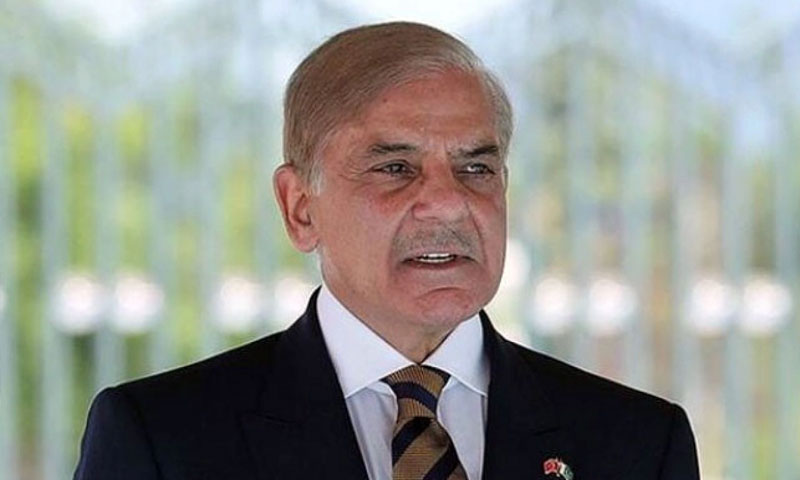
PM Shehbaz Orders Review of NEPRA’s New Solar Rules as Backlash Grows
Prime Minister Shehbaz Sharif has taken swift action in response to controversial new regulations issued by the National Electric Power Regulatory Authority (NEPRA) affecting solar energy users across Pakistan. In a high-level meeting on Wednesday, the premier directed the Power Division to file a review appeal against the newly notified rules governing rooftop solar and distributed energy consumers. The move comes amid rising criticism from politicians, energy experts, and solar prosumers about the shift from a net-metering system to a net-billing framework under the Prosumer Regulations 2026. The changes, aimed at restructuring how surplus solar electricity is credited and billed, threaten to reshape Pakistan’s rooftop solar sector. PM’s Directives to Protect Solar Consumers According to the Prime Minister’s Office (PMO), Shehbaz Sharif took “immediate notice” of the new regulations and ordered the Power Division to file a review appeal before NEPRA to ensure existing consumer contracts are protected. He emphasised that the financial burden of nearly 466,000 solar prosumers should not be shifted onto 37.6 million households that draw electricity directly from the national grid. He also instructed officials to formulate a comprehensive strategy to address the implications of the regulatory changes. The meeting was attended by top federal leaders, including Deputy Prime Minister Ishaq Dar, Power Minister Awais Leghari, and other senior officials. What the New Regulations Change Under the Prosumer Regulations 2026, NEPRA has effectively ended the decade-old net-metering system. Previously, solar producers could export unused electricity to the grid and receive one-for-one credit against future consumption. The new net-billing approach replaces this with compensation at the national average energy purchase price, which industry reports suggest is significantly lower than what consumers previously received. For new solar users, the buyback rate has been slashed to around Rs8.13–Rs11.33 per unit, down drastically from the earlier rate of approximately Rs25.32 per unit. Contracts for future prosumers have also been shortened from seven years to five years. Existing prosumers are reportedly kept on their current contracts until expiry, but critics argue some provisions could shift them to the new net-billing regime prematurely. Criticism and Backlash The regulatory shift has generated widespread backlash. Solar prosumers, consumer associations, and several political figures claim the move disincentivises rooftop solar adoption and threatens Pakistan’s broader clean energy goals. Critics argue that instead of promoting solar investment, the new rules place undue financial pressure on smaller producers and homeowners. Energy analysts warn that the policy change could slow the growth of decentralised renewable energy in a country where solar installations have surged due to high grid tariffs and frequent power outages. In the Senate, debates have underscored political unease over NEPRA’s decision, with some lawmakers arguing that the regulator should reconsider the scale and pace of its changes. Government’s Position and Next Steps While the Power Division prepares the review appeal, Prime Minister Sharif’s office has stressed that the intent is not to reverse solar policy but to safeguard existing commitments and ensure fair treatment of consumers. Officials say the appeal will seek to clarify contract protections and avoid unfair cost burdens on households reliant on the national grid. Stakeholders and solar advocates will closely watch NEPRA’s response to the review appeal. The outcome could have significant implications for Pakistan’s renewable energy landscape and private investment in solar power.

Ring of Fire Solar Eclipse to Dazzle Skies on February 17
Sky watchers around the world are preparing for a spectacular astronomical event as the first solar eclipse of 2026 is scheduled for February 17. This event will be an annular solar eclipse, often referred to as a ring of fire eclipse, when the Moon moves directly between the Earth and the Sun but does not completely block it. An annular eclipse occurs when the Moon is near its farthest point from Earth in its orbit. Because it appears slightly smaller in the sky, it cannot fully cover the Sun’s disk. Instead, a bright ring of sunlight remains visible around the Moon, creating the dramatic ring of fire effect. At the peak of this eclipse, nearly 96 percent of the Sun’s surface will be covered. The full ring effect will only be visible in limited parts of the world. The path of annularity is expected to pass mainly across remote regions of Antarctica. Observers in parts of southern Africa, the southern tip of South America, and nearby oceanic areas will witness a partial solar eclipse, where only part of the Sun appears obscured. Unfortunately, Pakistan and most of Asia will not be able to see this eclipse directly, as they lie outside the visibility path. However, astronomy enthusiasts can follow live streams and virtual coverage provided by observatories and space agencies. These broadcasts allow viewers to experience the celestial event safely and in real time. Solar eclipses are not just visually impressive. They also provide valuable opportunities for science education and public engagement. Educators often use these events to explain how the Sun, Moon and Earth align, as well as how orbital mechanics shape what we see in the sky. Experts always remind the public that looking directly at the Sun without proper protection can cause serious eye damage. Anyone observing a solar eclipse must use ISO certified eclipse glasses or indirect viewing methods. This February eclipse marks the beginning of an active eclipse season in 2026. A total lunar eclipse is scheduled for early March, offering another dramatic display in the night sky for viewers in certain regions. Although the ring of fire will not be visible from Pakistan, excitement around the world continues to build. For astronomy lovers, February 17 promises a reminder of how dynamic and beautiful our solar system can be.
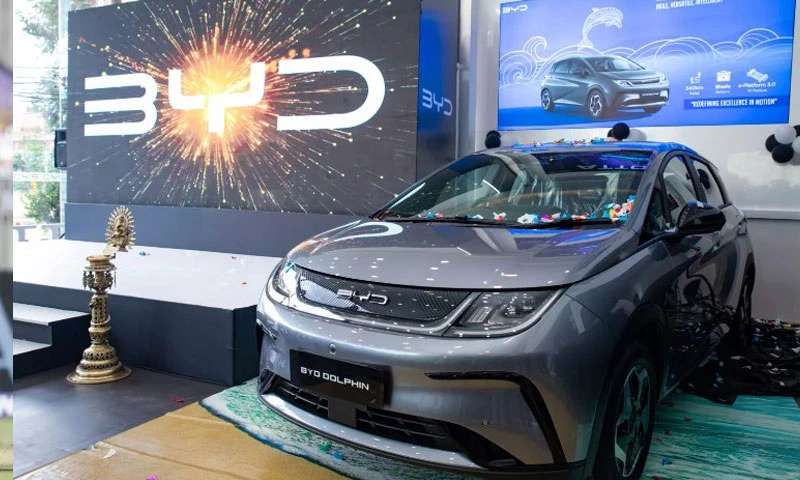
BYD Opens Sixth Dealership in Faisalabad to Boost EV Presence in Pakistan
Mega Motor Company, in partnership with global new energy vehicle leader BYD, has inaugurated Pakistan’s sixth authorized BYD dealership in Faisalabad, further accelerating the brand’s nationwide expansion strategy. The new 3S dealership offers sales, service, and spare parts under one roof. Located in one of Punjab’s busiest commercial hubs, the facility aims to provide a complete customer experience. Visitors can explore BYD’s latest NEV lineup, schedule test drives, access certified after-sales services, and purchase genuine accessories. The opening signals BYD’s growing confidence in Pakistan’s electric vehicle market and its focus on strengthening its presence in commercially active cities. Growing Demand Driving Expansion Danish Khaliq, Vice President Sales and Strategy at BYD–MMC, said the company has witnessed strong interest from customers in Faisalabad. “The opening of our sixth dealership reflects the positive response BYD has received in Pakistan. We’ve seen significant demand from Faisalabad, and this expansion allows us to serve customers here more effectively,” he said. He added that BYD’s national strategy focuses on expanding accessibility through authorized dealerships while maintaining the premium customer experience associated with BYD Experience Centers. “As we grow nationwide, our strategy is to enhance accessibility and support long-term adoption through licensed and authorized dealerships while maintaining the customer experience associated with BYD Experience Centers,” Khaliq said. Faisalabad Joins BYD’s Expanding Network With this launch, Faisalabad becomes the fourth city in BYD Pakistan’s footprint, joining Karachi, Lahore, and Islamabad. Out of six operational facilities nationwide: Three operate as full BYD Experience Centers Two function as BYD Care Centers dedicated to service and spare parts The Faisalabad facility offers comprehensive 3S services including sales, service, and spare support The dealership delivers the same engagement standards and brand environment customers experience in major metropolitan centers. Strengthening Pakistan’s EV Shift BYD is currently the world’s leading new energy vehicle manufacturer, backed by decades of innovation in battery systems, electric powertrains, and sustainable mobility solutions. Through its partnership with Mega Motor Company, BYD is positioning itself as a key contributor to Pakistan’s transition toward cleaner transportation. The move aligns with rising awareness about fuel efficiency, emission reduction, and improved urban air quality. Expanding Product Portfolio BYD’s lineup in Pakistan continues to grow. Customers in Faisalabad will now have access to: BYD Atto 3 BYD Seal BYD Shark 6 Recently launched BYD Atto 2 Sealion 7 These models combine advanced battery technology, strong performance, and lower running costs, catering to an increasingly tech-aware and environmentally conscious consumer base. With expansion into Faisalabad, BYD and MMC are reinforcing their long-term commitment to Pakistan’s evolving automotive landscape.
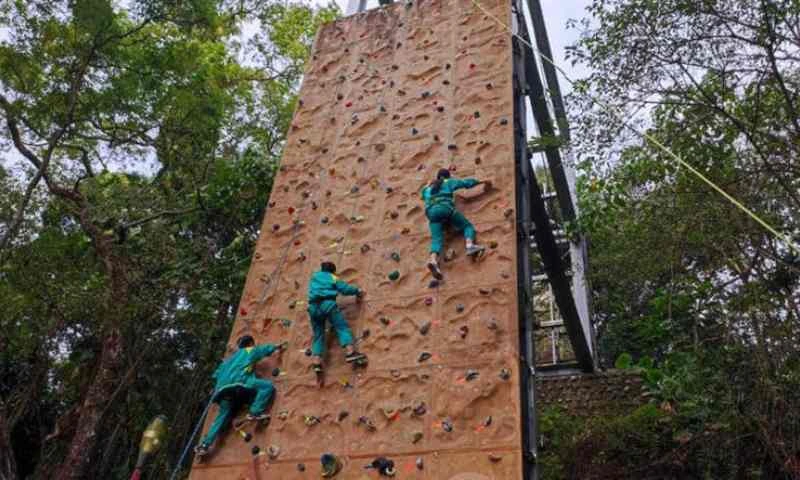
Why a School in Taiwan Made Students Climb a 12-Meter Wall
A unique educational experiment in Taiwan has drawn international attention after a high school introduced a rule requiring students to scale a 12-meter rock-climbing wall before they can receive their graduation certificates. The policy, introduced by Shu-Chi Senior High School in Hsinchu County, aims to build resilience, confidence and problem-solving skills among students. The unusual requirement quickly went viral online, with videos and photos of students tackling the climb being widely shared on social media. The school’s rock-climbing wall is not part of a typical gym class. It was installed as part of a broader physical education and character-building program that school leaders say prepares students for real-world challenges. Principal Lin Chien-Yu explained that the climb is meant to stimulate personal growth. “We want students to be brave enough to take on life’s obstacles,” he said in an interview featured in local media. “Conquering the climbing wall shows them they can push past fear and reach new heights.” Students at Shu-Chi have varied reactions to the requirement. Some enjoy the challenge and see it as a fun way to stay fit, while others find it intimidating. Despite the mixed feelings, most students recognise that the experience teaches perseverance, patience and strategic thinking. Teachers supervise the activity closely and ensure safety gear and trained spotters are always present. Experts in education and child development have praised the idea for promoting physical activity and mental resilience. According to the World Health Organization, adolescents should engage in at least 60 minutes of moderate-to-vigorous physical activity daily to support healthy growth. Activities like rock climbing provide cardiovascular exercise, muscle strength development and enhanced coordination, qualities that benefit students well beyond high school. Rock climbing is increasingly embraced by schools globally as a tool for promoting confidence and teamwork. In the United States, several high schools have added climbing walls to their physical education facilities, with educators noting improvements in student engagement and confidence. These programs often pair climbing with discussions on goal-setting and overcoming fear. Taiwan’s initiative is seen by many as an innovative blend of physical education and character building. While not all schools have adopted similar graduation requirements, many institutions have begun incorporating alternative physical challenges into their curricula. For example, schools in Europe and North America sometimes include outdoor adventure activities such as hiking, kayaking or ropes-course challenges to encourage leadership and resilience. Parents and students alike have shared photos and videos of the compulsory climb on social platforms. Some teens post clips of themselves successfully reaching the top of the wall, while others share humorous footage of peers struggling but ultimately completing the task. These posts have drawn supportive comments from users around the world, many saying the requirement sounds “fun” and “empowering.” Critics argue that not all students may be comfortable with climbing, but the school maintains that participation is safe, supervised and designed to be inclusive. By combining physical challenge with emotional growth, Shu-Chi Senior High School hopes to equip its graduates with confidence and life skills that extend far beyond the classroom.
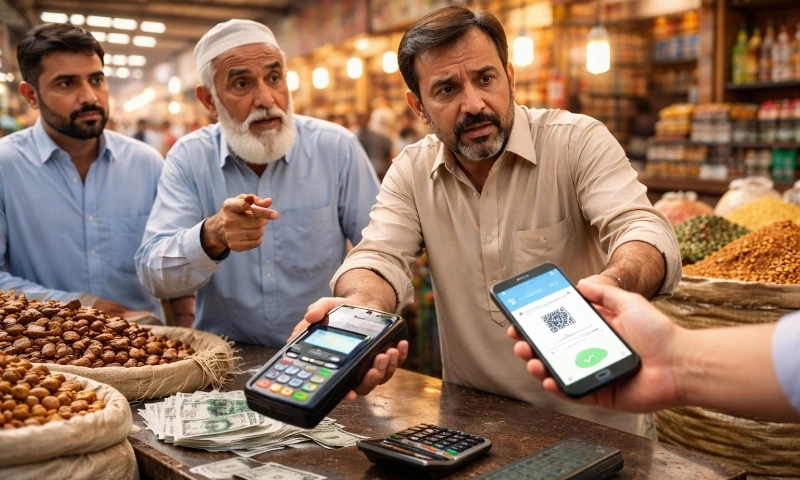
Pakistan’s Digital Payments Plan Faces Backlash From Vendors
A new government-backed push for cashless transactions has stirred concern among traders and small business owners across Pakistan. Market associations in major cities such as Karachi, Lahore and Islamabad say the proposed rules could force vendors to adopt digital payment systems before they are ready, creating financial strain and compliance challenges. The Pakistan Remittance Initiative and the State Bank of Pakistan are promoting cashless transactions to modernise the economy and reduce the cash economy’s share. Officials believe that digital payments will improve transparency, broaden tax bases, and curb illicit financial flows. However, many traders fear the pace of implementation and cost burden attached to new systems. During recent discussions, representatives from the All Pakistan Anjuman-e-Tajiran raised several objections. They pointed out that a large number of small shops and street vendors lack reliable internet access and often operate on thin profit margins. One trader from Lahore said that “small businesses cannot bear extra transaction fees or penalty costs” that come with electronic payment devices. Traders also highlighted power outages and weak mobile internet in rural areas as major hurdles. Officials have been clear about the benefits of digital payments. The Finance Ministry claims that cashless systems can attract investment, boost efficiency, and enable real-time financial data for economic planning. In other countries such as India, digital wallets and Unified Payments Interface (UPI) systems have transformed how consumers pay for everyday goods, spurring growth in the digital economy and reducing reliance on physical currency. Pakistan’s digital finance ecosystem has been expanding gradually. Services like Easypaisa, JazzCash and bank mobile apps are widely used for bill payments, transfers and purchases. Telecom providers report significant quarterly increases in new enrollments for mobile wallets. During the last fiscal year, digital transactions in Pakistan crossed record levels, driven partly by pandemic-era behaviour shifts and increasing smartphone penetration. Despite growth in digital adoption, barriers remain. Many rural regions have limited tech infrastructure, and financial literacy levels vary significantly. Traders also caution that the government must offer incentives rather than penalties if it expects broad acceptance. Some small business groups are calling for training programs, subsidised payment devices, and lower service charges to ease the transition. Consumer advocates have voiced support for cashless options, especially among younger, tech-savvy buyers. They argue that digital payments are safer, faster and more convenient. Some analysts also say that expanding cashless payments can reduce corruption by creating transparent records and minimising unaccounted cash flow. The government has yet to publish final regulations, and it remains unclear whether compliance deadlines will be adjusted to accommodate trader concerns. Authorities say discussions with stakeholders are ongoing and that any rollout timeline will consider the capabilities of smaller enterprises.

T20 World Cup 2026 Delivers Epic as South Africa Survive Afghanistan Scare
In one of the most dramatic games of the 2026 ICC Men’s T20 World Cup, South Africa edged out Afghanistan in a double Super Over thriller on Wednesday at the Narendra Modi Stadium in Ahmedabad. The Group D clash showcased high pace, big hitting, and nerve-shredding moments that had fans on the edge of their seats. South Africa Set 187 After Strong Start Afghanistan won the toss and chose to field first on a surface that looked good for chasing. South Africa responded with positive intent. Quinton de Kock and Ryan Rickelton built a fluent opening stand, striking boundaries early and putting pressure on Afghanistan’s pace attack. De Kock looked sharp through the off side, while Rickelton attacked the shorter deliveries. Their partnership laid the foundation for South Africa’s total of 187 for 6 in 20 overs. Middle order contributions kept the momentum going. Afghanistan’s bowlers fought back in phases, with spinners applying pressure in the middle overs, but South Africa maintained a healthy scoring rate throughout. Afghanistan’s Brave Chase Afghanistan’s reply began cautiously but soon gained pace. Rahmanullah Gurbaz provided aggression at the top, taking on the fast bowlers and finding boundaries regularly. His attacking approach ensured Afghanistan never fell too far behind the required rate. The chase tightened in the closing overs. South Africa’s experienced quicks, including Kagiso Rabada, tried to close the game out. However, Afghanistan’s lower order refused to surrender. With tension at its peak, Afghanistan managed to level the scores, forcing the first Super Over after finishing level with South Africa’s total. Super Over Drama Turns into Double Thriller The first Super Over raised the tension even further. Afghanistan sent out their power hitters and attacked from ball one. Clean strikes over midwicket and clever placement behind square helped them collect 17 runs, putting immediate pressure back on South Africa. The Afghan batters mixed calculated aggression with sharp running between the wickets, ensuring every delivery counted. South Africa began their response cautiously but knew they could not afford dot balls. A boundary early in the over steadied nerves. With the required rate climbing, the Proteas batters shifted gears. A towering six over long-on brought the equation within reach. Needing big hits off the final deliveries, South Africa produced under pressure. A crisp boundary followed by another clean strike ensured they matched Afghanistan’s 17, sending the contest into a rare and dramatic second Super Over. The stadium in Ahmedabad was electric by then. Fans sensed they were witnessing something special. In the second Super Over, Afghanistan once again showed remarkable nerve. Despite the exhaustion and emotional rollercoaster, their batters stayed fearless. A boundary off the opening ball set the tone, while smart placement into gaps kept the scoreboard moving. They finished on 17 runs again, throwing down a fresh challenge. South Africa responded with clear intent. There was no hesitation this time. The first scoring shot cleared the infield, and soon after came a massive six that shifted momentum. The Afghan bowlers searched for yorkers and variations, but South Africa’s batters anticipated well and targeted the shorter side of the boundary. With the equation narrowing, composure proved decisive. A powerful strike over deep midwicket sealed the chase. South Africa surged past the target, scoring 23 runs in the over to finally close out one of the most dramatic matches of the 2026 T20 World Cup. Players embraced in relief while Afghanistan’s squad stood disappointed but proud. The crowd applauded both teams after a contest that will be remembered as one of the most thrilling double Super Over finishes in tournament history. Tournament Implications This win gives South Africa a valuable boost in Group D. The result strengthens their qualification hopes and underlines their ability to handle pressure situations. Afghanistan, despite the defeat, earned widespread praise. Their aggressive batting and fearless mindset showed once again why they are among the most unpredictable teams in T20 cricket. The 2026 T20 World Cup, co-hosted by India and Sri Lanka, has already produced several high-quality matches. But this encounter in Ahmedabad may well stand as one of the tournament’s defining games.
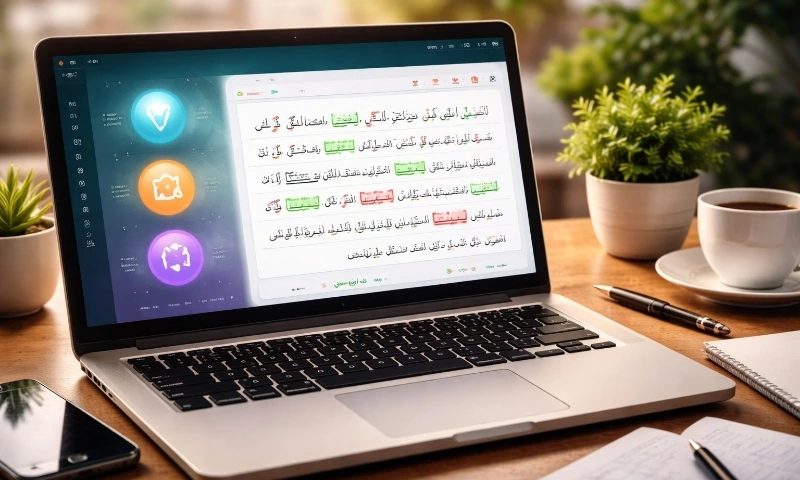
New Urdu Grammar Tool Aims to Transform Digital Writing
A new artificial intelligence powered software designed specifically for the Urdu language has been unveiled, marking a significant step forward in regional language technology. The tool, called Gramora, aims to improve grammar, punctuation, vocabulary and overall clarity in Urdu writing, offering a dedicated solution for millions of native speakers. Developed by a team of linguists and technology experts, Gramora addresses a long standing gap in AI language tools. While English users benefit from advanced grammar and writing assistants, Urdu speakers have had limited access to intelligent software tailored to their linguistic needs. Gramora seeks to close that divide by using machine learning models trained specifically on Urdu language data. At the launch event, one of the developers said that Urdu speakers “deserve tools that understand the nuances and depth of their language.” The software goes beyond basic spellchecking. It detects contextual errors, suggests alternative phrasing, improves sentence structure and enhances vocabulary choice. Early demonstrations showed the tool identifying mistakes that conventional checkers often miss. Urdu is spoken by more than 230 million people worldwide. Despite this vast user base, digital tools for Urdu have historically struggled because of the language’s complex script, rich grammar and contextual variations. Developers say Gramora has been trained on extensive linguistic datasets to better interpret meaning and context rather than relying only on direct word matching. In addition to grammar correction, Gramora offers style suggestions and sentence rephrasing features. These tools make it useful for students, journalists, content creators and professionals who rely on precise writing. The software is designed to work across web platforms and integrates with common writing environments, allowing users to improve their text in real time. Technology analysts see this launch as part of a wider global shift toward language specific AI tools. As artificial intelligence continues expanding into everyday writing tasks, demand for regional language solutions has grown rapidly. Urdu digital content has also increased in recent years due to rising internet penetration and social media usage in Pakistan and across South Asia. Initial testing of Gramora shows promising improvements in writing accuracy and fluency. Developers plan to refine the system further by incorporating user feedback and expanding features such as predictive text and conversational AI capabilities in Urdu. If successful, Gramora could play a key role in strengthening digital literacy and empowering Urdu speakers to communicate more effectively in academic, professional and creative spaces.
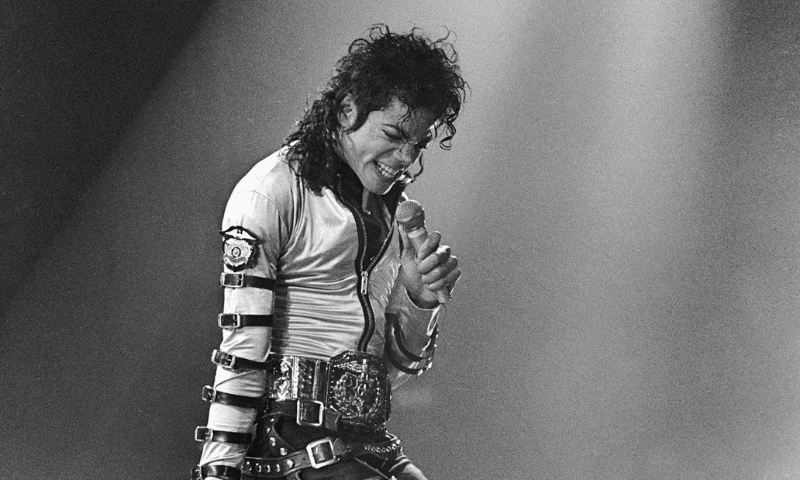
First Behind-the-Scenes Look at Michael Jackson Biopic Michael Released
Fans of the late King of Pop Michael Jackson were treated to an exclusive first look at the upcoming biographical film Michael, offering early insight into one of the most highly anticipated movies of 2026. The behind-the-scenes footage was released by Lionsgate as part of the promotional rollout for the film, showcasing the intense preparation involved in creating an authentic portrayal of Jackson’s life and artistry. The footage focuses on actor Jaafar Jackson, the nephew of Michael Jackson, who takes on the titular role. In the new clip, he is shown rehearsing and refining some of the legendary dance moves that helped define Michael’s global impact. The scenes also highlight the meticulous effort by the cast and crew to capture the spirit of the pop icon’s stage presence. In speaking about his experience, Jaafar Jackson said he has “felt that love for Michael every day on set,” underscoring his emotional connection to the part and to the legacy of his uncle. This personal connection has generated excitement among fans and industry watchers, who see it as adding a level of authenticity rarely available in standard biographical films. Michael is directed by Antoine Fuqua, known for critically acclaimed films like Training Day and The Equalizer, and written by Oscar-nominee John Logan, whose credits include Gladiator and The Aviator. Produced by Graham King’s GK Films and Lionsgate, the biopic follows Jackson’s journey from his beginnings with the Jackson 5 to his rise as a solo superstar and influential figure in global music history. The film’s release has been much discussed since its announcement. Originally scheduled for earlier dates, Michael faced several delays and reshoots, with Lionsgate now setting April 24, 2026 as its official theatrical premiere. The decision to postpone appears tied to the complexity of Jackson’s life story and the filmmakers’ desire to balance artistic depth with narrative cohesion. The first full trailer for the movie, released earlier in February 2026, immediately sparked global buzz. Viewers praised Jaafar Jackson’s performance, noting his capture of key elements of Michael’s iconic style, including signature dance moves and vocal mannerisms. Some fans even said he “really outdid himself” in his depiction of the music legend. The behind-the-scenes footage also shows efforts to recreate famous moments including early studio sessions and live performances, suggesting the film will be both a celebration of Jackson’s music and a deep look into his creative process. As anticipation builds, Michael is shaping up to be one of the standout music biopics of the year, offering audiences a fresh lens on the life of an artist whose influence still resonates across generations.

Pakistan Auto Sales Reach 43-Month High in January 2026
Pakistan’s automobile market is showing renewed strength as total vehicle sales in January 2026 reached a 43-month high, driven by strong demand, lower interest rates and rising consumer confidence, industry data shows. According to the Pakistan Automotive Manufacturers Association (PAMA), total sales of cars, light commercial vehicles (LCVs), vans and sport utility vehicles (SUVs) rose to 23,055 units during the month, marking a 36 percent year-on-year increase and a 74 percent rise month-on-month. This strong performance lifted cumulative vehicle sales during the first seven months of fiscal year 2025–26 (7MFY26) to 111,377 units, up 43 percent from 77,686 during the same period last year. Analysts say this signals a broader rebound in Pakistan’s auto industry after years of muted activity. Experts attribute the sharp increase to a combination of favourable factors. Lower interest rates set by the State Bank of Pakistan have reduced financing costs, while easing inflation has improved consumer purchasing power. Many buyers also delayed deliveries to secure January registrations, which typically improve resale value. These trends boosted month-on-month figures sharply. Among leading automakers, Indus Motor Company (IMC) saw sales jump 52 percent YoY and 119 percent MoM to 5,060 units in January. Strong demand for models including the Corolla, Yaris and Cross helped drive growth. Similarly, Honda Atlas Cars Ltd (HACL) recorded a 64 percent YoY and 86 percent MoM rise to 3,620 units, with its City and Civic variants particularly popular. Pak Suzuki Motor Company (PSMC) continued its positive trend, reporting a 32 percent YoY and 67 percent MoM surge to 10,916 units. The performance of popular models such as the Alto and Wagon R contributed strongly to overall sales. Sazgar Engineering Works Ltd also posted an all-time high monthly figure of 2,004 units. The two- and three-wheeler segment also saw remarkable growth as combined sales climbed by 31 percent YoY and 13 percent MoM to reach an all-time monthly high of 181,790 units. Motorcycle manufacturers like Atlas Honda Ltd, the maker of the widely owned CD70 bike, recorded record monthly sales. Commercial vehicle categories also performed well. Truck and bus sales surged 77 percent YoY to an all-time monthly high. However, tractor sales slid, reflecting continued weak demand in the agricultural sector. Industry analysts believe the positive momentum in auto sales could continue in 2026, supported by stable macroeconomic conditions, lower borrowing costs and the gradual introduction of new vehicle models, including hybrid and electric vehicles that have started entering the market through new entrants like Mega Motor Company’s BYD lineup.
