

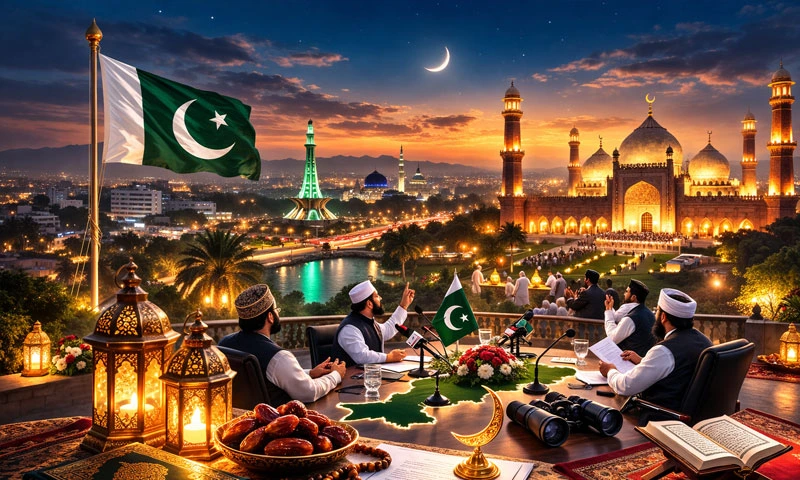
Pakistan stood on the brink of Ramadan 2026 as the Central Ruet-e-Hilal Committee met to sight the crescent moon marking the start of the holy month. The meeting was chaired by Maulana Abdul Khabir Azad and held in Peshawar, while zonal committees gathered in provincial capitals to collect testimonies from across the country. Officials from the Pakistan Meteorological Department and the Ministry of Religious Affairs were also present to provide technical input regarding moon visibility. The committee reviewed weather conditions, astronomical data, and eyewitness reports before announcing the official decision. Cloud cover in parts of the country remained a key factor in visibility, although clear skies in several regions raised expectations of a positive sighting. The final announcement would determine whether Ramadan begins the following day across Pakistan. Read More: Inside Pakistan’s Mosques: The Intense Prep Behind Taraweeh Nights The Ruet-e-Hilal Committee follows a long-standing tradition of physical moon sighting, even though astronomical calculations are considered during deliberations. This method continues to play a central role in religious observances across Pakistan. India and Bangladesh Confirm Ramadan Moon Apart with Pakistan neighboring countries also confirmed the sighting. Authorities in India and Bangladesh announced that the Ramadan crescent had been sighted, meaning the holy month would begin there the next day. In Bangladesh, the National Moon Sighting Committee confirmed the crescent after Maghrib prayers. Similarly, religious authorities in India declared the beginning of Ramadan following verified reports from multiple locations. These announcements often influence public anticipation in Pakistan, though the Ruet-e-Hilal Committee makes its decision independently based on domestic reports. Read More: Federal Government Announces Ramadan 2026 Office Timings Across Pakistan Ramadan’s Spiritual and Social Significance Ramadan holds immense religious importance for Muslims worldwide. The month is observed through fasting from dawn to sunset, increased prayer, charity, and community gatherings. In Pakistan, Ramadan brings a visible shift in daily life, including adjusted office hours, special television transmissions, and bustling markets ahead of iftar. Government institutions also prepare for the month with announcements regarding working hours and utility arrangements. Religious scholars encourage unity and harmony during the sacred period. Awaiting the Final Word in Pakistan As the committee meeting concluded deliberations, citizens across Pakistan waited for the official announcement. The decision would not only mark the start of fasting but also set the tone for nationwide religious observances over the coming weeks. Read More: Saudi Arabia Confirms Wednesday as First Day of Ramadan 2026 After Moon Sighting While India and Bangladesh confirmed the beginning of Ramadan, Pakistan’s declaration remains rooted in its own verification process. The Ruet-e-Hilal Committee’s announcement ultimately ensures clarity and unity for millions preparing to observe one of Islam’s holiest months. Yesterday, the Ramadan crescent was sighted in Saudi Arabia and several other Arab countries, marking the beginning of the holy month there a day earlier. Following the official confirmation by Saudi authorities, Muslims in the Kingdom observed their first fast, which has now been completed today. Several Gulf and Arab states also began Ramadan in line with Saudi Arabia’s announcement, ushering in the start of religious and spiritual activities across the region.
T20 World Cup: Dominant Win Over Namibia Sends Pakistan to Super Eight
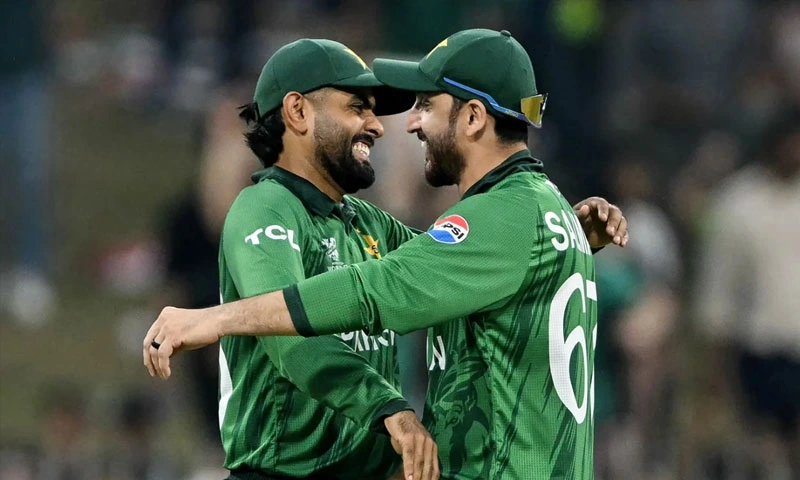
The ICC Men’s T20 World Cup 2026 delivered high tension in Group A as Pakistan locked horns with Namibia at the Sinhalese Sports Club in Colombo on February 18. According to India Today match coverage, weather forecasts had predicted showers throughout the afternoon, raising fears of a washout that could complicate qualification scenarios. Pakistan entered the fixture under pressure following their heavy defeat to India earlier in the tournament. A win was the simplest route to the Super Eight stage. A washout would have given them one point, but qualification would then depend on net run rate calculations. Fortunately for Pakistan, the rain stayed away long enough for a full match to unfold. Sahibzada Farhan’s Century Changes the Game The turning point came with a commanding performance from Sahibzada Farhan. The right-hander delivered a fluent century that anchored Pakistan’s innings and lifted the team to a dominant total beyond 190 runs. India Today reported that Farhan’s hundred was one of the standout performances of the group stage. His knock blended controlled aggression with smart strike rotation, ensuring Pakistan built steady momentum rather than relying on late acceleration. The innings not only strengthened Pakistan’s position in the match but also boosted their net run rate, a crucial factor in group standings. Bowlers Seal the Super Eight Spot Pakistan’s bowling unit complemented the batting effort with disciplined execution. Early breakthroughs disrupted Namibia’s chase and prevented any sustained partnerships. Tight middle overs further restricted scoring, leaving Namibia with an uphill battle. Namibia struggled to keep pace with the required run rate and eventually fell well short of the target. The result confirmed Pakistan’s Super Eight qualification with six points from four matches. Group A concluded with India topping the table, while Pakistan secured second place ahead of the United States. Namibia exited the tournament without a win but earned praise for competing strongly throughout the event. Momentum Restored Ahead of Knockout Phase Pakistan’s campaign now moves into the Super Eight stage, where competition intensifies significantly. The victory over Namibia restores confidence after earlier setbacks and highlights the importance of middle-order stability. Farhan’s century arrives at a crucial moment in the tournament. As Pakistan prepares for stronger opposition in the next round, consistency with both bat and ball will determine whether this resurgence transforms into a deep World Cup run.
Cricket Shakeup: ICC May Move 2029 and 2031 Events From India to Australia
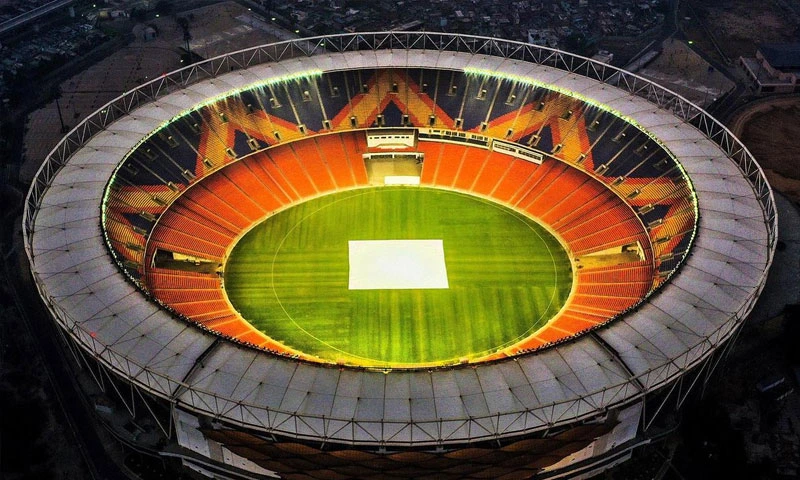
Rising political tensions between Pakistan and India have created fresh uncertainty around the hosting of upcoming major cricket tournaments scheduled in India. Amid strained relations between the two neighbours, the International Cricket Council (ICC) is reportedly considering relocating some key events, including the 2029 Champions Trophy and the 2031 ODI World Cup, to Australia. India and Bangladesh were originally named co-hosts of both these major ICC events, with India slated to host the bulk of matches. However ongoing diplomatic tension which recently surfaced during the ICC Men’s T20 World Cup 2026 has prompted cricket administrators to examine contingency plans for alternative venues. Australian cricket venues have emerged as likely candidates because of Australia’s proven record of hosting high-profile ICC competitions. Read More: T20 World Cup Permutations: When and How India and Pakistan Can Cross Paths Again Background: Cricket and Regional Politics Collide The current controversy stems partly from the 2026 T20 World Cup, co-hosted by India and Sri Lanka, where Pakistan initially boycotted its match against India. The boycott was announced in solidarity with the Bangladesh Cricket Board (BCB) after Bangladesh withdrew from its India fixtures on reported security concerns. Pakistan briefly considered withdrawing too but later reversed its decision after high-level consultations involving the Pakistan Cricket Board (PCB), the ICC, and neighbouring cricket boards, to avoid potential financial losses and uphold the spirit of the sport. During the T20 World Cup match between India and Pakistan on February 15, 2026, both teams did not exchange the customary handshake at the toss, a symbolic continuation of the rivalry and political tension that has affected bilateral cricket relations for years. More recently, Pakistan and India have not played a bilateral series since 2012–13 because of longstanding political strain and security concerns. What This Means for Future ICC Events Relocating events like the 2029 Champions Trophy or 2031 ODI World Cup would be a major shift for the ICC. India currently plays a central role in global cricket logistics, economy, broadcast revenue, and fan engagement. Moving events to Australia could ensure smoother participation from all member nations, especially if geopolitical tensions persist. Read More: Free Entry Announced for Pakistan vs Namibia T20 World Cup Clash Australia has previously hosted significant ICC tournaments, including the 2015 Cricket World Cup and the 2022 ICC Men’s T20 World Cup, making it a reliable alternative should the ICC council approve the shift. These venues offer world-class infrastructure and a neutral environment for global cricket. Broader Impact on South Asian Cricket Neutral hosting arrangements are not unprecedented in cricket. The ICC’s Future Tours Programme allows matches to be scheduled at neutral venues if teams cannot tour due to political or security reasons. This flexibility aims to ensure that international cricket continues without undue disruption, balancing logistical needs with diplomatic sensitivities. Read More: Flights to Colombo Cross $1,300 Ahead of India vs Pakistan T20 Clash If the ICC’s plans proceed, it would mark a significant departure from traditional scheduling and reinforce how geopolitics continues to shape the sport in South Asia.

Federal Government Announces Ramadan 2026 Office Timings Across Pakistan
The Federal Government of Pakistan has officially published the revised office timings for the month of Ramadan 1447 AH, aiming to support employees in observing fasting while maintaining productivity across ministries and departments. The PakObserver report states that the adjusted schedule will take effect from the first day of Ramadan, which this year is expected to be either February 19 or February 20, 2026, depending on the sighting of the crescent moon. Government offices will follow timings from 9:00 a.m. to 3:00 p.m., six days a week, with Fridays observing early closure after Zohar prayers. Read More: Ramadan 2026: Which Countries Will Have Longest and Shortest Fasting Hours Details of the Revised Work Schedule According to the notification, the revised schedule applies to all federal ministries, divisions, departments and attached/subsidiary offices. All employees will begin work at 9:00 a.m. and continue until 3:00 p.m. in the afternoon. On Fridays, offices will close soon after the Zohar prayer break, reflecting the traditional midday prayer practice during Ramadan. The arrangement mirrors similar timings adopted by provincial governments in previous years. Provinces like Punjab, Sindh, Khyber Pakhtunkhwa, Balochistan and Islamabad Capital Territory traditionally align their work hours with the federal directive to maintain uniformity. This approach helps public sector staff balance spiritual obligations such as Suhoor and Iftar with official duties. Why Timings Change in Ramadan During the holy month of Ramadan, Muslims fast from dawn (Fajr) to sunset (Maghrib), abstaining from food and drink during daylight hours. The alteration in office hours allows fasting employees to conserve energy during the hottest part of the day and to spend more time with family for Suhoor, Iftar and prayers. Read More: SBP Declares Bank Holiday on Ramadan’s First Day for Zakat Deduction Similar adjustments occur in many Muslim countries. For example, in the United Arab Emirates, government work hours are reduced by two hours while private sector hours are set from early morning until mid-afternoon. These changes are intended to facilitate comfort and productivity during fasting. Impact on Public Services While government offices operate on shortened hours, essential services such as healthcare, emergency response, police and utility services will continue regular operations to ensure public safety and uninterrupted service delivery. This structured plan reflects the need to balance service continuity and religious observance. Private businesses and educational institutions often issue their own Ramadan schedules, adjusting hours to fit the cultural and operational needs of employees, customers and students. Read More: Ramadan 2026: Federal Constitutional Court Issues Office Hours Notification As Ramadan approaches, millions of Pakistanis prepare spiritually while businesses and public offices align operations to suit the fasting calendar.

Cricketer Hassan Ali and Wife Samiya Celebrate Birth of Their Baby Boy
Pakistani pacer Hassan Ali and his wife Samiya, also known as Samiya Naveed, have announced the arrival of their newborn son, bringing joy to fans and well-wishers across the cricketing world. The couple shared the happy news on social media, where they expressed gratitude and excitement after welcoming their baby boy into the family. Hassan Ali, 31, is one of Pakistan’s premier fast bowlers, known for his fiery pace, aggression, and ability to deliver under pressure. He rose to prominence following his impactful performances in the 2019 ICC Cricket World Cup, where he finished among the tournament’s top wicket-takers. His ability to swing the ball at high speeds and bowl crucial spells has made him a key member of Pakistan’s bowling attack across formats. A Moment of Personal Celebration Hassan and Samiya announced the birth of their son on social platforms with heartfelt messages. Close friends, family and fans quickly flooded the comments section with congratulatory wishes, celebrating the couple’s new chapter in life. https://x.com/RealHa55an/status/2023987779655372972 Celebrations in the cricket community have been particularly warm. Several fellow cricketers and sports figures extended their greetings. Pakistan team fast bowler Shaheen Shah Afridi posted “Welcome to the world, little one,” along with heart emojis, while former batsman Shoaib Malik tweeted his best wishes to the family. These reactions reflect the affection the cricketing fraternity holds for Hassan both on and off the field. Hassan Ali’s Cricket Journey Hassan started his international career in 2016 and impressed quickly with his pace and aggression. He played a pivotal role in Pakistan winning the 2017 ICC Champions Trophy, where he delivered a match-winning spell in the final against India. With more than 100 wickets across formats, Hassan has consistently showcased his skill and resilience, earning praise from fans and pundits alike. In recent years, Hassan has battled forms and fitness challenges, but each time returned with renewed vigor. His commitment to improving his game and contributing to Pakistan’s success remains unwavering. Life Beyond Cricket Away from the pitch, Hassan Ali embraces his role as a husband and now a father. His family life remains a source of strength and balance. Samiya often shares personal moments and family memories on her social media, showing a softer side to the cricketer’s life beyond the professional spotlight. As Hassan and Samiya begin this new journey of parenthood, fans will be eager to see more personal milestones from the couple while continuing to follow his performances for Pakistan in upcoming cricket events.

Apple’s First Multicity Launch Event Set for March 4: Here’s What You Must Know
Apple has confirmed a product launch event on Wednesday, March 4, 2026, marking one of the company’s first major hardware showcases of the year. Invitations describe the gathering as a “special Apple Experience” and will take place simultaneously in New York, London and Shanghai at 9:00 a.m. Eastern Time. The announcement has stirred widespread anticipation within the tech world, with observers and analysts suggesting it may be Apple’s most globally oriented launch strategy yet. Traditionally, Apple holds product events at its Cupertino, California campus, but this multicity format underscores the company’s intent to engage a broader international audience. Read More: New Apple Devices Coming Soon: Faster iPads, Smarter Siri, and More What’s Expected at the Apple March 4 Event Although Apple has not officially disclosed the product lineup, credible industry sources and rumors point to several major hardware announcements around the March 4 event: iPhone 17e A more affordable successor to the iPhone 16e called the iPhone 17e is widely expected to debut. It may include a faster A19 chip, MagSafe support, and potentially a Dynamic Island display while retaining a competitive starting price around $599 for global markets. New MacBooks with M5 Chips Apple is believed to be preparing several MacBook updates featuring its next-generation M5 silicon, which offers significant performance gains over the previous M4 chip. These could include new MacBook Pro models with M5 Pro and M5 Max variants, and possibly a more affordable MacBook powered by an A18 Pro chip. Read More: iPhone 18 Pro Leaks Suggest a New Direction for Apple’s Flagships Updated iPads Rumors also point toward refreshed iPad models, including a higher-tier iPad Air with an M4 chip and a revamped base-level iPad with an A18 processor. Both devices would benefit from Apple’s latest software advances seen in iPadOS 26, which brings new windowing and productivity features. Additional products such as new Mac displays, refreshed Mac mini, and even a Home hub accessory have also been mentioned in speculation, though Apple has not confirmed details. No Live Stream Confirmed Yet Notably, Apple’s invitation makes no mention of a live stream, which could mean the event will not be broadcast globally in the traditional online keynote format. Instead, Apple may follow recent practice, spreading product announcements through press releases and hands-on demos over several days leading up to March 4. Read More: No More iPhone SE: Apple Reshapes Its Lineup With iPhone 16e What This Could Mean for Apple’s 2026 Lineup Industry analysts believe this event will signal the start of Apple’s 2026 product cycle, with additional announcements likely throughout the spring. If Apple delivers on expectations, March 4 could be one of the biggest early-year launch days in the company’s recent history.
Inside Pakistan’s Mosques: The Intense Prep Behind Taraweeh Nights
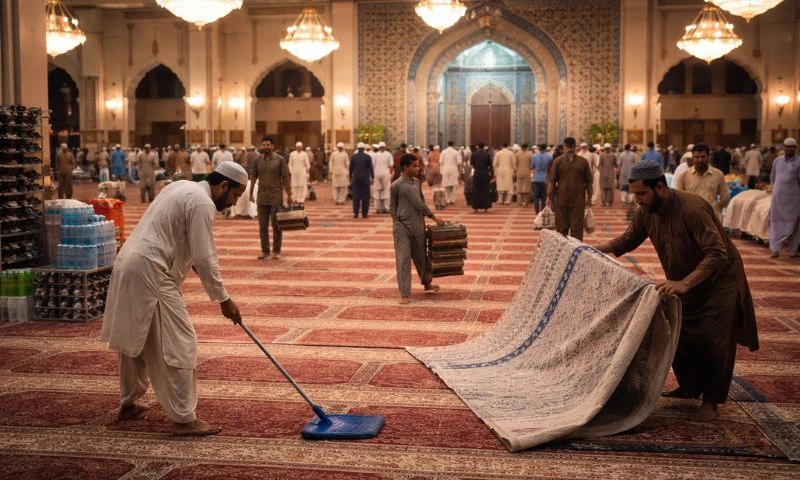
Across Pakistan, mosques start preparing for Taraweeh weeks before Ramadan. Taraweeh is a voluntary night prayer offered after Isha during Ramadan, and many mosques hold it in congregation every night. With attendance rising sharply, mosque committees focus on cleanliness, reciters, sound, and safety. Deep Cleaning and Space Planning The first step is practical. Volunteers wash courtyards, deep clean prayer halls, and dust fans, lights, and shelves. Many mosques replace or shampoo carpets and repair ablution areas. They also re-mark saff lines, add extra mats, and create clearer entry and exit flows for peak nights, especially the last ten days. In larger city mosques, teams set up separate lines and access points for women, and assign volunteers to guide families. Read More: How to Lose Weight During Ramadan: Simple Expert Tips That Work Choosing the Huffaz and Setting the Pace A major Taraweeh task is selecting the imam or hafiz who will lead long recitations. For flagship mosques, this can involve formal selection. At Islamabad’s Faisal Mosque, the religious affairs ministry selects a group of reciters for Ramadan nights after a competition process. One of the selected qaris, Muhammad Bilal Orakzai, described the year-round effort behind that role: “to recite here, we prepare hard the whole year round,” he said. Many neighborhood mosques do it locally, but they still plan a schedule, agree on pace, and coordinate backup reciters in case of illness. Security and Crowd Control Security planning has become more visible in recent years. Police and district administrations often issue Ramadan security directions, especially for Taraweeh and Friday prayers. In Islamabad, police directed mosque managements to deploy guards during Taraweeh, restrict parking near gates, keep a single entry and exit route, and report suspicious activity. In Punjab, official guidelines have included extra personnel, CCTV and walk-through gates, searchlights, controlled entry routes, and tighter checks during Taraweeh hours. Read More: Will Ramadan Begin on Feb 19? Pakistan Awaits Official Moon Sighting Announcement Sound, Lighting and Community Logistics Mosques also test microphones, upgrade speakers, and reduce feedback so worshippers can follow recitation clearly. Committees arrange water points, manage shoe areas, and coordinate nearby parking with residents. On high-traffic nights, some mosques set volunteer rosters for crowd flow, first aid support, and lost-and-found desks. The goal stays simple: a calm, safe space where worshippers can focus on prayer.

How to Lose Weight During Ramadan: Simple Expert Tips That Work
Ramadan is not only a time for spiritual reflection and fasting but also a period when many people aim to improve their health and manage their weight. While skipping food from dawn (Suhoor) to sunset (Iftar) burns calories naturally, unhealthy eating after sunset can undo fasting benefits. Experts now say that with a few smart changes, you can lose weight in Ramadan without compromising your energy or health. Why People Gain Weight in Ramadan Although fasting reduces eating hours, many people tend to overeat high-calorie foods at Iftar and Suhoor. Sugary drinks, fried snacks like samosas, and heavy desserts lead to excess calories, poor sleep, and bloating. Read More: The Best Mobile Apps to Track Sleep, Hydration and Fitness in Ramadan Nutritionist Dr. Shameem Ahmed notes, “People often break their fast with sweet drinks and fried food. These choices spike blood sugar and cause weight gain rather than help with weight loss.” This shows that food quality matters as much as fasting itself. Expert-Recommended Tips for Weight Loss in Ramadan Health professionals suggest simple changes that help maintain energy while promoting fat loss: 1. Start Iftar With Water and Dates Drink water first to rehydrate and eat one or two dates for natural sugars. This helps control hunger and prevents eating large portions later. Dates also provide important vitamins and potassium. 2. Choose Protein-Rich Meals Include lean proteins such as chicken, fish, lentils, or eggs at Suhoor and Iftar. Protein boosts metabolism and keeps you full longer, reducing snack cravings later at night. 3. Avoid or Cut Back on Fried Foods Fried snacks like pakoras and samosas are high in calories and fat. These foods cause weight gain and digestive discomfort. Replacing them with baked or grilled alternatives can help control calorie intake. Read More: The Smart Ramadan Shopping Plan That Cuts Costs Without Cutting Joy 4. Limit Sugary Drinks and Desserts Sweet drinks and sugary desserts add calories without nutrition. Try herbal teas, fresh fruit, or plain yogurt instead. Reducing sugar also helps improve energy levels during fasting hours. 5. Stay Active, Even Lightly Gentle activity such as a short walk after Iftar can boost digestion and burn calories. Moderate exercise does not need to be intense; consistent movement helps keep your metabolism active. 6. Eat Balanced Suhoor for Sustained Energy Suhoor should include slow-digesting carbohydrates like oats, whole wheat toast, and fruits. These foods provide sustained energy and prevent hunger pangs later in the day. Why These Changes Work Experts say that losing weight in Ramadan is less about eating less and more about eating smart. A balanced diet that focuses on hydration, protein, healthy fats, and fiber helps control hunger, regulate metabolism, and prevent energy crashes. Read More: 5 Morning Drinks to Kickstart Weight Loss in 2026 Dr. Ahmed adds, “Fasting gives your body a break, but what you eat at Iftar and Suhoor sets the tone for weight loss or gain.” This underlines the importance of mindful eating during Ramadan. Gentle activity such as a short walk after Iftar can boost digestion and burn calories. Moderate exercise does not need to be intense; consistent movement helps keep your metabolism active.
Free Entry Announced for Pakistan vs Namibia T20 World Cup Clash
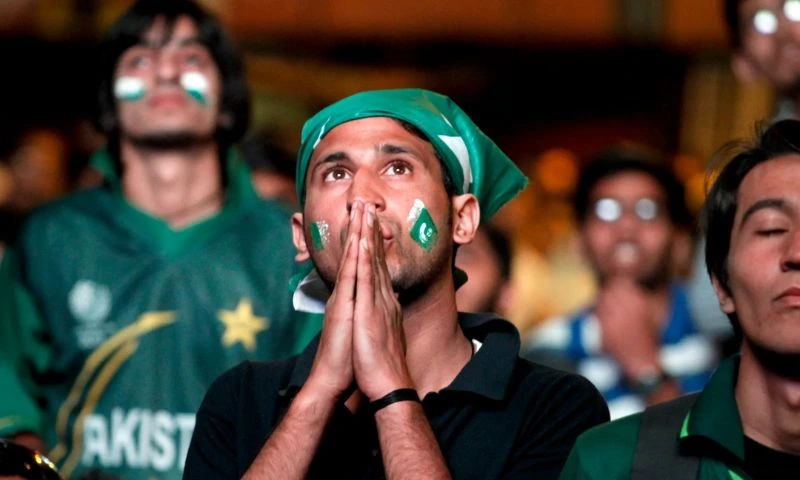
Sri Lanka Cricket (SLC) has announced free entry for fans to witness the crucial ICC Men’s T20 World Cup 2026 Group A match between Pakistan and Namibia at the Sinhalese Sports Club Ground (SSC) in Colombo on Wednesday. The gesture aims to boost local fan participation and bring greater excitement to one of the tournament’s most pivotal fixtures. According to the official SLC statement, Gates 5 and 7 of the SSC Grounds will be opened to the public from 1:00 pm local time, two hours before the scheduled 3:00 pm start. Fans can enter free of charge to watch what promises to be a thrilling contest. This match holds huge importance for Pakistan. The team must win to secure a Super Eight stage berth as the second-placed team in Group A. Pakistan currently has four points after its earlier results, including a defeat to India in what was a tournament-highlight match. A win would take Pakistan to six points, overtaking the United States for the second spot in the group. Read More: Win or Go Home: Pakistan Faces Namibian Test in Must-Win Match If rain disrupts play, however, Pakistan could still advance. A washout would split the points, giving each side one point and lifting Pakistan’s tally to five. That would leave them ahead of the United States on points and likely secure their place in the Super Eights. But both teams will be eager to play a full match and settle the matter on the field. Colombo’s weather has been unpredictable, with forecasts indicating showers throughout the afternoon. The venue itself holds historic significance. The Sinhalese Sports Club Ground has hosted several standout matches this tournament, including the opening game and the event’s first under-lights international fixture. This will be the fifth World Cup match held at the SSC and the final one at the venue for this edition. Fans turning up in large numbers could help create a lively atmosphere for this defining match. Read More: T20 World Cup Permutations: When and How India and Pakistan Can Cross Paths Again Pakistan’s squad reached Sri Lanka earlier in February to compete in this event, which is co-hosted by Sri Lanka and India. The tournament started on February 7 and runs until March 8, 2026, featuring 20 teams across eight venues. The thriller against Namibia is one of the final group stage fixtures before the Super Eight stage begins. With free entry drawing greater local support, Wednesday’s game could become one of the most memorable moments of the early World Cup period, as Pakistan battles for survival and advancement in the marquee event. Fans are expected to pack the ground in a display of passion for cricket.

Ramadan 2026: Which Countries Will Have Longest and Shortest Fasting Hours
As Ramadan 2026 approaches, Muslims worldwide are preparing for the sacred month of fasting, prayer, and reflection. One key aspect that varies significantly across the globe is the daily fasting duration, which depends on sunrise and sunset times in each region. Why Fasting Hours Differ Across Countries Muslims observe fasts from dawn (Fajr) until sunset (Maghrib). Because the Islamic calendar is lunar, Ramadan shifts earlier each year by about 10–12 days. This year, Ramadan is expected to begin on February 19, 2026, though some countries may start a day earlier if the crescent moon is sighted. Read More: Ramadan 2026: Which Countries Will Have Longest and Shortest Fasting Hours Fasting hours change due to a country’s latitude and seasonal daylight patterns. Countries nearer to the equator have more consistent sunrise and sunset times, while those farther north or south experience greater variation. Longest Fasting Hours in 2026 In 2026, many cities in the Northern Hemisphere will record some of the longest fasting durations due to longer daylight hours during late winter and early spring. • Helsinki, Finland: ~17.5 hours• Nuuk, Greenland: ~17 hours• Glasgow, Scotland: ~16.5 hours• Ottawa, Canada: ~16.5 hours• Zurich, Switzerland: ~16.5 hours• Rome, Italy: ~16.5 hours• Moscow, Russia: ~~11–12 hours (varies)• London, UK: ~14–16 hours These figures reflect how locations closer to the Arctic experience extended days even in February and March. Many Muslims in these regions rely on moderation rules from scholars, allowing them to follow fasting times of nearby moderate cities or follow Mecca’s schedule to ensure health and feasibility. Shortest Fasting Hours Around the World Conversely, countries closer to the equator and in the Southern Hemisphere will observe some of the shortest fasting hours: • Christchurch, New Zealand: ~11–11.5 hours• Puerto Montt, Chile: ~11.5 hours• Karachi, Pakistan: ~12 hours• Buenos Aires, Argentina: ~12 hours• Cape Town, South Africa: ~12.5 hours• New Delhi, India: ~12.5 hours• Dubai, UAE: ~12–13 hours• Nairobi, Kenya: ~13 hours These regions benefit from more balanced and consistent day lengths in late winter, making fasting durations manageable for many observers. Read More:SBP Declares Bank Holiday on Ramadan’s First Day for Zakat Deduction Moderate Fasting Times in Many Regions Many countries, including those in the Middle East and South Asia, will see fasting hours around 12.5–14 hours. For example: • UAE (first day fast): ~12 hours 46 minutes — shorter than last year’s ~13 hours 16 minutes. • Pakistan: Fasting hours are generally shorter in 2026 compared with the previous year. In cities like Cairo, Riyadh, Jakarta, and Kuala Lumpur, the duration will also range towards shorter or balanced fasting times because of proximity to the equator or favorable daylight patterns. Scholarly Guidance for Extreme Locations In areas where daylight hours are extremely long such as Greenland or northern Scandinavia, many Islamic scholars recommend that Muslims either follow the fasting timings of Makkah or a nearby moderate city to maintain health and avoid hardship. This practice is widely accepted among jurists and helps ensure that the fast remains spiritually meaningful and physically sustainable.
