


The Pakistan Telecommunication Authority (PTA) has partnered with Meta, the parent company of WhatsApp, to introduce a dual One-Time Password (OTP) system designed to prevent an increase in WhatsApp account takeovers across Pakistan. This move comes amid rising complaints from users about hackers gaining unauthorized access to accounts through social engineering tactics. Under the new system, known as “Meta OTP,” a second authentication code will automatically be generated three minutes after the first OTP is sent. This second code allows a user to regain control of their account if the original OTP has been compromised or mistakenly shared with a scammer. How Dual OTP Works Currently, WhatsApp uses a single OTP sent via SMS to verify a user’s identity when they log in on a new device. Scammers have taken advantage of this by posing as courier staff or customer service agents to trick users into providing their OTPs, then accessing accounts and committing fraud. In several reported cases, unauthorized access to accounts has led to requests for money from the victim’s saved contacts. The new Meta OTP feature adds a layer of protection by generating a secondary code shortly after the original. If a user suspects that their first OTP has been exposed to a hacker, entering the second code will help prevent the scammer from successfully taking over the account. The feature is currently being rolled out first in Pakistan. PTA and Meta Collaboration Officials from the PTA and Meta have completed the technical discussions needed to implement the system. Final consultations are expected to conclude soon before the feature is fully launched and made available to WhatsApp users across the country. Pakistan is set to be the first market in the world where this dual OTP security system will be implemented as a standard protection measure. The collaboration reflects growing concern among regulators about digital fraud and account theft. PTA has been actively monitoring cyber threats targeting communication apps and social platforms, advocating for stronger safeguards for users. WhatsApp Safety and User Guidance Meta’s introduction of dual OTP systems aligns with increasing global focus on account security. Security experts often recommend enabling two-step verification and adding a recovery email to strengthen protection against unauthorized access. These steps, along with new OTP measures, can significantly reduce the risk of account hijacking. In a world where messaging apps are widely used for personal and business communication, protecting user accounts from unauthorized access remains a priority for both regulators and platform providers.
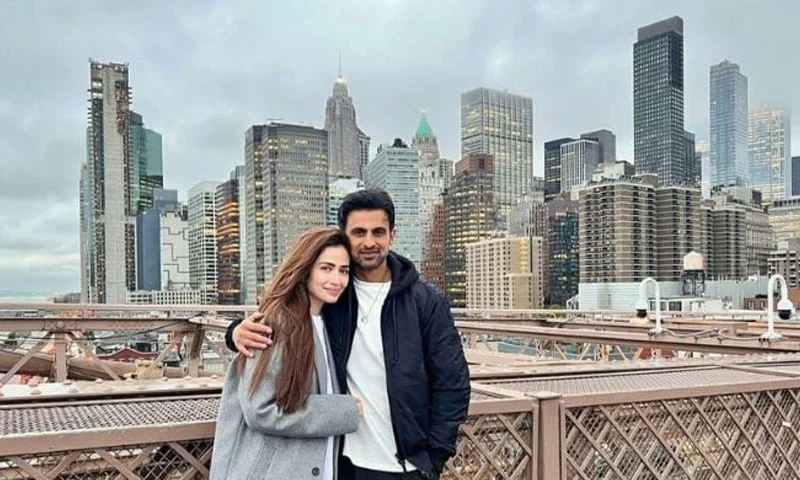
Shoaib Malik Denies Fourth Marriage Rumours, Threatens Court Cases
Former Pakistan all-rounder Shoaib Malik has refuted persistent rumours suggesting he has entered into a fourth marriage, strongly condemning misinformation circulating online and threatening legal action against those spreading false claims. The denial came in response to a social media post that quickly gained traction, prompting Malik to address the matter publicly. Malik took to his official social media accounts on March 2 to categorically deny the rumours. In his clarification, he warned that he would pursue legal action against anyone found responsible for intentionally disseminating untrue information about his personal life. “I would like to categorically state that these rumours are completely baseless and fabricated,” he wrote. “I am taking this matter seriously and all necessary legal steps will be taken.” pic.twitter.com/WhuqIutvDI— Shoaib Malik 🇵🇰 (@realshoaibmalik) February 28, 2026 Background: Social Media Rumours and Reaction The controversy began when unverified social media posts claimed that Malik had secretly married for a fourth time, a subject that drew significant attention from fans and critics alike. Such gossip quickly attracted hundreds of shares and comments on platforms such as Instagram and Twitter, prompting concerned followers to seek clarification from the cricketer himself. Malik’s statement was posted alongside an emphatic legal warning. He urged members of the public to refrain from believing or reposting “wild speculations” that lack factual basis and misrepresent his character. He said misinformation has real-world implications and can cause reputational harm if not checked promptly. Shoaib Malik’s Personal Life in Public View The 44-year-old cricketer has long been a figure of public interest in Pakistan and beyond. He previously made headlines for his marriages and family life. Malik’s first marriage was to Rubina Malik, with whom he has three sons. The couple later separated. In 2010, he married Indian tennis star Sania Mirza, a high-profile union that also attracted intense media attention. The marriage ended in divorce after several years. Fans have often followed Malik’s personal milestones as closely as his cricketing achievements, which include captaining Pakistan in all three formats and representing the country for over two decades. His former relationship with Indian tennis star Sania Mirza especially generated widespread media coverage due to its cross-border nature and celebrity status. Malik’s Professional Legacy Shoaib Malik made his international debut in 1999 and became one of Pakistan’s most experienced all-rounders. Known for his powerful batting, sharp fielding and handy medium-pace bowling, he played pivotal roles in Pakistan’s ODI, Test and T20 squads for years. He has also competed in various global T20 leagues, including the Pakistan Super League and international club tournaments. Since retiring from international cricket, Malik has remained active in franchise leagues and continues to be a respected name in cricketing circles. Legal Action and Public Misinformation in Pakistan Malik’s firm warning comes amid a broader environment where celebrities and public figures in Pakistan are increasingly taking legal recourse against defamatory online content. Pakistani law recognises online defamation as an offence under the Pakistan Penal Code and related cybercrime statutes, allowing individuals to seek civil and criminal remedies for reputational harm caused by internet rumours. By addressing the issue directly and threatening legal action, Malik set a firm precedent for other public personalities dealing with misinformation, signalling that unfounded rumours can carry real legal consequences.
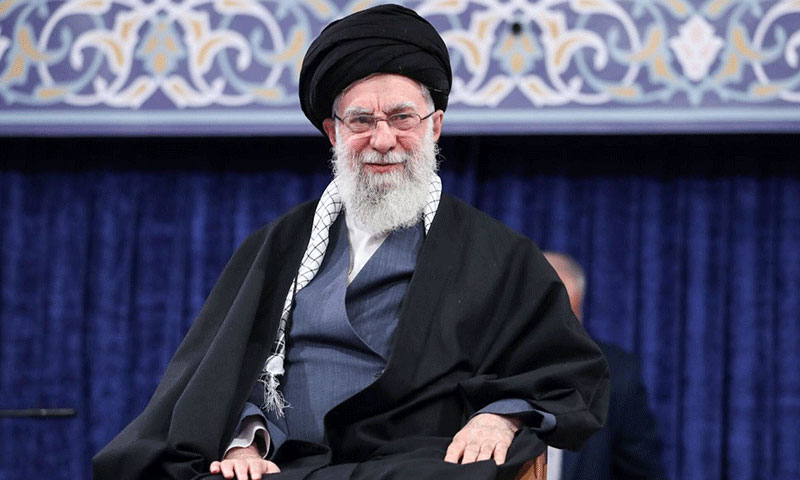
Life of Iran’s Ayatollah Ali Khamenei: From Seminary Student to Powerful Supreme Leader
Ayatollah Ali Khamenei rose from modest roots in the eastern Iranian city of Mashhad, where he was born to a religious family on April 19, 1939. Early on, he received Islamic education and memorised the Quran before studying philosophy and theology in the major Shiite seminary city of Qom. His early exposure to religious teachings and activism helped shape his lifelong involvement in politics and clerical leadership. In the early 1960s, Khamenei joined the movement against Shah Mohammad Reza Pahlavi. His activism led to multiple arrests by the shah’s intelligence service, SAVAK, and periods of exile. He played a key role in organising protests that culminated in the 1979 Islamic Revolution, which toppled the monarchy and brought clerical rule to Iran. In the Name of God, the Compassionate, the MercifulAmong the faithful are men who fulfill what they have pledged to Allah: there are some among them who have fulfilled their pledge, and some of them who still wait, and they have not changed in the least (Holy Quran 33:23). pic.twitter.com/f1JizOKWQD— Khamenei.ir (@khamenei_ir) March 1, 2026 Rise to Power and Presidency Following the revolution, Khamenei quickly ascended within the new political establishment. He served in multiple positions, including deputy defence minister, Tehran Friday Prayer leader, and later as president of Iran from 1981 to 1989. During his presidency, he navigated the country through the destructive Iran-Iraq War, emerging as a dominant political figure. In 1981, a bomb attack left him badly injured and permanently impaired his right arm. This early brush with assassination marked the beginning of his long and controversial career in Iran’s highest ranks. After the death of Ayatollah Ruhollah Khomeini in 1989, Iran’s Assembly of Experts appointed Khamenei as the Supreme Leader — a decision that required amendments to the constitution because he did not hold the highest clerical rank at the time. Supreme Leader: Authority and Influence As Supreme Leader, Khamenei became the most powerful figure in Iran, with authority over the armed forces, judiciary, foreign policy and major state institutions. He held ultimate control over the Islamic Revolutionary Guard Corps (IRGC), which played a critical role in domestic and regional affairs. His decisions outweighed those of presidents and parliament, making him a central figure in national and foreign policy. Under his leadership, Iran’s foreign policy focused on opposition to the United States and Israel, backing allied militias and forming the so-called “axis of resistance” that included groups like Hezbollah and Hamas. Internally, he suppressed dissent and protests, including the significant 2009 Green Movement and mass demonstrations in 2022 following the death of Mahsa Amini. Domestic Challenges and Controversies Critics argued that Khamenei’s rule became increasingly authoritarian, marked by crackdowns on reformist movements, restrictions on personal freedoms and suppression of political opposition. Widespread protests over economic hardship in 2025 also challenged his leadership, reflecting deep social discontent. Nevertheless, he maintained tight control through his loyal network within the clerical establishment and security forces. Khamenei’s Role in Iran’s Nuclear Ambitions Khamenei was pivotal in shaping Iran’s nuclear strategy. While he approved the 2015 Joint Comprehensive Plan of Action (JCPOA), a nuclear deal with world powers, he remained skeptical of full engagement with the West. After the U.S. withdrew from the agreement, he adopted a more defiant posture and supported advancing the nuclear program. Death and Legacy On February 28, 2026, Khamenei was reportedly killed in a joint U.S.-Israeli military operation that struck his compound and other key locations in Iran. Iranian state media confirmed his death and announced 40 days of national mourning, underscoring his symbolic status in the Islamic Republic. His passing leaves a power vacuum at the heart of Iran’s political system, with the future direction of the regime uncertain. Khamenei’s life and rule spanned the formative decades of the Islamic Republic, deeply shaping its identity, governance, military posture and regional influence. His legacy remains contested, seen by supporters as a steadfast defender of sovereignty and by critics as a symbol of repression and rigid theocratic rule.
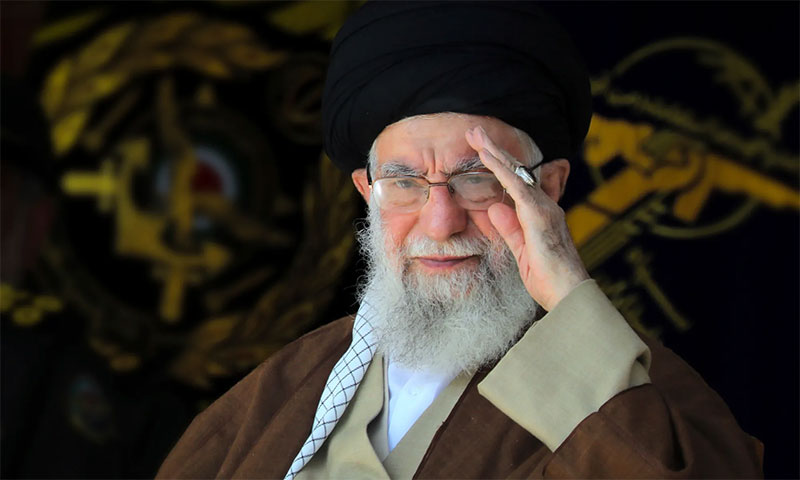
Iran’s Supreme Leader Khamenei Killed in US-Israeli Strikes, 40 days of mourning announced in Iran
Iran’s Supreme Leader Ayatollah Ali Khamenei has been killed in joint military strikes by the United States and Israel, Iranian state media confirmed early Sunday, marking one of the most significant escalations in Middle East tensions in decades. The attacks targeted his compound in Tehran as part of a broader offensive launched late Saturday under what U.S. officials have described as a pre-emptive military campaign. Khamenei, 86, had led the Islamic Republic since 1989, holding ultimate authority over political, military and religious affairs in Iran. His death was confirmed shortly after U.S. President Donald Trump publicly announced the strike, calling it a decisive action against what he described as a persistent threat to U.S. and regional security. https://Twitter.com/Tasnimnews_Fa/status/2027920852470403379 Government Declares Mourning and Public Holidays Following the confirmation, the Iranian government declared 40 days of official mourning nationwide and announced seven days of public holidays as a mark of respect for the late leader. State media also reported that several of Khamenei’s family members, including his daughter, son-in-law and granddaughter, were killed in the attack, with additional reports indicating that another relative was also among the casualties. US and Israeli Military Operation The strike forms part of a major joint operation by the United States and Israel, known in military circles as Operation Epic Fury and Operation Roaring Lion, targeting Iran’s leadership, nuclear infrastructure and strategic military sites. U.S. officials said the attack was timed to coincide with a high-level meeting of Khamenei and senior aides, based on intelligence that ensured the operation’s maximum impact. President Trump described the strikes as a necessary step to protect American forces and allies, asserting that advanced intelligence systems enabled precise targeting. He wrote that Khamenei was unable to evade capture or destruction, even with sophisticated tracking and surveillance efforts. Immediate Retaliation from Iran Hours after the strikes, Iran launched missile and drone attacks against U.S. bases in the Gulf and Israeli territory, escalating the conflict into a broader regional confrontation. Reports have emerged of civilian and military casualties on both sides, as well as damage to infrastructure across the region. The Islamic Revolutionary Guard Corps has pledged continued retaliation, portraying Khamenei’s death as martyrdom at the hands of “vicious terrorists” and vowing that the “hand of revenge” will not let the attackers go unpunished. Global Reactions and Consequences World leaders have reacted with alarm to the rapid escalation. The United Nations and major powers called for restraint and urgent diplomacy to prevent further spillover into neighboring countries. Oil markets also reacted sharply, with global crude prices rising due to fears of disrupted supplies through the Strait of Hormuz. Analysts say Khamenei’s death creates a significant power vacuum in Tehran. His successor has not yet been named, and Iran’s Assembly of Experts, a clerical body responsible for selecting the next supreme leader, is expected to convene soon. Some experts believe hardliners within the Islamic Revolutionary Guard Corps could assert greater influence during the transition. The conflict, which erupted amid months of failed nuclear negotiations, regional proxy tensions and internal Iranian protests driven in part by economic hardship, now stands on the brink of broader war with global implications.
