


US President Donald Trump warned on Monday that a “big wave” of military strikes against Iran could be imminent, and he did not rule out sending American troops on the ground if needed. His comments came as joint United States-Israel operations continue against Iranian military targets. Trump made his remarks while underlining that the current air campaign is still developing and might soon intensify. He also emphasized that the US remains open to all options, including ground force deployment. Trump’s Direct Warnings to Iran In the interview referenced, Trump said the United States could escalate its military campaign if Iran retaliates more forcefully. His warning followed several days of joint US-Israeli strikes targeting what American officials described as Iranian military infrastructure. Posting on Truth Social, Trump added a stark message to Tehran: the US would strike with “a force that has never been seen before!” if Iran launched significant retaliation. pic.twitter.com/uAxTGrJisv— Donald J. Trump (@realDonaldTrump) March 2, 2026 Ground Troops Not Ruled Out Trump’s comments echoed Pentagon signals that while no American ground troops are currently in Iran, their future deployment is not off the table. US Secretary of Defense Pete Hegseth refused to rule out troop deployment, saying the Pentagon is prepared to consider all options to achieve US objectives. “We’re not going to go into the exercise of what we will or will not do,” Hegseth said. General Dan Caine, Chairman of the Joint Chiefs of Staff, also noted that US operations are ongoing and could extend if deemed necessary by military leadership. Ongoing Military Operations The conflict escalated late last week when the United States and Israel began extensive airstrikes against Iran, described by officials as part of a broader strategy to degrade Tehran’s military and strategic capabilities. This offensive followed months of heightened diplomatic tension and proxy engagements across the region. The campaign, dubbed Operation Epic Fury by some outlets, has struck Iranian military sites and leadership infrastructure. Iranian sources report that these attacks have resulted in significant casualties and damage to critical facilities. Regional Spillover and Retaliation Iran has retaliated against the US and its allies with missile and drone strikes across the Middle East, targeting American positions and partner nations. Multiple fronts, including Lebanon, Bahrain, Kuwait, and the Gulf states, have seen heightened activity in recent days. Officials in Tehran have expressed defiance, with some Iranian leaders vowing continued resistance against what they call foreign aggression. Global Concerns and Market Impact The conflict’s expansion has rattled global markets, particularly energy prices, as shipping lanes like the Strait of Hormuz remain volatile due to military movements and rising tensions. Financial analysts warn that prolonged conflict could further disrupt trade and energy stability. US Lawmakers Raise Strategic Questions Back in Washington, lawmakers from both political parties expressed concern about the lack of a clear long-term plan following Trump’s announcements and initial strikes. Some legislators cautioned that open-ended operations without defined goals could embroil the United States in a prolonged conflict. Democrats and Republicans alike noted the risk of escalation if diplomatic avenues remain underdeveloped, stressing the need for careful oversight.
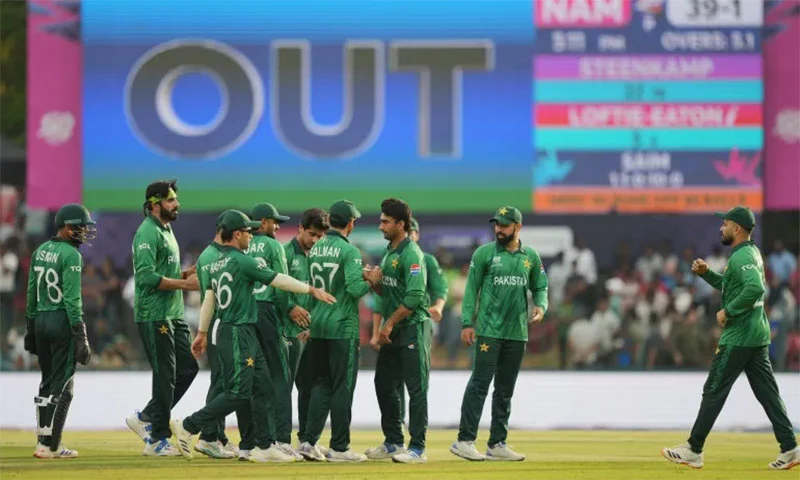
T20 World Cup Disaster: Rare Moment in Pakistan Cricket History as PCB Fines Squad
The Pakistan Cricket Board (PCB) has fined every member of the national squad Rs5 million for what it described as an “underwhelming” campaign in the ICC Men’s T20 World Cup 2026. The move is unusual because the fines were reportedly imposed exclusively for poor on-field performance, not for disciplinary breaches. According to reports, the penalties were imposed immediately after Pakistan’s heavy defeat to India in the group stage, a loss by 61 runs that shook confidence in the team’s preparation and execution. Officials told players the fines could have been waived if Pakistan had progressed to the semi-finals but since the side failed to reach the final four, the fines were enforced. This marks a rare moment in Pakistan cricket history, where financial penalties follow pure performance issues rather than disciplinary actions. In the past, PCB penalties were generally linked to breaches of conduct or off-field behaviour. T20 World Cup 2026: What Went Wrong Pakistan entered the tournament with strong expectations. The team topped their initial group and advanced to the Super Eight stage, but results were mixed: Pakistan struggled early against the Netherlands before edging a narrow win. They suffered a heavy loss to India and a defeat to England in Super Eights. A rain-affected match against New Zealand saw points shared, but the side could not recover strong momentum. A close win over Sri Lanka was not enough to lift Pakistan’s net run rate, and they were eliminated before the semi-finals. The early exit extended Pakistan’s recent semi-final drought in major ICC tournaments, adding pressure on team leadership and selectors. PCB Sends a Message on Accountability Reports say board officials want to make a statement on accountability and performance expectations. The fines are meant to signal that financial rewards and privileges are increasingly tied to results on the field. This echoes comments attributed in other reports that PCB officials believe the team was “pampered” and must now face consequences for inconsistent results. While the board has not publicly outlined further disciplinary measures or structural changes, the move may lead to discussions about leadership and squad strategy going forward. Reaction from Players and Experts Captain Salman Agha already acknowledged the team underperformed after the World Cup exit. “We have underperformed in the whole tournament. We are out of the semis due to our failure in decision-making in pressure situations,” he said. Though PCB’s action may be unpopular among fans, analysts say it reflects rising demands on performance consistency in modern T20 cricket. Pakistan’s men’s team now turns its focus to future assignments, including an ODI series against Bangladesh scheduled in March 2026. The fines may also spark internal reviews of selection criteria, coaching, and T20 strategy ahead of upcoming global events
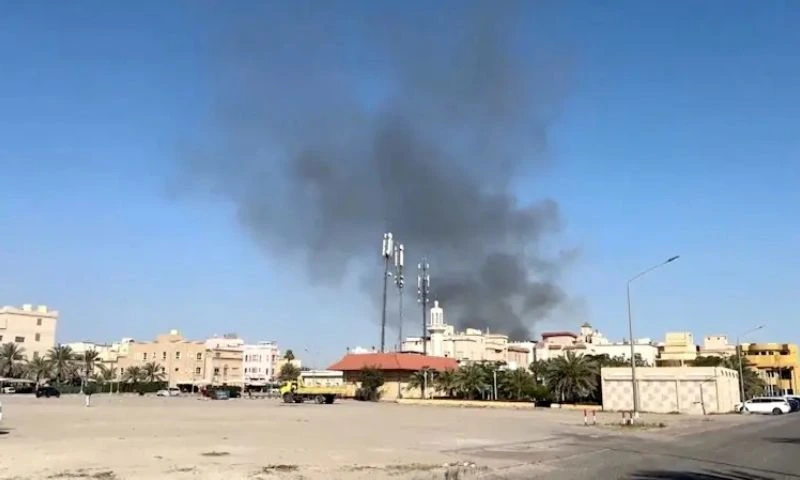
Multiple U.S. Fighter Jets Crash in Kuwait as Middle East War Escalates
Several U.S. military fighter jets crashed in Kuwaiti airspace on Monday, March 2, 2026, as tensions in the Middle East intensified into a broader confrontation involving the United States, Iran and allied forces. The Kuwaiti Ministry of Defence confirmed the crashes, stating that all crew members survived and were evacuated safely. Aircraft Crashes Amid War Escalation According to official statements by Kuwait’s Ministry of Defence, several U.S. warplanes crashed on Monday morning during ongoing hostilities in West Asia. The ministry said that all crew members survived and were taken to hospitals for medical evaluation, adding that search and rescue operations were deployed immediately following the crashes. Videos circulating online show at least one U.S. F-15 fighter jet descending through the sky engulfed in smoke and flames before crashing, with footage suggesting the pilots ejected safely before impact. Kuwaiti security forces were seen assisting and escorting the jets’ crew members after they reached the ground. State media from Iran claimed responsibility for downing some of the aircraft, asserting that Iranian defenses had struck U.S. jets during the widening conflict. However, some reports have also raised the possibility of “friendly fire” incidents within the complex combat environment, though this has not been officially confirmed. Read More: Context of the Regional Conflict The crashes come as part of a rapid escalation in the Middle East conflict, which began after a joint U.S.-Israeli military operation targeted key Iranian sites and leadership. Among the most significant developments was the reported killing of Iran’s Supreme Leader Ayatollah Ali Khamenei in a coordinated airstrike, forcing Tehran to launch extensive retaliatory strikes across the Gulf. These attacks have involved ballistic missiles and drones targeting strategic sites in several countries, including Kuwait. The Iranian response has triggered air defense alerts in multiple nations, with Kuwaiti forces reportedly intercepting hostile drones and missile threats in its airspace for the third consecutive day. Smoke was also seen near the U.S. Embassy in Kuwait City, prompting diplomatic warnings for American citizens to seek shelter and stay vigilant. Strategic and Human Impact While the crashes of U.S. military aircraft mark a significant event in this conflict, authorities in Kuwait and the United States have stressed that all crew members survived and that their conditions were stable as of the latest reports. Nevertheless, the incidents represent the first confirmed losses of American combat aircraft in Kuwaiti territory since the conflict intensified. The broader Middle East crisis has already had far-reaching effects beyond military engagements. Civilian populations in Gulf cities such as Dubai, Abu Dhabi and Qatar have experienced airspace closures, disruptions to commercial flights, and evacuations of foreign nationals. Regional stock markets shut down as a precaution, and oil prices surged amid fears of further geopolitical instability. Read More: PIA Suspends Flights to UAE, Qatar, Kuwait and Bahrain After Middle East Tension Diplomatic and Military Reactions Global leaders have reacted to the intensifying conflict with a mix of condemnation and calls for de-escalation. Iran’s top security officials have stated that Tehran will not negotiate with the United States, while several Western nations, including the United Kingdom and France, have pledged support for regional allies. Meanwhile, the United States continues military operations in the region, asserting that it will maintain its strategic posture against threats from Iranian forces. As the conflict continues, the international community remains closely watching developments and urging diplomatic channels to prevent further escalation that could engulf wider parts of the Middle East in open warfare.
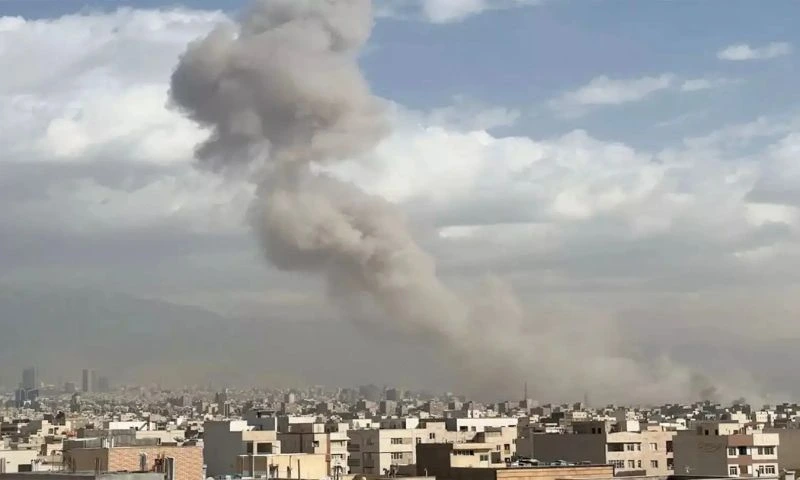
Iranian Airstrikes Shake Dubai’s Reputation as Safe Tourism Haven
The United Arab Emirates, long known as a secure and luxurious global tourism and business destination, faced a startling shift in its reputation after Iranian missiles and drones struck parts of Dubai and Abu Dhabi this weekend. The attacks, part of a wider escalation in the Middle East conflict involving Iran, the United States and Israel, have rattled residents, visitors and global markets alike. Strikes Hit UAE Cities, Harming Infrastructure On February 28 and into early March 2026, Iran launched a significant wave of missiles and drones across the Gulf, targeting several nations in retaliation for joint U.S. and Israeli military strikes on Iranian territory. The UAE’s air defenses intercepted the majority of projectiles, but debris and explosions still caused damage in Dubai and Abu Dhabi. The Dubai International Airport terminal sustained minor structural harm, and four people were reported injured as a result of aerial debris. The iconic Burj Al Arab hotel also experienced damage from intercepted drones, and blasts were reported at other prominent locations, including hotels on Palm Jumeirah. In Abu Dhabi, authorities reported casualties and injuries as Iranian strikes continued. Overall, three people were killed and at least 58 others were injured across the UAE, according to official defense ministry estimates. Tourism and Safety Perceptions Upended Dubai’s global allure, built on safety, luxury and economic opportunity, faced a fierce challenge as tourists and expatriates took cover and panicked amid blasts. As some visitors initially mistook the explosions for fireworks, the reality soon set in that the city, once considered insulated from major conflict, was no longer immune to regional tensions. Eyewitnesses reported periods of sheltering and confusion at major tourism and residential areas, undermining the confidence many foreign visitors and investors had placed in the Emirate’s security. Airspace Closures and Disrupted Travel In response to the aerial attacks and ongoing conflict, the UAE closed its airspace temporarily. Major carriers, including Emirates Airlines, suspended flights into and out of Dubai, leaving many travelers stranded. Millions rely on the UAE’s international hubs for global connections, and the shutdown has sent ripple effects across international travel networks. To assist impacted passengers, the UAE government offered accommodation, meals and flight rebooking options for thousands stranded by the cancellations. Wider Conflict Context and Regional Fallout The strikes on the UAE occurred within the broader framework of a rapidly escalating conflict that began when a coordinated U.S.-Israeli assault targeted Iranian military sites and leadership positions. Iran’s extensive retaliation involved missiles and hundreds of drones launched at various Gulf states. Gulf nations, including the UAE, Saudi Arabia and Qatar, have since condemned the attacks and expressed concern about regional security. Diplomacy and alliances are under strain as leaders work to avoid further escalation. Impact on Tourism and Business Climate Economists and travel industry experts say that the perception of safety is as critical as reality in tourism and business hubs. Dubai’s branding as a safe, tax-free frontier for visitors and investors depends heavily on stability. The recent attacks now pose a serious test to that image, with potential long-term implications for tourism, foreign investment and expatriate confidence if security concerns persist. As authorities work to reassure both residents and international audiences, the lasting impact of these strikes on the UAE’s global reputation will be watched closely by governments and markets worldwide.
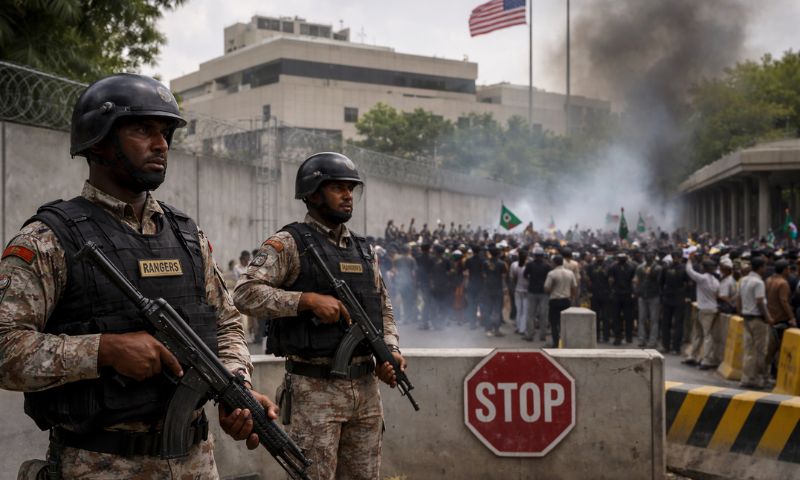
US Embassy in Pakistan Cancels Visa Services After Violent Protests
In response to violent protests across Pakistan, the United States Embassy in Islamabad and its Consulates General in Karachi and Lahore have cancelled all visa appointments and American Citizen Services scheduled for Monday, March 2, 2026. The decision comes as security concerns mount around diplomatic missions following clashes between protesters and law enforcement and widespread demonstrations in major cities. Security Alert and Cancellation of Services On March 1, the US Mission in Pakistan issued a security alert, announcing that all visa and consular appointments, including American Citizen Services such as passport renewals and notarial services, are cancelled for March 2 at the US Embassy in Islamabad and consulates in Karachi and Lahore. The advisory, posted on the Embassy’s X account, also stated that US personnel have been instructed to restrict their movements until further notice. The alert warns American citizens in Pakistan to monitor local news, avoid large crowds, stay aware of their surroundings, and ensure their Smart Traveler Enrollment Program (STEP) information is up to date for security updates. Read More: PIA Suspends Flights to UAE, Qatar, Kuwait and Bahrain After Middle East Tension Protests Turn Violent Across Cities The embassy’s decision followed widespread demonstrations across the country that began on March 1, 2026, after news of Iranian Supreme Leader Ayatollah Ali Khamenei’s assassination in a series of United States and Israeli airstrikes. Supporters of the Iranian leader took to the streets, expressing outrage with anti-US and anti-Israel slogans. In Karachi, hundreds of protesters attempted to storm the US Consulate General, breaching the outer wall in some areas and smashing windows and gate structures. Clashes with police and paramilitary forces intensified, with security personnel using tear gas and, according to multiple reports, live fire against the crowd. At least 23 people were reportedly killed and over 120 injured in these confrontations, making it one of the deadliest protest episodes in recent Pakistani history. Similar demonstrations erupted in Lahore and Islamabad, where crowds gathered outside US diplomatic sites. In Lahore, protests remained largely peaceful but drew heavy police presence, while in Islamabad, demonstrators attempted to march toward the US Embassy in the Diplomatic Enclave until being stopped by roadblocks and riot police. Impact on Diplomatic Operations The cancellation affects both non-immigrant and immigrant visa interviews, and routine services previously scheduled. According to travel and visa service platforms, although routine services are suspended, emergency services for US citizens may continue on a case-by-case basis. Appointment fees and visa application validity may be extended automatically once operations resume. Security has been heightened around all diplomatic missions in Pakistan. Local law enforcement agencies and federal security forces have been deployed to reinforce the protective perimeter around the embassy and consulates. Read More: Istanbul Talks at a Crossroads: What Could Go Wrong if US–Iran Negotiations Fail Government and Public Response In response to the unrest, Pakistani authorities have invoked strict security measures in multiple cities and, in some cases, imposed restrictions on public gatherings to prevent further escalation. Interior officials have also reiterated that while peaceful protest remains a constitutional right, vandalism and attacks on institutions will be prosecuted under applicable laws. The diplomatic missions have urged citizens and foreigners alike to avoid protest areas, follow official guidance, and verify information through embassy channels as the situation evolves.

Qatar Extends Remote Work for Government Staff Amid Regional Security Fears
The Qatari government has extended remote working arrangements for public sector employees, citing heightened regional tensions and concerns over public safety. The decision, effective on Monday, March 2, 2026, comes as part of broader precautionary measures aimed at protecting citizens, residents and ensuring continuity of essential government services. Government Directive for Remote Work The Council of Ministers Secretariat General announced the extension of remote work for employees across all ministries, government agencies, public institutions and authorities. This follows an earlier announcement to begin remote work on Sunday, March 1, in response to the evolving situation in the Middle East. Under the directive, remote working applies to nearly all administrative and civil roles, but excludes employees in military, security and health sectors, as well as those whose duties require their physical presence at the workplace. Officials have urged citizens and residents to rely solely on official government sources for information and to strictly follow safety and security advice issued by relevant authorities. Precautionary Measures in Response to Regional Conflict The decision to extend remote work comes amid escalating tensions following a series of military exchanges between regional powers, including the United States, Israel and Iran. There have been reports of missile and drone attacks in neighboring countries, prompting swift actions by several Gulf nations to enhance protective measures. In recent days, Qatar joined a coalition of Gulf and Arab states in condemning Iran’s missile and drone strikes, expressing concerns over escalating conflict and its potential impact on civilian safety and regional stability. The Ministry of Interior in Qatar also has issued several public safety alerts, advising residents to stay indoors and follow early warning systems as precautionary measures. Read More: Israel Launches Pre-Emptive Attack on Iran as Explosions Reported in Tehran Impact on Public Life and Services The extension of remote work is one of several steps taken within Qatar to mitigate risk and maintain the functioning of essential services. Alongside remote work, officials have taken other safety measures such as banning the use of drones temporarily and directing educational institutions to shift to distance learning. Hamad International Airport has also kept flight operations suspended as a precaution, and Qatar Airways has warned passengers of further disruptions due to the ongoing closure of Qatari airspace. While remote work helps limit physical movement and reduce risk for civil employees, authorities have been careful to ensure that vital government operations continue without interruption. Each entity is tasked with assessing its operational essentials and adjusting work arrangements accordingly. Read More: PIA Suspends Flights to UAE, Qatar, Kuwait and Bahrain After Middle East Tension Public Reaction and Government Assurance Reactions among the Qatari public have varied. Some residents appreciate the focus on safety and precaution, while others are concerned about disruptions to routine services and personal plans. Government officials have acknowledged these concerns, stressing that the remote work directive is a temporary measure rooted in safety priorities and continuous monitoring of the situation. Authorities have reiterated that all information will be shared through official channels and that citizens and expatriates alike should follow guidance to ensure their own safety and that of their families.

Cristiano Ronaldo’s Dubai Match Postponed Amid Rising Middle East Tensions
The Asian Football Confederation (AFC) has postponed key continental club championship matches, including Cristiano Ronaldo’s much-anticipated Al Nassr clash in Dubai, citing growing security concerns in the Middle East. The decision comes amid escalating geopolitical tensions that have disrupted sports fixtures across the region. Postponement of Major Matches Al Nassr’s quarter-final tie against UAE side Al Wasl, set in the AFC Champions League Two competition, was due to be played in Dubai on March 4. Fans, players and club officials had prepared for a vibrant clash. However, the AFC announced that the match, along with several other fixtures, has been postponed until further notice. In an official statement, the AFC said that due to the developing situation in the Middle East, Round of 16 and quarter-final matches in the West Region, originally scheduled for March 2-4, 2026, would be rescheduled. Matches in the East Region will go on as planned. The statement emphasised that the AFC will continue to monitor the rapidly evolving situation and prioritise the safety of all involved, including players, officials and fans. Read More: US Embassy in Pakistan Cancels Visa Services After Violent Protests Geopolitical Tensions Impacting Sports The postponement reflects broader regional instability following recent military actions and retaliatory strikes involving key Middle Eastern countries. These conflicts have raised concerns about secure travel and safe environments for international sporting events. Experts say that such tensions often lead governing bodies to reassess match schedules, especially in regions with significant security risks. Football competitions are particularly vulnerable because they draw large crowds and international media attention. The decision to postpone parts of the AFC Champions League mirrors actions by other sports organisations facing similar dilemmas. Players and teams now face uncertainty about when these matches will be rescheduled. Al Nassr’s Season and Ronaldo’s Form Before the postponement, Al Nassr had been enjoying strong form in the Saudi Pro League, sitting at the top of the table with consistent performances across competitions. On March 1, the club secured a 3-1 victory over Al Fahya, with contributions from star players including Sadio Mane and João Félix. Cristiano Ronaldo, however, missed a penalty in that game before the comeback unfolded. Despite the setback in front of goal, Al Nassr’s overall season has been strong with Ronaldo continuing to be a central figure. Earlier this season, he even returned from a brief absence linked to internal disputes and regained his role in the squad. Read More: Fan Reaction and Uncertain Schedule Fans of both Al Nassr and Al Wasl have reacted with mixed feelings. Some expressed disappointment over social media, while others acknowledged that safety must come first. As of now, no new dates have been set for the postponed Champions League fixtures. Football analysts say that global tournaments, especially those involving cross-border travel, will continue to be influenced by geopolitical developments and that organisers will likely adopt flexible scheduling approaches as situations unfold. Looking Ahead for Asian Football The postponement of these fixtures underscores the wider effects that international conflict can have on sport. It not only disrupts tournament timelines but also affects club finances, fan engagement and players’ competitive rhythms. With winter giving way to spring, football stakeholders will closely watch how regional tensions evolve and what that means for the remainder of the AFC competitions.
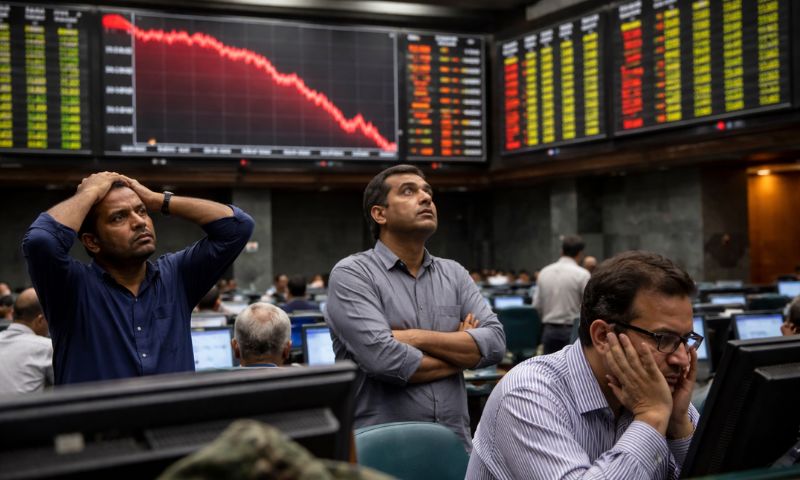
KSE-100 Records Historic 15,000-Point Crash as Geopolitical Fears Rattle Markets
The Pakistan Stock Exchange (PSX) witnessed one of the most dramatic sell-offs in its history on Monday as the benchmark KSE-100 Index plunged more than 15,000 points shortly after the market opened. Trading commenced normally in Karachi, but panic selling quickly swept across sectors within minutes, sending shockwaves through the investor community. Sharp Drop Triggers Trading Suspension Shortly after the opening bell, the KSE-100 index fell by over 15,000 points, representing a decline of nearly 9 percent compared to its previous close of 168,062.16 points. This steep fall triggered an automatic trading suspension under PSX market rules, designed to halt activity when extreme volatility occurs and to prevent further panic-driven losses. When trading eventually resumed around 10:30 am, the index was still down by 12,334.88 points from the previous close, marking a 7.34 percent drop, before marginal recovery efforts brought it back within more moderate losses later in the morning session. Read More: PSX Sees Intense Volatility as KSE-100 Declines Over 1,600 Points All Sectors Hit Hard Investors saw heavy declines across multiple sectors, with fewer than five companies remaining in positive territory during the early session. The vast majority of stocks registered sharp losses as shareholders rushed to exit positions amid the sudden downturn. Data from trading summaries shows other market indexes and indices also suffered, with the KSE-100 dropping to around 152,991 points during the most intense phase of the sell-off. Geopolitical Tensions and Oil Prices Analysts and market observers have largely attributed the extreme turbulence in the Pakistan market to escalating geopolitical tensions in the Middle East. Reports indicate that rising conflict in the region has riled global markets and sparked risk aversion among investors. At the same time, Brent crude oil prices surged sharply, rising by approximately 10 percent to around $80 per barrel amid concerns that widening conflict could disrupt supply. Such spikes in commodity prices often elevate uncertainty in emerging markets like Pakistan. Read More: Oil Prices Surge 10% as Iran Conflict Threatens Key Supply Routes, Analysts Warn $100 Oil Possible Local Market Context Just weeks ago, the KSE-100 had shown more stabilized conditions, with occasional rallies and declines typical of stock market cycles. For example, in mid-February, after days of selling pressure, the index managed to result in positive gains due to renewed buying interest. Despite these intermittent positives, the broader trend over the previous month was downward even before Monday’s crash, with the KSE-100 shedding nearly 10.8 percent month-to-date, according to historical data. What This Means for Investors The sudden crash and trading halt have left many investors concerned about near-term market stability. Trading suspensions are used globally in such situations but also reflect the severity of selling pressure and investor sentiment during periods of high uncertainty. Financial analysts caution that external shocks such as geo-political conflict and oil price volatility can sharply affect risk appetite among both domestic and international investors. How the market will respond in the next sessions remains closely watched by traders

T20 World Cup 2026: Semi-Final Lineup Confirmed, Full Match Schedule Revealed
India sealed their spot in the ICC Men’s T20 World Cup 2026 semi-finals with an electrifying five-wicket victory over the West Indies in their final Super Eight match at Eden Gardens in Kolkata. India successfully chased down a target of 196, winning with four balls to spare, thanks to a spectacular unbeaten 97 from Sanju Samson that powered their thrilling win. Samson’s innings featured 12 fours and four towering sixes and was praised as one of the most important knocks in the tournament. After the match he said, “It means the whole world to me.” He added that he learned match-finishing skills from veterans like Virat Kohli and Rohit Sharma. Semi-Final Lineup Set With India’s victory confirmed, the semi-final lineup for the T20 World Cup 2026 is now locked in. South Africa and New Zealand will contest the first semi-final, while India will face England in the second. The matches will be played at iconic Indian venues, with the first semi-final set for Eden Gardens in Kolkata and the second at Wankhede Stadium in Mumbai. The final is scheduled for March 8 at the Narendra Modi Stadium in Ahmedabad. South Africa had previously secured their semi-final spot with a convincing win against Zimbabwe, remaining one of the tournament’s unbeaten teams in the Super Eight stage. Pakistan Eliminated, Tournament Venues Rearranged Earlier in the Super Eight round, Pakistan failed to keep their semi-final hopes alive, becoming the third team to be officially knocked out after losses to Sri Lanka and others. Their exit means that all remaining knockout matches will be held in India rather than Sri Lanka, as had been provisionally planned. England became the first team to reach the semifinals after a narrow win over Pakistan in a key Super Eight match, setting the tone for a dramatic final stage. Tournament Structure and Context The 2026 T20 World Cup features 20 international teams competing across the Super Eight and knockout rounds. The top two from each Super Eight group advance to the semi-finals. India, South Africa, England and New Zealand are the four teams progressing, each showcasing strong performances throughout the tournament. India’s path to the semifinals was not straightforward, as a heavy loss earlier in the Super Eight stage had put pressure on their title defence. They kept their hopes alive with a record total of 256 against Zimbabwe and strong batting displays from key players. Looking Ahead to the Knockouts India’s upcoming semi-final against England marks the third consecutive T20 World Cup semifinal meeting between the two teams, a rivalry with history and high stakes. South Africa and New Zealand meet in the other semi-final, promising an exciting finish to the championship. Cricket fans around the world are now looking ahead to these marquee matchups, as teams compete for a place in the final and a chance to lift the coveted T20 World Cup trophy. The tournament continues to draw global attention with intense matches, dramatic finishes, and high-quality cricket from the world’s best teams.

Oil Prices Surge 10% as Iran Conflict Threatens Key Supply Routes, Analysts Warn $100 Oil Possible
Oil prices climbed sharply after renewed conflict in the Middle East sparked by U.S. and Israeli military strikes on Iran, prompting traders and analysts to warn of major supply disruptions and a potential surge in global crude oil costs. Brent crude rose about 10 percent to roughly $80 a barrel on Sunday, its highest level in months, reflecting fears that the crisis could cut off key supply routes. Threats to the Strait of Hormuz Drive Market Jitters A critical factor behind the price climb is concern over the Strait of Hormuz, the narrow waterway through which roughly 20 percent of the world’s oil trade passes. After the attacks, many tanker owners and energy traders halted shipments through the strait amid warnings from Iranian authorities and ongoing retaliatory strikes in the region. Analysts said if the strait’s closure persists or worsens, the impact on physical supply could be severe. “While the military attacks are themselves supportive for oil prices, the key factor here is the closing of the Strait of Hormuz,” said Ajay Parmar, director of energy and refining at ICIS, underscoring how vital the route is for global crude flows. Analysts Warn Prices Could Break $100 a Barrel Industry experts are now projecting that oil prices could climb even higher if the conflict continues and maritime transport remains disrupted. Some analysts foresee prices opening “much closer to $100 a barrel” when markets reopen, particularly if the strait remains effectively blocked for an extended period. Helima Croft, Head of Commodities Research at RBC Capital, noted that regional leaders had warned Washington that “a war on Iran could lead to oil prices jumping to more than $100 a barrel,” indicating how sharply markets are reacting to the unfolding geopolitical tensions. OPEC+ Production Increase Likely Too Small to Offset Disruption In response to market volatility, the OPEC+ group of oil-producing countries agreed to a modest production increase of 206,000 barrels per day beginning in April. However, analysts caution that this is unlikely to offset the potential loss of millions of barrels per day should shipping through the Strait of Hormuz remain constrained. Even with alternative pipelines in Saudi Arabia and the UAE available, analysts from Rystad Energy note that net supply could be reduced by 8 million to 10 million barrels per day, given the scale of exports that normally transit the strait. Global Supply Chains and Imports Adapt to New Risks The crisis has prompted governments and energy firms especially in Asia to reassess their stockpiles and seek alternative sources of crude. India, one of the world’s largest oil importers, is evaluating increased Russian oil purchases to bridge potential shortfalls resulting from Middle East supply disruptions. Investors are now watching closely, with oil futures reflecting elevated risk premiums tied to geopolitical events. The situation underscores how political instability in a key production area can ripple outward, affecting not just energy markets but broader financial and economic conditions worldwide.
