


India secured a dramatic victory over England to reach the ICC Men’s T20 World Cup 2026 final after a thrilling semi final clash at the Wankhede Stadium in Mumbai. The defending champions posted a huge total of 253 for 7 in 20 overs, putting England under immense pressure in the chase. Sanju Samson played a crucial role with a powerful 89 runs, anchoring India’s innings with aggressive stroke play. He received strong support from teammates including Shivam Dube and Ishan Kishan, helping India build one of the biggest totals of the tournament. The match turned into one of the highest scoring games in T20 World Cup history, with a combined 499 runs scored across both innings. Bethell’s Century Keeps England in the Hunt England’s chase started under heavy pressure but young batter Jacob Bethell produced a sensational performance to keep his team alive in the match. Bethell smashed 105 runs off 48 balls, producing a fearless display of power hitting against India’s bowling attack. His innings included several boundaries and sixes that brought England close to pulling off a remarkable chase. Despite Bethell’s heroic effort, England struggled to maintain momentum once other batters failed to build long partnerships. Dramatic Finish as India Hold Nerve England needed a strong finish in the final overs but India’s bowlers held their composure under pressure. Jasprit Bumrah and the Indian bowling attack delivered crucial overs near the end of the innings. England eventually finished on 246 for 7 in their 20 overs, falling just seven runs short of the target. The narrow victory sealed India’s place in the tournament final and ended England’s campaign despite their spirited fight. India to Face New Zealand in Final With this victory, India advanced to the T20 World Cup 2026 final, where they will face New Zealand. The defending champions are now aiming to become the first team to successfully retain the T20 World Cup title. The semi final also continued a pattern in recent tournaments where matches between India and England at the last four stage often play a decisive role in determining the eventual champion. Cricket fans now await the final showdown between India and New Zealand, which promises to be another high intensity encounter in the tournament.
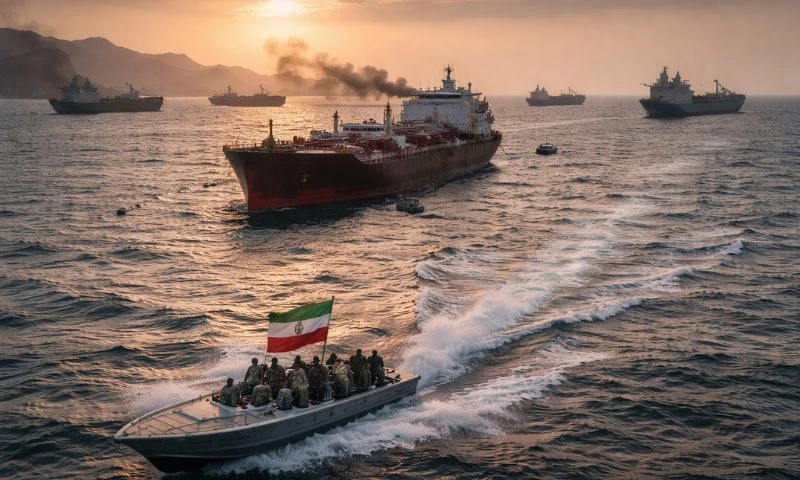
Strait of Hormuz Shutdown Sparks Fuel Shortage Fears: Five Ways Countries Can Reduce Fuel Use
The ongoing conflict involving Iran, United States and Israel has triggered one of the most serious global energy crises in recent years. Following military strikes by the United States and Israel on Iranian targets in late February 2026, Iran responded by shutting down shipping through the Strait of Hormuz, a critical maritime route for global oil transport. Iran’s Revolutionary Guards warned vessels that no ships would be allowed to pass through the strait and threatened to attack tankers attempting to cross. Several oil tankers have been struck or damaged in the area, and maritime traffic has dropped sharply as shipping companies avoid the region due to safety concerns. The conflict has already shaken global energy markets. Oil prices have surged and governments worldwide are preparing for potential fuel shortages if the crisis continues. Why the Strait of Hormuz Is So Important The Strait of Hormuz is one of the most strategic waterways in the world. It connects the Persian Gulf with the Gulf of Oman and the Arabian Sea and serves as the main export route for oil and liquefied natural gas produced in the Gulf region. Roughly 20 percent of the world’s oil supply moves through this narrow passage, making it the most important oil chokepoint in global trade. Major oil exporters including Saudi Arabia, Iraq, Kuwait, the United Arab Emirates and Qatar depend heavily on this route to ship their energy supplies to global markets. Asian economies such as China, India, Japan and South Korea are especially reliant on oil transported through the strait. Because there are few viable alternative routes, disruptions in the strait can quickly lead to higher fuel prices and supply shortages worldwide. Lessons From Past Energy Crises History shows that geopolitical conflicts can trigger sudden energy shortages. During the 1973 Arab oil embargo, oil producing nations cut exports to Western countries, causing severe fuel shortages and economic disruptions. Similarly, during the Iran Iraq War in the 1980s, attacks on oil tankers in the Persian Gulf disrupted global energy trade. In response, many countries adopted strategies such as fuel conservation, energy diversification and strategic petroleum reserves. These lessons remain relevant today as the world faces another potential energy crisis. Five Practical Ways to Reduce Fuel Consumption While governments work to stabilize energy supply, countries can take several practical steps to reduce fuel consumption and ease pressure on global markets. 1. Expand Remote Work and Online Education One of the fastest ways to reduce fuel consumption is to cut daily commuting. Governments can encourage remote working policies in both public and private sectors. Schools and universities can shift temporarily to online learning. During the Covid 19 pandemic, remote work significantly reduced transportation fuel demand in many countries. 2. Improve Public Transport Use Encouraging people to use buses, trains and metro systems can drastically reduce fuel consumption. Governments may introduce temporary incentives such as reduced fares or expanded public transport routes. Many countries adopted this approach during previous energy crises. 3. Promote Carpooling and Shared Mobility Carpooling and ride sharing programs can reduce the number of vehicles on roads. Cities can encourage workers to share rides to workplaces and limit unnecessary travel. Even a small reduction in private vehicle usage can significantly lower national fuel demand. 4. Accelerate Renewable Energy Projects The crisis highlights the importance of renewable energy sources such as solar, wind and hydropower. Expanding these alternatives can reduce reliance on imported fossil fuels and improve long term energy security. Countries investing heavily in renewable energy will be less vulnerable to geopolitical disruptions. 5. Launch Nationwide Energy Conservation Campaigns Governments can promote simple energy saving practices such as reducing unnecessary travel, limiting electricity usage and improving fuel efficiency in transport. Public awareness campaigns during past oil crises helped reduce national energy demand significantly. Preparing for a New Energy Reality The closure of the Strait of Hormuz demonstrates how vulnerable global energy supply chains remain to geopolitical tensions. If the disruption continues, fuel prices could rise further and economic pressures may increase worldwide. Experts say the crisis should serve as a wake up call for governments to invest in energy diversification, conservation and long term sustainability. While geopolitical conflicts are difficult to predict, smarter energy policies and reduced fuel dependence can help countries weather future crises.

Top 5 Kids Clothing Brands in Pakistan Parents Should Know
Shopping for children can sometimes be challenging for parents. They want clothes that are comfortable, durable, stylish, and affordable. In Pakistan, the fashion industry has expanded rapidly over the past decade, and several brands now focus specifically on children’s clothing. Many Pakistani families prefer well known brands because they offer reliable quality, attractive designs, and easy availability through stores and online platforms. This guide highlights five popular kidswear brands in Pakistan that parents frequently choose when shopping for their children. 1. Hopscotch Hopscotch is widely considered one of the leading kidswear brands in Pakistan. The brand offers clothing for newborns, toddlers, and teenagers. Its collections include casual outfits, festive dresses, and everyday wear. Parents appreciate Hopscotch for its colorful designs, comfortable fabrics, and child friendly styles. The brand has expanded rapidly and now operates stores in several major Pakistani cities as well as online platforms. 2. Minnie Minors Minnie Minors is one of the most established kids clothing brands in Pakistan. It has been serving families for decades with clothing designed specifically for infants and young children. The brand focuses on soft fabrics and practical designs that suit everyday wear. Many parents trust Minnie Minors because of its consistent quality and long presence in the Pakistani retail market. 3. Outfitters Junior Outfitters Junior is the kids collection of the popular Pakistani fashion brand Outfitters. It is known for modern western style clothing for children. The brand offers items such as T shirts, hoodies, denim jeans, jackets, and casual outfits. Outfitters Junior is especially popular among urban families who prefer trendy clothing for their children. 4. Bacha Party Bacha Party has quickly become one of the most popular children focused retail brands in Pakistan. Unlike many brands that only sell clothing, Bacha Party offers a wide range of products for kids including clothing, toys, school supplies, and accessories. Parents often visit Bacha Party stores because they can find many children related products in one place. The brand is known for colorful designs and playful themes that appeal to kids. 5. J. Kids (Junaid Jamshed) J. Kids is the children’s clothing line from the well known Pakistani brand Junaid Jamshed. The brand focuses on traditional Pakistani outfits for children, including kurtas, shalwar kameez, and festive wear. Families often choose J. Kids for special occasions such as Eid, weddings, and cultural events because the brand combines traditional designs with comfortable fabrics suitable for children. Growing Kids Fashion Market in Pakistan Pakistan’s kids fashion industry has grown significantly in recent years. Many brands are now investing in dedicated children’s collections that focus on quality materials and stylish designs. The rise of online shopping has also made it easier for parents to explore multiple brands and purchase clothing without visiting stores. As a result, Pakistani families now have several reliable options when shopping for children.
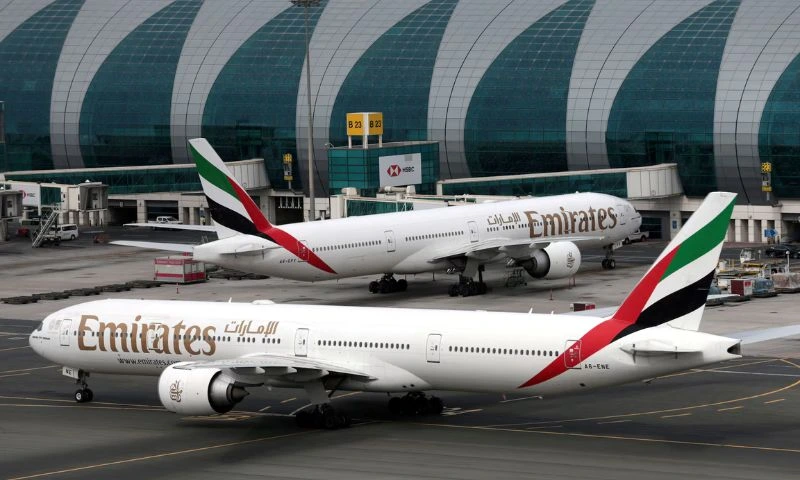
Emirates Resumes Limited Flights After Middle East Airspace Reopens
Dubai based airline Emirates has resumed a limited number of flights after parts of regional airspace reopened following disruptions caused by the ongoing conflict involving the United States, Iran and Israel. The airline confirmed that it is currently operating a reduced flight schedule until further notice while closely monitoring the situation in the Middle East. Emirates said that only selected flights are currently open for booking, and passengers who had earlier reservations will be accommodated on a priority basis. According to the airline, these flights are now open for booking through its official website and customer service channels. The company also advised passengers to check the latest updates before traveling as the operational schedule may continue to change depending on the regional situation. With the limited re‑opening of airspace, Emirates is operating a reduced flight schedule until further notice. Visit https://t.co/A2RdND1Gjr for more information. These flights are open for booking and we are accommodating customers with earlier bookings as a priority.… pic.twitter.com/a0R100YFUL — Emirates Support (@EmiratesSupport) March 5, 2026 Passengers Advised Not to Travel Without Confirmed Bookings Emirates has urged customers to travel only if they have confirmed bookings for operating flights. The airline warned that passengers should not go to the airport unless their flight has been confirmed. Travelers who plan to transit through Dubai will only be allowed to travel if their connecting flight is operating. This measure aims to prevent congestion at airports and ensure smoother operations during the limited flight schedule. The airline also said customers should check their email regularly and review their booking details online to stay informed about any changes or cancellations. Passengers are encouraged to verify their contact details through the booking management system to receive timely updates. Read More: UAE Airports Reopen with Limited Flights Following Conflict Disruptions Flexible Options Offered to Affected Travelers Emirates has introduced flexible options for passengers who were scheduled to travel between 28 February and 31 March. Customers can rebook their tickets on alternative flights to the same destination for travel on or before 30 April. Passengers who booked their tickets through travel agents have been advised to contact their agents directly for assistance. Travelers who booked directly with Emirates can request support through the airline’s customer service platform. The airline is also offering refunds for passengers who no longer wish to travel. Refund requests can be submitted through the airline’s official refund process. In addition, Emirates confirmed that all city check in locations across Dubai are temporarily closed until further notice as part of the operational adjustments. In a statement, the airline thanked passengers for their patience and said, “The safety and security of our passengers and crew remain our highest priority.” Background: Conflict Forces Regional Airspace Closures The disruption to flights began after tensions escalated in the Middle East following military developments involving the United States, Israel and Iran. The situation raised concerns about aviation safety across the region. As the conflict intensified, several countries temporarily restricted or closed parts of their airspace as a precaution. These restrictions affected international flight routes across the Gulf, forcing airlines to suspend or reroute flights. The Middle East serves as one of the world’s most important aviation corridors connecting Europe, Asia and Africa. As a result, disruptions in the region quickly affected global travel networks and airline schedules. Read More: PIA Suspends Flights to UAE, Qatar, Kuwait and Bahrain After Middle East Tension Why Emirates Flights Were Impacted Emirates operates one of the world’s largest international airline networks through its hub in Dubai. Many of its routes pass through or near airspace affected by the conflict. When these routes became restricted, airlines had to cancel or reroute flights to ensure passenger safety. Longer alternative routes also increased operational costs and made some flights temporarily impractical. With parts of the regional airspace now reopening, Emirates has begun restoring services gradually while continuing to assess the security situation and operational feasibility. For now, the airline says it will maintain a reduced flight schedule and update its operations as conditions improve.
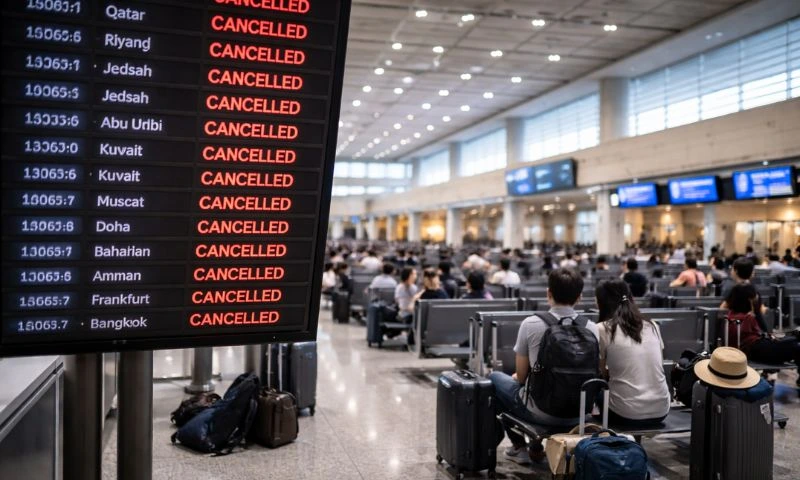
Middle East War Brings Tourism Boom to Sudden Halt
Tourism across the Middle East has slowed sharply as the ongoing conflict involving the United States, Israel and Iran creates uncertainty for travelers and businesses. Cancelled flights, postponed trips and safety concerns are casting a shadow over a region that has become one of the world’s most popular tourism destinations. The war has disrupted travel routes and forced airlines to suspend or reroute flights through several major aviation hubs in the Gulf. Airports in cities such as Dubai, Abu Dhabi and Doha serve as critical transit points for international travel, meaning disruptions in the region are affecting tourism flows worldwide. Industry experts say the sudden escalation of the conflict has left travelers uncertain about visiting the region, while tour operators and airlines struggle to adjust their schedules. Cancellations and Postponed Holidays Travel agencies report that many tourists have cancelled or postponed their trips to Middle Eastern destinations as the conflict intensifies. The uncertainty has affected hotels, airlines and tour companies that depend heavily on international visitors. The Gulf region has spent years building its reputation as a luxury tourism hub with large investments in infrastructure, cultural attractions and hospitality projects. Cities such as Dubai, Abu Dhabi and Doha have emerged as major travel destinations offering world class shopping, entertainment and business tourism. However, the conflict has disrupted this momentum. Tour operators say travelers are hesitant to book holidays until the situation stabilizes. Global tourism analysts note that geopolitical tensions often have an immediate effect on travel patterns. Concerns about safety, airspace closures and flight disruptions can quickly discourage visitors from planning trips to affected regions. Aviation Disruptions Hit Tourism Industry One of the most immediate impacts of the war has been on air travel. Several flights across the region have been cancelled or delayed, leaving thousands of passengers stranded and forcing airlines to change routes. The Middle East is one of the world’s most important aviation crossroads, handling a significant share of international transit traffic. When conflicts disrupt this network, the effects are felt across the global travel industry. Research indicates that more than 5,000 flights were cancelled during the early days of the conflict, highlighting the scale of the disruption. The crisis has also raised concerns about the broader economic impact on tourism dependent economies. Billions of Dollars at Risk Tourism is a major economic driver across the Middle East. Analysts estimate that the sector contributes hundreds of billions of dollars annually to regional economies and supports millions of jobs. However, experts warn that if the conflict continues, visitor numbers could decline significantly. Some projections suggest international arrivals in the region could drop by 11 to 27 percent in 2026, potentially costing tens of billions of dollars in lost tourism revenue. Beyond immediate financial losses, prolonged instability could damage the region’s reputation as a safe travel destination. Long Term Outlook Remains Uncertain Despite the current disruption, tourism experts say the long term outlook will depend on how quickly the conflict is resolved. The Middle East tourism industry has demonstrated resilience in the past, recovering from economic crises and global disruptions. For now, however, uncertainty continues to dominate travel planning. Airlines, travel agencies and hospitality businesses are closely monitoring developments as they wait for stability to return to the region. Until then, many tourists appear to be adopting a cautious approach, delaying trips and seeking alternative destinations.

Islamabad Incident Sparks Outrage After Journalist’s Pet Dog Killed
A pet dog belonging to an international journalist was killed in Islamabad in an incident that has sparked concern among residents and the media community about animal safety and security in the federal capital. The journalist, who works with an international news organization, said the dog was killed in what appeared to be a deliberate act in the neighborhood where he lives. The incident occurred in a residential area of Islamabad where the journalist had been living with his family and pets. According to the report, the dog was found dead under suspicious circumstances, prompting calls for authorities to investigate the case. The journalist later shared details of the incident publicly, drawing attention from local residents, journalists and animal rights advocates who demanded accountability and stronger protection for animals in urban areas. Journalist Calls for Investigation After the incident, the journalist said he believed the killing was intentional and urged authorities to investigate the matter. He described the event as distressing and called for justice for the animal. He also highlighted that the killing of pets not only affects animal welfare but also raises wider concerns about safety within residential communities. Incidents involving violence against animals can often signal deeper social issues that need attention. Animal welfare activists also voiced concern about the case, saying it reflects the ongoing challenges faced by pet owners and animal lovers in cities where enforcement of animal protection laws remains weak. Animal Cruelty Laws in Pakistan Pakistan has laws intended to protect animals from cruelty. The Prevention of Cruelty to Animals Act of 1890 prohibits unnecessary harm or suffering to animals and allows authorities to impose penalties on those responsible. However, activists say enforcement of these laws remains inconsistent across the country. In many cases, complaints about animal cruelty go unresolved due to weak enforcement mechanisms and lack of awareness. In Islamabad, the Capital Development Authority and municipal authorities have previously carried out campaigns aimed at managing stray animals and promoting responsible pet ownership. Despite these efforts, animal welfare groups say more work is needed to ensure the safety of both pets and stray animals. Growing Debate on Animal Welfare The incident has revived discussions about animal welfare in Pakistan’s urban centers. Over the past decade, awareness about pet ownership and animal rights has increased, especially in major cities such as Islamabad, Lahore and Karachi. Animal welfare organizations have been advocating for stronger legislation and better enforcement to prevent cruelty against animals. Several civil society groups have also launched rescue services and shelters to protect abandoned or injured animals. Experts say that addressing such issues requires cooperation between authorities, local communities and animal welfare organizations. They stress that stronger enforcement of existing laws and public awareness campaigns are essential to prevent similar incidents in the future. Calls for Accountability Following the death of the journalist’s pet, members of the media and local residents have called for authorities to identify those responsible and take appropriate legal action. Advocates argue that ensuring accountability in such cases can help discourage future acts of cruelty and reinforce the importance of humane treatment of animals. The case has also prompted wider reflection on how communities can create safer environments for pets and animals while strengthening legal protections across the country.
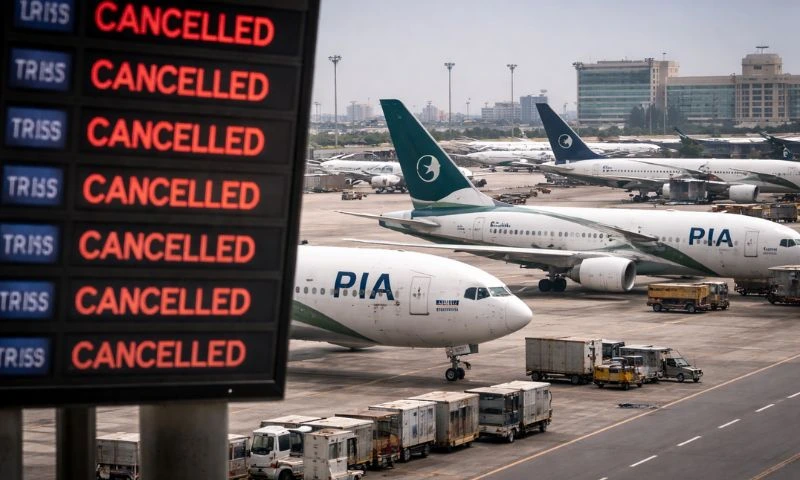
Middle East Crisis Costs Pakistan Airlines Rs20 Billion So Far
Pakistan’s aviation sector has suffered losses estimated at Rs20 billion after widespread flight cancellations triggered by regional tensions and airspace closures across parts of the Middle East. The disruption began on February 28 and has severely affected both domestic and international airline operations. Authorities say the conflict involving the United States, Iran and Israel has forced several Gulf countries to restrict or close sections of their airspace. As a result, airlines operating to and from Pakistan have faced major operational challenges, including cancelled flights, longer routes and rising operational costs. Since the beginning of the crisis, 578 flights operated by Pakistani and foreign airlines have been cancelled, creating significant financial losses for airlines and inconvenience for thousands of passengers. Industry officials estimate that the aviation sector has already suffered losses worth millions of dollars, highlighting the scale of disruption caused by the regional conflict. Hundreds of Flights Cancelled Across Major Airports Pakistan’s major international airports have been heavily affected by the crisis. Airport sources report that 162 flights to Middle Eastern destinations were cancelled in a single day, affecting travellers across the country. Flights were cancelled from key airports including Karachi, Islamabad, Lahore, Peshawar, Multan, Sialkot and Faisalabad. The routes primarily affected were those connecting Pakistan with Gulf countries such as the United Arab Emirates, Qatar, Bahrain and Kuwait. Karachi’s Jinnah International Airport alone saw 40 flights cancelled to destinations such as Dubai, Abu Dhabi, Doha, Sharjah, Kuwait and Bahrain. Meanwhile, 38 flights were cancelled from Islamabad to several Gulf destinations including Dubai, Abu Dhabi, Doha and Sharjah. Lahore airport recorded 28 cancelled flights, while Peshawar reported 24 cancellations on routes to Gulf cities. Multan, Sialkot and Faisalabad airports also experienced disruptions, with several international departures cancelled. The cancellations affected flights operated by major airlines including Emirates, Etihad Airways, Air Arabia, Pakistan International Airlines, Airblue, Flydubai, Qatar Airways and Fly Jinnah. Islamabad Airport Among the Worst Affected Islamabad International Airport has experienced some of the largest disruptions. Officials say nearly 180 flights were cancelled at the airport over five days, highlighting the severity of the situation. In addition to international routes, several domestic flights connecting cities such as Karachi, Gilgit and Skardu were also affected due to airspace restrictions and operational changes. Authorities say between 35 and 40 two-way flights are currently being cancelled daily from Islamabad airport alone. Pakistan International Airlines has also adjusted its operations. Due to restricted airspace, the airline has reduced the use of its Airbus A320 aircraft and instead deployed Boeing 777 aircraft on alternative routes to manage longer flight paths. Passengers Advised to Check Flight Status Airlines and airport authorities have urged passengers to remain in contact with airlines before heading to airports. Officials say travellers should confirm the status of their flights through airline helplines due to the rapidly changing regional situation. Experts say prolonged disruptions could further impact airline revenues and passenger traffic if the regional conflict continues. Pakistan’s aviation industry, which was already recovering from pandemic-era losses, now faces another major challenge as geopolitical tensions reshape global air travel routes.

Finn Allen Smashes 33-Ball Century to Break Rohit Sharma Record
New Zealand opener Finn Allen delivered one of the most explosive innings in T20 cricket history, smashing a breathtaking century off just 33 balls during the ICC Men’s T20 World Cup semi-final against South Africa. The remarkable knock helped New Zealand defeat South Africa convincingly and secure a place in the tournament final. Allen’s record-breaking innings came at Eden Gardens in Kolkata, where the aggressive opener dismantled South Africa’s bowling attack with fearless strokeplay. The Kiwi star reached his hundred in only 33 deliveries, surpassing the previous fastest century record in T20 World Cup history. The previous record belonged to West Indies legend Chris Gayle, who had scored a century in 47 balls during the 2016 T20 World Cup. Allen’s achievement not only broke that mark but also became the fastest hundred ever scored in a men’s T20 World Cup match. Record-Breaking Innings Full of Boundaries Allen’s sensational innings included 10 fours and eight sixes, as he dominated the South African bowling attack from the start. Out of the 33 balls he faced, more than half ended at or beyond the boundary, highlighting the destructive nature of his batting. He reached his fifty in just 19 balls, the fastest half-century by a New Zealand player in the tournament, before racing to his century in another 14 deliveries. The innings also helped New Zealand chase down South Africa’s target of around 170 runs in less than 13 overs, sealing a commanding nine-wicket victory in the knockout match. Allen shared a powerful opening partnership with wicketkeeper batter Tim Seifert, who scored 58 runs, putting the Proteas bowlers under pressure early in the chase. Rohit Sharma’s Record Surpassed Allen’s stunning knock also eclipsed a major record previously held by Rohit Sharma. The Indian star had jointly held the fastest T20 International century record among full-member nations with a 35-ball hundred. Allen’s 33-ball ton moved ahead of that mark and became the fastest against a full-member side. The innings now ranks among the fastest centuries in all T20 international cricket. It is also the joint third-fastest hundred in overall T20I history, placing Allen among the most destructive hitters in the format. A Career Highlight for the Kiwi Opener Allen has built a reputation as one of New Zealand’s most aggressive T20 batters. Since making his debut, the right-hander has played in multiple domestic leagues and franchise tournaments around the world, including the IPL, Big Bash League and Major League Cricket. His fearless approach at the top of the order has made him a key player in New Zealand’s white-ball setup. The 33-ball century now stands as the highlight of his international career and one of the greatest innings in T20 World Cup history. With the victory over South Africa, New Zealand advanced to the final and kept alive hopes of winning their first T20 World Cup title.

K-Electric Bill Shock: Karachi Consumers to Pay More for Electricity
Electricity consumers across Pakistan will face an additional financial burden of about Rs23 billion after the power regulator approved higher charges through fuel cost and tariff adjustments. The decision was announced by the National Electric Power Regulatory Authority, which issued a late-night notification allowing increased charges in electricity bills. According to the notification, consumers will pay around Rs1.98 per unit extra in electricity tariffs in March, combining different adjustments approved by the regulator. The increase includes a fuel cost adjustment of Rs1.63 per unit for electricity consumed in January 2026 and an additional 35 paisa per unit under the quarterly tariff adjustment to be recovered over the next three months. Officials said the fuel cost adjustment alone accounts for approximately Rs14 billion, while the quarterly tariff adjustment will add another Rs8.7 billion to consumer bills. Who Will Be Affected by the Increase The higher fuel cost adjustment will apply to almost all electricity consumers served by distribution companies and K-Electric. However, some categories will remain exempt from the additional charges. According to the regulator, lifeline consumers, electric vehicle charging stations and prepaid electricity users who opted for prepaid tariffs will not be affected by the adjustment. The increase will appear in electricity bills issued in March 2026, meaning households and businesses will soon see the impact in their monthly utility costs. Power sector experts note that such adjustments are part of Pakistan’s regulated tariff system, which allows utilities to pass on fluctuations in fuel prices and generation costs to consumers. Why Electricity Costs Are Rising Fuel cost adjustments occur when the cost of producing electricity changes due to fluctuations in fuel prices such as furnace oil, coal, liquefied natural gas and other energy sources. If generation costs increase, the difference is recovered from consumers in later billing cycles. Pakistan’s power sector heavily relies on imported fuels, making electricity prices vulnerable to international energy markets. Rising global fuel costs, currency depreciation and higher generation expenses often translate into increased tariffs for consumers. According to energy analysts, Pakistan has struggled with high power generation costs for years due to dependence on imported energy and capacity payments to power producers. Impact of National Grid Supply on K-Electric The regulator also highlighted the positive effect of supplying electricity from the national grid to K-Electric. It said the additional power supply helped reduce potential tariff increases for consumers. Officials noted that if K-Electric had not received electricity from the national grid, the cost of electricity could have increased even further. The regulator estimated that consumers might have faced a combined increase of Rs3.88 per unit due to higher fuel costs and capacity charges. The development highlights the importance of improving coordination between the national grid and private utilities to manage electricity costs. Growing Pressure on Households The latest tariff adjustments come at a time when many households are already facing rising living costs. Higher electricity bills are likely to increase pressure on families and small businesses, particularly during periods of heavy power consumption. Energy experts say Pakistan must continue investing in renewable energy and improving power sector efficiency to reduce dependence on costly imported fuels. Without structural reforms and investment in cheaper energy sources, electricity prices may remain volatile, leaving consumers vulnerable to periodic tariff increases.
