


The JAECOO J8 plug-in hybrid SUV (PHEV) has been spotted in Pakistan, signaling the possible arrival of another premium hybrid vehicle in the country’s rapidly expanding SUV segment. The vehicle is expected to compete with top-tier models such as the Hyundai Santa Fe, Kia Sorento HEV and Chery Tiggo 9 PHEV. The spotting of the J8 PHEV suggests that its official launch may not be far away, especially as the JAECOO brand continues to expand its footprint in Pakistan under Nishat Group’s NexGen Auto. Built on Chery platform with shared hybrid technology The JAECOO J8 PHEV has strong links to Chinese automaker Chery. It shares its core architecture with the Chery Tiggo 9 PHEV, as both vehicles are built on the same T1X platform and use similar plug-in hybrid systems. However, while the Tiggo 9 is designed for urban family use, the J8 features a more rugged and premium design, targeting buyers looking for a luxury SUV with an adventurous edge. A large, feature-packed seven-seater SUV The JAECOO J8 PHEV falls into the D-segment SUV category, offering a spacious interior and advanced features. It comes with a 2+3+2 seven-seater configuration and a wheelbase of 2,820 mm, making it one of the longest vehicles in its class. The SUV is expected to feature high-end materials such as Nappa leather seats, along with a long list of modern technology and safety features. Powerful hybrid performance International specifications reveal that the J8 PHEV is built for both performance and efficiency. Key highlights include: 1.5L turbocharged plug-in hybrid engine Triple-motor setup with 3-speed hybrid transmission Combined power of around 530 horsepower 650 Nm of torque All-wheel drive (AWD) 0 to 100 km/h in just 5.4 seconds 34.46 kWh battery pack The vehicle also supports Vehicle-to-Load (V2L) functionality, allowing it to power external devices, adding practicality for outdoor use. Advanced safety and technology features The J8 PHEV is expected to offer a high level of safety and driver assistance systems. It includes 10 airbags and up to 19 advanced driver assistance systems (ADAS), making it one of the most tech-loaded SUVs in its segment. These features place it among the most advanced hybrid SUVs likely to enter the Pakistani market. Expected price in Pakistan While official pricing has not been announced, industry estimates suggest that the JAECOO J8 PHEV will be priced close to its closest rival, the Chery Tiggo 9 PHEV, which currently costs around Rs1.37 crore (ex-factory). This positions the J8 as a premium offering aimed at buyers seeking a mix of luxury, performance and hybrid efficiency. Growing competition in Pakistan’s hybrid SUV market The arrival of the JAECOO J8 PHEV highlights the growing shift toward hybrid vehicles in Pakistan. With more automakers entering the plug-in hybrid segment, consumers now have access to a wider range of fuel-efficient and high-performance SUVs. If launched at a competitive price, the J8 PHEV could become a strong contender in Pakistan’s premium SUV category.

Apple Launches AirPods Max 2 After 5 Years at $549
Apple has officially launched the second-generation AirPods Max, marking its first major update to the premium over-ear headphones in more than five years. The new model is priced at $549, the same as the original version introduced in 2020, and comes with a range of improvements aimed at competing in the high-end audio market. The updated headphones are powered by Apple’s latest H2 chip, which enables improved performance, better sound quality and a host of new smart features. Improved noise cancellation and audio quality One of the biggest upgrades in the new AirPods Max is enhanced active noise cancellation, which Apple says is significantly more effective than the previous generation. Apple stated: “AirPods Max are upgraded with up to 1.5x more effective ANC”, highlighting a major improvement in blocking external noise. The headphones also feature a new microphone system and improved computational audio, delivering clearer calls and richer sound quality. In addition, the device supports high-resolution lossless audio via USB-C connection, targeting professional users and music creators who require higher fidelity sound. Read More: MacBook Neo: Apple Unveils Its Cheapest Laptop Ever New AI-powered features introduced Apple has introduced several new intelligent features in the latest version of AirPods Max. These include Adaptive Audio, which automatically adjusts sound levels based on surroundings, and Conversation Awareness, which lowers volume when users start speaking to someone nearby. Another key addition is Live Translation, a feature powered by Apple’s artificial intelligence platform that allows users to translate in-person conversations in real time. Voice isolation has also been improved, making calls clearer even in noisy environments. Availability and market competition Apple said the new AirPods Max will be available for pre-order starting March 25 in more than 30 countries, with retail availability expected in early April. The launch comes as Apple looks to strengthen its position in the premium headphone market, which is currently dominated by brands such as Sony, Bose and Sennheiser. Despite the improvements, the overall design of the headphones remains largely unchanged from the original version, focusing instead on internal upgrades and smarter features. Read More: Apple’s Big 2026: Over 20 New Devices Including Foldable iPhone and AR Glasses Apple doubles down on premium audio segment The launch of the second-generation AirPods Max signals Apple’s continued focus on expanding its ecosystem of premium audio products. With increasing competition and growing demand for high-quality wireless headphones, Apple is betting on AI-driven features and improved performance to attract both everyday users and professionals. Industry analysts say the addition of advanced features such as live translation and enhanced noise cancellation could help Apple strengthen its position in the global audio market.
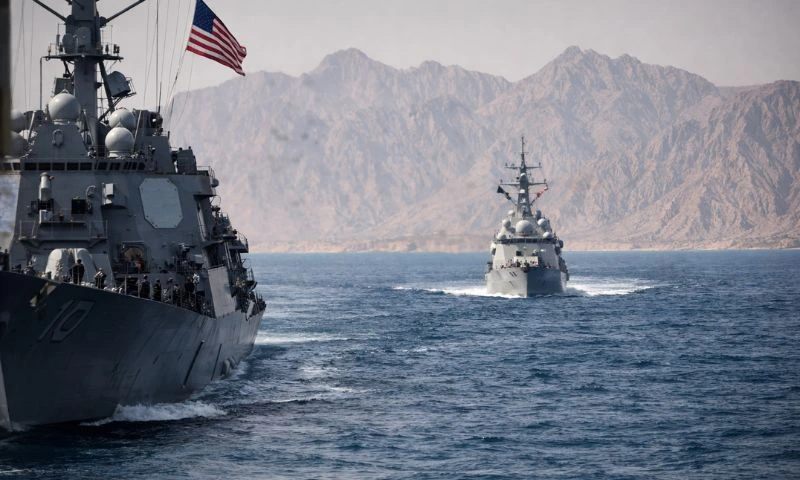
Trump Pressures Allies to Secure Strait of Hormuz but Nations Hold Back
US President Donald Trump has called on multiple countries to deploy naval forces to secure the Strait of Hormuz, as tensions in the Middle East continue to escalate. However, key allies have so far stopped short of committing military support, exposing divisions over how to respond to the crisis. Speaking to reporters, Trump said he had reached out to “about seven” countries to help safeguard the critical shipping route, which carries nearly 20 percent of the world’s traded oil. He made his position clear, stating: “I’m demanding that these countries come in and protect their own territory.” NATO warning raises stakes Trump also issued a strong warning to allies, particularly within NATO, suggesting that failure to respond could have long-term consequences for the alliance. He said: “If there’s no response or if it’s a negative response I think it will be very bad for the future of NATO.” The remarks underline Washington’s growing frustration as it seeks greater burden-sharing from partners in managing the escalating Iran conflict. Allies hesitate despite US pressure Despite the urgency from Washington, several countries have reacted cautiously and avoided firm commitments. The United Kingdom acknowledged discussions with the US but has not agreed to send warships. Officials indicated that London is reviewing the situation carefully before taking any action. France has also refrained from making a military commitment, emphasizing the need for diplomatic efforts and de-escalation rather than immediate naval deployment. China, which is heavily dependent on oil shipments through the strait, called for stability and urged all sides to avoid further escalation. Beijing stopped short of offering any direct security role. South Korea has also taken a cautious stance. While it relies on Middle Eastern energy supplies, Seoul has said it is monitoring the situation closely and has not confirmed any military involvement. These responses reflect a broader concern among global powers about being drawn into a widening regional conflict. Iran signals control over access On the other side, Iran has maintained that control of the Strait of Hormuz remains firmly in its hands. Foreign Minister Abbas Araghchi said that decisions regarding access to the waterway are a military matter. He stated: “this is up to our military to decide.” He also confirmed that several countries had approached Iran seeking assurances for safe passage. However, Iran has taken a hard line against Washington. Araghchi said: “we don’t see any reason why we should talk with Americans.” Oil markets react to uncertainty The rising tensions have already shaken global energy markets. Oil prices surged sharply, with West Texas Intermediate crossing $100 per barrel and Brent crude rising above $106, reflecting fears that any disruption in the strait could choke global supply. Energy analysts warn that even a partial disruption could trigger a global economic shock, as major economies depend heavily on oil flowing through the route. Global risk grows as uncertainty continues The lack of coordinated action among allies highlights the complexity of the situation. While the US is pushing for a collective security response, other nations appear reluctant to commit military resources without a clear strategy or international consensus. With tensions continuing to rise and no unified response in sight, the Strait of Hormuz remains at the center of a high-stakes geopolitical standoff that could reshape global energy and security dynamics.

Govt Employees to Receive March Salaries Ahead of Eid
The federal government has announced the advance disbursement of salaries for March 2026 to facilitate employees ahead of Eid ul Fitr, offering timely financial relief as millions prepare for the religious festival. According to official details, the government has directed all relevant departments to ensure that salaries, which are typically paid at the start of the following month, are released earlier than usual so employees can manage their Eid expenses comfortably. This move is part of a longstanding practice in Pakistan, where salaries and pensions are often released in advance when Eid falls close to the end of the month. Decision aims to provide financial relief Officials say the early disbursement is intended to help employees cover essential expenses such as shopping, travel and family obligations during Eid. A statement shared through official channels noted that the decision was taken to ensure that government workers do not face financial strain during the festive period. In Pakistan, Eid ul Fitr is one of the most significant religious occasions, often involving increased spending on food, clothing and travel. By releasing salaries ahead of time, the government aims to ease the burden on employees who would otherwise have to wait until the usual payment cycle. Provinces also follow similar practice The initiative is not limited to the federal government. Provincial governments, including Punjab, Sindh and Khyber Pakhtunkhwa, have also announced similar measures. For example, authorities in Sindh confirmed that salaries, allowances and pensions for March will be released in advance to ensure employees receive payments before Eid celebrations. Likewise, Punjab and KP governments have issued notifications stating that salaries and pensions will be disbursed on March 16, 2026, instead of the usual early April schedule. These coordinated measures are expected to benefit thousands of government employees and pensioners across the country. Eid expected in third week of March Eid ul Fitr in Pakistan is expected to fall around March 20 or 21, 2026, depending on the sighting of the Shawwal moon. Authorities say the early salary release aligns with this timeline, ensuring that employees have sufficient funds ahead of the holidays. Experts note that such financial planning plays an important role in maintaining consumer spending during festive periods, which can also support local markets and businesses. Tradition continues amid economic challenges The advance salary announcement comes at a time when many households are dealing with rising living costs. Analysts say that early salary payments can provide short-term financial relief, especially for middle-income families managing monthly budgets. The move also reflects the government’s broader effort to support public sector employees during key religious occasions. As Eid approaches, the early disbursement is expected to bring relief to millions of families across Pakistan, allowing them to celebrate the festival with greater ease and financial stability.

Pakistan’s IT Exports Near $3 Billion in 8 Months of FY26
Pakistan’s information technology sector continues its strong upward trajectory, with exports reaching nearly $3 billion during the first eight months of fiscal year 2025-26, reflecting steady growth in one of the country’s most promising industries. The increase highlights the growing global demand for Pakistani IT services, including software development, freelancing, and IT-enabled solutions. The sector has become a key source of foreign exchange for the country, helping ease pressure on Pakistan’s external accounts. Consistent growth driven by freelancers and IT firms According to industry data, Pakistan’s IT exports have maintained a consistent upward trend throughout the fiscal year. Earlier figures showed exports reaching $2.61 billion in the first seven months of FY26, marking a significant year-on-year increase. The growth is being driven by a combination of freelancers, software houses, and outsourcing firms, all of which are serving international clients across North America, Europe, and the Middle East. Experts say Pakistan’s competitive pricing, skilled workforce, and increasing digital adoption have positioned the country as an emerging hub for global IT services. Read More: Pakistani Freelancers Earn Over $2.22 Billion in Just Six Months Monthly fluctuations but overall upward momentum Despite the strong overall performance, monthly export figures have shown some fluctuations. For example, IT export receipts stood at around $374 million in January 2026, slightly lower than December’s peak levels but still significantly higher compared to the same period last year. Analysts attribute these fluctuations to seasonal trends, payment cycles, and global economic conditions, but emphasize that the broader growth trend remains intact. IT sector becomes key pillar of Pakistan’s economy Pakistan’s IT and IT-enabled services sector is now among the fastest-growing segments of the economy. It has become a major contributor to services exports, which themselves have shown strong growth during FY26. According to official data, Pakistan’s overall services exports reached $5.66 billion in the first seven months of FY26, with IT services leading the increase. The sector’s ability to generate foreign exchange without heavy reliance on imports makes it especially valuable for Pakistan’s economic stability. Industry experts also note that the country has a large pool of freelancers and young professionals, which continues to support expansion in digital exports. Read More: Pakistan’s 5G Journey Begins: When Will Ultra-Fast Internet Reach Everyone? Future outlook remains positive The outlook for Pakistan’s IT exports remains strong, with expectations that the sector could cross new milestones by the end of the fiscal year. Government initiatives aimed at improving digital infrastructure, easing payment systems, and supporting startups are expected to further boost growth. However, experts also highlight challenges such as payment barriers, talent migration, and infrastructure limitations that need to be addressed to sustain long-term growth. Overall, the steady rise in IT exports reflects Pakistan’s increasing integration into the global digital economy and its potential to become a major player in the international tech market.
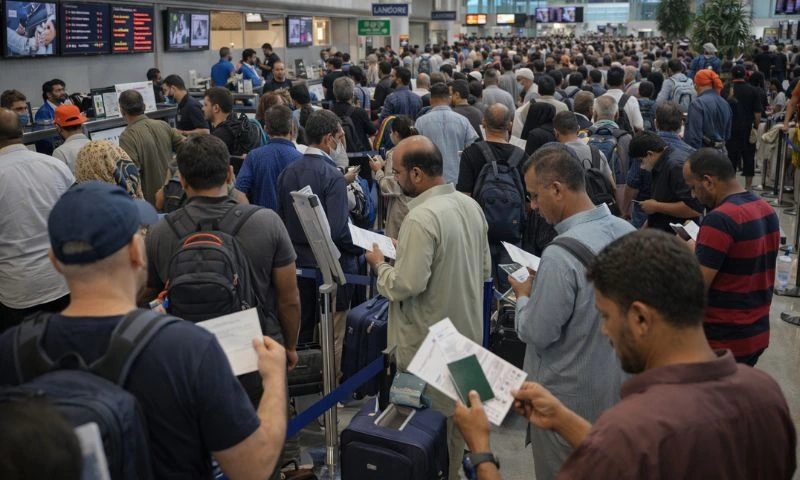
Over 110,000 Passengers Seek Refunds as Gulf War Disrupts Flights from Pakistan
Pakistan’s aviation sector is facing a severe disruption as the ongoing conflict involving Iran, the United States and Israel continues to impact flight operations across the region. Thousands of passengers have cancelled their travel plans, with more than 110,000 travelers seeking ticket refunds due to widespread flight suspensions. According to airport sources, the affected passengers were scheduled to travel from Pakistan to destinations including the United Arab Emirates, Kuwait, Qatar, Iran, Iraq and Azerbaijan. The uncertainty surrounding airspace safety and ongoing hostilities has forced airlines to cancel numerous flights, creating chaos for passengers and heavy financial losses for airlines and travel businesses. Over 90 flights cancelled in a single day The impact of the crisis was evident on Monday when more than 90 flights were cancelled across major airports in Pakistan, including Allama Iqbal International Airport in Lahore. Authorities say flight operations remain disrupted as airlines continue to adjust schedules based on evolving security conditions in the region. Over the past 17 days, the situation has escalated significantly. Aviation data shows that around 1,955 flights have been cancelled from airports in Lahore, Karachi, Islamabad, Multan, Faisalabad, Sialkot, Peshawar and Quetta. These cancellations have resulted in billions of rupees in losses for airlines, while travel agents are also facing financial setbacks. Read More: Islamabad Airport to Suspend Flights for Two Hours on March 17 Global aviation disruption intensifies The crisis is not limited to Pakistan. According to data shared by airlines and travel agencies, the ongoing conflict has led to the cancellation of more than 55,000 flights worldwide, pushing the aviation industry toward a broader crisis. Airspace restrictions, security threats and rerouting of flights have significantly increased operational challenges for airlines globally. In one incident highlighting the risks, an Emirates flight (EK-623) from Lahore to Dubai was forced to return midway due to security concerns. The aircraft, carrying over 100 passengers, landed safely back in Lahore. Travel agents and businesses hit hard The disruption has also severely impacted Pakistan’s travel industry. Khawaja Ayub Naseem, a leader of the Travel Agents Association, said agents typically earn between Rs1,000 and Rs3,000 per international ticket, but the wave of cancellations and refunds has wiped out their earnings. He noted that this period usually sees a surge in travel due to Eidul Fitr, with overseas Pakistanis returning home and pilgrims heading for Umrah. However, the suspension of flights has disrupted these seasonal travel plans. Travel agents say new bookings have nearly stopped, worsening the financial strain on the sector. Read More: PIA Suspends Flights to UAE, Qatar, Kuwait and Bahrain After Middle East Tension Limited operations continue on select routes Despite the widespread disruption, airport authorities say that some international routes remain operational. Flights are still running to destinations such as Saudi Arabia, Muscat, Europe, Canada, Malaysia, Thailand and Sri Lanka, while services to several Middle Eastern countries remain suspended or limited. Officials say the situation remains fluid, and flight operations will depend on how regional security conditions evolve in the coming days.
