

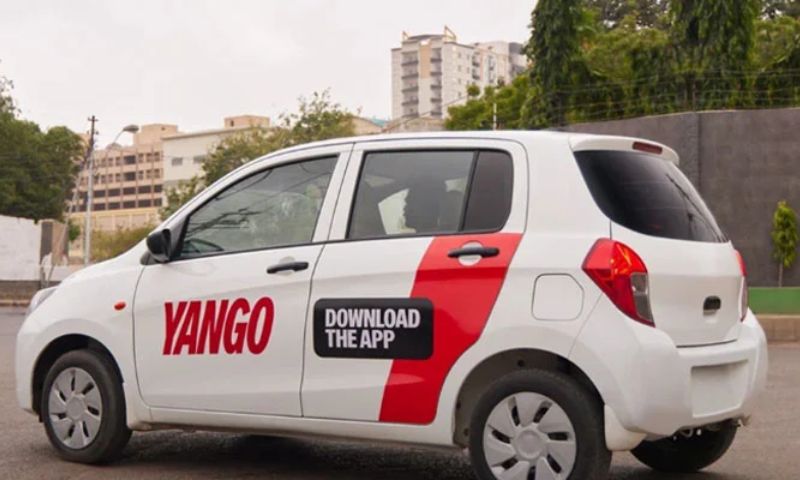
In a significant development for Pakistan’s digital mobility sector, Yango Ride has become the first ride-hailing platform in the country to receive a Transport Network Company operating license from the Punjab Provincial Transport Authority. The approval marks a turning point for the regulation and future growth of ride-hailing services in Pakistan. First to Operate Under New Legal Framework The newly granted license allows Yango Ride to operate under the Provincial Motor Vehicle Amendment Act 2025, which formally regulates ride-hailing services in Punjab. The approval follows months of coordination between Yango and the Punjab Transport Ministry, along with other stakeholders, as authorities worked to establish a structured licensing framework for digital mobility platforms. This move is widely seen as a step toward formalizing a sector that has long operated with limited regulatory clarity. Stronger Oversight and Passenger Safety The new framework is designed to improve transparency and introduce stricter safety and compliance standards. Authorities aim to ensure better verification systems for drivers and stronger protections for passengers. Industry experts believe this could address long-standing concerns about safety, service quality, and accountability in Pakistan’s ride-hailing ecosystem. Yango has also confirmed collaboration with the Punjab Safe City Authority to integrate emergency 15 services into its app, further enhancing rider safety and response mechanisms. Yango Signals Long-Term Commitment Miral Sharif, Country Manager for Yango Pakistan, welcomed the development and emphasized the company’s long-term vision. He said, “We are grateful to the Punjab Transport Authority for granting us the license and appreciate the professionalism demonstrated throughout the process.” He added, “This milestone reflects our commitment to working closely with regulators to support the development of a safer, affordable, and reliable ride-hailing ecosystem in Pakistan.” The company believes the license reinforces its long-term presence in Pakistan and its focus on meeting high regulatory and safety standards. Impact on Pakistan’s Ride-Hailing Industry The approval sets a precedent for other ride-hailing platforms operating in Pakistan, including global and local players. With clearer regulations now in place, companies may be required to align their operations with new compliance standards. This could lead to a more structured and competitive market, benefiting both drivers and passengers. Greater regulatory certainty also reduces the risk of sudden policy disruptions that have historically affected digital platforms. A Boost for Digital Economy and Urban Mobility As urban populations grow and demand for flexible transport increases, regulated ride-hailing services are becoming essential. The licensing framework is expected to support innovation while safeguarding public interests. Yango’s approval sends a positive signal for Pakistan’s broader technology ecosystem, highlighting the government’s willingness to embrace digital platforms under formal regulatory structures. Yango’s license is more than a regulatory milestone. It represents a shift toward a mature, transparent, and safer ride-hailing industry in Pakistan. If implemented effectively, this framework could reshape urban mobility, improve trust in digital platforms, and pave the way for sustainable growth in the country’s gig economy.
Faster Than Ever: Zong’s 5G Test Impresses Industry
Pakistan’s race toward next-generation connectivity has gained momentum as Zong announced successful 5G trials in Islamabad, achieving peak download speeds of over 1,400 Mbps. The tests, conducted across multiple urban environments in the capital, highlight the operator’s technical readiness for a future nationwide rollout. High-Speed Trials Show Network Capability According to Zong, the pre-launch testing phase demonstrated consistent performance and strong signal stability across different locations. The company emphasized that these speeds were achieved through efficient spectrum utilization and optimized infrastructure. Zong noted that its “output-to-spectrum” efficiency played a critical role in reaching these benchmarks, reflecting years of investment in network upgrades and advanced technologies. These results place Zong among the leading telecom operators in Pakistan’s evolving 5G landscape, especially as competition intensifies. Building on a History of 5G Milestones Zong has been at the forefront of 5G development in Pakistan for several years. In 2019, it conducted the country’s first successful 5G trial and established the first functional 5G node. In 2020, the company completed South Asia’s first 5G international video call, showcasing low latency and real-time communication capabilities. Since then, Zong has continued investing in infrastructure upgrades, artificial intelligence-based traffic management, and network expansion. These milestones have helped position Pakistan among countries preparing for full-scale 5G deployment. Three-Pillar Strategy for 5G Launch Zong has outlined a clear roadmap for its commercial 5G rollout, built on three core pillars. The first is improving customer experience by ensuring a smooth transition for existing 4G users. The second focuses on diversified services, enabling new applications powered by high-speed connectivity. The third pillar centers on AI-driven optimization, where intelligent systems manage network performance during peak usage. This approach indicates that Zong is not only focusing on speed but also on long-term reliability and scalability. Competition Heats Up in Pakistan’s Telecom Sector Zong’s announcement comes shortly after another major telecom operator, Jazz, revealed similar early 5G testing results in Islamabad with speeds also reaching around 1,400 Mbps. This growing competition suggests that Pakistan’s telecom industry is entering a critical phase, with operators racing to establish dominance ahead of a commercial launch. What 5G Means for Pakistan The introduction of 5G is expected to transform Pakistan’s digital landscape. Faster speeds and lower latency could enable smart cities, advanced healthcare, cloud gaming, and industrial automation. Zong’s latest trials represent more than just a speed milestone. They signal a shift toward a more connected and digitally driven economy, where high-speed internet becomes a backbone for innovation. Final Analysis While the results are promising, the real challenge lies in translating test speeds into consistent real-world performance. Infrastructure costs, spectrum allocation, and affordability will play key roles in determining how quickly 5G becomes accessible to the public. For now, Zong’s 1.4 Gbps achievement is a strong indicator that Pakistan is moving closer to the 5G era.
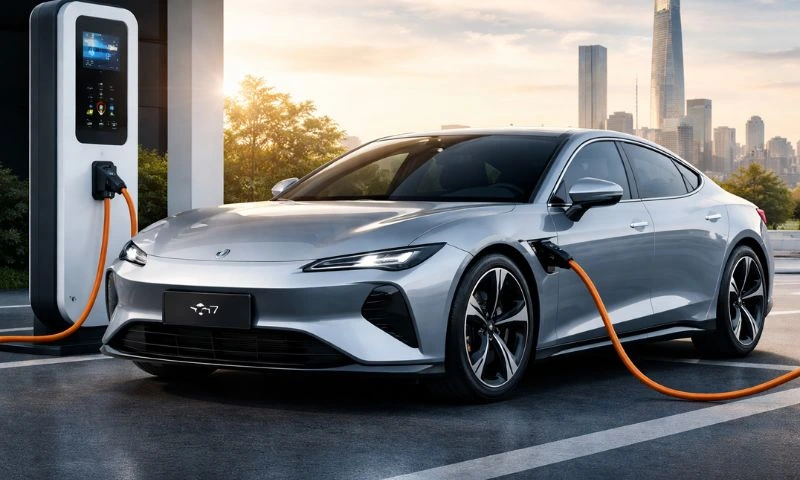
Xiaomi SU7 Update Brings 902 KM Range and Faster Charging
Xiaomi is preparing to unveil a major update to its flagship electric sedan, the SU7, with a headline feature that is already drawing global attention. The refreshed model, set to launch in China on March 19, is expected to deliver a claimed driving range of up to 902 kilometers on the CLTC cycle, positioning it among the longest-range EVs in its segment. More Than Just a Facelift Unlike a routine cosmetic refresh, the updated SU7 is being described as a comprehensive upgrade. Xiaomi is targeting improvements across battery technology, charging performance, ride quality, and onboard hardware. The company is expected to roll out updates across all variants, including Standard, Pro, and Max models. Reports suggest that Xiaomi aims to make the lineup more consistent by standardizing key hardware features rather than limiting upgrades to higher trims. Breakthrough Range and Charging Gains The biggest talking point remains the range figures. The updated lineup is expected to offer around 720 km for the Standard variant, 902 km for the Pro, and 835 km for the Max under CLTC testing conditions. However, industry experts caution that CLTC figures tend to be optimistic. Real-world range or WLTP-equivalent numbers are likely to be lower, with estimates suggesting around 675 to 720 km for the Pro variant in practical use. Charging speed is another area of improvement. The top-spec Max variant is expected to add up to 670 km of range in just 15 minutes under ideal conditions. If achieved in real-world scenarios, this would place Xiaomi among the leaders in fast-charging EV technology. New Electrical Architecture and Performance Enhancements The updated SU7 will reportedly feature advanced electrical systems, with Standard and Pro models using a 752V architecture, while the Max variant moves to an even more advanced 897V platform. These upgrades are expected to improve efficiency, charging speed, and overall performance. Xiaomi is also likely to introduce the V6S Plus motor across the lineup, replacing older configurations to deliver better consistency and output. Focus on Comfort, Safety and Smart Driving Beyond performance, Xiaomi is also enhancing comfort and safety features. Reports indicate that all variants may receive a unified driver-assistance system, while higher trims could include dual-chamber air suspension and adaptive dampers. This signals Xiaomi’s shift from being seen as a smartphone company entering the auto sector to a serious EV manufacturer competing with global brands like Tesla and Porsche. Why This Matters for Pakistan Although Xiaomi has not confirmed plans to launch the SU7 in Pakistan, interest in Chinese electric vehicles is growing rapidly due to rising fuel prices and increasing awareness of EV benefits. Previous reports suggest that the SU7 has already been spotted in Karachi, sparking speculation about a future launch, though no official timeline exists yet. For Pakistani consumers, the SU7 represents a glimpse into the future of mobility, where long-range EVs could reduce dependence on expensive fuel and reshape the automotive market. Final Analysis The Xiaomi SU7 update is not just about a 902 km range claim. It reflects a broader shift in the EV industry, where Chinese manufacturers are pushing boundaries in range, charging, and technology. If Xiaomi delivers on its promises, the SU7 could emerge as a serious competitor in the global EV race, setting new benchmarks for performance and efficiency.
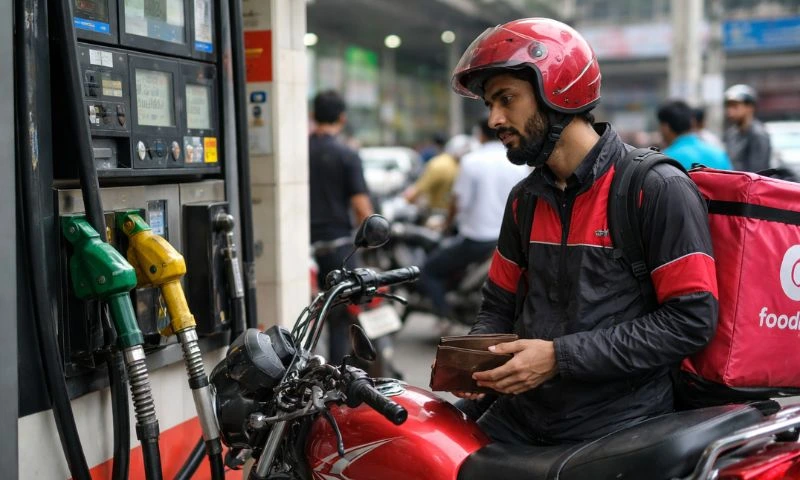
From Earnings to Survival: How Fuel Prices Are Crushing Riders in Pakistan
Pakistan’s latest fuel price increase is placing intense financial pressure on thousands of delivery riders, exposing the fragile economics of the country’s rapidly growing gig economy. With petrol prices crossing Rs321 per litre, riders who depend on motorcycles for daily earnings are now struggling to sustain both their work and household expenses. Rising Costs, Shrinking Earnings The immediate impact of the price hike is visible in daily operations. Riders are spending significantly more on fuel while earning nearly the same amount per delivery. Mohammad Murtaza Ali, a food delivery rider, described the situation in stark terms. He said, “Things were going fine earlier, but since petrol prices increased, we’re facing a lot of difficulties at home.” He added, “Earlier, we’d spend around 500 rupees on petrol; now it’s 800 rupees.” This sharp rise in fuel expenses has forced riders to either work longer hours or accept lower take-home income. In many cases, both are happening simultaneously. A Crisis Deepened by Global Factors The fuel price surge is not occurring in isolation. It is linked to global oil market disruptions, particularly tensions affecting supply routes such as the Strait of Hormuz. Pakistan, which relies heavily on imported oil, passes these rising costs directly to consumers. Recent increases of around Rs55 per litre have amplified the burden on daily wage earners, especially those in the delivery sector who operate on thin margins. Ripple Effects Across Urban Economy The impact extends beyond riders. Delivery services are a critical part of urban life, handling food, groceries, medicines, and parcels across major cities. As fuel costs rise, delivery platforms face a difficult choice. They can either increase rider payouts or raise delivery charges. If neither happens, riders absorb the losses themselves. This creates a chain reaction. Higher operational costs can lead to increased delivery fees, which may reduce customer demand. At the same time, lower incentives could reduce rider availability, affecting service quality and delivery times. Ramadan Adds More Pressure The timing of the fuel hike has made the situation worse. During Ramadan, household expenses typically rise, but riders are seeing their disposable income shrink. Many riders are now struggling to meet basic needs. Some reports indicate that workers are even relying on charity meals to cope with rising costs. What Lies Ahead If fuel prices remain elevated, the pressure on Pakistan’s delivery ecosystem will likely intensify. Riders may exit the sector, delivery costs could increase, and urban mobility patterns may shift. The crisis highlights a larger structural issue. Gig workers form a key part of Pakistan’s informal economy, yet they lack financial protection when external shocks occur. Final Analysis Pakistan’s fuel price surge is not just a transport issue. It is a socio-economic challenge affecting livelihoods, urban services, and consumer costs. Delivery riders continue to keep cities running, but with every increase in petrol prices, their sustainability becomes harder to maintain.
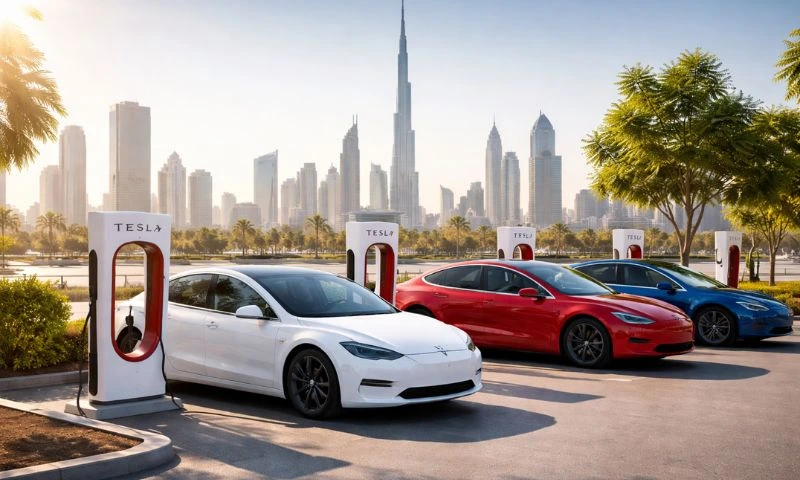
Tesla Makes Charging Free Across UAE, Saudi Arabia and Qatar
In a move aimed at supporting electric vehicle users during a period of regional uncertainty, Tesla has announced free Supercharging across its network in the UAE, Saudi Arabia and Qatar. The decision allows Tesla owners to charge their vehicles at no cost for a limited time across dozens of locations in the Gulf. The announcement was made through Tesla’s official charging channels, with the company confirming that the offer applies immediately across a wide network of stations spanning major cities and highways. Free Charging During ‘Tough Times’ The initiative follows earlier comments by Tesla CEO Elon Musk, who described such measures as part of the company’s broader support strategy. He said that making Supercharging free is standard company policy “during tough times.” While Tesla has not specified how long the free charging will continue, the move is widely seen as a response to ongoing geopolitical tensions in the region that have disrupted travel and energy dynamics. Extensive Network Across the Gulf The free Supercharging offer covers a large number of locations across the UAE, including Dubai, Abu Dhabi, Sharjah, Ajman, Ras Al Khaimah and Fujairah. Popular spots such as Dubai Mall Za’abeel, Mall of the Emirates, Yas Mall and major highway routes are part of the network. Beyond the UAE, Tesla has extended the benefit to key locations in Saudi Arabia including Riyadh, Jeddah, Dammam and Taif, as well as Doha Festival City in Qatar. This widespread coverage ensures that both city commuters and long-distance travelers can take advantage of the offer without worrying about charging costs. Strategic Move Amid Regional Uncertainty The timing of the decision is significant. The Gulf region has been experiencing heightened tensions, which have impacted logistics, fuel markets and mobility patterns. Tesla’s move appears to be aimed at easing travel for EV users during this period. The company has previously implemented similar initiatives in crisis situations. For example, free Supercharging was offered in disaster-affected regions and conflict zones, reinforcing its approach to customer support in emergencies. Boost for Electric Vehicle Adoption The move could also accelerate EV adoption in the Gulf, where governments are already investing heavily in clean energy and sustainable transport. The UAE, in particular, has been expanding its EV infrastructure and encouraging residents to switch to electric mobility. By removing charging costs, even temporarily, Tesla is making electric driving more accessible and appealing to both existing owners and potential buyers. No Timeline Yet Despite the benefits, Tesla has not announced an end date for the free Supercharging program. For now, Tesla users across the UAE, Saudi Arabia and Qatar can take full advantage of the offer, with no additional steps required beyond using designated Supercharger stations.
