

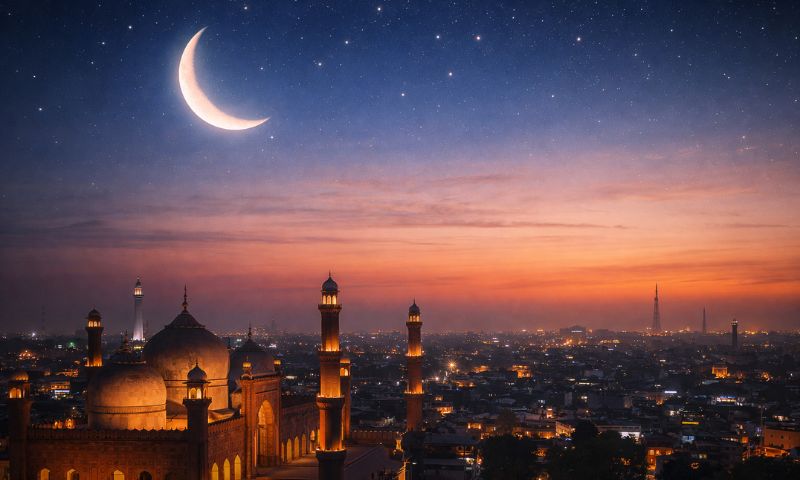
Pakistan will celebrate Eid ul Fitr on Saturday, March 21, 2026, after the Shawwal moon was not sighted in the country. The announcement was made by the Central Ruet-e-Hilal Committee, which met in Islamabad under the chairmanship of Maulana Abdul Khabir Azad to observe the crescent moon. After reviewing reports from across the country, the committee confirmed that no credible moon sighting was received. As a result, Ramadan will complete 30 days and Eid ul Fitr will be observed on Saturday. The Ruet-e-Hilal Committee is the official body responsible for announcing Islamic months in Pakistan, based on verified moon sighting testimonies from different regions. Earlier, astronomical forecasts by the Pakistan Meteorological Department and SUPARCO had also indicated that the chances of moon sighting on March 19 were very low, making March 21 the likely date for Eid. Regional Countries Also Set for Saturday Eid Several countries in South and Southeast Asia are also expected to celebrate Eid on Saturday, March 21, due to similar moon sighting conditions. India has confirmed Eid on March 21 after the crescent moon was not sighted. Bangladesh is also likely to mark Eid on Saturday following the completion of 30 days of Ramadan, while Indonesia and Malaysia are expected to observe the festival on the same day based on local moon sighting and astronomical calculations. These countries traditionally announce Eid based on local moon visibility, which often results in a one-day difference compared to Gulf nations. Moon Sighting Tradition Remains Key Eid ul Fitr marks the beginning of Shawwal, the tenth month of the Islamic calendar, which is based on lunar cycles. The festival is determined by the sighting of the crescent moon, making local observations crucial in deciding the exact date. With Pakistan and several regional countries aligning on Saturday, millions of Muslims will celebrate the end of Ramadan together with Eid prayers, family gatherings, and festive traditions.

Zong 5G is Live; Leading Pakistan’s Digital Journey into a New Era with Commercial 5G Launch
At a defining moment in Pakistan’s digital evolution, Zong, Pakistan’s leading technology service enterprise, has officially attained its 5G license and commercially launched its 5G services in more than 16 cities including Islamabad, Rawalpindi, Karachi, Lahore, Peshawar, and Quetta. Ushering in a new era of digital connectivity, innovation, and economic acceleration, Zong has a strategic commitment to deploy and upgrade 1,000+ 5G sites nationwide in 2026, driving scale, speed, and impact across Pakistan’s digital ecosystem. This launch reflects a clear strategic commitment: to lead Pakistan’s transition into a fully digital, intelligent, and connected future. It marks the culmination of Zong’s journey from pioneering Pakistan’s first 5G trial in 2019 to deploying a robust, multi-city 5G infrastructure today. Backed by globally benchmarked infrastructure, Zong has already demonstrated speeds exceeding 1.4Gbps in trials, reinforcing its position at the forefront of technological excellence and network innovation. At the core of Zong’s 5G strategy are three transformative pillars. Ultimate Customer Experience remains the top priority delivering low latency, high reliability, consistency and seamless performance to power next-generation use cases such as immersive gaming with customized bundles, ultra-HD video streaming, and advanced digital lifestyles. Moreover, Zong ensure to deliver faster issue resolution and a smooth, consistent experience across app, touchpoints, and social channels. Diversified Products & Services Portfolio will extend 5G beyond connectivity, enabling integrated solutions including cloud platforms, enterprise digitization tools, smart homes & IoT ecosystems, CCTV solutions and tailored offerings for startups, SMEs and large industries. Complementing this, is a strong focus on AI Enablement, personalized products and bundles recommendations, embedding intelligent automation across the network to enable predictive network optimization and proactive problem detection. As a subsidiary of China Mobile Limited, the world’s largest telecommunications enterprise, Zong brings global expertise and innovation leadership to build a world-class digital ecosystem in Pakistan, aligned with national growth priorities. In line with the Government’s Digital Pakistan vision and Pakistan Vision 2030, its 5G rollout positions the country as a rising global technology hub while strengthening the CPEC agenda, enabling high-speed, low-latency connectivity to power smart industries, transform healthcare, and drive precision agriculture, accelerating sustainable growth and nationwide digital innovation. Zong is not just launching a network; it is enabling a future where every individual, business, and industry can thrive in a truly Digital Pakistan. The era of 5G is live with Zong 5G – Aisa hai future!

20,000 Seafarers Trapped as Nations Propose Safe Corridor
A growing humanitarian crisis is unfolding in the Gulf as around 20,000 seafarers remain stranded amid escalating regional tensions. In response, several countries have proposed the creation of a safe maritime corridor to enable the evacuation of ships and protect crew members trapped in high-risk waters. Safe Corridor Proposal Gains Momentum The proposal was presented at a meeting of the United Nations’ International Maritime Organization in London. Countries including Bahrain, Japan, Panama, Singapore, and the United Arab Emirates have backed the initiative, with support from the United States. The plan calls for “a framework such as a safe maritime corridor” to allow vessels to exit the Gulf safely. Officials stressed that the main objective is to “facilitate the safe evacuation of merchant ships” and protect the lives of thousands of seafarers caught in the conflict zone. Conflict Disrupts Global Shipping Routes The crisis stems from escalating tensions involving Iran, which has led to serious threats against ships attempting to pass through the Strait of Hormuz. Hundreds of vessels have halted operations or dropped anchor, leaving crews stranded at sea. The Strait of Hormuz is one of the world’s most critical energy corridors, handling nearly one-fifth of global oil and gas supplies. Any disruption in this route has immediate implications for global energy markets and maritime trade. Shipping activity has already declined sharply, with tanker movements dropping significantly as companies suspend operations due to safety risks and rising insurance costs. Rising Humanitarian Concerns Beyond economic disruption, the situation has raised serious humanitarian concerns. According to the International Maritime Organization, multiple incidents have occurred since the conflict escalated, resulting in fatalities and injuries among crew members. IMO Secretary-General Arsenio Dominguez warned that seafarers “must not become victims of broader geopolitical tensions,” emphasizing the urgent need for de-escalation and protective measures. Reports also indicate that thousands of additional passengers and crew members are stranded across hundreds of vessels, facing uncertainty, limited mobility, and mounting psychological stress. Global Powers Weigh Security Measures The crisis has prompted discussions among global powers about securing maritime routes. NATO officials have indicated that member states are exploring options to ensure safe passage, while the United States has urged nations to help maintain security in the Strait of Hormuz. At the same time, Iran has stated that it continues to provide humanitarian assistance to vessels and crews in the region, even as tensions remain high. Broader Implications for Trade and Energy The ongoing disruption highlights the vulnerability of global supply chains to geopolitical shocks. A prolonged crisis could lead to sustained increases in shipping costs, energy prices, and delivery delays across international markets. For countries dependent on imported energy, including Pakistan, any instability in the Gulf directly impacts fuel prices, inflation, and economic stability. A Crisis Demanding Urgent Action The proposal for a safe corridor reflects a growing consensus that immediate action is needed to prevent further loss of life and restore confidence in global shipping routes. As diplomatic efforts continue, the fate of thousands of seafarers remains uncertain, underscoring the human cost of geopolitical conflict in one of the world’s most strategic regions.
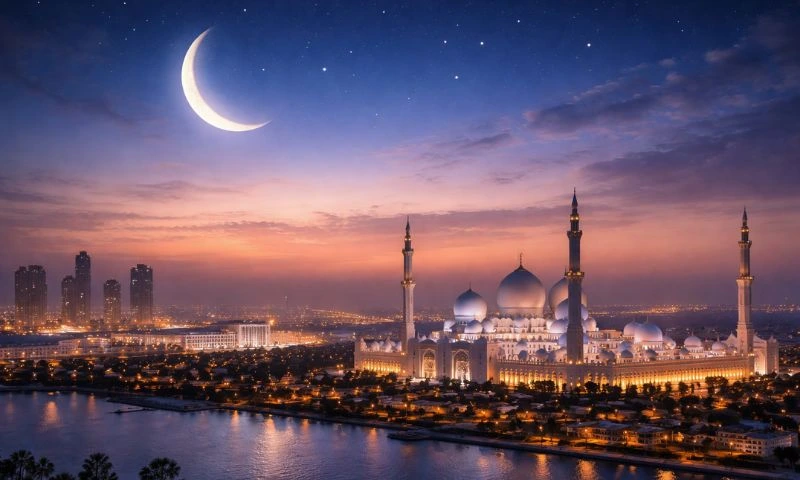
UAE, Saudi Arabia Announce Eid After Moon Sighting Update
The announcement of Eid Al Fitr 2026 has once again highlighted the global significance of moon sighting traditions, with countries across the world observing the Shawwal crescent under varying conditions. In the UAE and most Gulf nations, Eid will be celebrated on Friday, March 20, 2026, following the non-sighting of the crescent moon on Wednesday. Crescent Not Sighted, Ramadan Completes 30 Days Authorities in the UAE, Saudi Arabia, Qatar, Bahrain, and Kuwait confirmed that the Shawwal crescent moon was not visible on March 18. As a result, Ramadan will complete 30 days, with Eid beginning the following day. Saudi Arabia’s moon-sighting committees reported that the crescent “was not sighted anywhere,” reinforcing the decision to mark Eid on Friday. This aligns with Islamic tradition, where the start of Shawwal depends on verified moon sightings rather than fixed calendar dates. How Different Countries Declared Eid While most Gulf countries synchronized their Eid celebrations for March 20, several nations observed the festival on different days due to local moon sightings. Afghanistan, Niger, and Mali confirmed Eid on Thursday, March 19, after sighting the crescent earlier. Meanwhile, Singapore announced Saturday, March 21, as Eid, relying on astronomical calculations rather than physical sighting. This variation underscores the diversity in methods used globally, ranging from traditional visual sightings to modern astronomical predictions. Scientific Conditions Behind Moon Visibility Astronomical data played a crucial role in predicting the moon’s visibility this year. Experts noted that on March 18, the moon set before sunset, making it impossible to sight the crescent in many regions. The astronomical conjunction occurred early on March 19, improving visibility conditions for the following evening. Weather also impacted observations. Cloudy skies and rain in parts of Saudi Arabia made it difficult for observers to confirm sightings, adding to the uncertainty. Countries Still Awaiting Confirmation Several countries, including Pakistan, India, Bangladesh, Indonesia, and Morocco, waited for local moon-sighting committees to make final announcements based on regional visibility. Authorities in these countries traditionally conduct independent observations, which can result in Eid being celebrated on a different day from Gulf nations. A Global Tradition With Local Differences The moon sighting process remains a unifying yet diverse practice across the Muslim world. While technology and astronomy provide guidance, many countries continue to rely on physical verification to preserve religious traditions. This year’s announcements highlight how geography, weather, and methodology influence the timing of one of Islam’s most important festivals. Eid Al Fitr 2026 demonstrates the continued relevance of moon sighting in the modern world. Despite advances in science, the tradition remains deeply rooted in faith and community practice. As millions celebrate Eid on different days, the shared spirit of the festival remains unchanged, marking the end of Ramadan with unity, gratitude, and reflection.
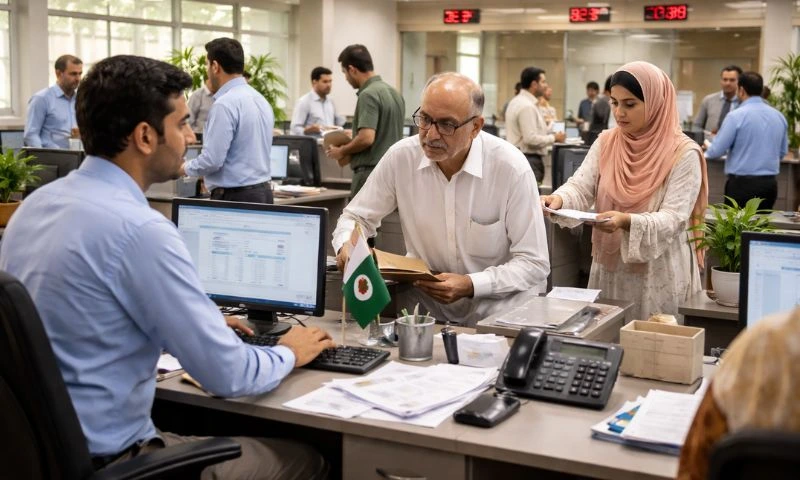
Post-Ramadan Schedule: Federal Offices Return to Full Hours
The federal government has officially announced revised office timings to be observed after the conclusion of Ramadan, signaling a return to extended working hours across public sector institutions. The new schedule, issued by the Establishment Division, will apply to all relevant federal offices nationwide. New Working Hours for Federal Offices According to the official notification, government offices operating on a five-day workweek will function from 8:00 am to 4:00 pm, Monday to Friday. Meanwhile, departments observing a six-day workweek will operate from 8:00 am to 3:00 pm, Monday to Saturday. In both cases, a lunch and prayer break from 1:00 pm to 1:30 pm has been designated, ensuring continuity of work while accommodating daily religious obligations. The revised schedule will come into effect immediately after Ramadan, replacing the reduced working hours that were introduced during the holy month. Transition From Ramadan Schedule During Ramadan, federal offices typically operate on shortened timings to facilitate fasting employees. Earlier this year, offices working five days a week functioned from 9:00 am to 3:00 pm, while six-day offices closed even earlier. The shift back to longer hours reflects a return to normal administrative routines as Eid-ul-Fitr concludes and regular government operations resume. Administrative and Economic Implications The restoration of full working hours is expected to improve efficiency across government departments, many of which experience slower processing during Ramadan due to reduced schedules. Longer office hours typically enhance service delivery in key areas such as documentation, licensing, taxation, and public dealing. For businesses and citizens alike, the change often translates into faster turnaround times and improved access to government services. Experts note that such transitions are critical in maintaining administrative momentum, especially as Pakistan navigates economic challenges and increasing public service demands. Alignment With Seasonal Patterns The announced timings are also consistent with Pakistan’s broader seasonal work patterns. Post-Ramadan schedules often align with summer timings, which generally begin earlier in the day to maximize productivity and manage heat conditions. Historically, federal office hours have followed a similar structure, with early start times and mid-afternoon closures becoming standard practice after Ramadan. What It Means for Employees and Public For government employees, the revised schedule marks a return to longer working days, requiring adjustments in daily routines after a month of reduced hours. For the public, the change is largely positive. Extended office hours increase accessibility, particularly for individuals who rely on government services during working days. The announcement of post-Ramadan office timings is more than a routine administrative update. It reflects the government’s effort to restore operational efficiency while maintaining a structured approach to workforce management. As Pakistan transitions out of Ramadan, the return to standard working hours is expected to support smoother governance, better service delivery, and improved coordination across departments.
