

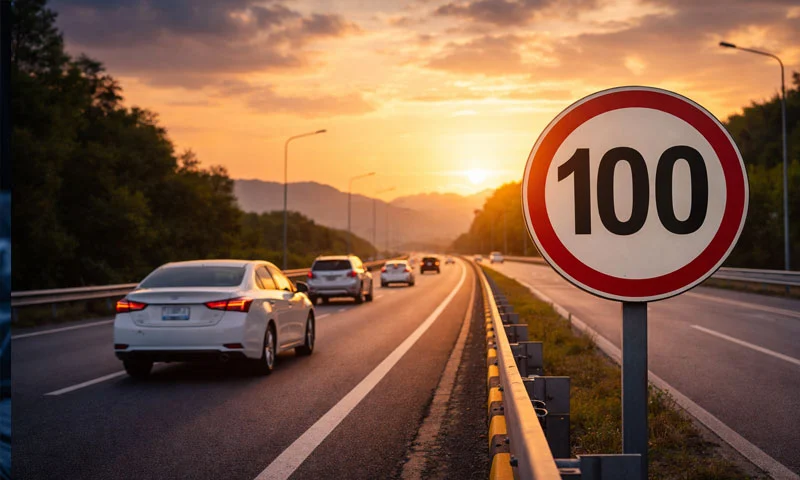
Pakistan has enforced new speed limits on motorways and national highways as part of a broader strategy to conserve fuel and manage rising energy costs. The move comes amid increasing pressure on fuel imports and a nationwide push for austerity. Under the revised rules, the maximum speed for cars and light transport vehicles on motorways has been reduced from 120 km/h to 100 km/h. On national highways, the speed limit for these vehicles has been lowered from 100 km/h to 80 km/h. Lower Limits for Buses and Heavy Vehicles The government has also tightened limits for public service and heavy transport vehicles. On motorways, buses and heavy vehicles are now restricted to 90 km/h, down from 110 km/h. On highways, their speed limit has been reduced to 65 km/h from the previous 80 km/h. Officials say these changes aim to reduce fuel consumption and improve road safety across the country. Strict Enforcement and Fines Begin Authorities have started strict enforcement of the new rules. Motorway Police have already issued fines to drivers exceeding the updated limits. In one reported case, a driver was fined Rs2,500 for driving at 115 km/h on a motorway. Officials have warned that violations will continue to result in penalties, especially during the busy travel season. Fuel Crisis Drives Policy Shift The reduction in speed limits is directly linked to Pakistan’s ongoing fuel crisis. The country relies heavily on imported oil, and recent global tensions have pushed up fuel prices significantly. Lower driving speeds are expected to improve fuel efficiency and reduce overall consumption. Experts say that even a small reduction in speed can lead to noticeable fuel savings over long distances. Impact on Travel and Commuters The new limits are expected to increase travel time slightly, especially on long motorway routes such as Lahore to Islamabad or Karachi to Hyderabad. However, authorities argue that the benefits of reduced fuel use and improved safety outweigh the inconvenience. The policy also comes ahead of peak travel periods like Eid, when millions of Pakistanis travel between cities. A Wider Push for Energy Conservation The speed limit changes are part of a larger set of measures introduced by the government to manage fuel demand. Other steps include reducing public sector energy use and promoting efficient transport practices. The National Highways and Motorway Police has urged drivers to comply with the new rules and contribute to national fuel conservation efforts.

Meta and Google Lose Major US Case Over Harm to Children
In a landmark ruling, a US jury has found Meta and Google liable for designing social media platforms that contributed to harm among young users. The case focused on Instagram and YouTube, which were accused of using features that encourage excessive and addictive use among children. The lawsuit was brought by a young woman who claimed she became addicted to these platforms at an early age. She told the court that prolonged use led to serious mental health issues, including anxiety, depression and body image problems. Millions Awarded in Damages The jury awarded millions of dollars in damages to the plaintiff. Reports indicate that Meta will bear a larger share of the compensation, while YouTube will also contribute. The court ruled that the companies failed to provide adequate warnings about the risks associated with their platforms. It also found that their design choices played a significant role in the harm experienced by the user. Case Focuses on Platform Design Not Content One of the most important aspects of the case was its focus on product design rather than user-generated content. Lawyers argued that features such as infinite scrolling, autoplay videos and constant notifications were deliberately created to keep users engaged for long periods. This approach allowed the case to bypass traditional legal protections often used by tech companies under US law. Part of a Wider Legal Battle Against Big Tech The case is part of a growing wave of lawsuits against major technology companies, including Meta, YouTube, TikTok and Snap. Thousands of similar cases are currently pending in US courts. Earlier, TikTok and Snap reached settlements in related cases before the trial began. Legal experts say this ruling could set a major precedent and influence future litigation. Some observers have compared the situation to past legal battles against the tobacco industry. Companies Deny Allegations and Plan Appeal Both Meta and Google have denied wrongdoing and said they will challenge the verdict. A spokesperson for YouTube said the claims are “simply not true” and stressed that providing a safe experience for young users remains a priority. Meta has also argued that multiple factors contribute to mental health issues and that its platforms are only one part of a broader picture. Growing Concerns Over Children’s Online Safety The ruling comes amid increasing global concern about the impact of social media on children. Studies and lawsuits have highlighted links between heavy social media use and issues such as sleep disruption, anxiety and poor self-image. Governments around the world are now considering stricter regulations, including age restrictions and stronger safety measures for young users. A Turning Point for Social Media Regulation This case is widely seen as a turning point in how courts view the responsibility of tech companies. By focusing on design and user engagement strategies, the ruling may reshape how platforms operate in the future. It also signals growing pressure on Big Tech to take stronger steps to protect children from potential harm online.
Parents Struggle as School Admissions Freeze Across Punjab
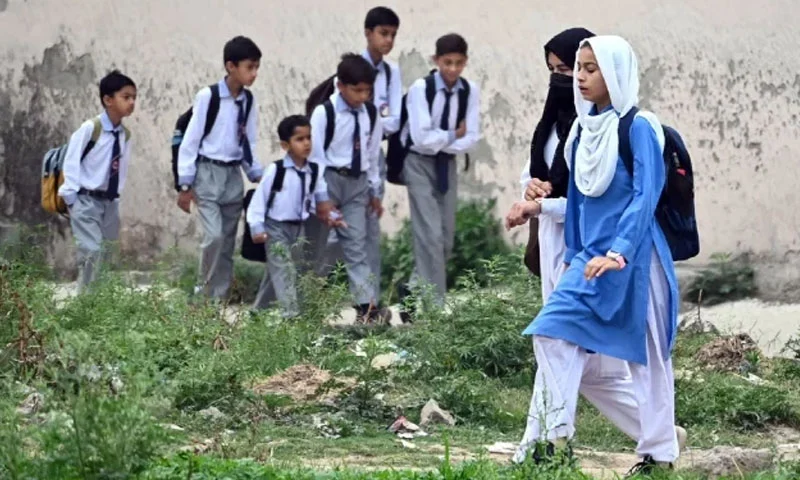
The Punjab School Education Department has ordered the closure of all public and private schools and academies from March 10 to March 31, disrupting academic activity across the province. Authorities warned that strict action will be taken against institutions that violate the orders. Schools found open may be sealed, registrations cancelled, and responsible officials could face penalties, including salary stoppages. Daily monitoring reports have also been made mandatory, while several schools in suburban areas have already been sealed for non-compliance. Admissions System Comes to a Halt The closure has severely affected the annual admissions cycle, which typically runs from March 1 to March 31. Parents usually enrol children in nursery, kindergarten and primary classes during this period. However, the shutdown has brought the process to a standstill. Reports suggest admissions have dropped sharply this year, with only about 20 percent of expected enrolments recorded so far. This indicates a decline of nearly 80 percent compared to last year. Education experts warn that this disruption could have long-term effects on student intake and school planning for the new academic session. Private Schools Criticise Govt Decision Leaders of private school associations have strongly criticised the closures. They argue that the education sector is being treated as a testing ground for policy decisions. They said that even countries facing conflict have not shut down schools completely. One representative described the situation as damaging for both students and institutions. The associations also pointed out that the annual examination system has already suffered, calling it “half-baked,” and now admissions have also been paralysed. They have demanded immediate reopening of schools and permission to proceed with admissions and academic activities. Exams Disrupted, Students Promoted The closures have also affected the examination process. Authorities acknowledged that proper annual exams could not be conducted this year. As a result, it has been decided that all students from Grade 1 to Grade 7 in public schools will be promoted without failure. Promotions are scheduled to take effect on March 31. Officials described the exam process as largely symbolic this year due to the disruptions. Strict Enforcement and Legal Warnings The Rawalpindi District Education Authority has warned that calling students or staff during the closure period will be treated as a violation of law. Authorities stressed that summoning teachers unnecessarily is unfair, especially amid rising fuel costs and inflation. Institutions that fail to comply may face sealing, cancellation of registration and disciplinary action against headmasters. Ongoing Education Challenges in Punjab The current situation adds to a series of disruptions faced by the education sector in recent years. Frequent closures due to smog, weather conditions and law-and-order situations have already reduced classroom days significantly. In one recent academic year, schools operated for less than half of the total working days. Experts say repeated interruptions are widening learning gaps, especially for students in public schools who lack access to online education tools. A Growing Concern for Students and Parents The latest shutdown has created uncertainty for parents planning their children’s academic future. With admissions stalled and exams disrupted, stakeholders fear long-term damage to the education system if closures continue without alternative arrangements.

New Fuel Quota System in Pakistan Explained: How Much Petrol You Will Get and How It Works
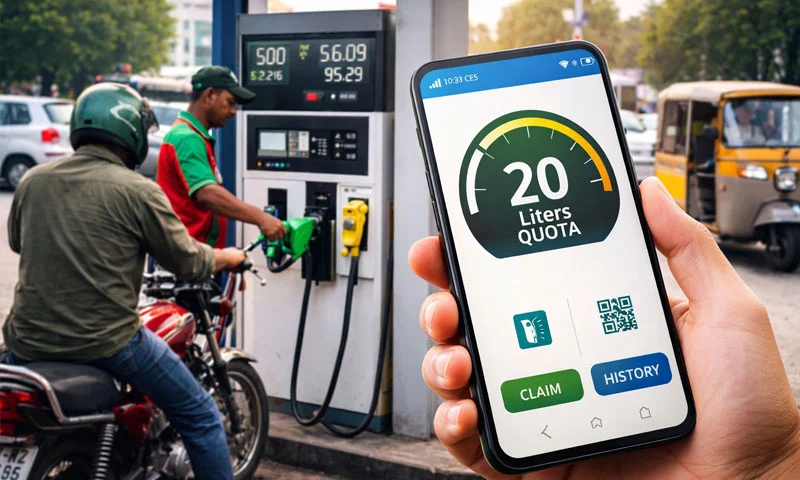
Pakistan has finalised a mobile application-based fuel quota system aimed at motorcycles, rickshaws and possibly small cars up to 800cc. The move comes as the country faces rising fuel costs and pressure on energy supplies. The system is designed to provide targeted subsidies to low-income users while encouraging fuel conservation across the wider population. Officials say final quota limits will be decided by the cabinet committee. How the Fuel Quota System Will Work The new system will operate through a fully automated mobile application. Consumers will use an app to generate digital vouchers for fuel purchases, while petrol stations will use a separate system to verify them. Each user’s quota will be linked to their vehicle registration number and CNIC. For example, motorcycles may receive a fixed allocation such as 20 litres per month. If a user attempts to purchase more fuel than their quota allows, the system will automatically limit the supply. Officials confirmed that only the available quota will be dispensed at petrol pumps. The mechanism is similar to the Ramazan subsidy model used previously, which relied on digital verification and controlled distribution. Petrol Pumps to Install Dedicated Systems Petrol stations will be required to set up dedicated dispensers or nozzles for subsidised fuel. Retailers must also install special devices linked to the system. To ensure smooth implementation, oil marketing companies will appoint focal persons at each retail outlet. Their details will be shared with authorities for monitoring and complaint resolution. The government will also provide training material, including demos and video tutorials, to help users and retailers understand the system. Special Devices and Digital Infrastructure The Ministry of Information Technology is working with mobile phone manufacturers to support the system. Specialised phones will be introduced at an estimated cost of Rs36,000, with retail prices around Rs72,000. Petrol pumps will deposit funds into a government account to ensure timely delivery of these devices. This step aims to avoid delays and ensure nationwide rollout. Relief for Low-Income Drivers The primary goal of the initiative is to protect low-income groups such as motorcyclists and rickshaw drivers from rising fuel prices. Officials said the subsidy model will ensure that essential users continue to access affordable fuel, while higher prices for other users will help reduce overall consumption. Past Attempts and Policy Background Earlier fuel subsidy plans have faced challenges. In 2023, a proposal to increase petrol prices for wealthy users and subsidise low-income riders was rejected due to concerns from international lenders. Similarly, past ideas such as introducing lower-grade fuel for motorcycles were debated but did not gain full approval. A Shift Toward Digital Fuel Management The new quota system reflects a broader shift toward digital governance and targeted subsidies in Pakistan. With global oil prices rising due to geopolitical tensions, authorities are focusing on efficient distribution and reduced waste. Experts believe such systems could help manage demand while protecting vulnerable segments of society.

Spider-Man: Brand New Day Trailer Breaks Records, Becomes First to Cross 1 Billion Views
Marvel fans worldwide have propelled Spider-Man: Brand New Day into record books after its official trailer became the first in history to cross one billion views, marking a major milestone for the Marvel Cinematic Universe and star Tom Holland. Historic Milestone for Marvel and Tom Holland The trailer achieved the unprecedented feat within days of its release, making it the most-watched film trailer ever. Industry data shows the trailer had already set records earlier by crossing over 718 million views within the first 24 hours, beating previous benchmarks held by Deadpool & Wolverine and even the highly anticipated GTA VI trailer. Within just a few days, total views surged past the one billion mark, making it the first movie trailer to reach this milestone globally. The massive response highlights the enduring popularity of Spider-Man and the strong fan base surrounding Tom Holland’s portrayal of the superhero. What the Trailer Reveals The trailer offers a glimpse into a darker and more emotional storyline. Set after the events of Spider-Man: No Way Home, it shows Peter Parker living anonymously after the world has forgotten his identity. Fans also get a look at several new and returning characters, including Bruce Banner and The Punisher, hinting at a larger crossover within the Marvel universe. The footage suggests that Peter may be facing a dangerous transformation, adding a new layer of complexity to the character’s journey. Why the Trailer Went Viral Experts say the trailer’s success can be attributed to a mix of strategic marketing and massive fan anticipation. Sony and Marvel used a unique rollout strategy, releasing short teaser clips ahead of the full trailer to build hype and engagement. The Spider-Man franchise remains one of Marvel’s most successful properties. The previous film, No Way Home, was a global blockbuster, earning billions and setting high expectations for the next installment. The emotional storyline combined with action-packed visuals and surprise character appearances helped drive repeated views across platforms. Release Date and Film Details Spider-Man: Brand New Day is scheduled for release on July 31, 2026, and will mark the beginning of a new chapter in Tom Holland’s Spider-Man journey. The film is expected to explore Peter Parker’s transition into adulthood while dealing with new threats and evolving powers. A New Benchmark for the Film Industry The trailer’s record-breaking performance signals a shift in how audiences engage with blockbuster films in the digital age. Crossing one billion views not only sets a new industry benchmark but also demonstrates the global reach of Marvel’s storytelling. With anticipation at an all-time high, Spider-Man: Brand New Day is already shaping up to be one of the biggest cinematic events of 2026.

PSL 11 Set to Start with Lahore vs Hyderabad Clash Under Unusual Conditions
The 11th edition of the Pakistan Super League begins today, March 26, with defending champions Lahore Qalandars taking on debutants Hyderabad Kingsmen at Lahore’s Gaddafi Stadium. The match will be played behind closed doors, marking one of the most unusual starts in the league’s history. Preparations for the tournament have been completed, with teams conducting training sessions and captains gathering in Lahore for a joint press conference ahead of the opening fixture. A Tournament Shaped by Crisis This year’s PSL comes amid extraordinary circumstances. The Pakistan Cricket Board has scaled down operations due to government energy conservation measures linked to the ongoing conflict involving Iran, the United States and Israel. As a result, all matches will be held without spectators, and the opening ceremony has been cancelled. The tournament has also been limited to only two venues, Lahore and Karachi, instead of the originally planned six cities. The changes reflect broader national measures aimed at reducing fuel consumption, as global oil supply disruptions have impacted Pakistan’s energy availability. Eight Teams, New Era for PSL PSL 11 marks a major shift for the league, expanding from six to eight teams. New franchises Hyderabad Kingsmen and Rawalpindi Pindiz join established sides, bringing fresh competition and new rivalries. The tournament will feature 44 matches over 39 days, with the final scheduled for May 3 in Lahore. Each team will play ten matches in the group stage, with the top four advancing to the playoffs. Captains Confident Despite Empty Stands Team captains expressed optimism about the competition, even as they acknowledged the absence of crowds. Lahore Qalandars captain Shaheen Shah Afridi said the team is fully prepared and aiming to win another title. He stated, “We will try our best to win the title once again.” Peshawar Zalmi skipper Babar Azam highlighted the importance of crowd support but stressed that his team has planned thoroughly and trusts its players’ abilities. Karachi Kings captain David Warner and Multan Sultans skipper Ashton Turner also expressed confidence in their squads and the quality of the league. Star Power and Global Talent Despite the challenges, PSL 11 continues to attract international players. Names like Marnus Labuschagne, Sikandar Raza, Devon Conway and Kusal Perera are part of this year’s tournament. The presence of global talent reinforces PSL’s reputation as one of the top T20 leagues in the world. A Test of Resilience This edition of PSL is not just about cricket. It reflects Pakistan’s ability to continue sporting events under economic and geopolitical pressure. While fans will miss the stadium atmosphere, the league still offers a platform for emerging players and high-quality competition.
Pakistan Ready to Begin Large-Scale Hajj Operation from April 18
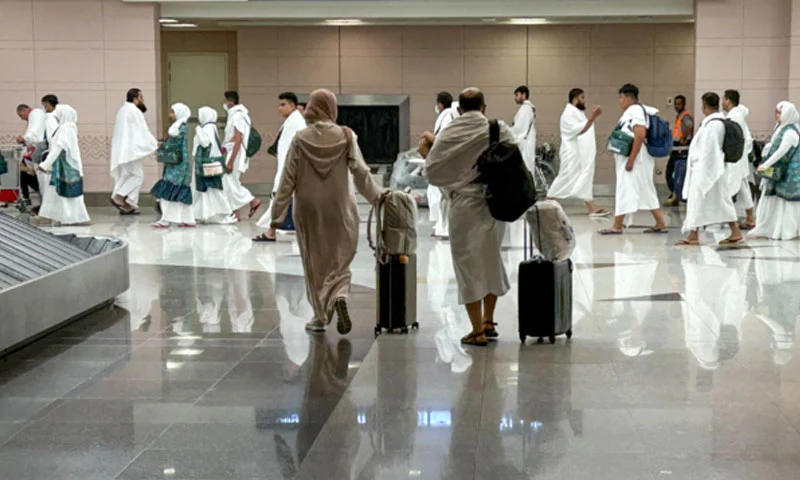
Pakistan will begin its Hajj flight operation on April 18, marking the start of the annual pilgrimage journey for thousands of pilgrims. The Ministry of Religious Affairs has finalised arrangements, with flights set to depart from major cities including Karachi, Lahore, Islamabad, Multan and others. According to official details, the operation will continue until May 21, ensuring the smooth transportation of pilgrims to Saudi Arabia ahead of Hajj rituals. Over 119,000 Pilgrims to Travel Under Govt Scheme More than 119,000 Pakistani pilgrims will travel under the government Hajj scheme this year. Authorities have arranged a large-scale air operation to facilitate their journey. A total of 468 flights will be operated during the pre-Hajj phase from eight cities, including Karachi, Lahore, Islamabad, Quetta, Sialkot, Multan, Faisalabad and Sukkur. Officials have advised pilgrims to regularly check their flight schedules through the Pak Hajj mobile application and the ministry’s official website for updates. Flight Distribution and Operational Plan The flight distribution reflects the large number of pilgrims from different regions. Islamabad, Karachi and Lahore will handle the majority of departures, while smaller numbers will depart from cities like Quetta and Sukkur. Flights will be divided between Jeddah and Madinah, depending on the pilgrims’ travel plans and accommodation arrangements in Saudi Arabia. Authorities say the schedule has been designed to ensure efficiency and reduce congestion at airports. Pakistan’s Hajj Quota and Preparations Pakistan’s total Hajj quota for 2026 stands at around 179,210 pilgrims. Out of these, approximately 120,000 will perform Hajj under the government scheme, while the remaining pilgrims will travel through private tour operators. Training sessions for pilgrims are already underway across the country. These sessions aim to guide pilgrims on rituals, safety measures and travel requirements before departure. Digital Support and Facilities for Pilgrims The government has introduced digital tools to support pilgrims throughout the journey. The Pak Hajj mobile app provides real-time updates, flight details and important announcements. In addition, the Road to Makkah initiative continues to facilitate immigration processes at selected airports, helping reduce waiting time upon arrival in Saudi Arabia. Focus on Smooth and Safe Operations Authorities have emphasised that all arrangements are being made to ensure a smooth and safe Hajj experience. Special attention is being given to logistics, health guidelines and coordination with Saudi authorities. Officials have urged pilgrims to follow instructions carefully and remain updated through official channels to avoid any inconvenience. A Major Religious Operation Begins The Hajj flight operation is one of the largest annual logistical exercises in Pakistan. Each year, thousands of pilgrims travel to Saudi Arabia to perform one of the five pillars of Islam. With preparations complete, the launch of flights on April 18 signals the beginning of a spiritually significant journey for many Pakistanis.
