

A major privacy controversy has erupted around LinkedIn after an investigation alleged that the platform may have been secretly scanning users’ browsers and collecting highly sensitive data without their knowledge. The findings, published as part of a campaign called “BrowserGate,” are being described by investigators as one of the most serious corporate surveillance cases in the digital era. Massive Data Collection Allegations According to the investigation conducted by Fairlinked e.V., LinkedIn allegedly deployed hidden code on its website that scans users’ browsers for installed software, including extensions. The report claims this process could affect as many as 405 million users globally. The system reportedly checks for more than 6,000 browser extensions using unique identifiers, collects the results, encrypts the data, and transmits it back to LinkedIn servers. Security researchers say this type of tracking goes far beyond typical analytics and enters the realm of device fingerprinting, where a user’s digital environment is mapped in detail. Sensitive Personal Information at Risk One of the biggest concerns raised by investigators is the nature of the data that could be inferred from browser extensions. Some extensions may reveal deeply personal information, including religious beliefs, political views, health conditions, or even whether a user is actively searching for a new job. Because LinkedIn profiles are tied to real identities, including names, employers, and job titles, this data could potentially be linked directly to identifiable individuals, raising serious privacy risks. Experts warn that combining such behavioral data with real-world identities could create highly detailed personal profiles. Silent Tracking Without Consent The report alleges that all of this data collection happens silently in the background, without explicit user consent and without clear disclosure in LinkedIn’s privacy policy. Investigators argue that such practices could violate global data protection laws, especially in regions where explicit consent is required for collecting sensitive personal data. A security expert quoted in discussions around the investigation described the operation as a system that can “map the exact tooling stack” of users and organizations, highlighting its potential use for competitive intelligence. Data Sharing With Third Parties The investigation further claims that LinkedIn may share collected data with external partners, including HUMAN Security, a cybersecurity firm with links to intelligence-sector professionals. This aspect of the report has intensified concerns about how user data may be distributed beyond the platform itself. LinkedIn Denies Allegations LinkedIn has strongly rejected the claims, stating that any browser detection mechanisms are used strictly to maintain platform integrity and prevent abuse, such as scraping or automated bot activity. The company maintains that it does not engage in unauthorized surveillance and that its systems are designed for security purposes. Growing Concerns Over Platform Privacy The controversy comes at a time when large technology platforms are already under scrutiny for data practices. LinkedIn, owned by Microsoft, has faced past criticism over data handling and security incidents, including large-scale data leaks and scraping controversies. Cybersecurity experts say the BrowserGate allegations highlight a broader issue in the tech industry, where the line between security monitoring and invasive surveillance is becoming increasingly blurred. What This Means for Users Privacy advocates are urging users to review their browser extensions, limit unnecessary permissions, and stay informed about how their data is being used. Some experts also recommend using privacy-focused browsers or disabling extensions that may expose sensitive behavior patterns. As investigations continue, the BrowserGate case could trigger regulatory action and legal challenges, potentially reshaping how platforms collect and process user data.

NASA Crew Spots Massive Canyon on the Moon Ahead of Flyby
Astronauts aboard NASA’s Artemis II mission have witnessed one of the Moon’s most dramatic geological features, often described as the Moon’s “Grand Canyon,” as they prepare for a historic lunar flyby. The crew reported seeing the massive Orientale Basin, a विशाल impact crater stretching hundreds of kilometers, offering a rare and breathtaking view never experienced in such detail by humans before. This observation comes as the astronauts continue their journey toward the Moon, marking the first crewed mission to travel this far into space in more than five decades. A Historic Mission Returns Humans to Deep Space The Artemis II mission, launched on April 1, 2026, is NASA’s first crewed lunar mission since the Apollo era. The 10-day journey will take four astronauts around the Moon and back to Earth without landing, serving as a crucial test for future lunar missions. The crew includes Reid Wiseman, Victor Glover, Christina Koch and Canadian astronaut Jeremy Hansen, representing a diverse international team. The mission is designed to test the Orion spacecraft’s systems, including life support, navigation and deep space operations, paving the way for future human landings on the Moon. Close Approach to the Moon Unlike the Apollo missions that flew much closer to the lunar surface, Artemis II will pass at a distance of around 4,000 miles from the Moon at its closest point. Despite the greater distance, modern technology allows astronauts to capture detailed observations of the Moon’s surface, including massive craters and geological formations that reveal the Moon’s violent history. The Orientale Basin, in particular, stands out as one of the most striking features, formed by a powerful impact billions of years ago. Its layered rings and vast scale make it comparable to a canyon-like structure, earning it the nickname “Moon’s Grand Canyon.” Astronauts Share Their Experience As the spacecraft approaches the Moon, astronauts have described the view as extraordinary and unlike anything seen from Earth orbit. One crew member described the sight of the basin as a reminder that “we are not on Earth,” highlighting the dramatic difference in terrain and scale. The mission has also provided stunning views of Earth from deep space, with astronauts capturing images of the planet from distances rarely experienced by humans. A Step Toward Future Moon Landings The Artemis program is a key part of NASA’s long-term strategy to return humans to the Moon and eventually establish a sustained presence there. Following Artemis II, future missions such as Artemis III and IV aim to land astronauts on the lunar surface and build the foundation for long-term exploration. The current mission is laying the groundwork by testing systems and gathering data that will be essential for these future steps. A New Era of Space Exploration The Artemis II mission represents a major milestone in human space exploration, bringing astronauts back to deep space for the first time since 1972. As the crew prepares for their lunar flyby, their observations of the Moon’s dramatic landscape are offering a glimpse into the future of space exploration, where humans once again venture beyond Earth’s orbit. The sight of the Moon’s “Grand Canyon” serves as both a scientific discovery and a symbolic moment, marking humanity’s return to the frontier of deep space.

FIA Introduces AI System to Track Most Wanted Criminals in Pakistan
Pakistan’s Federal Investigation Agency is set to deploy a new artificial intelligence based system designed to track and identify the country’s most wanted criminals in real time. The move is part of a broader push to modernise law enforcement and improve the ability to locate fugitives who attempt to evade capture by altering their appearance. Officials say the system will use advanced AI tools to generate updated visuals of suspects based on older photographs, allowing authorities to predict how a person may look over time. This means even if a suspect changes their hairstyle, grows a beard or alters facial features, the system can still help identify them. The FIA chief stated that under the new system, it would be “impossible” for criminals to hide their identity simply by changing their appearance. Digital ‘Red Book’ Gets Major Upgrade At the centre of this initiative is a modernised version of the FIA’s “red book,” which contains detailed records of the most wanted individuals. The updated version will now be digitised and enhanced with AI-powered features, making it accessible to law enforcement officials across the country and, in some cases, even to the public. The database will include comprehensive information such as CNIC numbers, passport details, phone records, bank accounts, known associates, family members and distinguishing physical features. It will also carry details of FIRs and the status of court cases. Authorities believe that integrating such extensive data into a single digital system will significantly improve coordination between agencies and speed up investigations. Focus on Human Smuggling Networks The upgraded system will also play a key role in tracking human traffickers, a major concern for Pakistani authorities following repeated migrant tragedies. According to officials, the red book currently includes 143 human traffickers wanted in various cases registered under anti-human trafficking units. The database will also map their routes, areas of operation and last known locations, helping authorities disrupt organised smuggling networks. The FIA has been intensifying its crackdown on such networks, warning citizens against illegal migration routes that often lead to deadly incidents. Shift Towards Digital Policing The introduction of AI tools reflects a broader shift towards digital governance and modern policing methods in Pakistan. Officials say the aim is to replace outdated manual systems with integrated digital platforms that allow real-time monitoring and data-driven decision-making. “Through systematic digitisation of investigations, inspections, accountability, and human resources processes, FIA has moved toward institutionalising e-governance and modern law enforcement practices,” the FIA chief said. The agency has also implemented internal accountability mechanisms using digitised processes, including inquiry systems and departmental proceedings, to improve transparency and oversight. Integration With Existing Systems Pakistan has already used advanced identification tools such as biometric systems for law enforcement, including fingerprint databases developed with support from national institutions. These systems have helped authorities identify suspects in criminal cases and track individuals across different regions. The addition of AI-based facial and visual tracking capabilities is expected to further strengthen these efforts by adding predictive and analytical layers to existing databases. Broader Security Implications Experts believe that the use of artificial intelligence in policing could significantly improve the efficiency of investigations and reduce the time needed to track fugitives. However, the success of such systems will depend on data accuracy, inter-agency coordination and safeguards to prevent misuse. The move signals Pakistan’s growing reliance on technology to tackle complex crimes such as human trafficking, financial fraud and organised criminal networks, areas where traditional methods have often struggled.
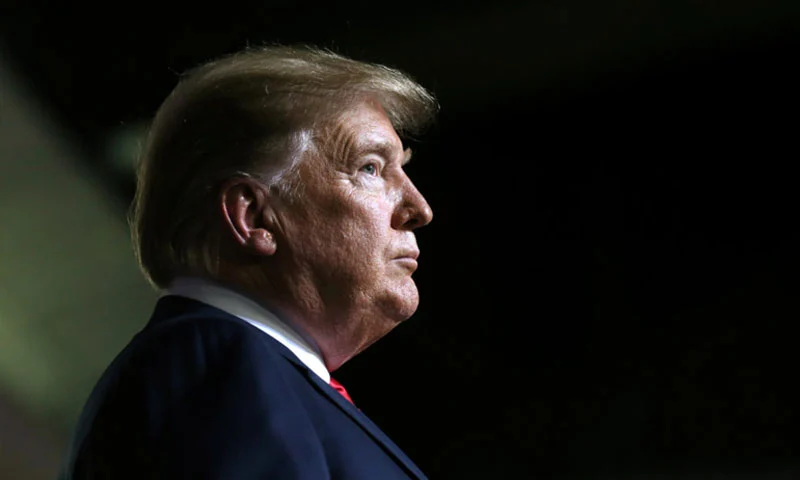
Trump Health Speculation Explodes After Sudden Disappearance, White House Responds
Fresh speculation about US President Donald Trump’s health spread rapidly after his unexpected absence from public engagements triggered concern across political circles and social media. The speculation intensified when it was announced that Trump would not appear publicly for the rest of the day, breaking from his usual routine. His absence during a period of heightened geopolitical tension added to the unease, with many questioning whether a medical issue was behind the sudden change. Unverified claims quickly surfaced online suggesting that the president had been rushed to Walter Reed National Military Medical Center, fueling widespread debate and concern. Viral Claims and Growing Uncertainty Social media played a central role in amplifying the rumours, with posts claiming emergency movement in Washington and suggesting a possible health scare involving the president. The situation escalated further as Trump was also absent from his regular weekend activities, including his well-known golf outings, which have historically been a consistent part of his schedule. Health speculation around Trump has been a recurring issue throughout his presidency, often driven by public appearances, visible physical signs, and his age, making him one of the oldest leaders to hold the office. Trump’s Health History Under Scrutiny Over the years, Trump’s health has remained a topic of intense public and media scrutiny. Previous instances, including visible bruising on his hands and reports of medical scans, have periodically sparked similar waves of speculation. At one point, Trump himself addressed concerns, stating, “I did. I got an MRI. It was perfect,” while maintaining that his overall health condition remained strong. Despite repeated reassurances, such moments have continued to raise questions among observers, especially during periods of limited public visibility. White House Breaks Silence After hours of growing speculation, the White House stepped in to dismiss the claims and clarify the situation. Trump’s spokesperson Steven Cheung rejected the rumours, stating that the president had not been hospitalized and was actively working. “There has never been a President who has worked harder for the American people than President Trump,” he said, adding that Trump “has been working nonstop in the White House and Oval Office.” Officials emphasized that there was no medical emergency and that the president remained fully engaged in his duties. Information Vacuum Fuels Speculation Analysts say the episode highlights how quickly speculation can grow when there is limited official information, especially concerning high-profile political figures. In the absence of immediate clarity, social media narratives often dominate, creating a cycle where unverified claims gain traction before official statements emerge. The incident once again underscores the intense public interest in presidential health and the political implications that such speculation can carry. Situation Stabilises but Questions Remain While the White House has firmly denied the rumours, the episode reflects the fragile balance between transparency and speculation in modern politics. For now, officials maintain that there is no cause for concern. However, the rapid spread of rumours has once again placed Trump’s health under the spotlight, ensuring that the topic remains a point of public attention.

Metro EV Prices Go Up by Rs5,000 Across Pakistan
Metro electric vehicles have become more expensive in Pakistan after Pak Star Automobile (Pvt.) Ltd announced a price increase across its entire lineup. According to the company’s official notification issued on April 3, prices of all Metro e-vehicle models have been increased by Rs5,000, with the revised rates effective immediately for all new orders. Dealers across the country have been instructed to charge customers based on the updated prices, reflecting the latest increase without any transition period. Why Prices Are Rising The company has attributed the increase to a surge in operational costs driven by recent economic pressures. Officials highlighted that rising sea freight charges and higher logistics expenses have significantly impacted overall production and distribution costs. Transportation costs from Karachi port to assembly plants, as well as delivery to dealerships, have increased sharply in recent weeks. In addition, the recent spike in petrol prices has indirectly affected the cost structure, making it difficult for the company to absorb expenses without passing them on to consumers. Electric Bikes No Longer Cheap Alternative Electric bikes were previously seen as a cost-effective alternative to petrol-powered motorcycles, especially amid rising fuel prices. However, the latest increase suggests that even the electric vehicle segment is not immune to inflationary pressures. Metro offers a wide range of electric bikes and scooters in Pakistan, with prices already ranging from around Rs179,000 for entry-level models to over Rs500,000 for premium options like the Metro Miku Super. Popular models such as the Metro T9, Metro Thrill and Metro M6 Empower are widely used for urban commuting due to their lower running costs and fuel-free operation. Impact on Consumers The price hike is expected to affect urban commuters who were increasingly shifting toward electric bikes to reduce fuel expenses. While electric vehicles still offer lower running costs compared to petrol bikes, the higher upfront cost may discourage new buyers. For middle and lower-income groups, the increase adds another financial burden at a time when both fuel prices and conventional motorcycle prices are already rising. Wider Market Trend The increase in Metro e-vehicle prices reflects a broader trend in Pakistan’s auto industry, where manufacturers are raising prices due to inflation, currency depreciation and higher import costs. From petrol motorcycles to electric bikes, nearly every segment of the two-wheeler market is witnessing upward price revisions, signaling sustained pressure on affordability. Outlook for Electric Mobility in Pakistan Despite the price increase, experts believe demand for electric bikes will continue to grow in the long term due to rising fuel costs and increasing awareness about environmentally friendly transport options. However, affordability will remain a key challenge, especially if economic pressures continue and further price hikes follow in the coming months.
Is the State Bank About to Raise Rates? What It Means for the Public and Investors
The State Bank of Pakistan’s next monetary policy decision is drawing unusual attention as markets weigh the risk of a rate hike if external financing pressure worsens and inflation stays elevated. The immediate trigger is a combination of rising oil prices, a heavier April debt repayment schedule and uncertainty over the timing of the next IMF-linked inflow into Pakistan’s foreign exchange reserves. The SBP’s next scheduled Monetary Policy Committee meeting is set for April 27, while the policy rate currently stands at 10.5 percent. The core question is not whether the central bank wants to raise rates right away, but whether worsening external and inflation conditions leave it with enough room to avoid doing so. A recent report suggested that an IMF-related inflow of about $1.2 billion, if reflected in reserves before the next MPC meeting, could reduce the pressure for immediate tightening. That possibility matters because Pakistan faces major external repayments this month, including a $1.3 billion Eurobond maturity on April 8 and the repayment of $2 billion in UAE deposits on April 17, according to local reporting. Why a Rate Hike Is Even Being Discussed The SBP kept its policy rate unchanged at 10.5 percent on March 9, but the central bank itself warned that the macroeconomic outlook had become more uncertain after the outbreak of war in the Middle East. In that same policy communication, the MPC noted that inflation had risen to 5.8 percent in January and 7 percent in February, and Reuters reported that the central bank saw inflation potentially remaining above 7 percent through FY26 and into FY27 if energy risks persisted. That caution has since become more relevant because Pakistan sharply raised petrol and diesel prices after global oil prices surged, adding to fears of second-round inflation in transport, food and other daily essentials. The IMF has also reinforced the case for caution. In its March 27 statement on Pakistan’s staff-level agreement, the Fund said Pakistan should continue with “appropriately tight” and data-dependent monetary policy to keep inflation under control and strengthen reserves. Reuters separately reported that Pakistan had assured the IMF it stood ready to tighten monetary policy, including by raising interest rates, if inflationary pressures intensified. What the Experts Are Saying Analysts have not uniformly predicted an immediate hike, but the direction of risk has clearly shifted. A Reuters poll ahead of the March meeting found all 10 analysts expected the central bank to hold at 10.5 percent at that time, yet the same report stressed that rising oil prices and regional tensions had limited the room for cuts. In other words, the market consensus has moved from wondering when easing may resume to asking whether the next move could actually be upward. Reuters also quoted Muhammad Ali, an investment analyst at AKD, after the January decision as saying, “We expect the central bank to hold the policy rate at 10.5% for the rest of the ongoing fiscal year.” That view now looks more vulnerable because the assumptions behind a long pause have been challenged by higher fuel prices, pressure on reserves and tighter IMF-linked policy expectations. The SBP’s own minutes from the March meeting show why reserves are central to this debate. The staff assessment presented to the MPC said that, in the baseline scenario and with planned official inflows, SBP reserves were expected to reach $18 billion by June 2026, but the same meeting also reviewed alternative oil-price scenarios for the current account and reserve path. That means the central bank has already been stress-testing exactly the kind of shock Pakistan is now experiencing. If SBP Raises Rates, What Would It Mean? A rate hike would be aimed first and foremost at containing inflation expectations, supporting the rupee and protecting Pakistan’s external account. Higher interest rates tend to make borrowing more expensive, slow demand, and help signal to markets and lenders that the central bank remains focused on price stability. In Pakistan’s case, it would also align with the IMF’s insistence on a tight, data-driven monetary stance at a time of imported inflation and reserve pressure. For the common man, however, the pain would likely be more immediate than the benefit. If rates rise, bank borrowing becomes costlier for businesses and consumers, which can lift financing costs on working capital, auto loans, personal loans and some housing-related borrowing. Businesses facing more expensive credit often pass those costs on through prices or slow hiring and expansion, which can weigh on household budgets and job creation. This is one reason central banks are usually careful about tightening too quickly when growth is still fragile. That trade-off between inflation control and damage to growth has become a recurring global concern during the recent energy shock. For investors, the picture is more mixed. Fixed-income investors and savers may benefit if deposit and government paper yields move higher, while equities can face pressure because higher rates usually reduce the attractiveness of risk assets and raise the discount rate applied to future earnings. Sectors dependent on financing, discretionary consumption and leveraged expansion tend to feel the strain first. On the other hand, if a rate hike restores confidence in macro stability and the rupee, some investors may view it as painful but necessary. This is particularly relevant because domestic market yields have already been trading above the current policy rate in some segments, suggesting markets have been pricing tighter conditions than the official benchmark alone implies. What If the IMF-Linked Inflow Arrives in Time? If the IMF-related $1.2 billion proceeds are approved and reflected in reserves before the April 27 MPC meeting, the SBP may have stronger grounds to stay on hold rather than hike immediately. An earlier reserve cushion could ease near-term external stress, especially during a month of large repayments, and give the central bank more time to assess how much of the oil shock is temporary and how much is feeding into broader inflation. But that outcome depends on timing, board approval and whether oil prices and domestic inflation indicators stabilize
