


Since the start of the Iran war, statements from Donald Trump have followed a pattern that analysts say is as striking as it is confusing. Over a span of just a few weeks, Trump’s remarks have swung between declaring victory, demanding military escalation, threatening allies, rejecting help, and then seeking cooperation. The rapidly changing tone has raised concerns among diplomats and observers about clarity in US messaging during a volatile geopolitical moment. From early declarations of victory to later warnings and contradictory positions on NATO and Iran, the timeline reflects what experts describe as a highly inconsistent communication strategy. A timeline of contradictions The sequence of statements paints a picture of shifting priorities and messaging, sometimes within the same day: Mar 3: “We won the war.”Mar 7: “We defeated Iran.”Mar 9: “We must attack Iran.”Mar 9: “The war is ending almost completely, and very beautifully.”Mar 11: “You never like to say too early you won. We won. In the first hour it was over.”Mar 12: “We did win, but we haven’t won completely yet.”Mar 13: “We won the war.”Mar 14: “Please help us.”Mar 15: “If you don’t help us, I will certainly remember it.”Mar 16: “Actually, we don’t need any help at all.”Mar 16: “I was just testing to see who’s listening to me.”Mar 16: “If NATO doesn’t help, they will suffer something very bad.”Mar 17: “We neither need nor want NATO’s help.”Mar 17: “I don’t need Congressional approval to withdraw from NATO.”Mar 18: “Our allies must cooperate in reopening the Strait of Hormuz.”Mar 19: “US allies need to get a grip – step up and help open the Strait of Hormuz.”Mar 20: “NATO are cowards.”Mar 21: “The Strait of Hormuz must be protected by the countries that use it. We don’t use it, we don’t need to open it.”Mar 22: “This is the last time. I will give Iran 48 hours. Open the strait”Mar 22: “Iran is Dead”Mar 23: “We had very good and productive talks with Iran.”Mar 24: “We’re making progress.”Mar 25: “They gave us a present and the present arrived today. And it was a very big present worth a tremendous amount of money. I’m not going to tell you what that present is, but it was a very significant prize.”Mar 26: “Make a deal, or we’ll just keep blowing them away.”Mar 27: “We don’t have to be there for NATO.”Mar 28: No major quoteMar 29: Claimed talks were progressingMar 30: “Open the Strait of Hormuz immediately, or face devastating consequences.”Mar 31: Claimed a deal was “very close” and that Iran would “do the right thing”Apr 1: “We’ll see what happens very soon.”Apr 2: Repeated that a deal was likely, while warning of continued strikes if notApr 3: “Something big is going to happen.”Apr 4: Said Iran must comply “immediately” or face further consequences.Apr 5: “Open the fuckin’ Strait, you crazy bastards, or you’ll be living in Hell – JUST WATCH! Praise be to Allah.” From victory claims to uncertainty What stands out is not just the tone, but the speed at which positions change. On multiple occasions, Trump declared victory over Iran, only to later suggest the war was ongoing or incomplete. Within days, his messaging shifted from rejecting NATO’s involvement to demanding support, and then again dismissing the alliance altogether. His comments on the Strait of Hormuz also varied sharply, from insisting allies must act to later saying the US did not need to be involved. Diplomatic observers say such fluctuations risk undermining credibility during sensitive negotiations. “This kind of messaging creates confusion not just for the public, but for allies and adversaries trying to interpret US policy,” said one foreign policy analyst based in Washington. Strategy or chaos Some supporters argue that the unpredictability is deliberate, part of a strategy to keep opponents off balance. Others see it as a lack of coherent policy communication during a critical geopolitical crisis. The mix of threats, declarations of victory, and references to ongoing negotiations has made it difficult to assess the actual state of the conflict or diplomacy. By late March and early April, Trump’s tone began to oscillate between optimism about a deal and warnings of further escalation, culminating in increasingly aggressive rhetoric. For now, the timeline of statements has become a story in itself, reflecting a communication style that continues to defy traditional diplomatic norms.
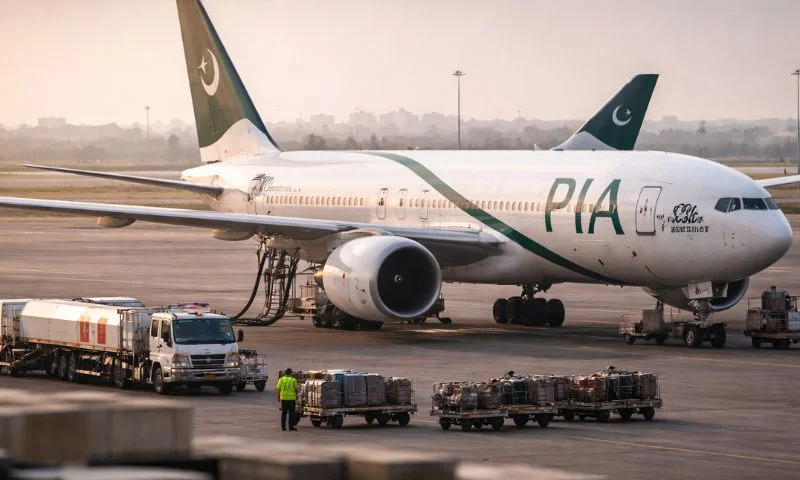
PIA Ends Discounts, Cuts Flights Amid Fuel Price Crisis
Pakistan International Airlines has scaled back operations and withdrawn fare discounts as rising jet fuel prices deepen financial pressure on the national carrier, according to officials. The move comes after a sharp increase in aviation fuel costs, driven by global oil price volatility and regional tensions that have disrupted supply chains. In an official statement, the airline confirmed that “a plan has been prepared to deal with the continuously rising prices and potential losses,” adding that fare concessions have been withdrawn for most passenger categories. Discounts for students, senior citizens, journalists and other groups have been suspended, with only limited exemptions for children and infants remaining in place. A spokesperson said the decision was necessary as “unprecedented increases in jet fuel costs” have significantly raised operating expenses. Flights reduced, routes suspended Alongside ending discounts, PIA has reduced its flight network to cut costs. Flights to several international destinations have been suspended or limited, while operations to some Gulf routes remain restricted due to ongoing regional disruptions. The airline has also reduced flight frequency on selected routes to manage fuel consumption. Officials said the airline was forced to take “tough administrative decisions” as it cannot pass the full burden of fuel price increases onto passengers. Industry data shows that aviation fuel prices in Pakistan have surged dramatically in recent weeks. Jet fuel rates have risen sharply, with reports indicating increases of over 100 percent since early March, putting airlines under severe financial stress. Fuel accounts for nearly 30 to 40 percent of airline operating costs, making such spikes particularly damaging for carriers already operating on thin margins. Mounting financial strain on national carrier PIA has long struggled with financial losses, and the latest fuel price surge has intensified concerns about its sustainability. Analysts say the airline’s latest measures are aimed at reducing immediate losses, but warn that continued volatility in oil markets could lead to higher ticket prices and further cuts in services. Recent weeks have also seen airlines operating in Pakistan introduce fuel surcharges, with additional charges applied on both domestic and international routes as operating costs climb. Experts link the surge in fuel prices to geopolitical tensions in the Middle East, which have disrupted key oil supply routes and increased global crude prices. Officials remain hopeful that conditions will stabilise. “It is hoped that international prices will soon return to normal levels,” the airline said, indicating that suspended routes could be restored once fuel costs ease. For passengers, however, the immediate impact is clear. Air travel is becoming more expensive and less accessible, as Pakistan’s aviation sector navigates one of its most challenging periods in recent years.

Govt Bike Subsidy Scheme: How You Can Apply Online
A few days ago, the federal government introduced a new fuel subsidy scheme for motorcycle owners. However, the registration process differs across provinces. So far, Punjab, Sindh and Khyber Pakhtunkhwa have each started registration through their own systems. This guide focuses on Punjab and explains the process step by step. What is the Bikers’ Fuel Subsidy Scheme? Under this scheme, eligible motorcycle owners will receive Rs. 2,000 per month for fuel. In official terms, this is described as a subsidy of Rs. 100 per litre on 20 litres of petrol. In simple words, the government is providing Rs. 2,000 worth of fuel every month. This amount will be credited through a mobile app or SMS. Users can then use this balance to get fuel worth Rs. 2,000 each month. How to Apply for the Subsidy in Punjab If you are based in Punjab, you can register for the bikers’ fuel subsidy through one of the following methods: By calling the helpline at 100 By using the app “Maryam ko Batain” Note that this process is only valid if you live in Punjab and your motorcycle is registered in Punjab. What are the Conditions to Enroll Before applying, make sure you meet all of the following requirements: The motorcycle must be registered in your own name The motorcycle must be registered in Punjab The motorcycle must be a 70cc model and must not exceed 70cc You must currently reside in Punjab If any of these conditions are not fulfilled, the application will be rejected. How to Enroll Through the App Before starting, make sure you have the following details ready: The chassis number of your motorcycle Your CNIC (Computerised National Identity Card) Step 1: Download the App Download the “Maryam ko Batayn” app from the Google Play Store or Apple App Store. Step 2: Sign Up for an Account Open the app and click on the “Sign up” option at the bottom of the screen. You will be asked to enter the following details: Name CNIC number Email address Mobile number Date of birth Gender New password Enter all the required information carefully. Step 3: Verify Your Mobile Number (OTP) After completing the sign-up form, you will receive a 10-digit OTP code via SMS on your registered mobile number. Enter this code in the app to verify your account. Step 4: Select the Subsidy Option Once your account is verified, log in again and select the “Bike Petrol Fuel Subsidy” option from the main screen. Step 5: Register for the Scheme You will be asked to provide additional details. Fill in all required fields to complete your application. Step 6: Wait for Approval After submission, your application will be processed. You will receive a Request ID. You can track your application status anytime through the “Pending Requests” section within the app. A step toward digital governance Despite challenges, the initiative highlights a growing shift toward digital governance in Pakistan. Online applications are expected to improve transparency and reduce manual intervention. Analysts say such targeted subsidy programmes could become more common as governments look for efficient ways to support citizens amid economic pressure. For now, the scheme provides immediate relief to thousands of students navigating rising costs.

From Bird Droppings to Bee Venom: Weird Skincare Trends That Actually Work
What once sounded like folklore or superstition is now finding a place in modern skincare routines. From bird droppings to fish DNA, a growing number of unconventional beauty treatments are moving from niche practices into mainstream conversation. While many of these methods appear bizarre, experts say some are rooted in real science and centuries-old traditions. Humans have long experimented with unusual skincare solutions. Historical accounts suggest that ancient civilisations used everything from milk baths to natural acids to improve skin texture. Today, similar ideas are resurfacing, often backed by modern research and repackaged for a global audience. Science behind the unusual Among the most talked-about treatments are so-called “vampire facials,” which use platelet-rich plasma derived from a person’s own blood. The idea is to stimulate collagen production and repair damaged skin. Studies have shown that such treatments can improve elasticity and reduce visible signs of ageing. Another trending approach involves salmon DNA, where purified polynucleotides are injected or applied to the skin. Early research suggests these compounds may improve hydration and skin texture. “They’ve been shown to help improve skin hydration, plumpness, texture and wrinkles,” said dermatologist Joshua Zeichner. Even bird-dropping facials, historically used in Japan, have gained attention. The treatment uses sterilised and processed ingredients that contain compounds like urea and guanine, which can exfoliate and brighten the skin. Experts stress that these treatments rely on purified, controlled formulations rather than raw materials. “You shouldn’t just scoop up bird poop off the street,” Zeichner warned, highlighting the importance of safety and proper preparation. Other unusual ingredients, such as bee venom, are also being studied for their potential anti-inflammatory and skin-repair properties. Read More: Aesthetic Physician Saba Jerjees Brings Science-Backed Skincare to Karachi Between trend and truth Despite growing interest, dermatologists caution that not all viral skincare trends are effective or safe. Many treatments gain popularity through social media or celebrity endorsements rather than strong scientific backing. In some cases, benefits may vary widely depending on the individual’s skin type, the formulation used and how the treatment is applied. Experts say the key lies in understanding the underlying mechanism rather than blindly following trends. Some of these methods work because they stimulate natural biological processes such as collagen production or gentle exfoliation. Others persist mainly because of their novelty and marketing appeal. At the same time, the global skincare industry continues to explore unconventional ingredients as part of a broader shift toward regenerative and personalised treatments. Read More: Secondhand, Repair, Repeat: The Fashion Trends Built on Responsible Buying A balance between curiosity and caution As interest in unusual skincare grows, specialists emphasise the need for caution. Treatments involving injections or biological materials should only be performed by trained professionals. Even natural remedies can cause irritation or allergic reactions if used incorrectly. Ultimately, experts say good skincare still comes down to basics: consistency, protection from sun damage and using products suited to individual needs. The fascination with bizarre rituals, however, shows no sign of slowing down. In a world driven by beauty trends and innovation, the line between science and curiosity continues to blur

Not Just Annoying: How Bad Odours Affect Your Brain and Body
From overflowing garbage bins to damp walls and industrial fumes, unpleasant smells are often dismissed as minor annoyances. But growing scientific evidence suggests they may have a deeper impact on human health than previously understood. Researchers say the sense of smell evolved as an early warning system, helping humans detect danger such as spoiled food, toxic gases or infection. Today, that same system continues to influence how the body reacts to its environment. “The olfactory system functions primarily as an avoidance system,” said Professor Johan Lundström, explaining how smells trigger rapid responses in the brain within milliseconds. From nuisance to real health effects Scientists have found that exposure to persistent bad odours can lead to a range of physical symptoms, including headaches, nausea and breathing discomfort. Unpleasant smells can also activate the vagus nerve, which connects the brain to the digestive system, sometimes triggering feelings of sickness. In some cases, the reaction is not caused by toxicity itself but by how the brain interprets the smell. Research suggests that odour-related stress can disrupt sleep, increase anxiety and reduce overall quality of life. Environmental health studies have also linked long-term exposure to strong odours with symptoms such as coughing, irritation and psychological distress, particularly in communities located near waste sites or industrial zones. Experts say the impact is not purely physical. “The health impact is mediated by an individual’s dislike or fear of a particular odor,” noted cognitive psychologist Pamela Dalton, highlighting how perception plays a key role in determining how strongly a smell affects someone. The hidden psychological and social toll Beyond immediate physical effects, bad odours can shape behaviour and lifestyle. People living with constant unpleasant smells often change their routines, avoiding outdoor activities, keeping windows shut or limiting social interactions. Over time, these adjustments can affect both mental wellbeing and social life. Unlike pleasant scents, which the brain may eventually ignore, negative odours tend to remain noticeable. This makes prolonged exposure particularly stressful. At the same time, smell is closely linked to memory and emotion, meaning that even a brief unpleasant odour can trigger strong reactions. Researchers also point out that odour pollution often affects lower-income communities more severely, as they are more likely to live near landfills, sewage systems or heavy industry. More than just a smell While bad odours are rarely dangerous on their own, scientists say they should not be ignored. They can act as early warning signs of environmental or health problems. At the same time, the ability to smell itself is crucial for wellbeing. Studies have shown that people with a stronger sense of smell tend to experience greater enjoyment in daily life, from eating to social interactions. Loss of smell, on the other hand, has been linked to poor diet, reduced quality of life and even increased long-term health risks. For researchers, the message is clear: smell is not just a background sense but a key part of how humans interact with the world. As cities grow and pollution rises, understanding how odours affect health may become increasingly important for public policy and urban planning.

App-Based Cleaning Jobs Rise in Pakistan as Workers Face New Pressures
On a humid afternoon in Gulshan-e-Iqbal, 32-year-old Shazia Bibi moves quickly through a two-bedroom apartment. Within an hour, the kitchen is spotless, floors are mopped and the house is back in order. Her next job is already waiting on her phone. Shazia is part of a growing number of domestic workers in Pakistan joining app-based home service platforms that promise quick bookings and steady income. These digital services are beginning to reshape a sector long dominated by informal arrangements, where workers are hired through personal contacts and paid in cash. With millions of domestic workers across Pakistan, most of them women, the shift toward digital platforms is opening new doors but also introducing new challenges. Opportunity meets algorithmic control For workers like Shazia, the move has brought higher and more predictable earnings compared to traditional house jobs. “I used to work in two houses and earn around 15,000 rupees,” she says. “Now I can make up to 25,000 if I get enough bookings.” But the new system comes with strict rules. Every job is tracked, timed and rated. A delay of even a few minutes can affect future bookings. Customer reviews play a crucial role in determining how often a worker is assigned jobs. “If someone gives a low rating, your work can stop coming,” Shazia says. “So after every job, we request them to give five stars.” Labour rights advocates in Pakistan warn that while platforms appear to formalise work, they also shift control from employers to algorithms. “These systems create invisible pressure,” says a Karachi-based labour researcher. “Workers are constantly being monitored and judged by ratings rather than treated as employees with rights.” Convenience for users, cost for workers For urban households, especially younger families, app-based services offer flexibility and convenience. Cleaners, electricians and beauticians can be booked within minutes, often for short tasks. But for workers, the experience can be physically and mentally demanding. Delays caused by traffic, security checks at apartment complexes or overlapping bookings can lead to penalties or reduced earnings. Workers say they often rush between jobs to avoid fines. “There are days when I don’t even sit down,” Shazia says. “If I take a break, I lose the next booking.” Basic facilities are another concern. Many workers avoid drinking water during shifts because they are unsure whether they will be allowed to use a client’s washroom. Between jobs, they wait in public spaces such as bus stops or staircases, with limited access to rest areas. Experts say the situation mirrors the early days of ride-hailing and delivery platforms in Pakistan, where workers were drawn in by flexible income but later faced income uncertainty and rising pressure. “There is a pattern with these platforms,” the researcher says. “At first, earnings look attractive. Over time, incentives change and workers bear more risk.” A changing relationship inside homes The rise of digital platforms is also changing long-standing relationships between households and domestic workers. In traditional arrangements, workers often developed familiarity with families over years. With app-based services, that connection is replaced by short-term, transactional interactions. Some households remain cautious. “I don’t know who is coming into my house,” says Sana Ahmed, a Karachi resident. “With our regular help, there is trust. With an app, it feels different.” As Pakistan’s urban economy evolves, app-based domestic services are likely to expand. For now, they offer both opportunity and uncertainty. Back in Gulshan, Shazia checks her phone as another booking appears. “The work is hard,” she says. “But for now, it helps me run my home. So I keep going.”

The $2 Billion Sphere That Could Change Live Shows Forever
A new generation of immersive entertainment venues is taking shape around the world, with massive dome and sphere structures promising to redefine how audiences experience music, sport and storytelling. The trend is being led by projects like the Sphere in Las Vegas, a futuristic venue wrapped in a giant LED exterior and equipped with cutting-edge audio and visual technology. Developers say such venues are designed to create fully immersive experiences that go far beyond traditional cinemas or concert halls. These structures use high-resolution wraparound screens, spatial audio systems and even sensory effects to place audiences “inside” the experience rather than just watching it. One industry expert says these spaces aim to blur the line between reality and performance, offering something audiences “cannot get at home”. A new frontier for concerts, sport and storytelling The Sphere has already hosted major concerts and events, showcasing what this technology can do. Its interior screen, one of the largest in the world, surrounds viewers entirely, creating a 360-degree environment. Supporters say such venues could transform not only live concerts but also sports broadcasting and film screenings. Instead of watching a match on a flat screen, audiences could feel as if they are inside the stadium. Companies are now racing to replicate the model. Rival firms are developing similar dome-style venues in cities across the United States, hoping to tap into growing demand for immersive entertainment. Experts believe the appeal lies in offering something unique in an era where streaming has made traditional content easily accessible at home. “People are looking for experiences,” one analyst said, pointing to how large-scale venues can attract audiences willing to pay premium prices. High costs and uncertain future Despite the excitement, questions remain about whether the model is financially sustainable. The Las Vegas Sphere reportedly cost billions of dollars to build, making it one of the most expensive entertainment venues ever created. High production costs for content tailored to such spaces add another layer of financial pressure. There are also concerns about how widely this model can expand. While major cities may support such large-scale projects, smaller markets could struggle to justify the investment. Critics argue that while the technology is impressive, its long-term success will depend on consistent, high-quality content that justifies the ticket price. Still, momentum continues to build. Developers are betting that immersive venues represent the next step in live entertainment, much like cinemas once replaced theatre for mass audiences. As these giant domes and spheres begin to spread, the question is no longer whether they will exist, but whether they can reshape the future of how people experience entertainment.

Apple’s 50-Year Journey: Game-Changers, Flops and the Fight to Stay Relevant
As Apple marks 50 years since its founding in 1976, its legacy is often defined by products that reshaped entire industries. But alongside those successes sits a long list of failures that reveal how the company learned, adapted and survived. From the early days of personal computing to today’s trillion-dollar dominance, Apple’s journey has been shaped as much by what went wrong as what went right. The hits that defined modern technology Apple’s biggest successes did not always come from inventing new ideas, but from refining them into something the mass market could understand and use. The Apple II, launched in 1977, helped bring personal computing into homes and classrooms, transforming Apple from a startup into a major player. It introduced simplicity at a time when computers were complex machines meant for hobbyists. That philosophy continued with the Macintosh in 1984, which popularised the graphical user interface. By replacing command lines with icons and a mouse, Apple made computers more accessible to ordinary users. Years later, the iPod followed a similar pattern. It was not the first MP3 player, but its design and seamless connection with iTunes made digital music mainstream. Analysts say the iPod also laid the foundation for Apple’s future. “Without the iPod, Apple would likely have lacked… the strength” to enter smartphones, one industry expert noted. Then came the iPhone in 2007, widely seen as Apple’s most transformative product. It combined a phone, music player and internet device into one, setting the template for modern smartphones. Today, hundreds of millions of units are sold each year. Even in the post-Steve Jobs era, Apple found success with products like the Apple Watch, which turned wearables into serious health tools and a major revenue stream. The misses that nearly cost Apple its edge Apple’s history is equally marked by products that failed, sometimes spectacularly. The Apple III, launched in 1980, suffered from serious hardware issues, including overheating. Reports of chips falling out forced Apple to suggest unusual fixes, damaging its reputation and leading to poor sales. The company’s first attempt at portable computing also struggled. The Macintosh Portable was criticised for being “too big, too heavy and too expensive,” and failed to gain traction despite heavy promotion. In the 1990s, Apple experimented with new categories that did not succeed. The Newton MessagePad, an early personal digital assistant, became infamous for its inaccurate handwriting recognition, while the Apple Pippin gaming console failed due to high prices and a lack of compelling content. More recently, the Vision Pro headset has raised similar concerns. Despite being positioned as the future of “spatial computing,” weak demand and high costs have limited its appeal, with analysts describing it as a product ahead of its time. Experts say these failures highlight a recurring lesson. “Being ahead of the curve is not enough,” one analyst said, pointing to how even innovative products can fail if they are not ready for the market. A company built on reinvention Apple’s ability to recover from its failures has been central to its survival. The company came close to collapse in the 1990s before Steve Jobs returned and refocused its strategy. Since then, Apple has relied on tight control over its ecosystem and a focus on user experience to maintain its position. But critics argue that while the company continues to refine its products, it has not delivered the same kind of groundbreaking innovation seen in earlier decades. At 50, Apple remains one of the most influential companies in the world. Yet its future may depend on whether it can once again turn risks into defining successes.
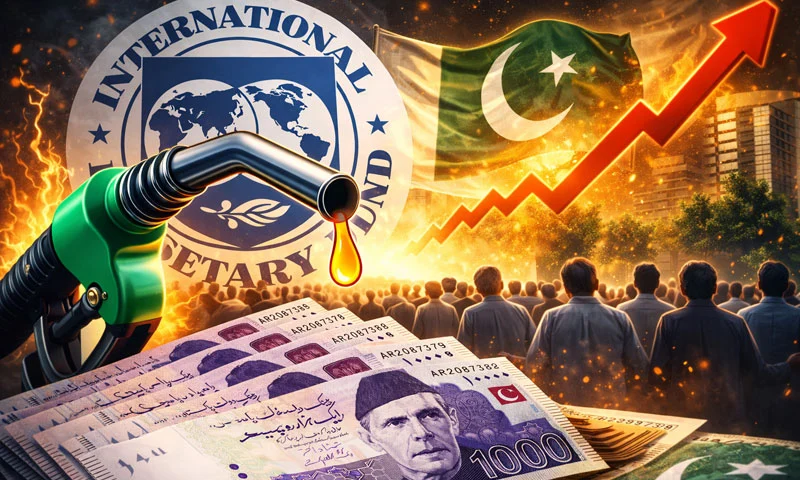
IMF Demands Fuel Reforms: What It Means for Millions of Pakistanis
Pakistan is once again at a critical crossroads after the International Monetary Fund pushed the government to remove fuel price distortions. The demand has sparked a key question across the country: will fuel prices rise again, or does the government still have room to provide relief? The answer is not simple. It depends on fiscal space, global oil trends, and political will. But experts agree on one thing. Tough decisions are unavoidable. Limited Options for the Government Pakistan currently has three main options, each with its own risks and consequences. The first option is to fully pass on international fuel prices to consumers. This aligns with IMF conditions and helps stabilize the economy. However, it directly increases petrol and diesel prices. The second option is to continue subsidies. This provides short-term relief but puts pressure on the national budget, increases fiscal deficit, and risks delaying IMF funding. The third option is targeted subsidies. Instead of giving relief to everyone, the government can support specific groups like farmers, transporters, or low-income households. Economists say the IMF strongly prefers the third option. One senior economic analyst explained that targeted subsidies are “the only sustainable middle path” because they protect vulnerable groups without damaging fiscal discipline. Will Fuel Prices Increase Again? Experts believe there is a high probability that fuel prices will increase in the coming months. Pakistan imports most of its fuel, and global oil prices remain volatile due to geopolitical tensions. When combined with IMF conditions, this creates upward pressure on domestic prices. Energy economist Dr Fahad Rauf says that if distortions are removed, “fuel prices will reflect actual market rates,” which means increases are likely unless global prices fall significantly. Even if the government tries to delay hikes through subsidies, it can only do so temporarily. The current fiscal constraints limit how long relief can continue. Can Pakistan Afford Subsidies? The government has already stretched its financial capacity to provide fuel relief. Subsidies are costly and often funded through borrowing or reduced development spending. According to financial experts, continuing blanket subsidies could widen the fiscal deficit and weaken Pakistan’s position in negotiations with international lenders. A former finance ministry official noted that “every rupee spent on untargeted subsidies reduces space for health, education, and development.” There is also the risk that prolonged subsidies could lead to delayed IMF disbursements, which Pakistan relies on to stabilize its economy and maintain foreign reserves. Impact on Inflation and Daily Life If fuel prices rise, the impact will be immediate and widespread. Transport costs will increase, leading to higher prices for food and essential goods. Electricity costs may also rise due to fuel-based power generation. Businesses will pass on higher operating costs to consumers. For the average household, this means higher monthly expenses and reduced purchasing power. Economists warn that inflation could spike again, especially in urban areas where transport and utility costs are a major part of household spending. Pressure on Agriculture and Industry Diesel is critical for agriculture and transport. Any increase in diesel prices can directly affect farming costs, especially during sowing and harvesting seasons. This could lead to higher food prices and put additional pressure on rural incomes. Industries that rely on logistics and transportation may also face increased costs, which could slow economic activity. The Case for Targeted Relief Policy experts are increasingly recommending targeted subsidies as the most practical solution. This approach involves identifying vulnerable groups and providing them with direct financial support instead of lowering fuel prices for everyone. For example, farmers could receive diesel subsidies, while low-income households could get cash transfers through existing programs. This ensures that relief reaches those who need it most while keeping overall spending under control. The upcoming federal budget will be crucial in shaping Pakistan’s fuel pricing strategy. The government is expected to gradually reduce distortions, possibly through phased price adjustments rather than sudden hikes. Analysts believe a hybrid approach is likely. Fuel prices may increase gradually, while targeted subsidies are expanded to protect vulnerable segments. The challenge for policymakers is to strike a balance between economic stability and public relief. A Difficult Trade-Off Pakistan’s fuel pricing dilemma highlights a broader economic reality. Relief measures are politically necessary, but financial discipline is unavoidable. As one senior policy expert put it, “There is no painless option left. The question is how to manage the pain.” For the public, this means preparing for potential price adjustments while hoping that targeted support measures can cushion the impact.
