


Pakistani film ‘Mera Lyari’ is seeking to challenge decades of negative stereotypes surrounding Karachi’s historic Lyari neighbourhood. It is a film focusing on Liyari’s football culture, multicultural identity and strong sense of community. At a promotional event held in Karachi ahead of the film’s May 9 release, actor Ayesha Omar said her understanding of the area changed after her experience of filming in Lyari, which was always associated in public discourse with gang violence, political unrest and poverty. “I never felt fear in Lyari,” Omar told attendees during a special meet-and-greet session. “Media and public perception had created a very different image of Lyari. Reality turned out to be much better.” The actor revealed that she spent months travelling regularly to the neighbourhood during filming and did so without security. “I did not even keep security with me,” she said, describing local residents as “extremely loving and full of life”. Lyari, one of Karachi’s oldest localities, has historically produced football talent and remains deeply connected to the sport. The film incorporates that sporting culture into its storyline, with real young football players from the area appearing in several scenes. Producer Waqar Rizvi said Lyari currently has 36 football grounds, with girls using them in the mornings and boys playing in the evenings. He added that authorities were planning to build three more football stadiums in the area. Filming through Karachi’s harsh summer Omar said the production faced difficult conditions during filming, which began in May and continued until July during Karachi’s intense summer heat. “The shooting was done in severe heat, which made it very difficult to continue working,” she said. Despite the challenges, the actor expressed excitement about the film’s release and praised the Sindh government for supporting the project through grants and institutional backing. “The government did not create any obstacles,” she said, adding that provincial departments also helped promote the film through social media campaigns. Omar also disclosed that the project initially carried a different title. According to her, the film was originally called “Behnaz” before later being renamed “Mera Lyari”. The actor said the movie offered a far more realistic portrayal of communities like Lyari than many mainstream productions. Referring indirectly to an Indian film, Omar said she once watched a movie depicting similar communities but found it “so unrealistic” that she stopped watching halfway through. By contrast, she said “Mera Lyari” allowed her to experience “the real life and people of Lyari” firsthand. Dananeer calls film ‘multilayered’ Earlier this week, actor Dananeer Mobeen attended a screening of the film at the UK Asian Film Festival in London. She rejected suggestions that the project was designed as a response to the Indian movie “Dhurandhar”. “It’s a disservice to boil this movie down to a response to another film,” she told reporters. “The core and crux of this movie is so special. We have explored Lyari, football culture, female football culture, women in sports, South Asian women in sports.” Dananeer urged audiences to view the film holistically instead of reducing it to a single narrative. “It’s a beautiful film. It was a beautiful image of Lyari,” she said.

5G Finally Arrives in Pakistan but Faces Shortage of Compatible Phones
Pakistan’s telecom companies are preparing to commercially launch 5G services across the country by mid-August, marking a major step in the government’s push to improve internet speed and digital connectivity. The rollout follows the government’s $507 million spectrum auction held in March this year, where Jazz, Zong and Ufone secured frequencies for next-generation mobile services. Industry officials say telecom operators have already started installing equipment and conducting service tests at selected sites ahead of the commercial launch. According to the Pakistan Telecommunication Authority (PTA), the government sold 480 MHz of spectrum during the auction, although officials had initially targeted 597 MHz. The auction included two lots in the 700 MHz band, all five lots in the 2,300 MHz band, all 19 lots in the 2,600 MHz band, and 22 out of 28 lots in the 3,500 MHz band. Jazz emerged as the largest buyer, securing 190 MHz of spectrum across multiple frequency bands. A senior Jazz official said the company had already activated around 150 pilot sites and planned rapid expansion in the coming months. “Jazz has launched 5G services at 150 sites and will be able to install equipment at 1,000 sites in the initial phase that will be extended to 2,500 sites by December this year,” the official said. Kazim Mujtaba, President Jazz GSM, said operators wanted a gradual and sustainable rollout strategy. “Let’s be clear; 5G is not about switching on sites for headlines. We’re deliberately piloting with around 180 sites today, and scaling from July as the ecosystem matures,” he said. “We will expand in a phased, disciplined manner, targeting 1,000 sites by mid-August and 2,500 by year-end, but only where it delivers real value,” he added. iPhone users face long wait Despite the excitement surrounding 5G, millions of iPhone users in Pakistan may not access the service anytime soon. Officials from the Ministry of IT and Telecommunication said Apple had informed Pakistani authorities that it would likely enable 5G services for iPhones in Pakistan in 2027 after evaluating the local market. The delay comes as high taxes on imported smartphones, especially premium devices like iPhones, continue to shrink Apple’s market share in the country. Samsung devices already support 5G services in Pakistan, while local manufacturers have also started producing compatible handsets. However, telecom industry officials estimate that only around 5% of mobile phones currently available in Pakistan support 5G connectivity. “This is a big challenge for telecom companies to launch 5G services in Pakistan,” industry officials said. Installment proposal and tax concerns Telecom operators have proposed a new installment-based financing scheme for mobile phones to boost 5G adoption. Under the proposal, users who default on payments could face restrictions on obtaining SIM cards from any telecom operator. Industry officials said earlier installment programs suffered heavy losses due to a default ratio of 30% to 40%. Zong reportedly opposed the proposal, arguing that operators such as Jazz and Ufone already enjoy an advantage through affiliated banking services. Telecom executives also urged the government to reduce sector taxes, saying high taxation was slowing Pakistan’s digital growth. “At nearly 45%, telecom is among the most heavily taxed sectors; yet it underpins the entire digital economy,” Kazim Mujtaba said. “You can’t build a future-ready Pakistan on yesterday’s tax model,” he added.

Pakistan Rejects Claims of Targeted Deportations From UAE
Pakistan’s government on Friday dismissed reports claiming that the United Arab Emirates was carrying out targeted deportations of Pakistani nationals, calling the allegations “vicious propaganda” spread through social media by vested interests. The clarification came after online reports and posts alleged that Pakistani workers had recently faced selective deportations from the Gulf state, raising concerns among overseas Pakistanis and their families. In a statement posted on X, Pakistan’s Interior Ministry said it had reviewed the available data and found the reports “mala fide.” Ministry of Interior has taken notice of speculative reporting in sections of media especially social media about targeted deportations of Pakistani nationals from brotherly Islamic country of UAE.— Ministry of Interior GoP (@MOIofficialGoP) May 8, 2026 “No country or sect specific deportations from any country including UAE are being carried out,” the ministry said. Officials stated that deportations from foreign countries, including the UAE, occur only under routine legal and immigration procedures linked to visa violations, overstays, illegal documentation or breaches of local laws. Read More: Big Relief or Bigger Pressure? Pakistan Repays $2 Billion to UAE The ministry stressed that Pakistani nationals who meet visa and employment requirements continue to travel to and work in the UAE and other friendly countries “without prejudice.” The statement described the social media reports as “fake news being peddled” and said the claims were “malicious and fabricated to serve ulterior motives.” The report said that established diplomatic channels involving the Foreign Office and the relevant host country is individually handling any issue involving Pakistani citizens abroad. Speculation intensified after debt repayment The rumors gained wider attention after Pakistan repaid approximately $3.5 billion in debt obligations to the UAE last month, a move that increased pressure on the country’s foreign exchange reserves and triggered broader economic speculation online. Social media users linked the repayment to claims of strained bilateral ties and alleged immigration restrictions targeting Pakistani workers. However, officials rejected any suggestion of political or economic retaliation by the UAE. Read More: World’s Safest Cities Revealed: Abu Dhabi Leads, UAE Takes 5 of Top 6 The UAE remains one of Pakistan’s most important economic and strategic partners. Millions of Pakistanis live and work across the Emirates, particularly in Dubai, Abu Dhabi and Sharjah, contributing significantly to Pakistan’s annual remittance inflows. According to recent data from the State Bank of Pakistan, overseas Pakistanis in the UAE rank among the largest contributors of remittances to Pakistan’s economy. The Gulf nation also hosts a substantial Pakistani labor force working in sectors including construction, transport, hospitality, retail and services. Overseas employment remains critical for Pakistan Pakistan has increasingly focused on overseas employment opportunities as the country seeks to stabilize its economy and improve foreign exchange inflows. The government has repeatedly emphasized strengthening labor export agreements with Gulf countries, especially the UAE and Saudi Arabia, where large Pakistani expatriate communities already exist. In recent years, UAE authorities have tightened visa screening and documentation requirements for multiple nationalities as part of broader immigration and labor market reforms. Analysts say such regulatory measures are standard administrative practices rather than country-specific actions. Read More: UAE President Sheikh Mohamed Makes First Official Visit to Pakistan Officials in Islamabad have also urged Pakistani workers traveling abroad to comply fully with immigration laws and employment regulations to avoid legal complications. The Interior Ministry’s latest statement appeared aimed at calming concerns among overseas workers and countering misinformation circulating online regarding Pakistan-UAE relations. Diplomatic relations between the two countries remain strong, with both governments continuing cooperation in trade, investment, energy and labor mobility.

easypaisa Profit Jumps 4.4 Times in Record Q1 2026 Results
Pakistan’s easypaisa Digital Bank reported record quarterly earnings for the first quarter of 2026, driven by strong growth in digital transactions, customer deposits and lending activity, as the country’s financial sector continues to shift toward mobile-first banking services. The bank announced that profit before tax (PBT) surged to PKR 3.66 billion for the quarter ended March 31, 2026, compared to PKR 840 million in the same period last year. The result marked a 4.4-times increase and represented the strongest quarterly performance in the bank’s history. Profit after tax stood at PKR 1.49 billion, while earnings per share reached Rs2.47. The strong results came as Pakistan’s broader macroeconomic environment showed signs of gradual stabilization during the first quarter. Officials cited the country’s IMF Extended Fund Facility programme, improving foreign inflows and consecutive current account surpluses as factors supporting economic confidence. The bank said the improving economic environment created “a constructive operating environment” for continued expansion. Revenue growth driven by lending and digital payments Overall revenue increased 24% year-on-year during the quarter, supported by growth across lending, treasury operations and payment services. Net markup income rose 22% from a year earlier, fueled by expansion in the lending portfolio and treasury books. Treasury income also climbed sharply due to strong deposit growth. Fee-based income posted a 27.1% increase, mainly because of higher payment services revenue, including OPS revenue and load and bundle income. The bank also benefited from lower provisioning charges, reflecting reduced default rates in its digital lending portfolio and stronger recoveries from previously written-off loans. Operating expenses rose 22% year-on-year as the bank continued investing in customer acquisition, merchant expansion and retention programmes. Commenting on the results, Jahanzeb Khan said the bank’s growth reflected increasing public confidence in digital banking. “This record performance reflects the strong momentum we have built as Pakistan’s leading digital bank,” he said. “Our continued growth is driven by customer trust, disciplined execution, and our commitment to expanding access to financial services at scale.” He added that the bank would continue focusing on innovation and financial inclusion. “Guided by our vision of empowering Pakistan through digital banking, we remain committed to relentlessly simplifying and securing financial services to unlock opportunities for all.” Deposits and user base continue to rise The bank’s balance sheet also showed strong expansion. Total assets reached PKR 217.6 billion by March 31, 2026, while customer deposits climbed 52% year-on-year to PKR 153.4 billion. The bank maintained strong liquidity indicators, with CASA and current account ratios standing at 97.7% and 80.6%, respectively. Total advances stood at PKR 27.3 billion, while the advances-to-deposit ratio reached 17.80%. Asset quality remained stable, with non-performing loans above 90 days past due reported at 3.03%. The bank said these loans remained fully covered through a coverage ratio of 164%. Its capital adequacy ratio stood at 21.27%, comfortably above regulatory requirements set by the State Bank of Pakistan. Amin Sukhiani said the bank would continue prioritizing sustainable growth and financial inclusion. “We are proud to deliver yet another record quarter,” he said. “Our results reflect the trust our customers place in us, the strength of our team, and the power of our digital-first model.” The bank said it now serves more than 22 million monthly active users, including three million new digital users added over the past year. Analysts say Pakistan’s digital banking sector continues expanding rapidly as smartphone penetration, mobile payments and branchless banking adoption increase across urban and rural markets.
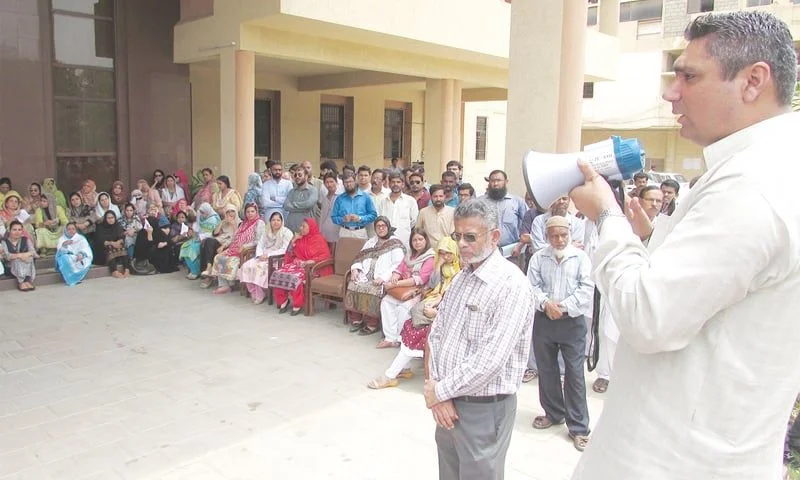
KU Teachers Threaten Complete Shutdown, Continue Exam Boycott Over Unpaid Dues
The Karachi University Teachers’ Society (KUTS) has intensified its protest movement and warned of a possible complete shutdown of the university, deepening uncertainty around academic and examination activities at one of Pakistan’s largest public sector universities. The warning came during a general body meeting where teachers strongly criticised the university administration over unpaid dues, alleged harassment and what they described as worsening financial mismanagement. Faculty members decided to continue their ongoing boycott of examinations after concluding that the administration had failed to address their long-pending demands. Attendees at the meeting voiced concern over the institution’s deteriorating financial condition, which they said had created instability across academic and administrative operations. Read More: Punjab Launches Interest-Free E-Bike Scheme for Teachers Teachers stated that delayed payments, uncertainty regarding finances and alleged governance failures had started affecting the university’s core functions. Participants also condemned what they described as “pressure tactics and harassment” by the registrar’s office and certain administrative officials in different departments. The association’s leadership told the gathering that teachers, officers and employees now stood together on a joint platform to press for their demands. “The university is facing severe financial instability, administrative uncertainty, and mismanagement,” participants said during the meeting, warning that the situation was disrupting both teaching and examinations. Financial strain at public universities Karachi University has faced repeated financial difficulties in recent years due to budget constraints, rising operational costs and delays in the release of government funds. Public universities across Sindh and other provinces have frequently complained about shrinking allocations, pension liabilities and salary pressures as inflation continues to strain institutional budgets. Education experts say prolonged disruptions at Karachi University could affect thousands of students, particularly those waiting for examinations, degree completion and admissions processing. The latest protest follows growing frustration among faculty members who argue that repeated negotiations with the administration have failed to produce practical solutions. KUTS leaders announced that the boycott of examinations would continue until meaningful progress emerged on pending issues. The teachers’ body also decided to hold a press conference next week to publicly present its concerns regarding the university’s financial and administrative situation. In addition, the association plans to release a detailed white paper outlining what it describes as financial irregularities, governance failures and operational challenges inside the institution. Pressure mounts on administration The administration has yet to issue a detailed public response to the latest escalation. However, the threat of a complete shutdown has increased pressure on university officials and provincial authorities to resolve the dispute quickly. Faculty representatives warned that continued inaction could further damage the university’s academic environment and reputation. Karachi University serves thousands of students from across Sindh and remains one of Pakistan’s leading higher education institutions. The ongoing dispute has now raised concerns among students and parents who fear prolonged delays in examinations and academic schedules.

Islamabad Housing Scam Exposed: 36,000 Illegal Plot Files Under NAB Probe
Investigators probing the Islamabad Cooperative Housing Society (ICHS) scandal have uncovered what officials describe as one of Pakistan’s largest housing fraud cases, after discovering that thousands of plot files were allegedly issued without sufficient land backing them. According to sources familiar with the National Accountability Bureau (NAB) investigation, the housing society had approval for only around 6,000 plot files under its sanctioned Layout Plan (LOP) and available land bank. Despite this, former office-bearers and alleged facilitators reportedly issued nearly 42,000 files over several years. Officials involved in the inquiry told local media that nearly 36,000 files now appear “illegal, excessive, or unsupported by available land”. Investigators believe the discrepancy points to systematic misuse of authority and large-scale financial fraud. The scandal has shaken thousands of investors and middle-class families who purchased plots in the Islamabad-based society, hoping to secure residential property in the federal capital’s expanding real estate market. Officials said many buyers allegedly received files for land that either did not exist, lacked legal approval or was never properly documented in official records. The investigation also found that payment records and allotment data for thousands of files remain missing or unavailable, making verification difficult for authorities and affected citizens alike. Rs16 billion irregularities detected Investigators have so far identified financial irregularities exceeding Rs16 billion. However, officials believe the figure may rise significantly as forensic audits and transaction tracing continue. Sources said fake, duplicate and excessive plot files may have helped suspects collect billions of rupees from the public through fraudulent sales and speculative trading. Read More: The Wildest Insurance Scam: Rolls-Royce ‘Bear Attack’ Turns Out to Be Human in Disguise Pakistan’s real estate sector has long faced criticism over weak regulation, illegal housing schemes and land ownership disputes. Authorities have repeatedly warned citizens to verify approvals from the Capital Development Authority (CDA) and relevant departments before investing in private societies. NAB officials confirmed the arrest of seven suspects linked to the former management committee and a land dealing company. Those arrested include former Secretary General Mehdi Khan Shakir, former Treasurer Malik Muhammad Nawaz, former Executive Member Muhammad Arshad, and four individuals associated with Land Stock Dealing Point Company: Munir Akhtar, Ali Mahmood, Yameen Malik and Ghulam Jillani. The Accountability Court in Islamabad granted NAB a seven-day physical remand of the accused. Investigators plan to recover documentary evidence, trace financial transactions and identify additional facilitators allegedly involved in the case. Probe may expand further Officials familiar with the inquiry said investigators are examining the role of more individuals connected to the society’s administration, land management and financial operations. Different NAB teams are currently handling separate aspects of the investigation to speed up the probe and identify additional victims and suspects. Read More: AI Fraud Boom: Fake Insurance Claims Are Getting Harder to Detect Authorities expect more arrests as scrutiny of financial records, land documents and transaction trails continues. The case has once again highlighted growing concerns over unchecked real estate practices in Pakistan, where thousands of citizens often invest lifetime savings into private housing schemes with limited regulatory oversight.

Govt Considers Big PTA Tax Relief for Overseas Pakistanis
Pakistan’s federal government is considering proposals to ease Pakistan Telecommunication Authority (PTA) taxes on mobile phones brought into the country by overseas Pakistanis, Minister for Parliamentary Affairs Tariq Fazal Chaudhry told the Senate on Thursday. The remarks came during the Senate’s question hour session after Senator Abid Sher Ali raised concerns over heavy taxation and registration charges imposed on smartphones carried by expatriates visiting Pakistan. Tariq Fazal said overseas Pakistanis had repeatedly demanded relief in PTA mobile taxes during overseas conventions held in Pakistan. He acknowledged that many expatriates faced difficulties because their imported phones worked only for a limited time before authorities blocked services unless users paid the required PTA duties and taxes. Read More: Relief Ahead? Pakistan Reviews Heavy Mobile Taxes That Raise Prices “Mobile phones brought from abroad remained functional for a limited period of a few weeks, after which services were suspended unless the prescribed PTA tax was paid,” the minister told lawmakers. He added that the government was seriously examining different proposals aimed at reducing the burden on overseas Pakistanis, particularly frequent travelers and families visiting the country. The minister noted that PTA tax rates varied depending on the value and model of the device. He also linked the proposed relief measures to broader government efforts aimed at facilitating overseas Pakistanis amid improving economic indicators and growing foreign investment interest in Pakistan. Debate over mobile taxes intensifies The development comes weeks after the National Assembly Standing Committee on Finance and Revenue directed the Federal Board of Revenue (FBR) and the Tax Policy Unit to examine possible rationalisation of duties and taxes on imported mobile phones in the federal budget for 2026-27. During the committee meeting chaired by Syed Naveed Qamar, lawmakers discussed concerns regarding high taxes on imported devices and their impact on consumers, overseas Pakistanis, and the digital economy. The meeting of the Standing Committee on Finance and Revenue was held today under the Chairmanship of Hon. Syed Naveed Qamar, MNA, in the Parliament House, Islamabad.The Committee was briefed on the duties and taxes levied on mobile phones. The Committee was apprised of the… https://t.co/Ql4BBwt8JF— Committees of NA (@NA_Committees) April 16, 2026 According to officials, there was an initial proposal to reduce the sales tax on completely built unit (CBU) mobile phones priced above $500 from 25% to 18%. Phones imported below the $500 threshold currently attract 18% sales tax. However, Head of the Tax Policy Unit Dr Najeeb informed the committee that authorities had limited fiscal room to reduce the standard 18% sales tax and withholding income tax on imported phones. “There is no space to reduce the standard rate of 18% sales tax on imported mobile phones, as well as withholding income tax,” he told the meeting. Read More: Used Phone Prices May Drop After FBR Revises PTA Tax Values for 62 Models Pakistan currently applies a combination of customs duties, sales tax, withholding tax, and PTA registration charges on imported smartphones. The taxes vary significantly depending on the model and declared value of the device. Overseas Pakistanis seek easier registration rules Overseas Pakistanis have frequently criticized the PTA mobile registration regime, arguing that the taxes often exceed reasonable limits for premium smartphones. Under the existing Device Identification Registration and Blocking System (DIRBS), overseas Pakistanis can temporarily use a foreign mobile device for up to 120 days without paying PTA duties. After that period, the phone requires official registration and payment of taxes to continue operating on local networks. Read More: Tax reduction announced for imported used iPhones, Pixels and Galaxy phones in Pakistan Analysts say the government faces a difficult balancing act between protecting tax revenues and encouraging digital connectivity and overseas remittances. Lawmakers in recent months have increasingly called for a more flexible framework that supports overseas Pakistanis without significantly hurting government revenues.

Massive Instagram Cleanup: Which Stars Lost the Most Followers?
Millions of Instagram followers disappeared this week after Meta launched a large-scale crackdown on fake and inactive accounts, hitting some of the world’s biggest celebrities, athletes and influencers. The latest “bot purge” sharply reduced follower counts for high-profile figures including Taylor Swift, Ariana Grande, BTS, Cristiano Ronaldo, Selena Gomez, Virat Kohli and Kylie Jenner. According to figures widely shared online, Taylor Swift reportedly lost nearly five million followers. Ariana Grande and BTS each saw declines of around seven million followers, while Cristiano Ronaldo reportedly lost close to eight million followers during the cleanup operation. Read More: Instagram DMs May Become Less Secure as Meta Removes Encryption The move sparked intense debate across social media platforms, with users questioning how many celebrity followers were genuine and how much online influence depends on automated or inactive accounts. Meta has described the action as part of its regular platform maintenance process aimed at strengthening authenticity and improving user trust. “As part of our routine process to remove inactive accounts, some Instagram accounts may have noticed updates to their follower counts,” the company said in a statement. “Active followers remain unaffected, and any restored suspended account will be included in the count again after verification.” Crackdown targets fake engagement The sudden drop in follower numbers does not appear linked to hacking incidents, account suspensions or cyberattacks. Instead, analysts say the losses reflect Meta’s increasingly aggressive campaign against fake engagement networks and automated bot activity. Social media platforms have conducted similar purges in the past, but industry observers say Instagram’s latest enforcement action appears significantly larger in scale. Meta has spent years attempting to reduce spam accounts, fake likes, automated comments and artificial follower inflation across Facebook and Instagram. The company argues that fake engagement harms advertisers, creators and ordinary users by distorting audience metrics and platform credibility. The issue has become particularly important as influencer marketing grows into a multi-billion-dollar global industry. Read More: New Report: Instagram Fails to Protect Teens From Sexual Images Brands increasingly rely on engagement quality instead of raw follower counts when selecting creators for sponsorships and advertising campaigns. Marketing agencies now use advanced analytics tools to detect suspicious audience activity, fake followers and abnormal engagement spikes. Experts say bot-driven popularity may create short-term visibility, but it can damage long-term trust and reputation. Pressure grows on influencers and creators The latest purge has renewed scrutiny around influencer credibility and the growing underground business of selling fake followers and engagement packages. Online services offering instant follower growth remain widely available despite repeated platform crackdowns. Some services use inactive accounts, while others rely on automated bots designed to imitate real user activity. Meta has repeatedly stated that it wants to prioritize authentic engagement and meaningful interactions over inflated vanity metrics. For creators, the latest cleanup highlights a broader shift in social media strategy. Platforms increasingly reward genuine audience interaction, watch time and community trust rather than simply large follower numbers. Read More: Is Instagram Really Dead for Marketers? 2026 Trends Reveal the Shift Analysts believe future moderation systems may become even stricter as social media companies face mounting pressure to improve transparency and reduce manipulation. Despite the losses, most major celebrity accounts continue to rank among the largest audiences on Instagram globally.

‘Dai Dai’, Shakira Returns to the World Cup Stage After 16 Years
Global pop star Shakira has returned to the FIFA World Cup spotlight with a new official tournament song titled “Dai Dai,” reviving memories of her iconic 2010 anthem “Waka Waka (This Time For Africa).” The Colombian singer unveiled a one-minute teaser clip on Thursday from the legendary Maracanã Stadium in Rio de Janeiro, one of football’s most iconic venues. Posting the preview on social media, Shakira wrote: “From Maracaná Stadium, here is ‘Dai Dai,’ the FIFA World Cup Official Song 2026.” Read More: Players Risk Red Cards for Covering Mouths at FIFA World Cup She also tagged Nigerian Afrobeats superstar Burna Boy, signaling his involvement in the project. The teaser shows Shakira performing on the Maracanã pitch alongside dancers in a vibrant stadium atmosphere. From Maracaná Stadium, here is “Dai Dai,” the @FIFAWorldCup Official Song 2026. Coming 5/14. We’re ready! ⚽️🐺 @burnaboy pic.twitter.com/UcfpO0s7jN— Shakira (@shakira) May 7, 2026 According to her post, the full version of the song will release on May 14, just weeks before the FIFA World Cup 2026 begins across the United States, Mexico and Canada. FIFA World Cup countdown begins The 2026 FIFA World Cup will kick off on June 11, with Mexico national football team set to face South Africa national football team at Estadio Azteca in Mexico City. The final will take place on July 19 at MetLife Stadium in New Jersey, just outside New York City. Shakira’s return to the tournament soundtrack comes 16 years after “Waka Waka” became one of the most recognizable World Cup songs in history. Released for the 2010 FIFA World Cup in South Africa, the track combined African rhythms with pop production and became a global chart success. The singer has long maintained a strong connection with football audiences worldwide through her World Cup performances and international stadium appearances. Competition grows around World Cup music “Dai Dai” arrives amid growing competition among brands and artists seeking to dominate the World Cup music landscape. Earlier this year, beverage giant Coca-Cola unveiled its own anthem campaign tied to the tournament. The track reimagines Van Halen’s classic song “Jump” and features Colombian reggaeton star J Balvin, drummer Travis Barker, singer Amber Mark and guitarist Steve Vai. Read More: From $15 to $150: Train Fare Spike Hits FIFA World Cup Fans Balvin previously described the challenge of adapting the rock anthem for football audiences. “‘Jump’ is not a fútbol song,” he told the Associated Press in March. “So that’s why I had to put the Latin love and passion for fútbol (in the lyrics).” The updated version blends Brazilian funk influences, hip-hop production and Latin-inspired lyrics. Producers also retained the original song’s signature guitar elements while adding stronger percussion layers. Still, FIFA’s official anthem traditionally holds a special cultural position during the tournament, often becoming deeply associated with fan celebrations and global football memories. With “Dai Dai,” Shakira appears set to once again place herself at the center of football’s biggest global spectacle.

Pakistan Plans to Ease Home Loans for Low-Income Families
Pakistan’s National Assembly Standing Committee on Finance and Revenue on Thursday urged the federal government and the State Bank of Pakistan to simplify financing procedures and expand subsidy support under the Prime Minister Apna Ghar Programme (PM-AGP), as concerns grow over the country’s weak mortgage finance sector and limited access for low-income families. The recommendations came during the committee’s 25th meeting at Parliament House in Islamabad, chaired by Syed Naveed Qamar. Senior officials from the ministries of finance, housing and works, and law and justice briefed lawmakers on the implementation of the subsidised housing finance initiative and proposed reforms to foreclosure and recovery laws. Read More: Govt cuts banks from E-bike scheme after 91% loan rejections The committee stressed that affordable housing finance should remain accessible to deserving low-income households through “transparent, accountable, and inclusive mechanisms”. Qamar told the meeting that affordable housing finance “must genuinely serve deserving low-income families through transparent, accountable, and inclusive mechanisms.” He also highlighted the urgent need for stronger foreclosure and recovery laws to support the country’s underdeveloped mortgage market and improve banks’ confidence in offering long-term housing loans. Low mortgage penetration raises concerns Officials from the Ministry of Housing and Works informed lawmakers that the PM Apna Ghar Programme aims to help low and middle-income families purchase homes while stimulating construction activity and economic growth. The scheme, approved in August 2025 and revised in March 2026, offers financing of up to Rs10 million for first-time homeowners. Borrowers receive loans at a fixed markup rate of 5% for up to 20 years under a 90:10 financing structure. According to official figures presented to the committee, authorities had received 25,304 applications by April 30, 2026. Banks approved 8,990 applications worth Rs37.154 billion, while 1,845 beneficiaries received disbursements totaling Rs5.071 billion. Read More:IMF Imposes New Conditions on Pakistan for $1.2bn Loan Officials acknowledged that Pakistan’s housing finance market remains severely underdeveloped. Mortgage financing contributes only 0.3% to the country’s gross domestic product and accounts for just 0.56% of total private sector credit. The government has set a target of financing 500,000 housing units over the next four years. Officials estimate the target will require nearly Rs3.2 trillion in financing support. Lawmakers questioned whether banks and financial institutions possess the institutional capacity to meet such ambitious goals within Pakistan’s fragile mortgage ecosystem. Committee seeks legal and banking reforms Committee members also expressed concern about the limited outreach of housing finance facilities in rural and underserved areas, particularly among low-income and informal-sector households. After detailed deliberations, the committee recommended that the federal government and the SBP introduce simplified loan procedures, flexible eligibility criteria, and stronger subsidy mechanisms to improve affordability and accessibility. The committee further called for priority reforms to foreclosure and recovery laws to reduce non-performing loans and encourage sustainable mortgage expansion. Officials from the Ministry of Law and Justice also briefed lawmakers on proposed amendments to “The Financial Institutions (Recovery of Finance) Amendment Act, 2026,” which seeks to revise housing finance recovery mechanisms and strengthen legal protections for lenders. Read More: Pakistan Auto Industry Demands End to Rs3 Million Car Loan Cap to Boost Sales Pakistan has long struggled with a shortage of affordable housing and limited access to formal mortgage financing. Analysts say structural banking reforms, stronger legal protections, and targeted subsidies remain essential if the government wants to expand homeownership among lower-income households and revive the construction sector.
