

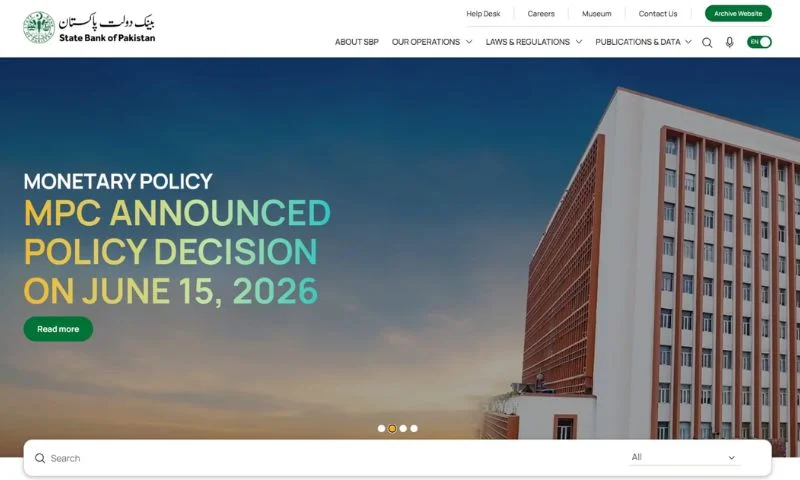
The State Bank of Pakistan (SBP) will launch its redesigned official website on July 1, 2026, introducing a modern digital platform that promises faster access to information, improved navigation and enhanced accessibility for millions of users. The new website will be available at www.sbp.org.pk and will serve citizens, businesses, financial institutions, researchers, journalists and other stakeholders. According to the central bank, the revamped platform forms part of its broader digital transformation strategy aimed at improving transparency, innovation and public engagement. In a statement, the SBP said, “The revamped website will provide a faster, easier and user-friendly digital experience for citizens, businesses, financial institutions, researchers, journalists and other stakeholders.” The bank added that the launch “marks an important milestone in SBP’s digital transformation agenda and reflects continued commitment to transparency, innovation and meaningful stakeholder engagement.” Faster navigation and improved user experience The SBP said it developed the website after extensive research and consultations with stakeholders to better meet users’ needs. The redesigned platform features a cleaner interface with simplified navigation, allowing visitors to locate information more quickly. It also includes enhanced search tools and filtering options that make it easier to find circulars, regulations, publications, monetary policy documents, financial market data, press releases and other official resources. Users will also benefit from a fully responsive design that works smoothly across desktop computers, smartphones and tablets. One of the biggest upgrades is the bilingual interface. Visitors can instantly switch between English and Urdu, making official information more accessible to a wider audience across Pakistan. The SBP also said it designed the website in line with the Web Content Accessibility Guidelines (WCAG). The platform includes accessibility features that improve usability for persons with disabilities, supporting the bank’s goal of creating a more inclusive digital environment. Digital transformation and financial literacy The central bank has also reorganized the website’s information architecture to improve access to major sections, including monetary policy, banking regulations, financial markets and other core functions. According to the SBP, “The revamped website strengthens SBP’s ability to communicate effectively with the public and supports the Bank’s broader vision of leveraging technology to deliver efficient, transparent and citizen-centric services.” The statement added that improved access to reliable information and digital resources “shall augment financial literacy and inclusion, while contributing to informed decision-making and stronger engagement with the financial system among all stakeholders.” To ensure a smooth transition, the previous version of the SBP website will remain accessible through a dedicated link on the homepage until July 15, 2026. This temporary option will help users who still need to access the earlier interface while adapting to the redesigned platform. The launch reflects the State Bank’s continued efforts to modernize its digital services and improve communication with the public. It also aligns with broader government initiatives to expand digital access and strengthen online public services through secure and user friendly technology. The new platform will become the primary source for all institutional information, official publications and regulatory resources from July 1 onward.
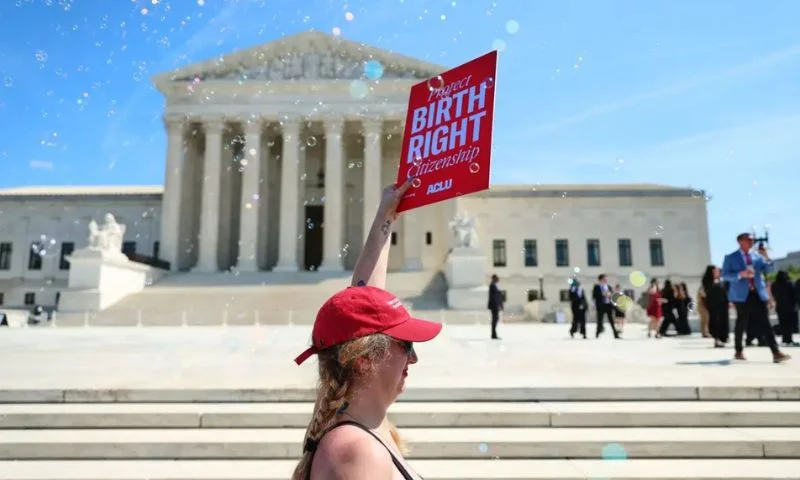
Birthright Citizenship Stays: Supreme Court Rejects Trump’s Executive Order
The United States Supreme Court has dealt a major setback to President Donald Trump’s immigration agenda, ruling that his executive order seeking to end automatic birthright citizenship violates the US Constitution and cannot take effect. In a 6 to 3 decision issued on Tuesday, the nation’s highest court upheld a lower court ruling that blocked Trump’s order, reaffirming that nearly all children born on US soil automatically acquire American citizenship under the 14th Amendment. The ruling preserves a constitutional principle that has existed for more than 150 years and marks one of the most significant judicial defeats for Trump’s second term. Trump signed the executive order on January 20, 2025, shortly after returning to office. The directive instructed federal agencies not to recognize citizenship for children born in the United States if neither parent was an American citizen or lawful permanent resident. The administration argued that children of undocumented immigrants and parents on temporary visas should not qualify for automatic citizenship. Chief Justice Roberts defends constitutional guarantee Writing for the majority, Chief Justice John Roberts traced the history of birthright citizenship from English common law through the adoption of the 14th Amendment in 1868 and the landmark 1898 Supreme Court case United States v. Wong Kim Ark, which established that nearly everyone born on American soil is a US citizen. Roberts rejected the administration’s interpretation of the Constitution, writing, “The trouble is that there is scant evidence for this dramatically revisionist view.” He added, “The Framers of the Fourteenth Amendment extended that promise to ‘every free-born person in this land.’” He concluded with the words, “We keep that promise today.” The majority found that the Trump administration failed to provide sufficient historical or legal evidence to support its reinterpretation of the Citizenship Clause. The court also reaffirmed that only narrow exceptions, such as children born to foreign diplomats, fall outside the constitutional guarantee. Blow to Trump’s immigration agenda The decision represents the second major Supreme Court defeat for Trump this year after the justices previously struck down his broad tariff policy. Immigration advocates welcomed the ruling, saying it protects constitutional rights and prevents uncertainty for hundreds of thousands of children born in the United States each year. Trump did not immediately respond to the judgment. Earlier in the day, however, he shared an article on his Truth Social platform suggesting Congress could change birthright citizenship through legislation. Legal experts note that such a move would face major constitutional hurdles and currently lacks sufficient political support. Birthright citizenship has remained a cornerstone of US constitutional law since the adoption of the 14th Amendment following the Civil War. The amendment guarantees citizenship to almost everyone born in the country regardless of their parents’ immigration status. Tuesday’s ruling reinforces that long established interpretation and leaves any future changes in the hands of constitutional amendment rather than executive action.

Pakistan Sets Up Special Fund to Stabilise Fuel Prices
The federal government has formally established the legal framework for a Petroleum Prices Stabilisation Fund, a move aimed at protecting consumers from sudden fuel price spikes and improving the country’s ability to respond to volatility in global oil markets. The Ministry of Finance issued a notification on Monday creating a new head of account for the fund, following the federal cabinet’s approval on June 5. The initiative comes after months of sharp fluctuations in international crude oil prices, driven largely by geopolitical tensions, including the recent conflict involving the United States, Israel and Iran. According to the notification, “All proceeds received in the name of the Petroleum Prices Stabilisation Fund will be credited to the Public Account of the Federation under the major head ‘Special Deposit Fund’.” The ministry said the Finance Division, Petroleum Division and the Oil and Gas Regulatory Authority (OGRA) will jointly finalize the fund’s operating procedures in line with legal and financial requirements. Authorities will seek the required approvals separately before the mechanism becomes fully operational. Fund to reduce impact of global oil price volatility Government officials said the fund currently holds no deposits. However, it is designed to capture future financial gains that can help reduce the impact of sudden increases in petroleum prices. According to informed sources, the government may transfer savings generated through future austerity measures or other available resources into the fund. Officials could then use those funds during the fortnightly petroleum price review process to soften the impact of international oil price increases on consumers. The decision follows recent episodes in which Pakistan secured crude oil cargoes through direct government level diplomatic efforts rather than conventional commercial channels. Those purchases reportedly resulted in significant savings compared with standard industry imports. Officials said those transactions relied on administrative decisions because no formal legal framework existed to retain or redirect the savings for future price stabilization. The new fund seeks to address that gap by allowing such financial gains to remain available for consumer relief instead of flowing entirely to oil marketing companies and refineries. Alternative oil imports may generate future savings Sources familiar with the policy said Pakistan could benefit from discounted oil purchases from non traditional suppliers such as the United States, Russia and Iran whenever commercial or diplomatic conditions allow. Lower priced imports or strategic fuel storage arrangements could generate savings that authorities may channel into the stabilization fund. However, officials acknowledged that Pakistan’s commitments under the International Monetary Fund programme limit the government’s fiscal flexibility. Even so, sources said limited allocations from special provincial grants to the federal government may support petroleum price stability in the coming fiscal year. Pakistan adjusts petroleum prices every two weeks based on recommendations from OGRA and movements in international oil prices and the rupee exchange rate. The country imports a large share of its petroleum requirements, making domestic fuel prices highly sensitive to global market changes. The new fund aims to provide authorities with a financial buffer to reduce sudden price shocks while maintaining greater stability in the local fuel market. The government has not announced when the fund will receive its first allocation. However, officials believe it will strengthen Pakistan’s ability to manage future energy price volatility and improve consumer protection during periods of global market uncertainty.

Abu Dhabi to Fujairah: Etihad Rail Slashes a 5 Hour Journey to Just 1 Hour 45 Minutes
The UAE’s long awaited Etihad Rail passenger service begins its first phase on June 30, offering commuters a faster alternative to driving and public buses while significantly improving connectivity between major emirates. The introductory service will connect Abu Dhabi and Fujairah in just 1 hour and 45 minutes, replacing a public transport journey that currently takes more than five hours with multiple bus transfers. The phased rollout marks a major milestone in the UAE’s national rail project, with Dubai passenger services scheduled to begin on September 30. The new railway aims to provide predictable travel times for commuters, students, business travelers and tourists while reducing dependence on private vehicles. Biggest time savings on Abu Dhabi to Fujairah route Among all planned routes, Abu Dhabi to Fujairah offers the biggest improvement. The train will complete the trip in 1 hour and 45 minutes. Drivers usually need between 2 hours and 20 minutes and 2 hours and 32 minutes, depending on traffic. Bus passengers currently spend 5 hours and 14 minutes to 5 hours and 45 minutes because no direct service exists. The new rail link creates the first direct mass transit connection between the UAE capital and the east coast. It will make travel easier for workers, students, families and visitors who do not own a car. أجمل الرحلات هي التي نشاركها مع من نحب. من ستصطحب معك في أول رحلة على متن قطارات الاتحاد؟ pic.twitter.com/VCjYM7CfJ1 — Etihad Rail (@Etihad_Rail) June 28, 2026 The network will expand further on September 30. At that stage, passengers will travel between Abu Dhabi and Dubai in just 57 minutes, compared with 1 hour and 15 minutes to 1 hour and 45 minutes by car and up to two hours by bus. The fixed rail timetable will also eliminate delays caused by traffic congestion, accidents and parking. Another key route will connect Dubai and Fujairah in 69 minutes. The same journey usually takes more than 90 minutes by car and around 2 hours and 15 minutes by bus, with travel times increasing on busy days. Journey planner to simplify door to door travel Etihad Rail said passengers will be able to plan complete journeys through its mobile application and website. The Journey Planner will display options including taxis, e hailing services, buses, shuttle buses, metro connections and walking routes, depending on each station. A Dh10 shuttle bus will connect the Mohamed bin Zayed City station with major destinations across Abu Dhabi. Read More: New UAE Train Will Reach Abu Dhabi in Just 1 Hour 45 Minutes Etihad Rail has also signed a memorandum of understanding with Yango Group to strengthen first and last mile connectivity. The partnership will improve pick up and drop off services around stations and help manage traffic during busy periods. In a later phase, passengers will be able to book both train tickets and connecting rides through one application. National network expands in phases The passenger rail network forms part of one of the UAE’s largest transport infrastructure projects. Authorities say it will eventually connect 11 cities and regions across the country with trains operating at speeds of up to 200 kilometres per hour. The first passenger service launches between Abu Dhabi and Fujairah on June 30. Dubai and Al Dhaid stations will open on September 30, followed by Al Dhafra on December 30. Sharjah’s station will complete the initial network on March 30, 2027. Officials say the project will strengthen mobility, support tourism, reduce road congestion and create a more integrated transport system for residents and visitors alike.

WhatsApp Finally Lets You Chat Without Sharing Your Phone Number
WhatsApp is rolling out one of its biggest privacy upgrades yet, allowing users to reserve unique usernames and connect with new people without revealing their phone numbers. The feature became available for username reservations on Monday and will gradually roll out worldwide over the coming months. Once fully launched later this year, users will be able to start conversations using usernames instead of sharing their mobile numbers with people outside their contact list. your phone number is personal and sometimes you want to connect without handing it over. that’s why we’re introducing usernames for WhatsApp. starting this week, you can reserve a username to use later this year when we launch the feature. It takes just a few seconds, make sure… — WhatsApp (@WhatsApp) June 29, 2026 The new system aims to address a long standing privacy concern. Many users rely on WhatsApp for communities, clubs, businesses and public groups but hesitate to share their personal phone numbers with strangers. “For most people, choosing a WhatsApp username should be something unique that only people you want to contact you will know,” WhatsApp said. Privacy takes center stage Unlike social media platforms, WhatsApp will not create a public directory of usernames. Users cannot browse profiles or receive suggestions. Anyone wishing to contact another person for the first time must already know that person’s exact username. Meta stressed that the feature focuses on privacy rather than social networking. “At its core, it’s a privacy feature, not a social media handle. There’s no directory to browse and no suggestions, so people need to know your exact username to contact you for the first time,” the company said. WhatsApp opened reservations before the full launch because of its enormous user base. “For over three billion people on WhatsApp a lot of names overlap, which is why we’re opening reservations early so everyone has the opportunity to select the username that matters to them,” the company said. Users can reserve a username by updating to the latest version of WhatsApp and navigating to Settings > Account > Username. The feature will reach countries in phases, and eligible users will receive an in app notification when it becomes available. Businesses and creators also benefit Meta will allow eligible creators, businesses and organizations to claim usernames that match their existing Facebook or Instagram identities. The move will help them maintain a consistent presence across Meta’s platforms while reducing impersonation risks. High profile usernames have also been reserved to protect public figures. WhatsApp also plans to introduce an optional username key that users can share for an additional layer of protection. Even if someone knows a username, the key can prevent unwanted first contact unless it is shared directly. Business model remains unchanged The announcement comes as WhatsApp expands its business services, artificial intelligence features and payment offerings. However, the company rejected suggestions that usernames would become a new advertising tool. “Usernames doesn’t change how WhatsApp’s business model works. Our focus remains on helping businesses connect with and serve their customers better,” the company said. Usernames is an easier way for customers to find and connect with you on WhatsApp Business. Learn more about reserving yours now: https://t.co/4jPgXvuejW https://t.co/AdcEttA7vJ — WhatsApp for Business (@whatsappforbiz) June 29, 2026 Meta recently introduced its Meta Business Agent, an AI powered assistant that helps businesses respond to customers around the clock on WhatsApp and Messenger. At the same time, the company continues to face regulatory scrutiny and legal challenges over child safety and privacy issues in several countries. For users, the immediate benefit is simple. They can soon share a unique WhatsApp identity instead of their personal phone number, giving them greater privacy while keeping the messaging experience familiar.
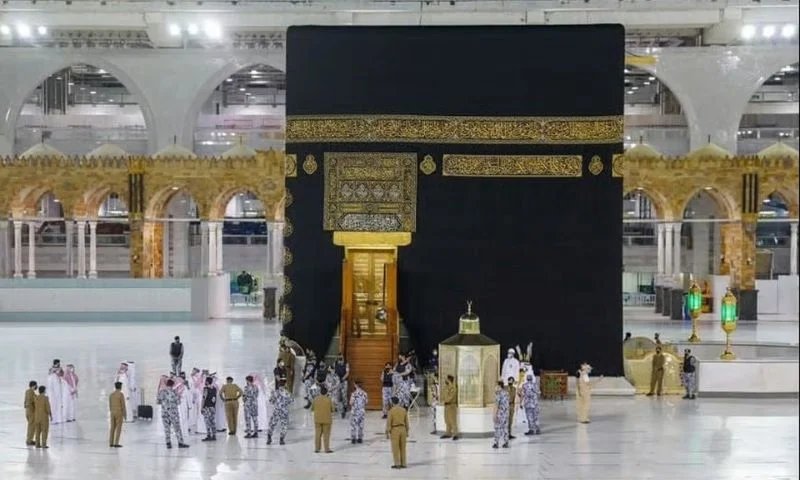
Holy Kaaba Washing Ceremony Begins Today in Makkah with Three Sacred Stages
Saudi Arabia will perform the annual washing of the Holy Kaaba today in a centuries old ceremony that reflects the deep reverence Muslims hold for Islam’s holiest site. The General Authority for the Care of the Two Holy Mosques will oversee every step of the event. According to the Saudi Press Agency (SPA), the ceremony follows three stages: preparation, washing, and perfuming with incense. On behalf of the Custodian of the Two Holy Mosques.. The moment of the arrival of the Deputy Governor of Makkah to begin the rituals of washing the Kaaba and ascending into it pic.twitter.com/UimrMVN1Qw — Inside the Haramain (@insharifain) June 30, 2026 Officials will begin by preparing a special mixture using 15 liters of Zamzam water, 15 liters of rose water, 15 liters of rose oil, and 100 milliliters of oud oil. The authority said, “The three stages are preparation, washing, then perfuming and incense burning.” It also said, “Each stage is carried out with great care and precision, reflecting the status of the Holy Kaaba and befitting its deep-rooted place in the hearts of Muslims.” Sacred tradition continues The washing ceremony takes place every year on the 15th of Muharram, shortly after Hajj. Islamic historians trace the tradition back to Prophet Muhammad (peace be upon him), who cleansed the Kaaba after the Conquest of Makkah. The Custodian of the Two Holy Mosques sponsors the ceremony. Senior Saudi officials, religious scholars, diplomats, and invited guests usually attend. 🕋 Every year on 15 Muharram, the Holy Kaaba is washed in a deeply spiritual tradition that reflects centuries of reverence and care for Islam’s holiest site. The Kaaba’s interior is cleansed with Zamzam water mixed with rosewater and fine fragrances, then perfumed with the… pic.twitter.com/jhBmE3akVj — Saudi Expatriates (@saudiexpat) June 29, 2026 Workers open the golden door of the Kaaba before selected guests enter. They clean the interior walls and marble floor with cloths soaked in the scented mixture. Afterward, they dry the interior and apply premium perfumes and oud incense. Saudi authorities prepare every material well before the ceremony. They also follow strict quality standards to ensure smooth arrangements for the globally significant event. Ceremony holds deep spiritual significance Millions of Muslims cannot enter the Kaaba, but they follow the annual ceremony through official photos and videos released by Saudi authorities. The Kaaba stands at the center of Masjid al Haram in Makkah. Nearly two billion Muslims face it during their daily prayers. It also remains the focal point of Hajj and Umrah throughout the year. The annual washing ceremony symbolizes purity, respect, and devotion. It also preserves a tradition that Muslims have cherished for generations.

Paraguay Make World Cup History as Germany Crash Out in Stunning Upset
Paraguay produced the biggest upset of the 2026 FIFA World Cup knockout stage on Monday, eliminating four time champions Germany 4 to 3 in a dramatic penalty shootout after a 1 to 1 draw following extra time at Boston Stadium in Foxborough. Ranked 37th in the latest FIFA rankings, Paraguay defied the odds against 12th ranked Germany in front of 63,945 spectators to book their place in the Round of 16. It was the tournament’s first penalty shootout and one of the biggest knockout upsets in World Cup history. Paraguay make history! 🇵🇾After scoring their first-ever @FIFAWorldCup knockout goal, they went on to defeat Germany on penalties and secure a spot in the Round of 16 👏 pic.twitter.com/4L8MNH5qLt— FIFA (@FIFAcom) June 29, 2026 Julio Enciso gave Paraguay a surprise lead late in the first half with the country’s first ever goal in a men’s World Cup knockout match. Germany responded in the 54th minute when Kai Havertz equalised, but neither side could find a winner during the additional 30 minutes. Germany thought they had completed the comeback in extra time when Jonathan Tah found the net. However, the goal was ruled out after a controversial foul on Paraguay goalkeeper Orlando Gill, a decision that sparked debate among broadcasters and fans alike. Gill and Canale become Paraguay’s heroes The shootout delivered more drama. Paraguay appeared on course to seal victory before veteran goalkeeper Manuel Neuer saved their fifth penalty, forcing sudden death. Germany’s Jonathan Tah then blasted his team’s sixth penalty over the crossbar, leaving José Canale with the chance to complete one of Paraguay’s greatest footballing achievements. He calmly converted the decisive kick to send the South American side into the Round of 16. Reuters reported that Gill had already denied penalties from Kai Havertz and Nick Woltemade before Tah’s miss handed Paraguay the advantage. The defeat also marked Germany’s first ever loss in a World Cup penalty shootout. Speaking after the famous victory, Paraguay goalkeeper Orlando Gill said, “It’s difficult to describe in words. It was a very challenging game. We were under attack from all sides but we resisted.” A historic @FIFAWorldCup win as Paraguay become the first-ever team to win a @FIFAWorldCup Round of 32 fixture on penalties! 👏🇵🇾 pic.twitter.com/sRfpbj8Qkh— FIFA (@FIFAcom) June 30, 2026 Captain Gustavo Gómez praised his teammates’ determination, calling the result a proud moment for the nation after one of the most disciplined defensive displays of the tournament. Germany’s World Cup struggles continue Germany entered the match as clear favourites after topping their group and enjoying more possession throughout the contest. However, Julian Nagelsmann’s side once again failed to convert dominance into victory. The four time world champions have now suffered group stage exits at the 2018 and 2022 World Cups before crashing out in the first knockout round in 2026. The latest disappointment is expected to increase scrutiny on Nagelsmann and his squad after another underwhelming campaign. Paraguay will face the winner of France versus Sweden in Philadelphia on July 4. By reaching the Round of 16, the South Americans have secured at least $15 million in FIFA prize money, while Germany leave the tournament with $11 million. The match also drew attention off the pitch. Although Boston Stadium fell just 201 spectators short of capacity, the atmosphere remained vibrant throughout. Ticket prices had dropped sharply before kickoff as resale demand softened, while viral German supporter “Freddy” reacted to the disallowed extra time goal with a series of question marks before posting a broken heart emoji after Germany’s elimination.
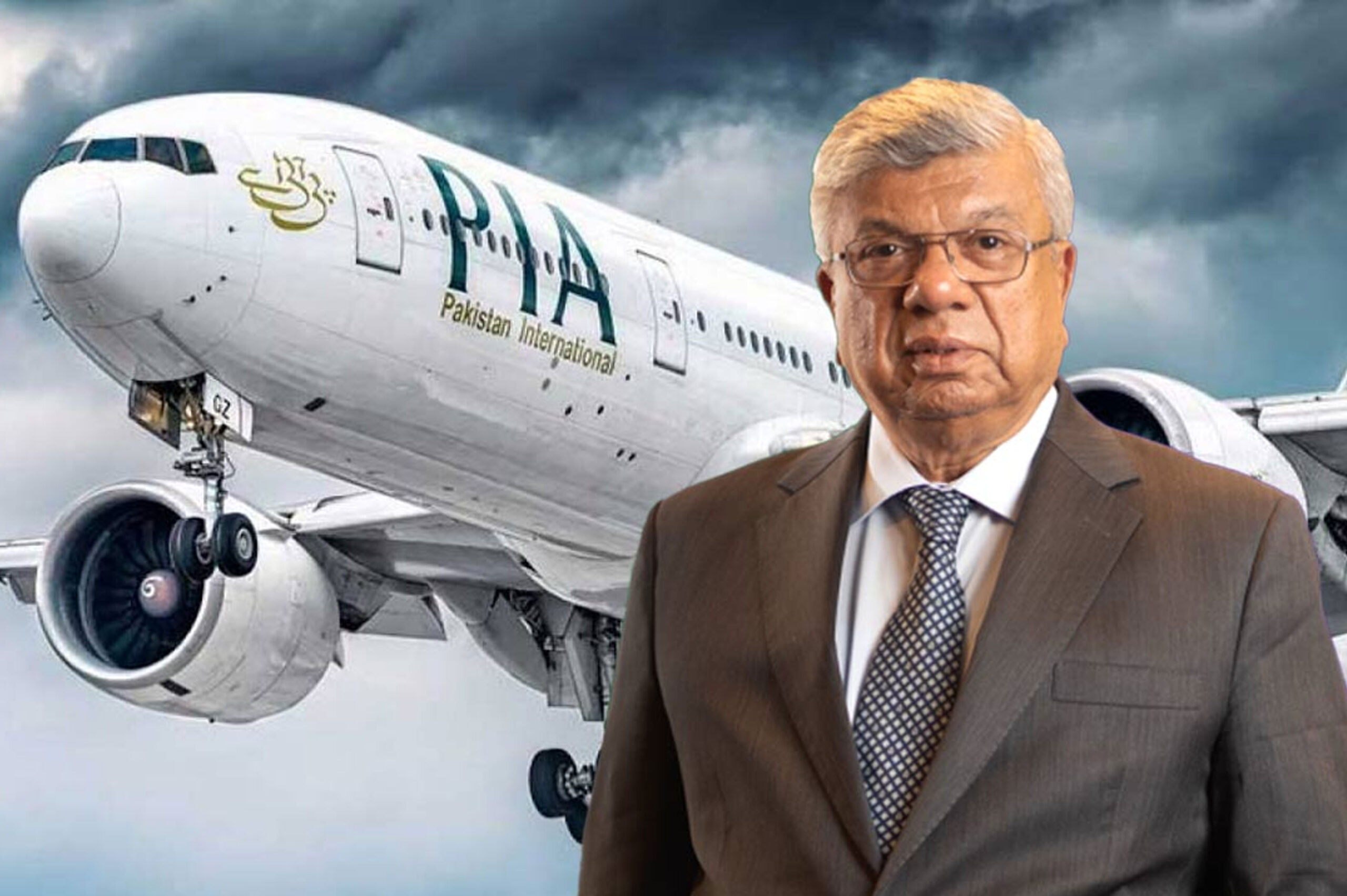
PIA Enters a New Era as Arif Habib Consortium Takes Control
Pakistan International Airlines (PIA) officially came under new management on Monday. PIA Equity Ltd, a special purpose vehicle of the Arif Habib Consortium, has taken control of the national airline. The transition marks the first financial close of Pakistan’s largest privatisation deal. Officials described it as the start of a new chapter for the airline. Prime Minister Shehbaz Sharif attended the ceremony. Deputy Prime Minister and Foreign Minister Ishaq Dar also participated. Chief of Defence Forces and Chief of the Army Staff Field Marshal Asim Munir was present as well. PIA described the transition as “a bold new chapter of modernisation and global excellence.” Today, #PIA officially transitions to new management under PIA Equity Ltd (a SPV of Arif Habib Consortium), marking a bold new chapter of modernization and global excellence. With a massive Rs125B equity injection, PIA is now fully capitalized and ready to modernize the airline… https://t.co/hrcGwu4QZC— PIA (@Official_PIA) June 29, 2026 The airline said a Rs125 billion equity injection had fully capitalised the company. It said the funding would modernise operations, improve service standards and preserve PIA’s legacy. “As the new ownership officially takes over today, we deeply understand that the trust of a nation isn’t simply transferred on a document. Trust is earned mile by mile, smile by smile, year by year. We know this. And we accept the challenge wholeheartedly,” the chairman of PIA Equity Ltd said. The new management pledged to modernise the fleet. It also promised better customer service and stronger operational performance. Government announces Rs180 billion investment The Ministry of Privatisation confirmed that the Privatisation Commission had completed the first financial close. It called the transaction the country’s largest privatisation deal. The total investment commitment stands at Rs180 billion. The package includes Rs125 billion in fresh capital for PIA. It also includes Rs55 billion payable to the Government of Pakistan. “The transaction brings a total investment commitment of Rs180 billion, including Rs125 billion in fresh capital to transform PIA and Rs55 billion payable to the Government of Pakistan,” the ministry said. The ministry said the transaction reflected Pakistan’s commitment to transparent, fair and competitive privatisation. Prime Minister Shehbaz Sharif congratulated everyone involved. “The successful first financial closing of the PIA privatisation transaction, and the transfer of management control to the investor consortium, marks the beginning of a new chapter for our national carrier. With a transformational investment to modernise and strengthen PIA, we are laying the foundation for its revival while reinforcing investor confidence in Pakistan.” Alhamdulillah! Today marks another important milestone in Pakistan’s economic reform journey.The successful First Financial Closing of the PIA privatisation transaction, and the transfer of management control to the investor consortium, marks the beginning of a new chapter for…— Shehbaz Sharif (@CMShehbaz) June 29, 2026 Deputy Prime Minister Ishaq Dar said the “complex transaction” succeeded through hard work, sincerity, efficiency and close coordination among government institutions. He said it reinforced the government’s commitment to transparent governance, economic reforms and investor confidence. Deal follows successful second privatisation attempt The government sold its 75 percent stake in PIA in December last year. The Arif Habib Consortium submitted the winning bid of Rs135 billion after 13 rounds of open bidding. The consortium includes Arif Habib, Fawad Ahmed Mukhtar, Gohar Ejaz and Aqeel Karim Dhedhi. It defeated another consortium led by Muhammad Ali Tabba. The sale marked Pakistan’s first successful privatisation since the 2005 sale of K Electric. It also completed the government’s second attempt to privatise PIA. I congratulate the Prime Minister and the entire Nation for first successful Financial Close of the PIA privatisation transaction which is in itself a landmark achievement for Pakistan.This complex transaction was completed through hard work, sincerity, efficiency and close…— Ishaq Dar (@MIshaqDar50) June 29, 2026 To attract investors, the government waived an 18 percent sales tax on aircraft leases. It also granted Rs36 billion in tax credits. Officials further extended the deadline for clearing more than Rs33 billion in liabilities owed to the Federal Board of Revenue and the Civil Aviation Authority. Officials expect the fresh investment to strengthen PIA’s finances. They also expect better passenger services, improved efficiency and stronger international competitiveness.
