


The United States’ war in Iran has cost $37.5 billion, Defense Secretary Pete Hegseth told skeptical senators on Tuesday. His appearance marked the first major congressional questioning since heavy US bombings resumed this month. Hegseth said the estimate covers certain war expenses and anticipated costs through September 30. However, he did not explain how the Pentagon calculated it. Reuters reported in March that the Trump administration estimated the first six days alone had cost at least $11.3 billion. Read More: Millions Need Help but Funding Is Vanishing, UN Women Warns President Donald Trump asked Congress last month for $87.6 billion in additional funding. The request directs $67.15 billion to the military, mostly for Iran-related operations, personnel, readiness, weapons stocks and classified programmes. Lawmakers Challenge Trump’s War Strategy Republican and Democratic lawmakers have complained about limited briefings since the US and Israel began bombing Iran on February 28. The dispute comes six months before midterm elections. Republicans face an uphill fight to retain both chambers, while Democrats, polling strongly, link the unpopular war to rising living costs. “The president is threatening escalation and war crimes, and suggesting this could be another forever war,” Senator Patty Murray said. Trump has threatened Iranian civilian infrastructure, actions that critics say could violate international law. Democratic Senator Kirsten Gillibrand also challenged the administration’s shifting statements. “The reason why they (people) are so upset with you and this administration is because the words you have used in the past don’t add up,” she said. “It’s either over, or it’s not over. It’s within two weeks, or it’s not two weeks, it’s either missiles or it’s not missiles.” Read More: Iran-Backed Group Offers Millions for Trump’s Killing Republicans hold narrow House and Senate majorities. As a result, major appropriations bills usually require Democratic votes. Pentagon Warns Training and Readiness Could Suffer Hegseth said the military would curtail training without urgent new funding. The conflict has strained the Pentagon’s nearly $1 trillion budget and could affect personnel costs, equipment maintenance and future capabilities. Joint Chiefs Chairman General Dan Caine said the Pentagon would find money to pay service members. However, he warned that maintenance and long-term investments could face pressure. Hegseth also urged Congress to approve Trump’s $1.5 trillion defense budget request for 2027. “Not funding this department at $1.5 trillion, I believe, is the greatest threat that our nation faces,” he said. Read More: Truth Social Will Sell Traders Faster Access to Trump’s Posts A fragile US-Iran ceasefire collapsed earlier this month, and both sides have since exchanged daily strikes. US military deaths rose to 18 over the weekend, while roughly 430 troops have suffered injuries. The Pentagon said 100 personnel were injured since July 7, although 96% returned to duty. Trump has threatened strikes on Iranian energy plants and bridges. He has also raised sending ground forces to seize Kharg Island and attacking the underground nuclear-linked Pickaxe Mountain facility. On Tuesday, Trump said the US would take out the mountain site “pretty soon.”
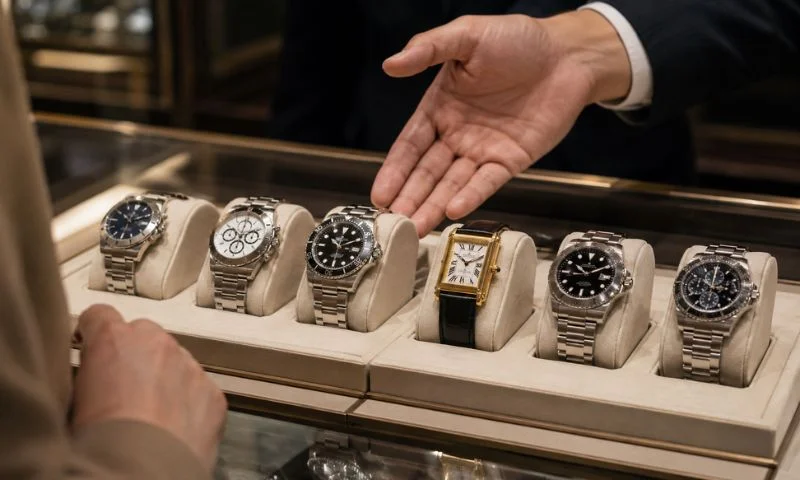
Rolex Still Leads, But Cartier Is Suddenly Stealing the Spotlight
Luxury watch prices are showing signs of recovery after a prolonged decline. Cartier has emerged as the fastest-rising name in recent secondary-market data. Pandemic-era speculation faded, quick resales became less profitable and rising supply pushed prices lower. However, the latest Morgan Stanley and WatchCharts report suggests buyers are returning with greater confidence. Secondary watch prices rose 1.5 per cent during the second quarter of 2026. This marked the fourth consecutive quarter with gains above 1 per cent. Moreover, 27 of the 35 brands tracked by WatchCharts recorded growth, up from 25 in the previous quarter. Big Three Continue to Command Premiums Morgan Stanley’s value-retention data showed improvement at seven of the eight major Swiss brands reviewed. Value retention measures the difference between a watch’s retail price and resale value. Patek Philippe remained the market leader. Its watches traded 15.4 per cent above retail on average at the end of the quarter. Rolex followed at 9.8 per cent, while Audemars Piguet remained 3 per cent above retail. Read More: Phillips Sets All Time Watch Auction Record in Just Six Months These were the only three tracked brands commanding average resale premiums. Patek’s Nautilus and Aquanaut collections traded 74 per cent and 90 per cent above retail, respectively. Rolex Oyster Perpetual watches traded around 35 per cent over list price. The figures show that buyers still trust established sports-watch models. Yet the wider improvement suggests demand is spreading beyond the market’s dominant names. Morgan Stanley noted that “the recovery became more broad-based,” although pricing power outside the three leading brands remains limited. The report also showed that every tracked brand improved its value retention over the past year. Cartier Prices Accelerate Despite Retail Discount Cartier delivered the biggest surprise in separate data from Chrono24’s ChronoPulse Index. Its secondary-market prices jumped 5.9 per cent in June and rose 9.9 per cent over six months. That made Cartier the index’s strongest recent performer. Still, Cartier has not caught Rolex or Patek Philippe. Morgan Stanley placed its average value retention at minus 27.4 per cent, so its watches continued to sell below retail. The reports measure different aspects of the market. ChronoPulse tracks price movements using more than 600,000 transactions. Morgan Stanley compares resale values with current retail prices. Cartier’s resale prices increased, but higher retail prices weakened its value-retention rate during the quarter. In fact, Cartier was the only one of the eight tracked brands to record a quarterly decline in value retention. This explains how Cartier can lead short-term growth while still trading at a sizable discount. Rolex, Patek Philippe and Audemars Piguet are protecting premiums they already hold. Cartier, meanwhile, is attracting buyers from a much lower starting point. The market has not fully recovered from its post-pandemic correction. However, shrinking discounts and broader gains suggest the decline is easing. Rolex and Patek remain the safer names for value retention, but Cartier is now drawing the greatest attention.
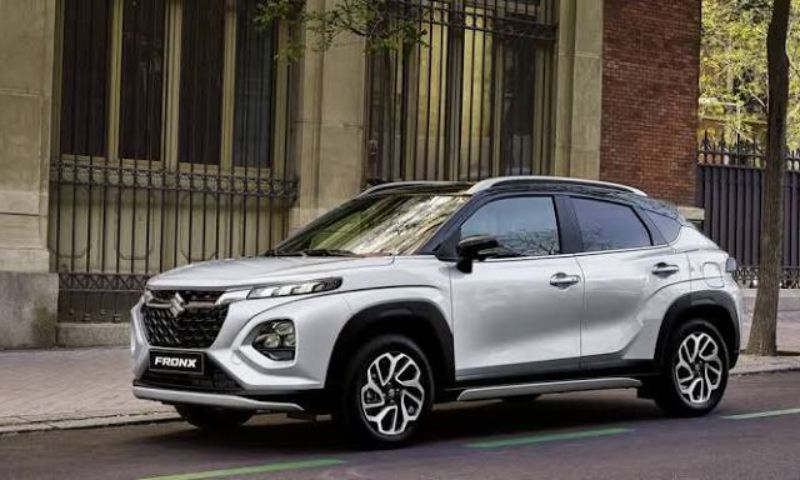
Suzuki Announces Fronx Discount, But Is It Really a Price Cut?
Pak Suzuki has introduced a limited-time discount on its Fronx hybrid variants. The move came only hours after the company raised their prices by about Rs700,000. The Suzuki Fronx price in Pakistan therefore changed twice within the same day. Buyers, however, will still pay more than the earlier introductory rates. Prices Changed Twice in a Single Day On July 21, Suzuki increased the Fronx GLX 6A/T Mono Tone price from Rs6,299,999 to Rs7,000,000. It also raised the Two Tone version from Rs6,374,999 to Rs7,075,000. A few hours later, the company announced promotional prices for both hybrid variants. Under the offer, the Mono Tone costs about Rs6,700,000. The Two Tone now costs about Rs6,775,000. Suzuki’s official promotions page lists the precise prices as Rs6,699,999 and Rs6,774,999, respectively. It also says stock is limited nationwide and directs customers to authorised Suzuki dealerships. The changes can be understood through the following comparison: Variant Previous price Revised price Promotional price Fronx GLX 6A/T Mono Tone Rs6,299,999 Rs7,000,000 Rs6,700,000 Fronx GLX 6A/T Two Tone Rs6,374,999 Rs7,075,000 Rs6,775,000 Limited-Time Offer Still Leaves Rs400,000 Increase Despite the discount label, the promotional price remains higher than the amount buyers previously paid. In simple terms, Suzuki first raised each hybrid variant by roughly Rs700,000. It then reduced the revised price by about Rs300,000 for a limited period. As a result, both variants now cost around Rs400,000 more than before. The exact increase is Rs400,001 for each model when calculated from Suzuki’s listed promotional prices. Suzuki has not announced an expiry date or the number of vehicles covered by the campaign. Its announcement only said: “This special offer is available for a limited period and on limited units only.” The Fronx entered Pakistan’s market on May 6, 2026. Global Suzuki said it was Pak Suzuki’s first locally produced model with a mild hybrid system. The company markets the Fronx as a compact SUV for family and daily use. Pak Suzuki’s website shows unchanged prices for the two non-hybrid GL variants. The five-speed manual costs Rs5,999,999, while the four-speed automatic costs Rs6,099,999. The discounted GLX versions have a six-speed automatic transmission and mild-hybrid technology. They also offer six airbags and a nine-inch infotainment display. For buyers, the headline discount may look substantial against the briefly revised Rs7 million-plus prices. However, the earlier rates show that Suzuki has only partially reversed the increase. The promotion does not restore the original Suzuki Fronx price in Pakistan.

Apple Upgrade Leasing May Launch for iPhones, Macs and iPads
Apple is reportedly preparing to launch a subscription-style leasing service that could reshape how customers pay for iPhones, Macs, iPads and Apple Watches. Bloomberg News reported that Apple Upgrade will launch in the United States on July 28. Swedish financial technology company Klarna will finance the programme. Customers will make monthly payments and gain several options during or after the agreement. They could upgrade early, pay off the remaining balance or keep the device when the lease ends. Apple and Klarna have not publicly confirmed the service. Neither company immediately responded to Reuters’ requests for comment. How Apple Upgrade Would Work The reported programme resembles vehicle leasing more than traditional device financing. Apple Upgrade will reportedly offer 24-month leases for iPhones and Apple Watches. Macs and iPads will usually carry 36-month terms. Applicants will undergo a soft credit check before approval. Customers will reportedly access the service through Apple’s US retail stores and online shop. Apple plans to market it as offering lower monthly payments than its existing financing options. The company also plans to stop accepting new customers into its iPhone Upgrade Program and standard iPhone financing plans. Existing arrangements would give way to Apple Upgrade for new applicants. Apple’s current iPhone Upgrade Program spreads payments across 24 months. Customers can trade in their device and upgrade after making 12 payments. The plan also includes AppleCare+ with Theft and Loss. Apple Upgrade will not include AppleCare, meaning customers would need to purchase device protection separately. Which Apple Devices Will Qualify The service will reportedly cover most iPhone, Mac, iPad and Apple Watch models. However, Apple plans to exclude several entry-level products. Those devices include the Apple Watch SE, base-model iPad, iPhone 16 and MacBook Neo. Purchases through Apple’s business and education channels will also remain outside the programme. Read More: Apple Makes Massive $30 Billion Bet on US-Made Chips With Broadcom The wider coverage would distinguish Apple Upgrade from the current programme, which focuses only on iPhones. Apple already offers interest-free Apple Card Monthly Installments for eligible iPhones, Macs, iPads and Apple Watches. However, those plans focus on eventual ownership rather than a lease-style arrangement. Why Apple Is Changing Course The reported launch follows Apple’s earlier attempt to create a dedicated hardware subscription service. Bloomberg first reported that project in 2022. Apple later shelved it after software problems, regulatory concerns and repeated delays. This time, Apple will rely on Klarna rather than financing the programme itself. That arrangement would place much of the credit risk with the financial services company. The move also comes as Apple faces higher hardware costs. The company recently raised prices on iPads, MacBooks and several other devices as memory and storage chip prices increased. The iPhone largely escaped those increases. A leasing model could help Apple encourage faster upgrades as customers keep premium smartphones and computers for longer. It could also make costly devices appear more affordable through lower monthly payments. However, customers will need to compare the full leasing cost with traditional financing and outright ownership. Monthly prices and possible early-upgrade fees remain unclear.
