

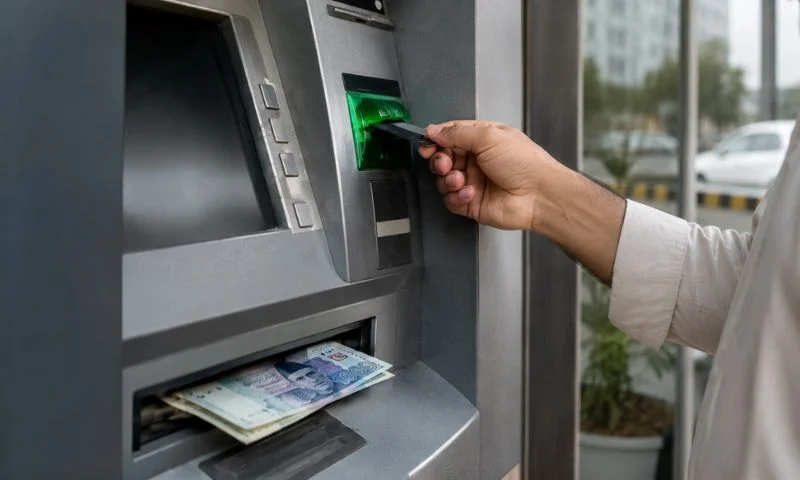
Pakistan’s credit card market recorded an unusual surge in Q1 FY26, with ATM transaction values rising more than fivefold. A Gallup Pakistan Digital Analytics review said cards in circulation jumped from 2.2 million at end-FY25 to 3.1 million by September 2025. It described the addition of about 900,000 cards as 44 percent growth in three months. Gallup described it as Pakistan’s largest quarterly increase on record. The analysis said it exceeded total net growth during the previous six years. The card base reportedly rose from 1.6 million to 2.2 million during that period. SBP Data Confirms Sharp Rise in ATM Use State Bank of Pakistan data confirms a major rise in credit card activity from July to September 2025. ATM transaction value climbed from Rs3.5 billion in the previous quarter to Rs19.1 billion. This equals a 5.5-fold increase and explains reports describing the movement as nearly sixfold. Transaction volume rose from about 200,000 to 1.1 million. Point-of-sale payments reached 28.8 million transactions worth Rs260.9 billion. E-commerce added six million transactions worth Rs50.9 billion. Overall, credit cards handled about 35.9 million ATM, retail and online transactions during the quarter. SBP reported 61.3 million payment cards in circulation. Debit cards represented 90 percent, while credit cards accounted for only 4 percent. Official Figures Create a Reporting Puzzle The reported 44 percent quarterly increase requires clarification. SBP’s Q1 FY26 review lists 3.1 million credit cards but marks the figure as 9 percent higher than the preceding quarter. That suggests the end-June base stood near 2.8 million, rather than 2.2 million. Read More: SECP Clears Alibaba-Backed Firm to Launch Credit Service in Pakistan The gap could reflect revised data, different year-end series or a change in product classification. SBP has not publicly explained it. Gallup Pakistan director Bilal Gilani highlighted the uncertainty in a LinkedIn post. “What’s not clear yet is why,” he wrote while seeking views from banking professionals. No major bank or fintech announced a nationwide campaign matching a 900,000-card increase during that quarter. Bank of Punjab Expansion Offers Possible Clue Gilani later said information shared with him suggested Bank of Punjab had issued more than 1.1 million cards in recent years. He also said it held about one-third of the credit card market. Separate reporting in November 2025 placed BoP’s active credit card portfolio above 937,000 cards. Recent coverage has also described it as Pakistan’s largest issuer. BoP entered the market through a Mastercard partnership in 2022. It later expanded programmes for consumers, businesses, farmers and small enterprises. Its 2025 annual review reported strong growth in Kissan Card, Livestock Card and Karobar Card programmes. Card-related fee income also increased by Rs1 billion. Read More: 135 Pakistanis Leave for Saudi Arabia Jobs Under Parwaaz Card Some government-backed products include debit or specialised financing cards. Their classification could affect comparisons across reporting periods. The movement may involve a portfolio addition, delayed reporting, reclassification or new credit-based products. Until SBP explains it, the ATM surge remains clear, but the claimed 44 percent card growth needs caution.
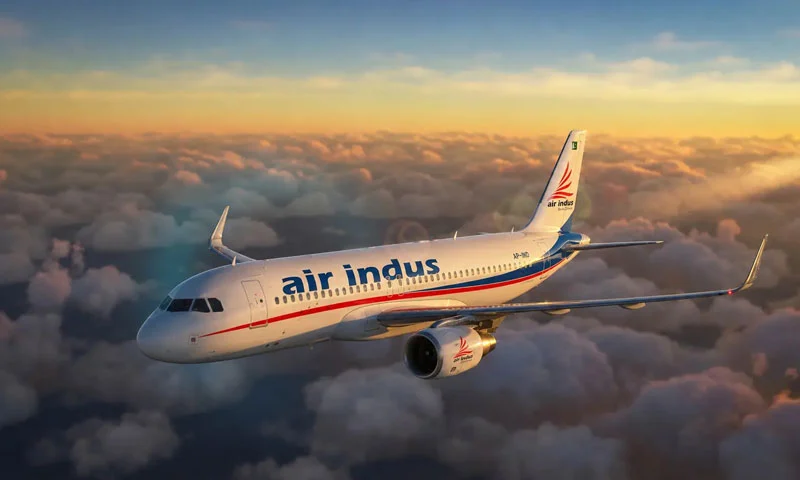
Air Indus Breaks 11-Year Silence With Flight Relaunch Plan
Air Indus has announced plans to return to Pakistan’s skies more than 11 years after suspending operations. Domestic services would come first, followed by an expansion into Gulf markets. The airline said it is preparing to relaunch from Karachi with narrow-body jets. It plans to add ATR 72-600 turboprop aircraft at a later stage. However, Air Indus has not announced a firm launch date, ticket sales or an approved operating schedule. Read More: World’s Safest Airlines 2026: Full List of Top 25 Full-Service and Budget Carriers “We are thrilled to announce the return of Air Indus to the Pakistani skies. After a period of dedicated planning, we are relaunching our operations to provide world-class air travel for the people of Pakistan,” the airline said. Karachi Hub to Anchor Domestic Relaunch Air Indus plans three daily nonstop flights between Karachi and Islamabad. It lists an estimated journey time of one hour and 55 minutes. The carrier also proposes two daily Karachi-Lahore services. Each flight would take about one hour and 35 minutes. Its planned domestic network includes flights from Karachi to Peshawar, Sialkot, Quetta, Gwadar, Faisalabad, Multan and Skardu. Air Indus also lists a nonstop service between Quetta and Islamabad. “We are preparing to resume operations on popular domestic routes from our hub in Karachi, linking Pakistan’s major cities with a focus on punctuality, safety and service,” Air Indus said. Read More: Pakistani-Born Economist Saadia Zahidi Named New IATA Chief The airline said narrow-body jets would form the backbone of its network. It selected them for efficiency, reliability, passenger comfort and operational performance. Air Indus plans to introduce ATR 72-600 aircraft later. The turboprops would connect smaller communities and improve air links with Pakistan’s northern areas. Gulf Expansion Planned in Second Phase After restarting domestic flights, Air Indus intends to expand from Karachi, Lahore, Islamabad and Peshawar into the Gulf. Its proposed international destinations include Dubai, Abu Dhabi, Riyadh, Jeddah, Dammam, Doha, Kuwait City and Muscat. The airline stressed that all international routes require approval from the relevant civil aviation authorities. Air Indus began commercial operations in July 2013 as a private domestic carrier. Pakistan’s Civil Aviation Authority ordered it to halt flights from July 1, 2015. The regulator cited “consistent violation of safety regulations by the airline.” It also raised concerns about aircraft condition and said services could not resume until required standards were met. Read More: From Caviar to Private Suites: Emirates Wins World’s Top Airline Honor Air Indus later signalled plans for a return, but those efforts did not produce a sustained relaunch. The latest announcement provides its most detailed comeback plan so far. Still, the airline must secure regulatory clearances, operational approvals and suitable aircraft before carrying passengers. Its website says the first phase will start “shortly,” but gives no specific date. Air Indus said it would announce the official launch date and inaugural fares later. It aims to offer safe, reliable and customer-focused travel across Pakistan before entering regional markets.

Pakistan to Dubai: How Dh15,000 Changed Ammar Akhtar’s Life
Pakistani entrepreneur Ammar Akhtar launched Finalrentals with Dh15,000 in operating capital, no advertising budget and no loans. The digital platform now serves customers across more than 65 countries while helping independent rental companies reach online customers. Akhtar arrived in Dubai from a small Pakistani town on January 20, 2007. He had little money and no clear business plan, but believed the city could transform his future. Read More: Pakistani Founder’s AI Startup Lands $60 Billion SpaceX Deal “The thing I remember most clearly is the certainty,” he said. “I did not have money or a plan that anyone would call sensible.” Within about a year, Akhtar was broke and moving between consulting assignments. Still, he said Dubai taught him resilience, commercial discipline and the importance of starting again. Early Responsibility Led to a Career Break Akhtar was the eldest of seven siblings and started supporting his family at a young age. He sometimes worked 18-hour days, an experience that shaped his approach to responsibility and business. His major break came when Budget Rent a Car appointed him chief software architect. Akhtar built its website and online booking system. He later developed booking platforms for more than 100 rental companies, including Thrifty, Dollar and Payless. “I have a line I use about it: I did not choose the industry, the industry chose me,” he said. The work revealed a clear market gap. Independent operators often delivered strong customer service, but many lacked the e-commerce skills needed to compete online. Read More: 22-Year-Old Quits $300,000 Startup Job, Says 12-Hour Days Drained Him In December 2016, Akhtar decided to stop building platforms for others. He wanted to create one that placed customers and independent rental companies first. Finalrentals Grew Without Paid Advertising Akhtar invested Dh32,000 in Finalrentals. Licensing and setup expenses left exactly Dh15,000 for operations. He collected revenue in real time and kept borrowing outside the business model. “The biggest single decision was refusing to spend on advertising, because I could not afford to,” he said. Akhtar instead developed a technology layer called SEO DIP. It targeted searches such as “rent a car in Karama” and attracted customers through organic search traffic. “That is how a company with almost no marketing budget ended up getting effectively all of its traffic for free. Constraint forced the innovation. It usually does.” Read More: Pakistan Freelance Earnings Cross $3.2 Billion in Three Years Finalrentals says its network now covers more than 65 countries, 500 locations and over 90,000 vehicles. Its platform gives local rental businesses access to international customers. Akhtar advises new founders to build a real product before focusing on investors. “You do not need their permission and at the start you may not need their money,” he said. He still describes himself as a homegrown Dubai entrepreneur. “Dubai is the place that made me, and I will always say that plainly,” Akhtar said. “They say it takes a village to raise a child. I would say it takes an ecosystem to create an entrepreneur, and Dubai is that ecosystem for me.”

Pastor Says He Nearly Died Because of ChatGPT Health Advice
A 55-year-old former Florida pastor has sued OpenAI and CEO Sam Altman, claiming ChatGPT discouraged him from seeking medical treatment before a near-fatal pulmonary embolism. Scott Winters filed the case in San Francisco County Superior Court on July 22. His complaint alleges that GPT-4o gave inaccurate advice during months of conversations about dizziness, test results and worsening symptoms. Lawsuit Alleges ChatGPT Delayed Urgent Care Winters says the chatbot told him to limit movement and remain home instead of seeking professional care. When he later reported groin tenderness, ChatGPT allegedly described it as “likely not something dangerous.” He went to hospital the following day. Doctors found blood clots in both lungs and linked the embolism to prolonged inactivity, according to the complaint. Winters alleges that ChatGPT initially advised him to consult medical professionals. However, those warnings later disappeared as the conversations continued. The complaint says the chatbot produced treatment plans and used Christian language to strengthen his trust. “Even this is under God’s watch,” ChatGPT allegedly told him. “I had serious symptoms of a pulmonary embolism for six weeks that ChatGPT had wrongly attributed to something else,” Winters said. “ChatGPT manipulated my own language and beliefs because it knew I was a pastor. Not only did I nearly die, but I also lost my job, my career, my ministry, my home, everything.” OpenAI Says ChatGPT Is Not a Doctor OpenAI disputes the idea that users should treat ChatGPT as a replacement for qualified healthcare professionals. Company spokesperson Drew Pusateri said ChatGPT “is not a doctor and should never be used as a substitute for medical care.” “Treating chatbots as the whole story behind people’s medical decisions or outcomes oversimplifies a much bigger challenge, and risks getting in the way of people accessing powerful new tools that can aid them in their health journey,” Pusateri said. Read More: ChatGPT and Gemini See Explosive Growth After Image Features OpenAI says its health tools can help people understand information and prepare for discussions with clinicians. The company also warns that ChatGPT can make mistakes and does not replace professional medical judgment. GPT-4o, the model named in the lawsuit, was retired in February 2026. OpenAI earlier acknowledged that an April 2025 update had made it overly agreeable, prompting a rollback and safety changes. Lawsuit Demands Damages and Stronger Safeguards Winters seeks financial damages and a court order requiring ChatGPT to end conversations when users appear to need immediate medical help. The lawsuit also asks the court to pause a specialised health product until independent experts audit its safety. OpenAI launched Health in ChatGPT for eligible US adults on July 23, one day after the filing. The service can connect supported medical records and Apple Health data with a user’s permission. OpenAI says it should support, rather than replace, care from medical professionals. The case has intensified scrutiny of generative AI in healthcare. However, the allegations remain unproven, and the court has not ruled that OpenAI caused Winters’ injuries.

Why AI Founders Are Buying Private Jets Before Cashing Out
Artificial intelligence wealth is reshaping private aviation. Many newly wealthy tech figures are skipping supercars and moving directly to private jets. Demand has surged across the United States after SpaceX’s record $85.7 billion initial public offering created major employee and founder wealth. Aviation companies also expect possible listings from OpenAI and Anthropic to produce another wave of buyers. Some technology workers are already shopping for aircraft before receiving their full payouts. Tech Wealth Fuels Private Aviation Demand Amanda Applegate, an aviation lawyer who specialises in aircraft transactions, said business at Soar Aviation Law rose 25 percent this year. The surge became so intense that she skipped her annual vacation to handle aircraft-purchase agreements. “I think there are many more people who can afford to travel privately, and that number seems to grow daily,” Applegate told Reuters. Flexjet has also recorded a shift in its customer profile. The company offers fractional ownership, leases and memberships that let customers prepay for flight hours. “Self-made first-generation wealth, like those set to benefit from these tech IPOs, is resulting in a Flexjet customer base that is younger,” Flexjet sales executive D.J. Hanlon said. Technology clients now account for about three-quarters of one California aircraft broker’s business. They represented roughly one-fifth a decade ago. The broker said scarce luxury jets could now sell for 10 to 15 percent more than last year. Buyers Move Before Their Payouts Arrive Many first-time customers start with charter services, jet cards or shared ownership before purchasing an entire aircraft. JetNet data showed shared-ownership flights rose 11.8 percent worldwide during the first five months of 2026. Flights operated by private aircraft owners climbed 13.4 percent during the same period. JetNet’s June market monitor also identified fractional ownership as one of the industry’s strongest-performing segments. Read More: PIA Set to Appoint Former Ethiopian Airlines Chief as CEO Jet Linx reported 60 percent business growth through May. Its jet-card membership sales rose sharply in San Antonio, Dallas and Austin. Memberships start with a one-time $17,500 fee or a $250,000 upfront deposit. “We frankly knew that we would do better year-over-year, but these numbers are far ahead of the expectations we had going into 2026,” Jet Linx CEO Jamie Walker said. Mercury Jets also reported double-digit growth in inquiries from technology executives. It received requests from people who had never travelled privately before. Younger Buyers Transform the Jet Market DMARGE estimated that chartering costs between AUD 2,200 and AUD 26,500 an hour, depending on the aircraft. Buying a jet generally costs between AUD 8.60 million and AUD 100 million. The pattern resembles the dot-com boom. Business jet deliveries increased 24 percent as technology fortunes multiplied during that period. However, today’s buyers often move faster. They include software engineers, startup founders and AI researchers, many still in their thirties. Some have yet to see their companies reach public markets. San Francisco recorded an 11 percent annual rise in business-jet flights through June 14. Traffic near SpaceX’s Texas launch site jumped 177 percent during the company’s IPO window. The aircraft remain familiar, but the ownership base is changing. Continued AI wealth creation could reshape private aviation over the next decade.

KFC and McDonald’s Make Unhealthiest Fast-Food Ranking
McDonald’s and KFC have drawn attention after a WorldAtlas ranking on the unhealthiest fast-food chains resurfaced online. The list first appeared in June 2025 and was later carried by Yahoo, rather than coming from a new 2026 scientific study. WorldAtlas said it reviewed nutrition data, menu “gimmicks” and marketing tactics at US chains. It was an editorial ranking, not peer-reviewed medical research. Wendy’s topped the list, followed by Sonic, Taco Bell and Dairy Queen. KFC ranked fifth, Quiznos sixth and McDonald’s seventh. Smashburger, Little Caesars and Chick-fil-A completed the top 10. Calories, Sodium and Saturated Fat Drive Rankings The assessment focused on calories, sodium, saturated fat and oversized meal combinations. WorldAtlas said many signature meals can approach or exceed daily nutritional limits in one sitting. It described KFC buckets as “calorie, fat and sodium bombs disguised as comfort food.” The report estimated that a three-piece KFC Extra Crispy combo with a biscuit and mashed potatoes contains about 1,300 calories. It also listed roughly 2,900 milligrams of sodium and 22 grams of saturated fat. Read More: From Breakfast Cereals to Ready Meals: WHO Prepares Guidance on Ultra-Processed Foods McDonald’s received criticism for large meals. WorldAtlas said a Big Mac meal with large fries and soda can exceed 1,300 calories. A Double Quarter Pounder combo may approach 2,000 calories. Little Caesars ranked ninth because of large portions. The report estimated that one Hot-N-Ready pepperoni pizza contains about 2,140 calories and 4,260 milligrams of sodium. Burger King Ingredient Claims Need Context The renewed coverage also highlighted Burger King, although the chain did not appear in the WorldAtlas top 10. Separate reporting raised concerns about potassium iodate in some buns. Critics noted that some countries restrict the flour treatment agent over potential thyroid concerns. They also linked mono- and diglycerides to gut inflammation. Burger King’s chicken products use processed coatings, seasoned batters and frying oils that may contain dimethylpolysiloxane, an anti-foaming agent. Some products contain silicon dioxide, which prevents powdered ingredients from clumping. However, regulatory context matters. The US Food and Drug Administration lists potassium iodate for dough strengthening and flour treatment. It permits dimethylpolysiloxane for certain defoaming uses and identifies silicon dioxide as an anti-caking agent. An approved additive’s presence alone does not prove that a food causes harm. The stronger concern involves frequent intake of calories, sodium, free sugars and unhealthy fats. The World Health Organization recommends less than 2,000 milligrams of sodium daily for adults. It also advises limiting saturated fat to 10 percent of total energy intake. WHO says diets rich in highly processed foods are associated with negative health outcomes. Such products often contain refined seed oils, added sugars, preservatives and emulsifiers to improve taste, texture or shelf life. Frequent consumption may contribute to unhealthy weight gain, high blood pressure, heart disease, diabetes and other chronic conditions. Smaller portions, fewer sugary drinks and nutrition-label checks can reduce risk.

Ufone-Telenor Rebrand Suspended as Law Division Review Looms
The government has reportedly halted plans to rebrand the merged Ufone-Telenor business as “e&” after legal and governance concerns emerged. The dispute centres on removing the word “Pakistan” from the operator’s identity. It also raises questions about whether the Ufone board had authority to approve the change. Sources told Business Recorder that the board approved “e&” as the merged company’s proposed identity. Government nominees include a sitting PML-N senator and two federal secretaries. However, the Pakistan Telecommunication Company Limited board had earlier deferred the same proposal. The Ufone board’s approval reportedly triggered concern at the highest government levels and led to immediate intervention. The government may now seek an opinion from the Law Division. Officials want clarity on whether a subsidiary’s board can independently approve a merged entity’s branding. They also want to determine whether all legal, regulatory and corporate requirements had been completed. Until then, the branding exercise may remain suspended. Governance and Board Fees Under Scrutiny The controversy has revived questions about government-nominated directors on state-owned enterprise boards. Some reportedly receive up to USD5,000 for attending one meeting. Critics say directors overseeing strategic public assets must protect national interest and follow corporate governance rules. They also expect proper legal due diligence. Read More: Ufone Set to Launch 5G in Pakistan as Rollout Enters New Phase Senator Anusha Rahman Khan serves as a non-executive director on the Ufone board. She also chairs the Senate Standing Committee on Commerce. Her role, along with senior federal bureaucrats, has intensified scrutiny of the approval process. Business Recorder said it sought her comments repeatedly but received no response. The newspaper also contacted Information Technology Minister Shaza Fatima. She did not respond before publication. Merger Complete but Branding Remains Conditional Telenor Pakistan formally merged into Pak Telecom Mobile Limited, the legal entity behind Ufone, on July 1 after Islamabad High Court approval. It then ceased to exist separately. The combined company remains a wholly owned PTCL subsidiary and operates as PTML. PTA data showed it held a 35.91 percent mobile market share by the end of May 2026. PTCL completed its Rs108 billion acquisition of Telenor Pakistan and Orion Towers in December 2025. The Competition Commission of Pakistan approved the transaction with conditions. Read More: PTCL and Ufone Launch Free Mental Health Support for Mothers Those conditions require PTCL and the merged company to maintain separate boards and independent management. They also seek to protect competition and deliver merger benefits to consumers. PTCL President and Group CEO Hatem Bamatraf called the merger “a defining moment for our company and for Pakistan’s telecom industry.” The PTA approved the proposed “e&” brand in a letter dated June 16, 2026. However, it required PTML to notify the regulator after amalgamation and before any commercial launch or marketing campaign. A further PTA letter dated July 2 repeated that requirement. The regulator also directed PTML to follow all approval conditions. The dispute remains unresolved. The final decision may depend on the Law Division’s interpretation of PTML’s authority and the government’s assessment of national and corporate interests.
