

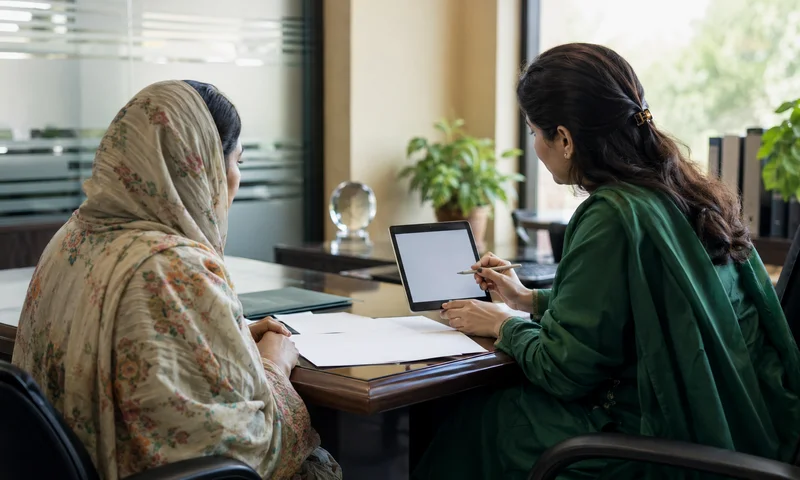
The Securities and Exchange Commission of Pakistan has won a global award for its proposed women’s inclusive insurance policy. The framework aims to widen women’s access to financial protection through tailored products, digital distribution and stronger consumer safeguards. Award recognises policy innovation SECP secured the Outstanding Policy Award at the 2026 Leadership Development Program for Regulators. Women’s World Banking conducted the programme at the University of Oxford’s Saïd Business School. The SECP team finished first among 26 participating pairs from 16 jurisdictions. Participants came from countries including India, Indonesia, Egypt, Nigeria, Morocco and Armenia. SECP Director Insurance Muhammad Arshad and Assistant Director Insurance Sofia B. Rabnawaz represented Pakistan. Their capstone presentation outlined a policy titled “Empowering Women Through Inclusive Insurance: Building Financial Resilience for a Stronger Pakistan.” Judges recognised the proposal for its clarity, innovation, feasibility and potential impact on women’s financial inclusion. Women’s World Banking says its programme helps regulators turn policy ideas into practical reforms. Its 2026 cohort included 52 regulatory leaders from 26 institutions across 17 countries. Two dedicated products for women Pakistan has around 117 million women, yet many remain underserved by formal insurance, according to the SECP. The policy seeks to reduce that gap by creating an accessible, inclusive and gender-responsive insurance market. It encourages insurers to offer at least two products designed specifically for women. These products would address financial risks that conventional insurance packages may not adequately cover. The framework also promotes digital platforms and other accessible distribution channels. SECP expects these routes to expand outreach, simplify access and bring more women into the formal insurance system. In the short term, the policy could benefit around 1.5 million women who already hold life insurance policies. Women covered through group life, health, accident and microinsurance schemes could also gain from the reforms. The initiative goes beyond increasing the number of policyholders. It aims to provide women with practical financial protection against illness, accidents, income shocks and other emergencies. Draft policy awaits public consultation SECP has not yet implemented the framework. The commission continues to review the draft and plans to seek public feedback before introducing the final policy. SECP Chairman Dr Kabir Ahmed Sidhu said the global recognition supported the regulator’s direction towards a more inclusive insurance market. “Our policies are focused on unlocking Pakistan’s significant insurance potential, particularly among women, through targeted products and digital distribution, while ensuring stronger consumer protection,” Sidhu said. Women’s World Banking defines financial inclusion as more than access to an account or loan. It also includes insurance, pensions, financial knowledge, digital skills and trust in formal services. For Pakistan’s insurance industry, the proposal could open a large underserved market while improving household resilience. Its eventual impact, however, will depend on product affordability, public awareness, digital access and effective enforcement of consumer protection rules.

What Happens to Your Body and Budget When Autumn Arrives?
Autumn brings shorter days, cooler temperatures and a return to structured routines across much of the Northern Hemisphere. These changes affect more than clothing choices. They can influence sleep, concentration, mood, appetite and household spending. Shorter days change the body’s rhythm The seasonal shift begins with the sun. As autumn progresses, daylight hours decline and the midday sun appears lower in the sky. Sunlight also travels through more of the atmosphere, reducing the heat that reaches the ground. Trevor Harley, emeritus psychology professor at the University of Dundee, says weather does not create one predictable emotional response. “It’s not the case that sunshine is good and rain is bad; both are good.” He says sunny conditions can encourage creativity, while cloudy weather may help people concentrate. Read More: The Best Flowers and Vegetables to Plant in July Reduced evening light can also affect the body’s internal clock. Samantha Dockray, an applied psychology lecturer at University College Cork, says darkness supports melatonin production. “As it gets darker as we move into autumn, the shorter days and longer periods of nighttime darkness can support the body’s natural sleep processes by increasing melatonin production, which may help some people fall asleep more easily and sleep slightly longer,” Dockray said. Children and teenagers may notice a sharper change when school resumes. Adults often maintain steadier schedules, although darker mornings can make waking difficult. Most people adjust within several weeks. Mood and energy can also suffer For some people, reduced daylight brings more serious symptoms. Seasonal affective disorder can cause persistent low mood, fatigue, poor concentration, appetite changes and unusually long sleep. The US National Institute of Mental Health says winter-pattern seasonal affective disorder often includes oversleeping, overeating and social withdrawal. Researchers link the condition to seasonal changes in daylight, serotonin and melatonin. Experts recommend consistent sleeping and waking times. Morning daylight, regular exercise and reduced screen exposure before bed can also support the adjustment. Anyone experiencing severe or persistent symptoms should seek professional medical support. Autumn reshapes household spending The new season also changes how people spend money. Families often face school costs involving uniforms, shoes, stationery, transport and electronic devices. Many households begin repaying summer travel debt while preparing for year-end celebrations. Food purchases commonly move from salads and lighter meals towards soups, meat and warm comfort foods. Colder evenings bring higher spending on heating, fuel, blankets, fleeces and indoor entertainment. “This is often called the ‘cosy effect’ and can be evident in buying blankets, fleeces and ‘cosy’ gear as we move from outside to inside,” said accounting lecturer Oliver Browne. Read More: Budget Travel Is Exploding: How People Are Seeing the World for Less September can also inspire healthier eating and new exercise plans. However, Browne says “normal service” often returns once school runs, traffic and commuting become routine in October. The autumn equinox briefly brings nearly equal periods of daylight and darkness. Across cultures, it has traditionally marked harvests, preparation and reflection. Modern routines may look different, but autumn still acts as a powerful reset for the body, household and mind.
Why Engro Is Selling Its Entire EPCL Stake After 29 Years
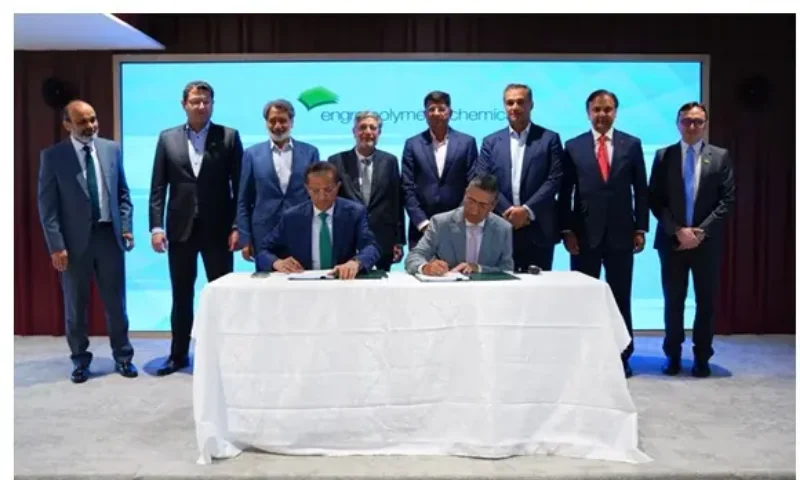
Engro Holdings is exiting Engro Polymer & Chemicals Limited after nearly three decades through a Rs19.7 billion share sale. Its wholly owned subsidiary, Engro Corporation Limited, signed a Share Purchase Agreement with Lotte Chemical Pakistan Limited. The agreement covers Engro’s entire EPCL holding. Rs19.7 billion deal covers controlling stake Engro will transfer 510.73 million ordinary shares, representing about 56.19 per cent of EPCL’s issued and paid-up capital. The transaction values each share at Rs38.60. The total consideration equals about $70.95 million. Completion requires corporate and regulatory approvals, applicable consents and other customary conditions. Lotte first submitted a non-binding offer for the stake in March 2026. The agreement moves the proposed acquisition into a binding phase, subject to completion requirements. The buyer will gain management control. EPCL shaped Pakistan’s petrochemical sector “EPCL has been a core part of Engro Corporation’s portfolio since 1997 and has played an important role in the development of Pakistan’s downstream petrochemicals sector. Over this period, Engro has expanded the business, helping establish EPCL as Pakistan’s only integrated chlor-vinyl complex and a key supplier to multiple downstream industries with products including PVC resin, caustic soda, and hydrogen peroxide, among others. “Beyond its operational footprint, EPCL has contributed to the development of strong technical capabilities within Pakistan’s manufacturing sector, becoming a training ground for engineering talent across the petrochemicals industry,” Engro said. EPCL supplies materials used across construction, manufacturing and other downstream industries. Its integrated complex gives it a distinct position in Pakistan’s chemical sector. Lotte Chemical Pakistan produces 500,000 tonnes of purified terephthalic acid annually at its Karachi plant. Manufacturers use PTA in polyester fibre, industrial yarn and PET bottles. Lotte’s acquisition would combine its existing platform with EPCL’s chlor-vinyl operations. Sale follows Engro’s portfolio restructuring The agreement follows Engro’s 2025 restructuring, which turned Engro Corporation into a wholly owned subsidiary of Engro Holdings. The new structure placed capital allocation under the group’s investment arm. Engro has since completed major portfolio decisions, including the $562.7 million Deodar telecom tower transaction. Engro Holdings CEO Abdul Samad Dawood said: “EPCL has been one of Engro’s flagship businesses. For nearly three decades, we have partnered with leading international companies to build capabilities, strengthen operations, and contribute to Pakistan’s industrial development. “We believe the proposed transaction would allow us to realise the value and learnings created through that journey while unlocking synergies for EPCL within a larger petrochemicals platform. At the same time, it would strengthen our ability to pursue new investment opportunities and continue building a resilient portfolio that compounds value for shareholders over the long term.” Lotte Chemical Pakistan CEO Adnan Afridi outlined the proposed benefits. He said: “This combination would create a stronger platform for sustainable growth, operational excellence, and innovation. The identified synergies, coupled with the complementary strengths of both businesses, would enhance our competitiveness while enabling us to deliver greater value to our customers and stakeholders through the proposed transaction.” The sale will formally end Engro’s EPCL ownership once all closing conditions are met.

France Hits Shein and Temu With New Clothing Fines
France began imposing penalties on ultra-fast fashion products on Tuesday, targeting the high-volume business models used by Shein and Temu. The measure aims to curb surging sales of cheap clothing and reduce environmental damage linked to overproduction. French lawmakers approved the fast-fashion law in June after years of debate over textile waste and online retail. France introduces product-level fast fashion fines The penalties start at €0.25, or about 30 US cents, for products such as boxer shorts and socks. They can reach €12, or around $14, for a coat. France has capped each charge at 50 per cent of the product’s pre-tax selling price. The penalties will rise further from 2030. Authorities calculate the amount through a formula that considers the number of products sold, their prices and repairability. This structure places the heaviest burden on retailers that introduce vast numbers of cheap, short-lived products. Shein offered more than two million products as of March 31, according to its Hong Kong listing prospectus. The company added about 4,700 new clothing styles each day. European retailers such as Inditex-owned Zara and H&M carry smaller online ranges. French officials said they do not expect the new system to affect those companies. Shein faces wider regulatory pressure Neither Shein nor Temu responded to requests for comment on the new fees. However, Shein’s French spokesperson, Quentin Ruffat, previously warned that the penalties would raise prices for customers. Ruffat said French shoppers “could pay €12 more for their Shein clothing by 2030” because of French penalties and European Union charges. China’s commerce ministry has called the French law discriminatory and described it as a trade barrier. It said the restrictions could breach the World Trade Organization’s non-discrimination principle. Read More: Why Was AliExpress Fined €550 Million? The Full Story Explained A ministry spokesperson urged France to “immediately correct these discriminatory practices” and ensure a fair and transparent environment for Chinese companies. The penalties add to commercial pressure on Shein after the EU and United States ended duty-free access for cheap e-commerce parcels. Those changes weakened a cost advantage that helped Chinese platforms ship low-priced goods directly to Western consumers. Shein’s valuation plunged before its Hong Kong stock market debut on Tuesday. Its shares fell 8 per cent during their first trading session, as investors weighed regulatory and tariff risks. New fees will support textile recycling The French penalties operate within a broader European effort to make clothing producers responsible for waste. The EU’s revised Waste Framework Directive requires every member state to establish an Extended Producer Responsibility system for textiles and footwear. Under that system, producers contribute to the cost of collecting, sorting, reusing and recycling discarded clothing. EU countries must establish textile EPR schemes within 30 months of the revised directive taking effect. Read More: Up to 200,000 US Visas Could Be Revoked Under New Policy France already has an organization that finances textile collection and reuse. It will collect the new penalties from importers or manufacturers responsible for qualifying fast-fashion products. The law makes France one of Europe’s most aggressive regulators of ultra-fast fashion. Supporters argue that the fees will reduce waste, while Shein and China maintain that consumers and Chinese businesses will bear unfair costs.
Pakistani Investors Struggle to Recover Millions From Dubai
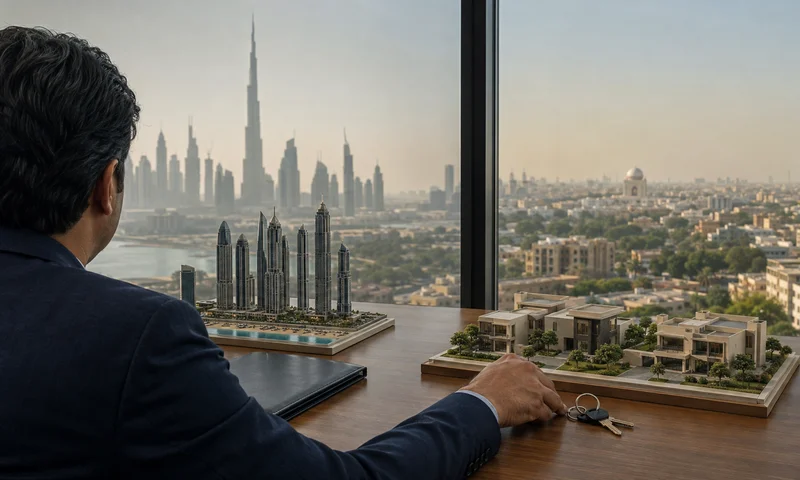
The Gulf war has curbed the flow of undeclared Pakistani money into Dubai, according to property and currency market sources. They said funds already placed in the emirate were returning to Pakistan and moving into local real estate. Thousands of Pakistanis have invested hundreds of millions of dollars in Dubai, mainly in property. Market reports previously ranked Pakistan as the second-largest foreign investor in the sector on two occasions. Market participants said undeclared wealth from Pakistan had also helped drive prices higher. Dubai loses its safe-haven appeal “About $60 million in illegal (or black) money is created in Pakistan per month and has been invested in Dubai, but this has now stopped,” All Pakistan Builders Association Chairman Hassan Bakhshi said. Currency dealers said the conflict had reversed the flow. They added that some investors could not recover money trapped in Dubai. “The higher remittances from Dubai reflect that Pakistanis are sending back their liquid assets to Pakistan,” said a currency dealer. Read More: 323Bahria Town Loses 527-Kanal Murree Property in FBR Auction State Bank of Pakistan data showed total workers’ remittances reached $3.6 billion in July 2026, rising 13 per cent annually. Saudi Arabia and the UAE jointly contributed more than $1.65 billion. However, official remittance data covers family maintenance and other legitimate transfers. It does not identify undeclared capital or prove that Dubai property investments have returned. The conflict has also weakened Dubai’s appeal as a destination for investment and tourism, market sources said. Karachi property prices climb Bakhshi said returning liquidity had fueled a sharp rally in Karachi’s Defence areas. “Property prices in Defence went up 50-60 per cent after the Gulf war started. Since the title of the Defence property is safe (meaning no double filing or fake dealing), most of the money is going towards the area,” he said. Property dealers also reported stronger buying and selling across Karachi as liquidity improved. Read More: Big Relief for Investors as Dubai Eases Property Visa Rules “The government is also taking measures to boost the construction industry, and the rebound in property prices was the result of this effort. The property prices in other areas of Karachi have increased in the range of 20 to 25pc,” property dealer Karim Dad said. Dubai’s official data presents a mixed picture. The Dubai Land Department said first-quarter transaction value rose 31 per cent to AED252 billion. Reuters later reported that transaction volumes fell 37 per cent annually during the first 12 days of March. Some properties also faced price cuts of 12 to 15 per cent. Businesses and investors seek exit routes Before the war, several Pakistani technology companies shifted to Dubai for its easier business environment. Internet disruptions and tax authority interference in Pakistan also encouraged the move. Thousands of Pakistanis used Dubai as a third-country base for legal trade with India and Bangladesh. Many now face disruption and are trying to recover investments while war-like conditions persist. Currency dealers expect hundreds of millions of dollars to return once conditions normalize. They argued that the conflict had damaged Dubai’s standing among foreign investors. Bakhshi also endorsed reports that Pakistanis were seeking exits while prices in the war-affected market remained severely depressed.
Google Is Hiring in Karachi, But Can You Qualify?
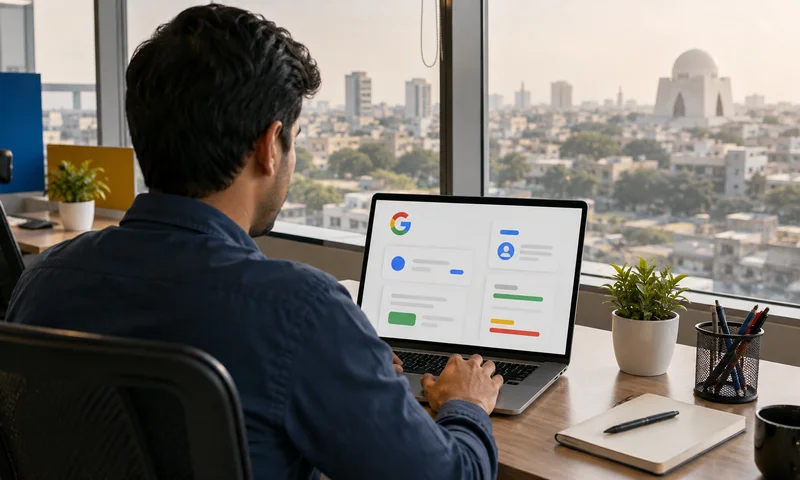
Google has advertised three specialized roles linked to Karachi, opening new employment opportunities for Pakistani professionals. The openings cover digital advertising, education technology and campaign analytics. They point to a selective expansion of Google’s commercial presence, not a broad recruitment drive for engineers or entry-level workers. Applications were available on Google’s official careers website as of August 31, 2026. Three Google jobs open to Pakistan applicants The Account Manager, Technology and Consumer Goods, Large Customer Sales role is based in Karachi. Google requires a bachelor’s degree or equivalent practical experience and two years in digital advertising, sales, business development or a related field. Applicants must communicate fluently in Urdu and English. The successful candidate will manage advertising relationships, analyze campaign data and support customers across Pakistan. Read More: Pakistan’s Tech Sector Gets Major Boost as Google Opens Office Google has also listed a Karachi-based Google for Education Lead. The person will drive major sales initiatives and high-value partnerships involving Chromebooks, Workspace for Education and Gemini. The minimum requirement is five years of technology sales or customer-facing sales experience. However, Google prefers candidates with 10 years in technology sales, strategic partnerships or business development. The Analytical Lead, Planning and Measurement, Large Customer Sales role lists Karachi among four possible locations. The others are Singapore, Taguig in the Philippines and Jakarta. It requires two years of relevant experience in analytics, advertising, digital marketing, consulting or customer-facing financial analysis. Google also values knowledge of SQL, R or Python. For Singapore applicants, the company says, “Google will be prioritizing applicants who have a current right to work in Singapore, and do not require Google’s sponsorship of a visa.” Vacancies signal a targeted expansion The job descriptions show that Google wants people who can work with large advertisers, senior decision-makers and education-sector partners. The roles focus on revenue, partnerships and measurement rather than software development. Meanwhile, the education lead will pursue major agreements with schools, universities and other institutions. Read More: Google Outbids AI Rival for Spirit Airlines Data in $10 Million Deal The openings therefore offer important opportunities, but they do not amount to mass hiring. Two positions name Karachi as their location. The analytical job allows applicants to select Karachi among several cities. Google builds on its Pakistan presence Google formally registered as a foreign company with the Securities and Exchange Commission of Pakistan on November 8, 2022. It then opened a liaison office to explore business opportunities and support the local technology sector. At the time, a company spokesperson said: “We have recently opened a liaison office in Pakistan to explore business opportunities, better market our products and services locally.” The company also pledged to support Pakistan’s fast-growing technology ecosystem. Read More: Google Is Free for You, So Who Actually Pays the Bill? The education vacancy also follows Google’s May 2026 announcement of a partnership with UNICEF covering Pakistan, India, Brazil and Kenya. The project aims to improve learning outcomes, train educators and strengthen school systems. Nearly four years after the registration, the vacancies show a cautious but visible expansion in Pakistan. For experienced candidates, they provide a direct route into Google’s advertising and education operations.
