


The Asan Tax Scheme registered 9,806 shopkeepers in its first month, including 1,929 first-time entrants to Pakistan’s tax system. However, only 428 participants had completed their tax returns, according to figures presented at a government review meeting. The registrations represent approximately 0.28% of the government’s target of bringing 3.5 million shopkeepers into the tax net during FY2026-27. Minister of State for Finance and Railways Bilal Azhar Kayani chaired the meeting on Friday, September 25. Trader representatives Ajmal Baloch and Kashif Chaudhry attended alongside senior Federal Board of Revenue officials. Registrations outpace completed returns Officials said registered shopkeepers remained at different stages of preparing and submitting their returns. Those who had completed filing included traders from both small and major cities. The figures distinguish scheme registrations from new additions to the tax system. First-time entrants accounted for approximately 19.7% of registrations, while completed returns represented about 4.4% of total sign-ups. The government’s nearly 10,000 registration figure therefore does not mean that all participants were previously outside the tax net. Kayani announced the 3.5 million target in June during the National Assembly’s debate on the federal budget. The government introduced the simplified scheme to encourage small traders to enter the formal tax system. FBR told to resolve technical problems Kayani directed the FBR to immediately address technical objections raised by shopkeepers and lawyers over the scheme’s implementation. He also instructed officials to issue FBR plates promptly to shopkeepers who had filed their returns. “The Asan Tax Scheme is a unique facility designed specifically for shopkeepers and not available to any other business segment,” Kayani said. He encouraged wider participation, saying shopkeepers had no reason to remain non-filers after the scheme’s launch. The meeting agreed that traders and FBR officials would maintain daily contact to resolve implementation problems. Authorities will also strengthen engagement with tax bars and lawyers. Trader representatives pledged cooperation and described the initiative positively. They nevertheless said building awareness among shopkeepers would take time. App supports registration and filing Finance Minister Muhammad Aurangzeb and Kayani launched the Retailer Scheme app at FBR headquarters on August 19. The app supports registration and return filing for eligible retailers with annual turnover of up to Rs200 million. Officials also told Friday’s meeting that authorities had issued an Urdu-language information booklet. It explains the new scheme, the regular return-filing procedure and penalties applicable after the deadline. They outlined penalties for shopkeepers who fail to pay taxes under either the scheme or the regular procedure by the deadline. The briefing specified Rs10,000 for the first month, Rs25,000 for the second and Rs50,000 for the third. For now, the first-month figures show a substantial gap between enrolment and completed filings. The government’s immediate priorities include resolving technical problems, expanding trader outreach and helping registered shopkeepers complete their returns.
Jazz Uses Huawei Technology to Deliver 15.1 Gbps Backhaul Link
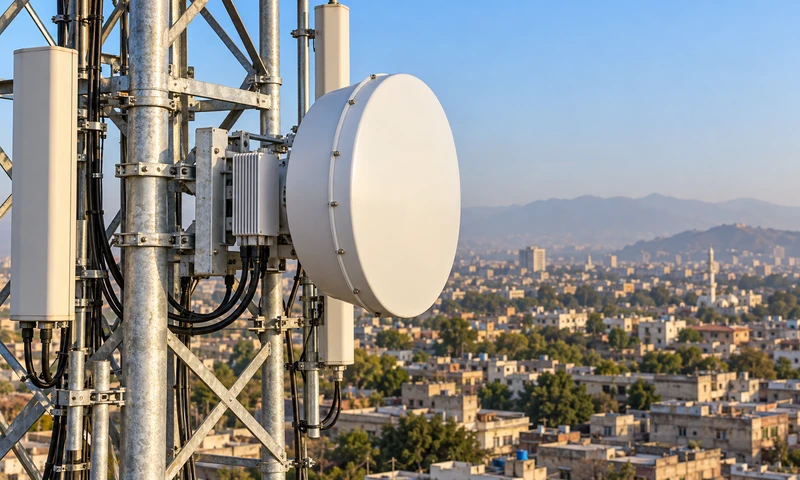
Jazz has deployed a 15.1 Gbps microwave link using a single antenna, expanding the capacity of its mobile backhaul infrastructure. The company described the deployment as Pakistan’s first and highest-capacity microwave link of its kind. The JazzWorld connectivity provider announced the development on September 25. It said the upgrade would help its transport network handle growing data traffic and support evolving 4G and 5G requirements. Backhaul carries traffic from mobile sites into the wider network. Its capacity helps determine how much data those sites can transport as customer demand increases. Single antenna carries more data The deployment uses a Super Dual Band configuration on a single high-efficiency antenna, based on Huawei Technologies’ microwave platform. Jazz said the arrangement increases throughput while limiting infrastructure requirements. It combines multiple carrier outdoor units on one antenna, reducing the need for separate dishes. The company expects this configuration to reduce the space that equipment occupies on towers. That makes the approach particularly useful at densely developed locations and sites with limited room for additional hardware. Read More: Is Your City Covered? Jazz Expands 5G Network to 10 Cities Huawei’s technical documentation explains that Super Dual Band combines traditional microwave frequencies with E-band. This brings together the longer-distance capabilities of conventional microwave bands and the greater capacity available through E-band. The approach allows operators to increase wireless transport capacity while simplifying antenna arrangements. They have not disclosed the link’s location, transmission distance or specific frequency configuration in its announcement. Jazz links upgrade to network demand “Jazz has always been at the forefront of adopting state-of-the-art technologies to build Pakistan’s most advanced and future-ready network,” said Khalid Shehzad, Chief Technology Officer, Jazz. “As the market leader, with the country’s largest 5G footprint, our transport network infrastructure has consistently evolved ahead of the growing demands of our customers. Achieving Pakistan’s first and highest-capacity 15.1 Gbps microwave link is another significant milestone in this journey, demonstrating our ability to push the boundaries of network capacity and innovation.” Jazz placed the deployment within its continuing investment in both fibre and microwave transport infrastructure. It said these investments would strengthen network scalability, efficiency and resilience as connectivity requirements grow. The 15.1 Gbps figure describes the microwave backhaul link’s capacity. It does not represent a promised download speed for an individual mobile subscriber. Microwave supports wider transport upgrades Huawei identifies microwave backhaul as an option for connecting mobile sites where geography or cost can complicate fibre deployment. Wireless links can therefore complement fibre within an operator’s transport network. Read More: Jazz, Ufone and Zong Cleared to Roll Out 5G Services in Pakistan Its dual-band antenna designs also allow different frequency bands to share an antenna, helping operators manage limited tower space. For Jazz, the announced deployment focuses on carrying more traffic through a compact equipment arrangement. The company said expanding high-capacity backhaul would support current services and future connectivity needs. The announcement did not include a deployment cost, a wider rollout schedule or measurements of changes in customer download speeds.
Zardari Approves Safe City Ordinance With Fines Up to Rs2 Million
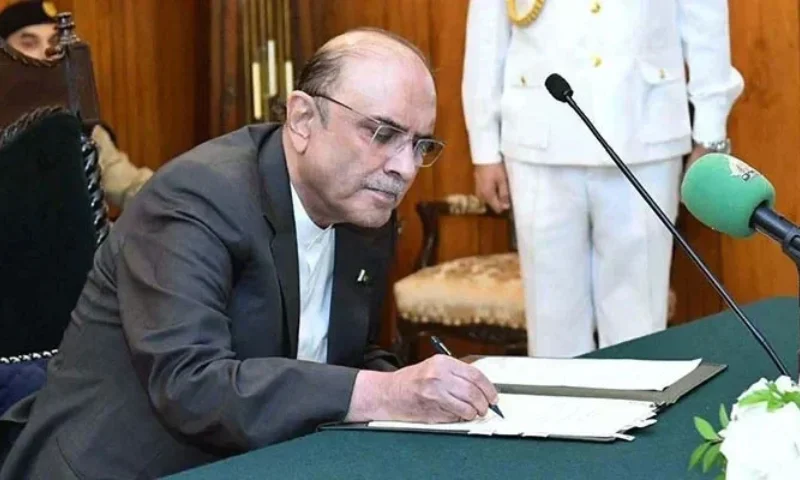
President Asif Ali Zardari has approved an ordinance allowing fines of up to Rs2 million for damaging Safe City cameras or surveillance infrastructure. The measure also covers people who incite or encourage such damage. The President’s House announced the approval on Saturday, September 26. Zardari acted on Prime Minister Shehbaz Sharif’s advice. The measure carries the title Islamabad Capital Territory Safe City Camera and Surveillance Infrastructure Protection and Damage Compensation Ordinance. It seeks to protect the capital’s surveillance network and ensure compensation for damage. Organisers may face liability Authorities can impose a penalty of up to Rs2 million for each damaged camera or piece of surveillance infrastructure. The provision therefore sets the maximum penalty per damaged item. The ordinance also allows authorities to hold organisers responsible for damage during rallies, processions, sit-ins, protests, strikes or other gatherings. صدرِ مملکت آصف علی زرداری نے وزیرِ اعظم کی ایڈوائس پر اسلام آباد کیپٹل ٹیریٹری سیف سٹی کیمرا اور سرویلنس انفراسٹرکچر کے تحفظ اور نقصان کی تلافی سے متعلق آرڈیننس کی منظوری دے دی۔ آرڈیننس کا مقصد سیف سٹی کیمروں اور نگرانی کے نظام کو نقصان سے محفوظ بنانا اور نقصان کی صورت میں اس کی… — The President of Pakistan (@PresOfPakistan) September 26, 2026 Its scope extends beyond those who physically damage equipment. People who instigate or encourage such actions can also face financial penalties. The President’s House outlined a process for assessing both the fine and the cost of damage. An authorised officer will make that determination after giving the person concerned an opportunity to present their case. Appeals allowed within 30 days Anyone challenging the determination can appeal before Islamabad’s district and sessions judge within 30 days. The appeal provision covers the assessment of the fine or damage costs. Authorities can recover unpaid fines or compensation as arrears of land revenue. They will use the recovered funds to repair or replace Safe City cameras and surveillance infrastructure. The compensation mechanism links money recovered from those held responsible to restoring damaged equipment. It accompanies the financial penalties and the right to challenge an officer’s assessment. The announcement comes as the government expands Islamabad’s surveillance network, with a September 30 deadline for completing the expansion project. Safe City expansion nears deadline Interior Minister Mohsin Naqvi set that deadline during an August 7 visit to the Safe City Headquarters. Minister of State for Interior Talal Chaudhry accompanied him at the progress review. Officials reported that teams had completed 85% of the overall expansion work. Installation of the new surveillance network had also reached 85%. They said workers had laid 415 kilometres of optical fibre to support the upgraded system. Work on the data centre, cyber architecture and cybersecurity infrastructure stood at around 80%. وفاقی وزیر داخلہ محسن نقوی اور وزیر مملکت طلال چوہدری کاسیف سٹی ہیڈکوارٹرز کا دورہ وفاقی وزیرداخلہ محسن نقوی کی زیر صدارت خصوصی اجلاس، سیف سٹی توسیعی پراجیکٹ پر پیش رفت کا جائزہ لیا سیف سٹی توسیعی منصوبے پر مجموعی طور پر 85 فیصد کام مکمل، نئے کیمروں کی تنصیب،85 فیصد کیمرے لگ گئے pic.twitter.com/OZrD6UfHlN — Ministry of Interior GoP (@MOIofficialGoP) August 7, 2026 “The advanced technology-based Safe City system will ensure enhanced public safety, effective surveillance, and rapid emergency response,” Naqvi said. He also gave officials three months to complete Islamabad Safe City’s modern Fusion Centre. At the same meeting, Naqvi directed officials to finalise the Safe City Bill for presentation before the National Assembly. The August briefing placed both physical surveillance equipment and supporting digital infrastructure within the expansion programme. The newly approved ordinance adds financial penalties and a damage-recovery process to efforts to protect that network.
SBP Pasban Remittance Scheme: Eligibility and Rs16bn Prizes
Pakistan’s banking industry has launched the Pasban Remittance Reward Scheme, offering recipients Rs16 billion in annual cash prizes. The initiative encourages overseas Pakistanis to send money through formal banking channels. State Bank of Pakistan Governor Jameel Ahmad inaugurated the scheme at the central bank’s headquarters on September 25. The Pakistan Banks Association (PBA) leads the initiative under SBP’s patronage. Banks will fund it entirely, without any burden on the national exchequer. Who qualifies for the Pasban scheme? Beneficiaries must receive home remittances equivalent to at least $100 monthly for three consecutive months within a quarter. The money must reach their bank account. Each eligible $100 remittance earns one digital, non-transferable entry, subject to meeting the three-month requirement. Receiving $100 each month generates three quarterly entries. Read More: Pakistan Eyes $44 Billion Remittance Record After Strong August Higher amounts earn proportionately more entries. Receiving $100 in October, $200 in November and $300 in December generates one, two and three entries respectively. That gives the beneficiary six entries for the quarter. The scheme also accepts eligible wallet credits but excludes over-the-counter cash collections and Roshan Digital Account inflows. Participation is free. Banks cannot demand fees, payments, ticket purchases, minimum balances or any other consideration. Rs100 million top prize every quarter Each quarterly draw will distribute 2,521 prizes worth Rs4 billion. These comprise one Rs100 million first prize and 20 second prizes worth Rs25 million each. Another 100 winners will receive Rs10 million each, while 2,400 will receive Rs1 million each. The annual programme provides more than 10,000 winning awards, totalling Rs16 billion. Regional allocations reserve 50% of prizes for beneficiaries receiving remittances from Gulf Cooperation Council countries. The UK and Europe each receive 15%, while North America and other countries each receive 10%. The first prize remains open to beneficiaries across all regions. The first draw takes place on January 15, 2027, covering eligible remittances received between October 1 and December 31, 2026. Organisers will conduct quarterly draws through a secure, fully digital and auditable process. They will publish results on the scheme’s dedicated webpage, alongside banks’ and PBA’s websites and official social media accounts. Banks expand support for remittances and exports PBA CEO and Secretary General Muneer Kamal described Pasban as another coordinated effort to support Pakistan’s external sector. Banks have funded an existing remitter incentive since July 2026, bringing their annual commitment to nearly Rs100 billion. Kamal said banks also voluntarily reduced Export Refinance Facility markup by three percentage points to 4.50% for new loans and rollovers. The reduction operates within the Rs1,052 billion ERF limit, complementing Export-Import Bank financing for small and medium-sized exporters. Read More: PM Shehbaz Wants 100% Digital Remittances. Why It Matters PBA Chairman Zafar Masud highlighted banks’ takeover of the Rs80 billion remitter incentive and support for circular debt resolution. He also cited record private-sector, agricultural and SME lending, alongside cheaper export refinancing. Masud said Pasban recognises overseas Pakistanis’ contribution through cooperation with SBP and the government. Ahmad said workers’ remittances reached a record $41.6 billion in FY26. He expected inflows to exceed $44 billion in FY27.
