

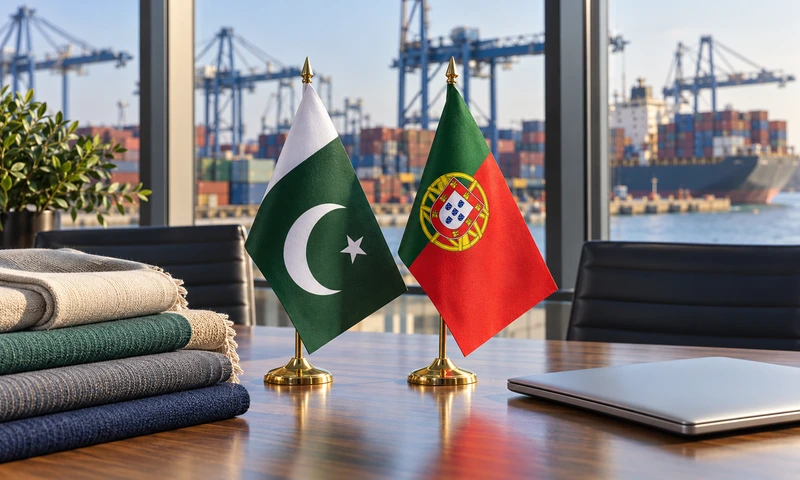
Pakistan and Portugal explored investment opportunities across five priority areas during talks between the Special Investment Facilitation Council and Portuguese Ambassador Paulo Domingues. The meeting in Islamabad on Saturday, September 26, focused on textiles, agriculture, information and communication technology, pharmaceuticals and Special Economic Zones. SIFC hosted the ambassador to discuss stronger economic ties and identify opportunities for collaboration between businesses in both countries. The council outlined Pakistan’s investment potential and explained how its facilitation framework supports domestic and foreign investors. It also highlighted opportunities arising from Pakistan’s expanding connections with international companies and institutions. The discussions centred on potential partnerships. The statement did not announce a signed investment agreement, project value or implementation timetable. SIFC outlines support for investors During the briefing, SIFC explained its role in coordinating investment-related engagement across government institutions. The council connects investors with relevant federal and provincial authorities, alongside institutions responsible for individual sectors. Its framework aims to streamline investment processes and help businesses develop commercially viable projects. The meeting examined how this support could encourage greater commercial engagement between Pakistani and Portuguese companies. SIFC stressed the importance of continued contact with international partners to identify workable investment opportunities. It also called for stronger connections between investors and businesses from both countries. Read More: From AI to Investment: LIIBS 2026 Explores Pakistan’s Next Move The engagement follows earlier diplomatic discussions on expanding economic cooperation. Pakistan and Portugal held their fourth round of bilateral political consultations in Islamabad on July 15, 2026. Those talks covered trade, investment, agriculture, renewable energy, information technology and labour mobility, alongside education and tourism. Officials also explored business-to-business engagement, port connectivity, and cooperation in olive cultivation and processing. Bilateral trade reached $221 million in 2024, compared with $189 million in 2020. Pakistan maintained a trade surplus with Portugal, providing an existing commercial base for the latest investment discussions. FC Porto partnership adds sporting link The SIFC meeting also highlighted FC Porto’s Dragon Force Academy in Sialkot as an example of expanding institutional and commercial ties. The initiative links the Portuguese football club with Forward Sports through its Sialkot Football Academy. It brings FC Porto’s youth development programme to Pakistan. Forward Sports, a Sialkot-based manufacturer of official FIFA World Cup match balls, operates the local academy. Under the partnership, FC Porto will provide intensive training for young Pakistani footballers and support the development of coaches and managers. Read More: Inside Kazakhstan and South Korea’s $19 Billion Investment Push The Portuguese club has confirmed the academy’s addition to its international Dragon Force network. Its wider expansion programme targets reaching 40,000 young athletes worldwide by 2030. For the bilateral relationship, the academy adds a sporting and training partnership to the sectors discussed at the SIFC meeting. The council cited the initiative while highlighting the scope for closer cooperation between Pakistani businesses and Portuguese institutions. SIFC emphasised sustained engagement to identify commercially viable projects and turn sector-specific opportunities into stronger business partnerships.
PNS Hangor Fires Its First Cruise Missile, Strikes Target at Sea
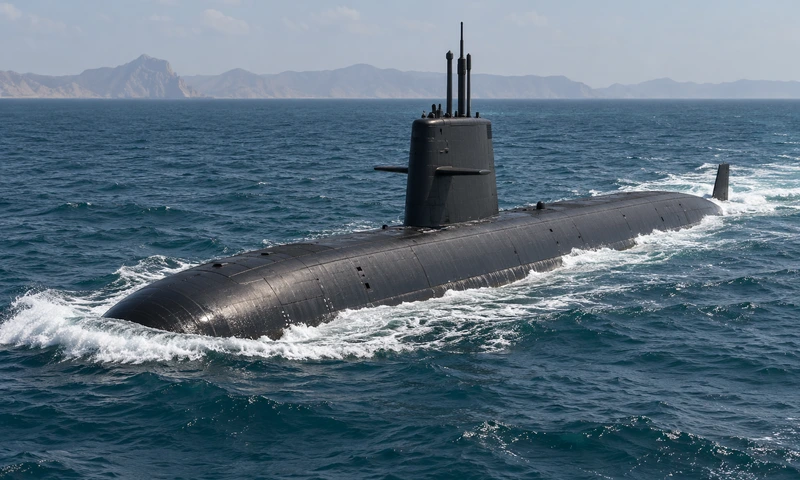
Pakistan Navy’s newly inducted submarine PNS/M Hangor successfully struck a long-range target during its maiden live weapon firing in the North Arabian Sea. The Navy’s Directorate General Public Relations announced the successful exercise on Sunday, September 27. It said the firing demonstrated the submarine’s operational readiness and weapon-system capability. Hangor launched an anti-ship cruise missile designed for precision engagement at extended ranges. The missile successfully hit its designated target, marking a significant step in bringing the submarine into full operational service. Read More: Pakistan Navy Rescues Indian Crew in Arabian Sea Emergency “The successful firing marked an important milestone in the operationalisation of PNS/M HANGOR and demonstrated the growing strength of Pakistan Navy’s subsurface warfare capabilities,” the DGPR — Navy said. Chief of the Naval Staff Admiral Naveed Ashraf witnessed the firing at sea. He praised Hangor’s combat capabilities and described the successful test as an important milestone in its operationalisation. The naval chief stressed the need to continuously strengthen subsurface warfare capabilities. He said these capabilities remained essential to operational readiness and Pakistan Navy’s deterrence at sea. The Navy said the exercise reaffirmed its commitment to maintaining a modern, combat-ready and technologically capable force. It linked that commitment to defending Pakistan’s maritime frontiers. PM Shehbaz praises submarine force Prime Minister Shehbaz Sharif congratulated the Pakistan Navy and its leadership on the successful maiden firing. He said Hangor’s successful engagement of a long-range target demonstrated the submarine force’s operational preparedness, professional expertise and combat capability. The prime minister reiterated the government’s commitment to ensuring the armed forces’ readiness to meet challenges to national security. He also commended Admiral Naveed Ashraf and the personnel involved in Hangor’s induction and operationalisation for their professional performance. The firing follows several stages in the submarine’s entry into service, including its commissioning in China and subsequent arrival in Pakistan. Hangor joins eight-submarine modernisation programme Pakistan commissioned PNS/M Hangor at a ceremony in Sanya, China, on April 30, 2026. President Asif Ali Zardari attended the ceremony alongside Admiral Naveed Ashraf. The submarine arrived in Karachi in June, joining Pakistan Navy’s operational fleet ahead of Sunday’s announcement. Hangor is the first of eight submarines Pakistan is acquiring through its defence partnership with China. The programme forms part of the Navy’s fleet modernisation effort. Read More: Gulf Tensions Explode as Iran Fires Missiles and Trump Demands Deal The construction arrangement divides the eight vessels equally between the two countries. China will build four, while Karachi Shipyard and Engineering Works will construct the remaining four in Pakistan. The submarine features advanced weapons, modern sensors and air-independent propulsion technology. At the commissioning ceremony, the naval chief highlighted the class’s role in protecting vital sea routes. He said the submarines would help deter aggression and secure maritime communications across the Arabian Sea and wider Indian Ocean. The first submarine’s launch took place at Shuangliu Base in Wuhan, China, in April 2024. Its maiden missile firing now marks a further milestone in the programme’s operational progress.
