

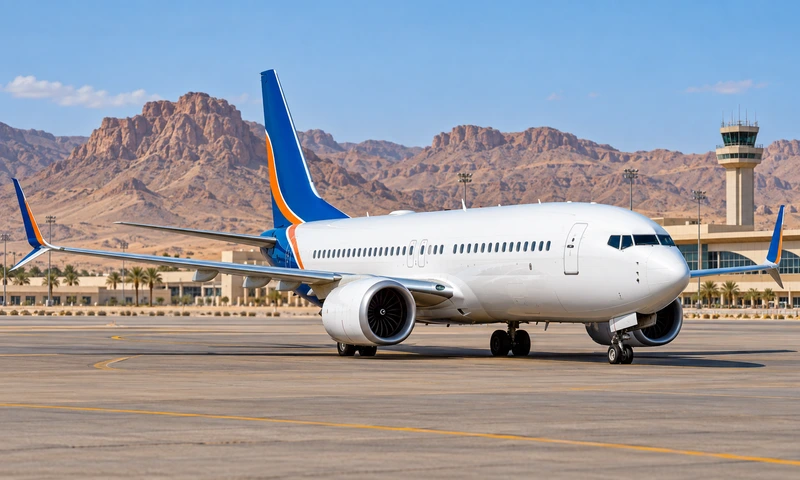
A flydubai flight from Dubai to Tel Aviv diverted to Saudi Arabia on Wednesday after an onboard incident involving a reported altercation between pilots. Flight FZ1073 landed safely at Tabuk Airport on September 30. The airline confirmed that all passengers were safe and accounted for. Flight-tracking information identified the aircraft as a Boeing 737 MAX 8, registration A6-FKF. It had been operating from Dubai International Airport to Ben Gurion International Airport. An Israeli official said a physical confrontation between the pilots preceded the emergency signals. The cause of the reported confrontation remained unclear. Emergency codes trigger concern Tracking data showed the aircraft transmitting code 7700, which signals a general emergency, before switching to 7500 and later returning to 7700. Code 7500 indicates unlawful interference with an aircraft, including a possible hijacking. Its transmission alone does not establish what happened inside the cockpit. Doron Spielman, a spokesperson for the Israeli prime minister’s office, said officials did not believe the incident involved a hijacking. The office also said it was working to bring Israeli passengers home. Officials had not established whether either pilot deliberately activated the emergency signals, according to the reporting available. The alert prompted Israel to scramble fighter aircraft while authorities assessed the situation. The Israeli military also reported a security assessment involving senior commanders. Tracking data shows changes in altitude The flight departed Dubai at 03:05 UTC, equivalent to 7:05am in the UAE, and climbed to 34,000 feet. At approximately 05:21 UTC, tracking data showed a steep descent, followed by a sharp climb and another descent. The aircraft subsequently flew around 15,000 feet, with further variations in altitude and ground speed. It began transmitting the general emergency code near the Saudi-Jordanian border. After briefly entering Jordanian airspace, it reversed direction and headed southwest towards Tabuk. The flight returned to code 7700 during its approach. The tracking service’s final aircraft-position message came at 06:58 UTC. These records describe the aircraft’s movements and signals. They do not independently explain the reported confrontation or establish responsibility for the incident. Airline works with authorities “The aircraft has landed safely in Tabuk Airport (TUU) and all passengers are safe and accounted for,” a flydubai spokesperson said. The carrier said its teams were cooperating with the relevant authorities and would release further information once it confirmed additional details. Its statement did not identify the pilots or explain what prompted the diversion. It also did not specify who selected the emergency codes. Early reports placed the aircraft at Tabuk following the landing. However, the statements reviewed did not confirm a departure time or establish that authorities had formally withheld clearance. The investigation remained ongoing, with the circumstances behind the cockpit incident still awaiting a fuller official account.
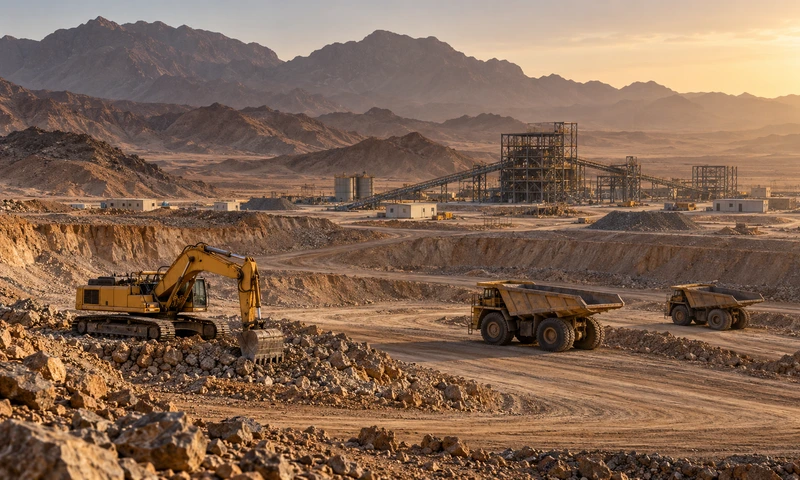
Barrick Links Full Reko Diq Construction to Security Improvements
Barrick Mining Corporation has slowed development of Pakistan’s Reko Diq copper-gold project, saying security must improve before full-scale construction proceeds. Chief executive Mark Hill told the Mining Forum Americas that the company was reassessing the Balochistan project. “We are revisiting it because we need some sort of security improvement before we would embark on a full construction schedule at Reko Diq,” Hill said. He provided no revised construction timetable and did not quantify the slowdown’s impact during the presentation. His comments also indicated a review of the project’s engineering, procurement and construction management strategy. Project review extends into 2027 Barrick had already announced a broader reassessment following escalating security risks and incidents. In an April 2 update, it said the review would continue until mid-2027. The assessment covers security, capital requirements, financing, project scope and timing. Barrick said it would maintain active management while reducing development activity and capital spending. Read More: KP Reopens Green Mining Operations With One Key Condition It also reaffirmed its commitment to existing community and social programmes in Pakistan. The company previously targeted first production by the end of 2028. However, its April update warned of potentially significant increases in both costs and the project timeline. Security remains a major concern in Balochistan. At a July 31 briefing, Pakistan’s military reported more than 40,000 counterterrorism operations nationwide during 2026 up to that point. These included over 31,000 intelligence-based operations in Balochistan. Investment estimates have increased Canada-based Barrick, formerly Barrick Gold Corporation, operates Reko Diq and owns 50 per cent. The Balochistan government holds 25 per cent, while three Pakistani state-owned enterprises share the remaining 25 per cent. Earlier estimates put the two-phase investment at approximately $7 billion. Phase-one costs subsequently rose from $4 billion to around $5.6 billion, with phase two estimated at roughly $3.5 billion. Barrick’s April update cited more recent ranges of $5.6 billion to $6 billion for phase one. It put phase two at $3.3 billion to $3.6 billion, excluding capitalised financing costs. Those ranges imply a combined $8.9 billion to $9.6 billion before financing costs, exceeding the earlier $7 billion estimate. The ongoing review could increase these amounts further. Mine plans include thousands of jobs Reko Diq lies in Balochistan’s Chagai district, near Pakistan’s borders with Iran and Afghanistan. The proposed conventional open-pit mine and milling facilities would produce high-quality copper-gold concentrate. Phase one would process approximately 45 million tonnes of ore annually. Phase two would double capacity to 90 million tonnes. Read More: How SIFC Unlocked a $200 Million Mining Project in Khuzdar Earlier plans envisaged a mine life of at least 40 years. The updated feasibility study reduced that to 37 years because of higher throughput. Further mineral discoveries could potentially extend operations to 80 years. Project estimates envisage 7,500 jobs during peak construction and 4,000 long-term positions once production begins. An earlier projection put free cash flow at approximately $74 billion over 37 years, using consensus long-term commodity prices. That forecast predates the current security and cost review.

Honda BR-V Discontinued in Pakistan After Nine Years
Honda Atlas Cars Ltd (HACL) has discontinued Honda BR-V production in Pakistan, ending the model’s local assembly run that began in 2017. A senior company executive confirmed the decision on Tuesday, September 29. He said Honda faced no difficulties obtaining parts and accessories from Japan or other countries. “Actually, the vehicle has completed its lifecycle, and that’s why its production has been halted,” he said. The executive put recent BR-V production at around 25-50 units a month. He could not say whether Honda planned to introduce a replacement in the near future. Honda has also removed the BR-V from its official website. Its other models remain on display, including the City, Civic and HR-V. Combined production and sales fall sharply Pakistan Automotive Manufacturers Association (PAMA) figures show a steep decline in combined BR-V and HR-V output and sales. Production totalled 120 units in July-August 2026, compared with 1,460 units during the same period in 2025. Combined sales fell to 191 units from 731 units. These figures represent declines of approximately 91.8 per cent in production and 73.9 per cent in sales. Read More: Honda CG 125 2027 Prices, Features and Changes Revealed However, the combined category does not show how much each model contributed to the decline. The totals therefore cannot establish the BR-V’s individual sales performance or the HR-V’s separate production trend. The original report dates PAMA’s combined reporting of the two models to FY22. Honda’s corporate history records the HR-V’s Pakistan launch on October 21, 2022, making that reporting timeline unclear. Dealers and vendors report weak demand A Honda dealer said the BR-V had already disappeared from showrooms. Buyers showed little interest in either booking the vehicle or purchasing available units immediately. Honda vendors also confirmed the production closure. They linked the decision to weak sales, while the company executive cited the completion of the model’s lifecycle. The withdrawal comes amid growing competition from Chinese and Korean brands in Pakistan’s automotive market. Buyers now have more choices across hybrid, range-extended electric and battery-electric vehicles. The combined sales figures indicate pressure on Honda’s two-model category, although they do not establish the reasons behind individual purchasing decisions. Honda continues its hybrid push PAMA records cited in the report show that Honda began BR-V assembly in April 2017. The company produced 648 units and sold 527 vehicles during that first month. Honda has since expanded its local range with electrified technology. It launched the locally produced HR-V e in Pakistan on July 28, 2025. Read More: Atlas Honda Finally Bringing 250cc and 500cc Bikes to Pakistan The hybrid uses a two-motor system combining petrol and electric power. Honda’s launch announcement also introduced Honda Sensing driver-assistance features across the HR-V range. That model remains part of Honda’s advertised lineup. However, the executive’s comments offered no confirmation of a direct successor to the BR-V.
Swabi Man Accused of Killing Sister, Niece Over TikTok Dispute
A man allegedly shot dead his sister and niece following a dispute involving TikTok videos in Swabi district on Tuesday. Police identified the suspect as Taj Bahadur and said he fled after the shooting. The attack took place inside a house in Leran, in the mountainous Gadoon area of Khyber Pakhtunkhwa, on September 29. Both women died at the scene, according to the First Information Report (FIR). Police registered the case at Utla Police Station on the complaint of Majida, wife of Yar Ali Khan. She accused Bahadur of entering the house and opening fire on his sister, the wife of Siyar Khan, and his niece. Complaint describes attack inside family home Majida told police that her husband and brother-in-law worked abroad. She shared the house with her sister-in-law and other family members. Further reporting, citing the police complaint, identified the younger victim as Siyar Khan’s 19-year-old daughter. It said family members were at home on Tuesday afternoon when Bahadur arrived carrying a weapon. Read More: 22 Dead, 384 Missing After Devastating Nepal Flash Floods The complainant alleged that he opened fire on the mother and daughter. Other members of the household escaped the shooting unharmed, according to the additional account. The available reports did not give either victim’s name. They identified the older woman through her husband and the younger woman as her daughter. Dispute reportedly concerned nephew’s videos The complaint linked the attack to Bahadur’s anger over his nephew Salman, son of Siyar Khan, making TikTok videos. According to the additional reporting, Bahadur had asked his sister to tell her son to stop making the videos. This account places the nephew’s activity at the centre of the reported dispute, rather than videos made by either victim. The initial report described the motive more broadly as a disagreement involving a TikTok video. It did not provide details about the recording or its contents. Police said they had begun an investigation and were searching for the suspect after registering the case. The reports reviewed did not announce an arrest or provide a response from Bahadur. The allegations about the shooting and its motive come from the complaint and police accounts cited in the reporting. Violence against women remains a concern The killings come against a wider backdrop of violence against women in Pakistan, including within family homes. The Human Rights Commission of Pakistan documented persistent gender-based violence in its review of Khyber Pakhtunkhwa for 2024. Its findings included hundreds of cases involving domestic abuse, sexual assault and killings committed in the name of honour. Read More: Air Canada Crash at New York’s LaGuardia Airport Leaves Two Dead, Dozens Injured Nationally, the commission recorded at least 405 honour killings and 1,641 domestic murders during 2024. Those figures provide background on violence against women. The available police account of the Swabi shooting linked it to a TikTok dispute without explicitly classifying it as an honour killing.
OICCI Elects Umar Ahsan Khan President for 2026-28
The Overseas Investors Chamber of Commerce and Industry (OICCI) has elected Dawlance chief Umar Ahsan Khan as president for 2026-28. He takes charge as Pakistan faces a sharp decline in foreign direct investment. The chamber announced the results at its Extraordinary General Meeting on Tuesday, September 29. Khan, CEO and managing director of Dawlance (Private) Limited, succeeds Yousaf Hussain, who led OICCI during 2024-26. Members elected Ahmed Zahid Zaheer as senior vice president. He serves as country chairman and general manager of Chevron Lubricants Pakistan (Private) Limited. Dr Syed Amir Ali, president and CEO of Meezan Bank Limited, secured the vice president’s position. Investment environment takes priority Khan said the chamber would maintain a constructive approach to advocacy, combining evidence with practical proposals for policymakers. “Our advocacy must remain constructive, credible and evidence-based. We should not simply highlight what needs to change. Wherever possible, we should bring practical solutions to the table and work with the government and other stakeholders to make them happen,” he said. He noted that foreign direct investment fell 34 per cent to $1.65 billion during the last financial year. His remarks highlighted the challenge of turning economic stability into investment commitments. Read More: Pakistan Portugal Investment Talks Focus on Five Key Areas “Macroeconomic stabilisation may get a country onto an investor’s shortlist, but it is the broader investment environment that ultimately determines whether capital is committed,” he said. The incoming leadership’s priorities include closer engagement with the government, regulators and international institutions. The new Managing Committee will also strengthen OICCI’s data-driven research during its term. Its agenda includes continued work through the chamber’s platforms on climate, diversity and inclusion, technology and artificial intelligence. Experience across manufacturing and finance Khan brings more than 35 years of business experience to the presidency. He began his career at ICI Pakistan in 1990. He joined Dawlance in 2010 as director finance and chief financial officer. Between 2014 and 2019, he served as chief operating officer at Thal Engineering, part of the House of Habib. He has led Dawlance as managing director and CEO since 2019. His academic qualifications include bachelor’s and master’s degrees in accounting and finance from the London School of Economics. OICCI’s role in Pakistan’s investment policy Established in 1860 as the Kurrachi Chamber of Commerce, OICCI represents more than 200 foreign-invested member companies in Pakistan. The chamber advises the government on financial, commercial and industrial policies affecting overseas investment. It also helps members address difficulties arising from laws and policy implementation. Read More: From AI to Investment: LIIBS 2026 Explores Pakistan’s Next Move Its regular policy work includes taxation and trade proposals developed with member companies before annual budget and trade policy announcements. OICCI also conducts business confidence and investment perception surveys. These provide an established research base for the incoming leadership’s emphasis on evidence and engagement with policymakers.
