


The State Bank of Pakistan has launched its Banking on Equality Policy 2026, setting fresh targets for women’s employment, digital accounts and business financing. The second edition builds on the framework introduced in 2021. It supports Pakistan’s National Financial Inclusion Strategy goal of narrowing the financial inclusion gender gap to 25% by 2028. SBP issued the policy on October 13 after consultations with local and international stakeholders. It aims to bring more women into formal banking while improving their financial literacy and opportunities for entrepreneurship. New targets for women’s banking access The central bank’s circular requires regulated institutions to increase women’s active account ownership by at least 20% annually. Branchless banking providers must expand their combined network of women agents to 35,000 by December 31, 2028. Banks and development finance institutions should also aim to double financing for women and women-owned or led businesses across priority sectors. SBP has set the same December 2028 deadline for this target. To widen access, institutions must promote Asaan Mobile Accounts and Asaan Digital Accounts among women, including informal and gig workers. Read More: Scan and pay: NBP makes passport fee payments easier The policy also calls for dedicated Women Digital Business Accounts with simplified requirements. Account limits should reflect the size and nature of each business. Banks should encourage women-led businesses to accept digital payments and develop financing products suited to female entrepreneurs. Alternative credit assessments form another part of the policy. These methods could help lenders assess women who lack formal credit histories or conventional collateral, reducing barriers to business financing. More women staff and leadership opportunities SBP has directed regulated institutions to prepare plans to raise women’s workforce share from 17% to 22% by December 2028. The policy addresses hiring, retention, promotion and mentoring. It calls for career development measures that help women progress into leadership positions. Banks should also support working mothers through daycare facilities or allowances. Such measures aim to help women remain in employment and continue their careers. Read More: SBP Pasban Remittance Scheme: Eligibility and Rs16bn Prizes The first policy delivered measurable gains, according to SBP. Pakistan’s financial inclusion gender gap narrowed from 39% in December 2021 to 29% in December 2025, a 10-percentage-point improvement. Banks hired more than 17,500 women during that period. Women’s share of banking staff consequently increased from 13% to 17%. Banks also established dedicated departments or teams to develop financial products and services for women. The updated framework builds on those arrangements to improve customer outreach and support women’s businesses. Quarterly reporting to track implementation SBP will monitor implementation through quarterly data reporting, regular evaluations and mystery shopping exercises. The monitoring framework will allow the central bank to assess institutions’ progress against targets for recruitment, female customers and branchless banking agents. Financial literacy remains a central priority alongside access to accounts and credit. The policy seeks to help women understand and use financial services while supporting their participation in entrepreneurship. The 2028 inclusion target would narrow the remaining gap by another four percentage points from its 2025 level.

One in 16 Young Internet Users in Pakistan Experienced Sexual Abuse
An estimated 1.5 million internet-using children in Pakistan experienced technology-facilitated sexual exploitation or abuse in a single year, a study has found. The findings expose major gaps in reporting and protection as the United Nations warns of growing risks from artificial intelligence. Nearly one in 16 internet users aged 12 to 17 experienced at least one form of such abuse. UNICEF, ECPAT International and INTERPOL published the findings in Disrupting Harm in Pakistan in September 2026. Funded by Safe Online, the research included a household survey of 1,012 children and 1,012 parents or guardians. Researchers collected survey responses between February and November 2025 and examined professional testimony, legislation and policies. Familiar perpetrators and unreported abuse In 85% of incidents children described, they already knew the perpetrator. The finding challenges the widespread assumption that online abuse primarily involves strangers. Social media accounted for 44% of reported instances, making it the most commonly identified digital setting. Read More: New Report: Instagram Fails to Protect Teens From Sexual Images Abuse included unwanted sexual images or conversations, demands for intimate photographs and sharing children’s images without permission. Researchers also documented sexual threats, blackmail and emerging risks involving AI-generated material. Children disclosed nothing to anyone in 57% of reported incidents. None of the surveyed children reported their experiences through formal channels such as helplines, social workers or police. Fear, stigma and possible repercussions at home discouraged children from seeking help. They feared blame, humiliation or family restrictions. Boys face additional barriers because expectations around masculinity can discourage disclosure and leave their experiences overlooked. UN warns technology is creating new dangers Najat Maalla M’jid, the UN secretary general’s Special Representative on Violence Against Children, presented her final General Assembly report on Monday. The presentation marked 20 years since the first UN global study on violence against children. She warned that overlapping crises following the Covid-19 pandemic continued to undermine progress. “Almost 45 million children are displaced because of conflict, but also because of natural disasters, because of the climate crisis,” she told journalists in New York. Although digital technology supports learning and communication, she warned that AI had opened “huge avenues for child sexual exploitation”. She also highlighted “cyberbullying, deepfakes and the recruitment of children into criminal activities.” Protection gaps extend beyond digital platforms The Pakistan study identifies weaknesses in prevention, investigations and survivor support. Legislation does not systematically require specially trained professionals to conduct children’s forensic interviews. Inappropriate questioning can consequently cause further trauma. The findings call for safe, confidential reporting systems and accessible support without blame or punishment. Read More: Why WHO Wants Tougher Social Media Rules for Children Meanwhile, poverty, food insecurity and rising prices deepen children’s vulnerability. Conflict and disasters can disrupt education and weaken family support. UNICEF estimates weather-related disasters displaced 15.6 million children across South Asia between 2016 and 2022. Climate-related events disrupted schooling for 35 million children in Bangladesh in 2024. Those figures do not establish a direct link between displacement and online sexual abuse. However, they reinforce the need to maintain child-protection services during emergencies alongside stronger digital safeguards.

Pakistan Textile Profits Rise 11% to Rs51.9 Billion
Pakistan’s top 20 listed textile companies recorded an 11% increase in combined profits to Rs51.9 billion in FY26, according to Topline Securities. Lower borrowing costs and a reduced effective tax rate lifted earnings despite nearly flat sales. The companies generated revenue of Rs1.4 trillion, equivalent to around $5 billion. Together, they represent 83% of the market capitalisation of the selected listed textile sector. The results show how financing and tax relief supported profitability while businesses struggled to expand revenue. Lower finance costs and taxes lift earnings Finance costs dropped 19% year-on-year to Rs54.5 billion. Topline attributed the decline mainly to lower financing rates and reduced borrowings under the Export Finance Scheme. Meanwhile, the effective tax rate fell to 33.2% from 37.1% a year earlier. Companies reversed deferred tax liabilities following changes in the future super tax treatment of exporters, driving much of that reduction. Read More: Pakistan Textile Exports Face Sharp Fall, Exporters Warn However, operating performance showed little improvement. Sales slipped 0.3%, while gross profit declined 0.2%. Gross margins held steady at 13.1%, highlighting the limited contribution of core business growth to the earnings increase. The distinction matters because lower interest and tax expenses can improve profits even when demand remains weak. Interloop leads gains as Nishat earnings fall Interloop, Sapphire Textile Mills and Nishat Mills collectively contributed 48% of the companies’ total earnings. Interloop’s consolidated profit jumped 129% to Rs12.7 billion, making it the largest contributor. Sales increased 5% to Rs187.7 billion. Better gross margins, lower finance costs and a sharp rise in other income supported its performance. Sapphire Textile Mills posted a 73% increase in unconsolidated profit to Rs6.8 billion. Its sales nevertheless fell 13% to Rs81.2 billion. Higher other income, cheaper financing and a lower effective tax rate helped offset the revenue decline. In contrast, Nishat Mills’ unconsolidated profit dropped 9% to Rs5.5 billion. Lower dividend income and weaker gross margins weighed on earnings, although sales rose 2% to Rs181.6 billion. Export figures differ as cost pressures persist The supplied account of Topline’s analysis puts FY26 textile exports at $17.6 billion, up 2%, representing 57% of goods exports. It also reports a 3% increase in value-added textile exports to $13 billion. However, APP’s reporting of Pakistan Bureau of Statistics data gives a different annual total. It places FY26 textile exports at $17.932 billion, up 0.26% from $17.887 billion. The available reports do not explain the discrepancy. Read More: Pakistan Earns $3.379bn From Textiles as Knitwear Tops $1bn Looking ahead, Topline expects FY27 budget measures and lower financing costs to support sector profitability. Companies are also adopting renewable energy and other cheaper energy sources to control expenses and remain competitive. Nevertheless, high energy costs remain a near-term challenge. Topline also identifies uncertainty over Pakistan’s GSP+ trade status as a risk. A potential slowdown in the United States and European economies could further weaken demand, complicating efforts to turn higher profits into sustained sales growth.
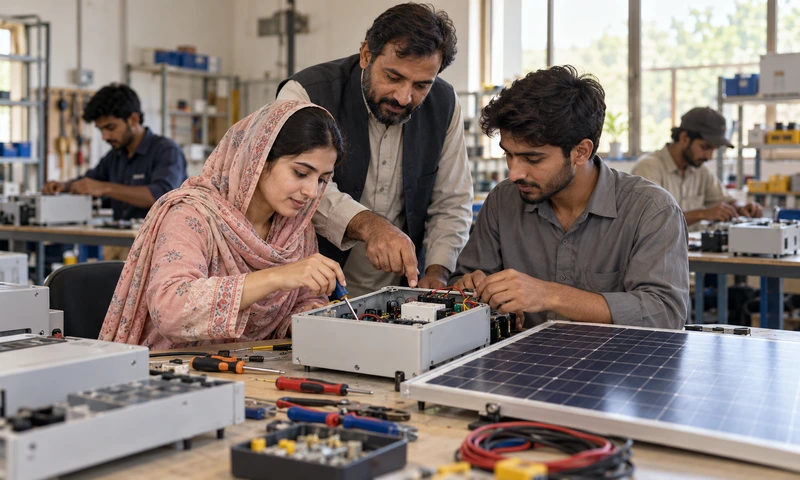
UNDP Jobs Initiatives Target 800 Million Employment Gap
The United Nations Development Programme launched two initiatives on October 13 to attract investment and create better-paid jobs in developing countries. The Investment Accelerator and Jobs for Prosperity Facility come as employment prospects lag behind population growth. UNDP estimates 1.2 billion young people will enter the workforce over the next decade, with just 400 million jobs projected. The launch took place during the IMF-World Bank Annual Meetings, running from October 12 to 18 in Bangkok. Connecting investment with jobs “Developing countries have enormous economic potential and ambitious plans for growth and job creation. Our role is to support those ambitions and help turn them into real results for people,” said UNDP Administrator Alexander De Croo. “Our new investment and jobs initiatives will help connect countries’ priorities with the finance and expertise needed to deliver. By working with governments, development banks and private investors, we can help turn investment into stronger businesses, more and better paid jobs, and higher incomes for people.” Read More: Pakistan’s Poverty Figures Exceed India and Bangladesh The Investment Accelerator will improve investment policies and regulations, prepare project pipelines, engage investors and move proposals into implementation. Meanwhile, the Jobs for Prosperity Facility will identify promising sectors, match skills with employer demand and remove investment and hiring barriers. Sector-specific project pipelines will support better-paid employment. UNDP supports financing frameworks and sustainable finance in more than 100 countries. It has identified over 700 Sustainable Development Goal investment opportunities across more than 50 countries. Since 2022, its work has helped align or mobilise over $920 billion in public and private finance towards these goals. Development banks expand cooperation A new World Bank Group cooperation framework already supports pilots in Nepal, Yemen, Haiti, Lebanon and Ghana. These target policy and governance reforms to encourage private investment. UNDP also plans agreements with the European Investment Bank and European Bank for Reconstruction and Development during the meetings. Partners will combine UNDP’s policy and implementation expertise with financing, risk-sharing and transaction capabilities. Existing partnerships include Generali, Italy and Cassa Depositi e Prestiti. The Platform for Investment Support and Technical Assistance, known as PISTA, helps turn national priorities into investment-ready projects. Insurance tackles investment risks Generali and the Italian Executive Director’s office at the World Bank Group co-hosted the launch dialogue. World Bank President Ajay Banga delivered opening remarks. Participants included De Croo, Generali Chairman Andrea Sironi and Thailand’s Vice Minister of Finance, Dr. Santitharn. Asian natural catastrophes caused $65 billion in losses during 2025. Insurance covered only $5 billion, leaving governments, businesses and households to absorb 92%. Read More: Government Puts Private Sector in Charge of Pakistan’s Economy Since 2022, UNDP and Generali have supported small-business resilience in Asia and sovereign risk financing in Viet Nam. They also support Uganda’s coffee value chain alongside the United Nations Industrial Development Organization. Cooperation covers research, risk-management tools and insurance innovation. The partners renewed their agreement in 2025 for three years. Better insurance protection aims to support recovery, safeguard public finances and reduce investment risks. Both initiatives form part of UNDP’s five corporate flagships under its Strategic Plan 2026–2029.
