


Some 41% of Asia-Pacific finance professionals expect interest rates to rise over the next three months, a new survey shows. Regional business confidence fell sharply despite stronger orders, investment and employment indicators. The findings come from the third-quarter 2026 Global Economic Conditions Survey by the Association of Chartered Certified Accountants and Institute of Management Accountants. The share expecting higher rates increased from 30% in the second quarter and 24% in the first. That represents a 17-percentage-point rise since the start of the year. Cost pressures also remained above normal. In Asia-Pacific, 62% of respondents reported higher operating costs, compared with the survey’s long-term average of 52%. Confidence falls despite stronger orders The region’s New Orders Index improved for a second consecutive quarter, approaching its highest level in the survey’s history. Capital expenditure and employment indicators also strengthened, moving towards their historical averages. However, confidence reversed almost three-fifths of its second-quarter increase. It remained slightly above its long-term average, despite the sharp quarterly decline. Renewed geopolitical tensions and higher energy prices may have contributed to the weaker sentiment, according to the survey. Some 24.1% of Asia-Pacific respondents identified geopolitical instability as their leading risk, compared with 18.4% globally. Regional respondents also cited talent and skills shortages and supply-chain disruptions more frequently than their global counterparts. The results show a gap between improving business activity and growing concern about the conditions companies could face ahead. Global costs keep rate fears elevated Globally, nearly 70% of accountants reported rising operating costs. Almost half expected interest rates to increase over the next three months, up from 42% in the second quarter. ACCA’s accompanying global release said cost pressures had eased from their second-quarter record but remained well above the historical average. Among chief financial officers, 82% reported higher costs. Global confidence declined slightly, although North America and Western Europe recorded improvements. The Global New Orders Index rose above its historical average, while investment and employment indicators improved but remained below theirs. AI investment supports growth ACCA Chief Economist Jonathan Ashworth said Asia-Pacific’s economic indicators remained encouraging, helped by the global artificial intelligence investment boom. However, he warned that further energy price increases and the expected effects of a powerful El Niño event posed downside risks. A significant slowdown in AI investment could also weaken growth. “While the global economy has shown remarkable resilience this year, downside risks remain prevalent,” Ashworth said in ACCA’s global release. Alain Mulder, IMA’s Senior Director for Europe Operations and Global Special Projects, said opposing forces were shaping the global outlook. AI investment supported growth, while higher energy prices, inflation and government bond yields increased pressure. The survey warned that persistent price increases could force companies to pass additional costs to consumers. That would weaken demand and raise the likelihood of further interest-rate increases by major central banks.
SBP Raises Policy Rate to 12% as Inflation Risks Rise
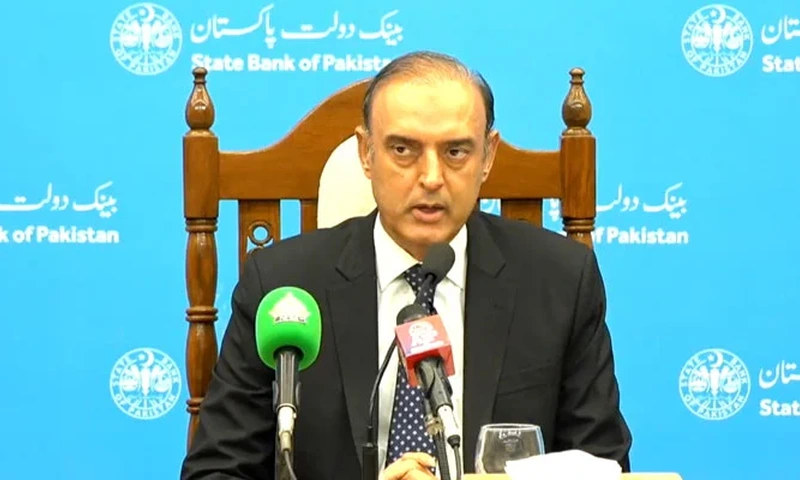
The State Bank of Pakistan raised its policy rate by 50 basis points to 12% on Monday as rising energy prices intensified inflation risks. The increase from 11.5% marks the central bank’s first rate hike since June. Governor Jameel Ahmad announced the decision after the Monetary Policy Committee meeting in Karachi. Nine of the committee’s 10 members supported the increase, he said. “Geopolitical conditions have led to an increase in energy prices,” Ahmad said, adding that petroleum product prices had remained above $100. He said economic conditions had deteriorated since the September meeting. Expectations for inflation and the current account deficit had increased somewhat, while wheat prices had also risen. The committee reviewed those developments before deciding to tighten monetary policy. The move seeks to contain inflation expectations and bring inflation towards the central bank’s 5–7% target range. Inflation exceeds expectations Headline inflation reached 10.3% year-on-year in September, exceeding the MPC’s expectations, according to the monetary policy statement. Higher energy and wheat prices, alongside related food products, drove much of the increase. Core inflation remained elevated at around 8.4%. The committee warned that sustained food and energy price increases could raise inflation expectations and eventually feed into core inflation. It identified geopolitical tensions, volatile global commodity prices and possible energy tariff adjustments as major risks. Further wheat price increases and adverse weather could also worsen the inflation outlook. The decision follows renewed pressure from international energy markets, alongside domestic food-price increases. Together, these developments have complicated the central bank’s efforts to contain price pressures while supporting economic activity. Growth and external account outlook Ahmad projected economic growth of 3.5–4.5% during FY2026-27. He said exports had improved but remained below the level the economy required. The central bank expects annual exports of $32.5 billion and imports of $71 billion. Workers’ remittances could reach $45 billion. Pakistan recorded a current account deficit of $874 million during the first quarter of FY2026-27. Rice, higher-value textiles and services led the export recovery. Remittances remained resilient, with the central bank expecting inflows to exceed earlier projections. Imports also increased sharply, reflecting non-energy purchases, recovering economic activity and higher prices. Despite those pressures, the SBP retained its current account deficit forecast of 0–1% of GDP for the fiscal year. It expects higher financial inflows to help build foreign exchange reserves. Reserves stable, fiscal risks persist The central bank’s reserves remained near $21.5 billion, covering approximately three months of imports. Continued foreign exchange purchases supported that position. The statement also noted Pakistan’s staff-level agreement with the International Monetary Fund. Federal Board of Revenue tax collection increased 7% year-on-year in the first quarter, exceeding its target by Rs33 billion. The SBP assessed both the overall fiscal balance and primary balance as remaining in surplus. However, the MPC warned that the intensifying Middle East conflict had complicated fiscal management. It urged stronger fiscal discipline, a broader tax base and faster structural reforms.

Pakistan Takes Second Place in Military Drone Contest Featuring 33 Nations
Pakistan’s military drone team secured second place at an international competition in Ankara featuring participants from 33 countries. Host Türkiye finished first, followed by Pakistan, Italy and France. The final of the inaugural Best International Military Drone Team Competition 2026 took place on Saturday, October 24. The Turkish embassy in Islamabad announced Pakistan’s achievement on Sunday. “Congratulations to the Turkish team for securing 1st place and Pakistan for achieving 2nd place at the Best International Military Drone Team Competition 2026 (BIMDTC-2026) in Ankara, bringing together competitors from 33 different countries,” the embassy said on X. Congratulations to the Turkish team for securing 1st place and Pakistan for achieving 2nd place at the Best International Military Drone Team Competition 2026 (BIMDTC-2026) in Ankara, bringing together competitors from 33 different countries. Congratulations also to Italy for securing 3rd place and France for finishing 4th. The outstanding performances of the Turkish and Pakistani teams stand as yet another testament to their skill, precision and growing expertise in the field of unmanned aerial systems. 🇹🇷🇵🇰 ذترکیہ میں منعقدہ بہترین بین الاقوامی عسکری ڈرون ٹیم مقابلہ جس میں 33 ممالک نے حصہ لیا میں ترکیہ کو پہلی اور پاکستان کو دوسری پوزیشن حاصل کرنے پر مبارک باد۔ اٹلی کو تیسری اور فرانس کو چوتھی پوزیشن حاصل کرنے پر بھی مبارک۔ ترکش اور پاکستانی ٹیموں کی شاندار کارکردگی بغیر انسانی فضائی نظاموں میں انکی مہارت, درستگی اور بڑھتے تجربے کا ایک اور ثبوت ہے۔ 🇹🇷🇵🇰 Ankara’da, 33 farklı ülkeden katılımcıların bir araya geldiği Uluslararası En İyi Askeri Uçangöz Takımı Yarışması (BIMDTC-2026) birinciliği elde eden takımımızı ve ikinciliği kazanan Pakistan’ı tebrik ediyoruz. Üçüncülüğü elde eden İtalya’yı ve yarışmayı dördüncü sırada tamamlayan Fransa’yı da kutluyoruz. Türk ve Pakistanlı takımların sergilediği üstün performans, insansız hava sistemleri alanındaki becerilerini, operasyonel yetkinliklerini ve giderek artan deneyimlerini bir kez daha ortaya koymuştur. — Türkiye in Pakistan (@TC_IslamabadBE) October 25, 2026 “The outstanding performances of the Turkish and Pakistani teams stand as yet another testament to their skill, precision and growing expertise in the field of unmanned aerial systems,” it added. The embassy also shared a photograph of the Pakistan Army team holding the national flag after the competition. Each participating country could enter up to three personnel, including at least two First-Person View pilots. Eligibility covered both active-duty and reserve military personnel, according to Türkiye Today. Teams with the fastest qualifying course times advanced to the final. Competitors then navigated a course containing 23 obstacles, testing speed, manoeuvring and flight skills. Türkiye’s Land Forces first team recorded a winning time of 41.417 seconds. Pakistan followed with 50.253 seconds, narrowly ahead of Italy’s 50.680 seconds. France completed the course in 57.142 seconds. Turkish Land Forces Commander General Metin Tokel presented Pakistan’s award, Türkiye Today reported. The event took place in Temelli, in Ankara’s Sincan district. Pakistan also earned an individual distinction. Captain Talha won silver after finishing second among more than 100 international pilots. The Turkish Land Forces Command organised the inaugural event. Alongside competitive flying, it aimed to promote international cooperation, professional interaction and the exchange of knowledge among military teams. Pakistan’s result comes as drones assume a larger role in its military operations and defence cooperation with Türkiye. During the brief conflict with India in May 2025, Pakistan deployed Turkish-origin YIHA-III and Asisguard Songar drones, Reuters reported. It also used the domestically produced Shahpar-II unmanned aerial vehicle. The state-owned Global Industrial & Defence Solutions conglomerate produces the Shahpar-II. Islamabad and Ankara have also expanded their security partnership with Riyadh. The three countries signed the Makkah Joint Defence Agreement in August amid regional tensions involving the US-Iran conflict and Houthi attacks. The agreement treats an armed attack against one member as an attack against all three, formalising their longstanding security cooperation. Türkiye submitted the pact to parliament for ratification in October. Beyond collective defence, the agreement covers defence-industry cooperation, intelligence sharing and counterterrorism, adding an institutional framework to the three countries’ military ties.

Saudi Wage Threshold to Rise in 2027, but Does It Guarantee a Pay Increase?
Saudi Arabia will raise the monthly salary threshold for fully counting Saudi private-sector employees under Nitaqat to SR5,000 in April 2027. A second increase will take the threshold to SR6,000 in April 2028. The Ministry of Human Resources and Social Development outlined the timetable following the announcement on October 25, 2026. The first phase takes effect on April 25, 2027, six months after the announcement. The second phase begins on April 25, 2028, giving businesses another year to prepare for the higher requirement. However, the ministry clarified that the decision does not directly require private-sector employers to increase Saudi employees’ salaries. Read More: Saudi Warning System Silent Before Riyadh Airport Attacks Instead, it changes the salary level that qualifies a Saudi employee for full inclusion in a company’s Saudization calculations. The phased rollout gives establishments time to adjust their workforce and payroll arrangements. Nitaqat measures businesses’ employment of Saudi nationals. The programme uses Saudization requirements that vary according to factors including an establishment’s economic activity and workforce size. The distinction matters for employees expecting an automatic pay rise. The announcement changes how an employer counts qualifying workers towards its Saudization obligations, rather than directly revising every Saudi employee’s employment contract. It also concerns Saudi nationals in private-sector employment. The announced thresholds do not establish a new minimum salary for expatriate workers, including Pakistanis working in the kingdom. Saudi Arabia previously set the full-counting threshold at SR4,000. The Saudi Press Agency reported the ministerial decision raising that figure from SR3,000 in November 2020. Against the SR4,000 benchmark, the April 2027 threshold represents a 25% increase. The SR6,000 requirement in April 2028 will stand 50% above that benchmark. For example, a Saudi employee earning SR4,000 would fall below the new full-counting threshold from April 25, 2027. An employee earning SR5,000 would meet the first-phase salary requirement but fall below the second-phase threshold a year later. The announcement supplied no detailed replacement schedule for counting employees whose salaries fall below the new thresholds. It therefore does not establish how much partial credit, if any, those employees would attract under the revised arrangements. Read More: Saudi Airport Attacks Disrupt Travel: PIA Temporarily Halts Riyadh Flights The changes come during a broader expansion of Saudi Arabia’s employment-localisation programme. The ministry announced a new three-year phase of developed Nitaqat beginning in 2026, targeting more than 340,000 additional private-sector jobs for citizens. The ministry said that phase aims to balance increased Saudi employment with private-sector growth, supporting the kingdom’s Vision 2030 objectives. Employers can also use the ministry’s Nitaqat calculator through Qiwa to assess their Saudization position. The service considers economic activity and the numbers of Saudi and non-Saudi employees. For businesses, the two implementation dates create separate planning deadlines. Full credit under the salary criterion will require SR5,000 from April 2027 and SR6,000 from April 2028.

Eric Bauza, Voice of Bugs Bunny and Daffy Duck, Dies at 46
Eric Bauza, the Emmy-winning voice actor behind Bugs Bunny, Daffy Duck and numerous other animated characters, has died at 46. His family announced his sudden death on Sunday, October 25, through his official Instagram account. The announcement said further details would follow. Although initial reports gave no cause, Los Angeles County Medical Examiner records identify hypertensive cardiovascular disease. It was reported that Bauza died at home. His death follows his recent work in Coyote vs. Acme, which brought several familiar Looney Tunes characters back to cinema audiences. Read More: ‘Heroes’ and ‘Nashville’ Star Hayden Panettiere Dies at 36 Bauza became one of the leading contemporary voices of the Warner Bros. franchise. His performances included Bugs Bunny, Daffy Duck, Porky Pig, Tweety and Marvin the Martian. He was among the actors who carried forward Bugs Bunny’s voice, alongside fellow performer Jeff Bergman. His work on Looney Tunes Cartoons, which premiered in 2020, introduced the characters to another generation. Outside that franchise, Bauza voiced Woody Woodpecker, the title character in The Adventures of Puss in Boots and Baby Fozzie in Muppet Babies. His performances earned three Children’s and Family Emmy Awards. In 2022, he won Outstanding Voice Performance in an Animated Program for Looney Tunes Cartoons at the inaugural ceremony. He followed that achievement with wins for Bugs Bunny Builders in 2023 and Teen Titans Go! in 2025. His management company also lists Emmy and Annie nominations among his career honours. Born on December 7, 1979, in Scarborough, Toronto, Bauza began his animation career as a character designer. Working with Hollywood production studios helped him move into voice acting. An early breakthrough came when he replaced Billy West as Stimpy in Ren & Stimpy Adult Party Cartoon. The series offered an adult-oriented version of the original Nickelodeon programme. Bauza subsequently built a career spanning television, films, video games and animated shorts. Gulf News reported 935 voice-role credits across 249 titles, reflecting the range of characters he performed. Read More: Moroccan Footballer Dies While Trying to Swim to Spain His later roles also included Buster Bunny in Tiny Toons Looniversity, extending his involvement with another Warner Bros. animation franchise. Warner Bros. Television Group and US Networks chair Channing Dungey paid tribute to Bauza’s contribution during 15 years at Warner Bros. Animation. “Eric Bauza was a unique voice talent who brought joy and laughter to millions around the world,” she said. Dungey described him as a valued member of the animation team who continued the legacy of performers such as Mel Blanc. At the time of his death, Bauza had projects in pre-production, including Bye Bye Bunny: A Looney Tunes Musical and The Dragon Masters. He is survived by his wife, Jessica, whom he married in 2016, and their son.

London to Islamabad on a Dreamliner: PIA Prepares for Boeing 787 Debut
Pakistan International Airlines has secured clearance for its first Boeing 787 following an inspection at Oslo Airport. The airline plans to launch Dreamliner operations with a London–Islamabad flight on October 31. A Civil Aviation Authority delegation led by Director General Nader Shafi Dar inspected the aircraft and approved its operation, according to sources. Flight PK-786 will depart London on October 31 and reach Islamabad with passengers on November 1, the report said. The aircraft will offer seating for 358 passengers. PIA also plans to introduce a new uniform on October 31, alongside the launch of Boeing 787 operations. Inspectors were scheduled to examine a second aircraft at Oslo Airport on Monday, October 26. A third aircraft is due for inspection in London on November 20. Sources told ARY News that the remaining aircraft would head to London after completing their inspections. They expect the additional capacity to strengthen PIA’s international network and improve passenger services. The clearance follows an earlier leasing announcement involving Norwegian carrier Norse Atlantic Airways. Norse would lease two Boeing 787-9 Dreamliners to PIA, with operations starting in November. That agreement covers aircraft, crew, maintenance and insurance, commonly known as an ACMI or wet-lease arrangement. Norse has increasingly pursued these contracts as higher fuel costs put pressure on its transatlantic business. The earlier announcement specified two aircraft, while inspections involving three. The available reports do not explain that difference. Meanwhile, disruptions to Saudi-bound services have complicated travel for passengers using Pakistani airports. A complete suspension of PIA’s Riyadh operations was reported. Fly Jinnah also cancelled a service covering Lahore, Karachi and Riyadh. Flynas cancelled its Karachi–Madinah and Karachi–Riyadh flights for technical reasons, according to the report. Other airlines continued scheduled services to Madinah and Jeddah from Lahore, Karachi, Peshawar and Islamabad. The Pakistan Airports Authority said it had established special facilitation counters at major airports nationwide to assist affected passengers. The disruption follows deadly attacks on Riyadh’s King Khalid International Airport. However, the casualty figures relate to an earlier attack, rather than a newly confirmed October 24 incident. The attack that initially killed at least 12 people and wounded more than 300 to October 10 was Saudi Arabia’s deadliest attack in more than a decade. The death toll is at 13 and Saudi authorities announced a partial reopening on October 25. Terminals 1 and 2 resumed handling domestic and international services, although flight-tracking data showed little traffic following the announcement. That partial reopening does not, by itself, establish that PIA has resumed its Riyadh flights.

Smartphone Prices Jump Up to Rs30,000, Leaving Karachi Buyers Struggling
Smartphone prices in Karachi have jumped by Rs15,000 to Rs30,000 per handset across major brands, squeezing lower- and middle-income buyers. Dealers blame rising chip costs, while consumers warn that basic digital services are slipping beyond their reach. Phones with 4GB RAM and 64GB storage previously cost around Rs20,000 to Rs22,000. Buyers now report quotes of Rs35,000 to Rs40,000 for comparable specifications. The increases affect access to education, employment, banking, transport apps, government services and family communication. Some buyers now consider used handsets or imported refurbished “kit phones” sold without retail packaging, despite concerns about reliability. Shopkeepers report falling sales, supply shortages and continued price fluctuations. Read More: Easypaisa App to Reach New Infinix, TECNO and itel Smartphones “When a phone costing Rs20,000 rises to Rs30,000 or Rs35,000, many consumers can no longer afford it. Our sales have fallen drastically following the increase in prices,” one shopkeeper told Dawn. Karachi Electronics Dealers Association president Muhammad Rizwan Irfan said taxes had not increased significantly enough to explain the price surge. He identified higher chip costs as the principal cause. Mian Abdul Rehman of the Pakistan Mobile Phone Manufacturers Association pointed to rising RAM and ROM costs. He said demand from AI systems, robotics and data centres had outpaced production. “AI companies are buying RAM and ROM at very high prices, which is driving up their cost,” he said. Manufacturers increasingly struggle to absorb those costs after an earlier period of relative stability, Rehman added. Global research supports that explanation. In July, TrendForce forecast third-quarter increases of 13–18% for conventional DRAM contract prices and 10–15% for NAND Flash. It cited tight supply and demand from AI infrastructure, alongside weakening consumer affordability. In Saddar, a father seeking a phone for his daughter, who had just started college, described repeated setbacks. His chosen model rose from Rs22,000–Rs23,000 to around Rs30,000 in August. Unable to immediately find another Rs7,000–Rs8,000, he delayed buying and saved more. Prices rose again, leaving him considering a used smartphone or keypad handset. A working woman at the same market said she had drawn on savings because her job required a reliable phone. Read More: Pakistan Gets New Chipless CNIC With Smartphone Verification At Abdullah Mobile Market near UP Mor, another buyer sought a replacement after thieves snatched his phone near KDA Chowrangi. Even Rs25,000–Rs30,000 could not secure a handset that ran essential apps properly, he said. Consumers urged government intervention to keep basic smartphones affordable. One shopper at Sareena Mobile Market in Buffer Zone questioned how rising device costs aligned with the government’s Digital Pakistan ambitions. “The government should take measures to keep the prices of basic smartphones affordable, so that people can access essential government apps and other digital services.” Another proposed a government agreement with a manufacturer to supply affordable basic models. Buyers argued that smartphones now serve essential daily needs, making affordability a matter of access to services.

Mother’s Second Marriage Alone Cannot End Child Custody, PHC Rules
The Peshawar High Court has ruled that a mother’s second marriage alone cannot justify denying her custody of her child. The court placed the minor’s welfare above either parent’s competing claims. Justice Mohammad Naeem Anwar issued the eight-page order while disposing of a Kohat resident’s revision petition. The single-member bench declined his request for custody of his son but upheld visitation rights. The father’s counsel argued that remarriage had ended the mother’s entitlement to custody. “This contention, however, cannot be accepted as an absolute proposition. The mere fact that a mother has contracted a second marriage does not, by itself, furnish a conclusive ground for depriving her of custody,” the bench ruled. Read More: Court Puts Contested K-Electric Tariff Decisions on Hold The court said judges must objectively assess each child’s circumstances, emotional attachments, settled environment, educational needs and proposed custodial arrangements. “The ultimate object is not to vindicate the legal entitlement of one parent at the expense of the other, but to ensure an arrangement most conducive to the minor’s physical, emotional, psychological, moral and educational development,” it observed. The couple’s marriage ended in 2018 following matrimonial discord. Their son remained with his mother, who remarried in 2024. He subsequently began living with his maternal grandfather in Shakardara, Kohat. The father sought custody through a family court, citing the child’s education, health and upbringing. On October 16, 2025, the trial court partially allowed his petition, granting him custody while preserving the mother’s visitation rights. The mother and other respondents appealed. On March 18, 2026, Kohat’s additional district judge overturned that decision and dismissed the father’s custody application. The appellate court retained his visitation rights, requiring advance notice to the mother and meetings at a mutually convenient, agreed location. The high court noted that the boy, approximately nine to 10, had never spent even one day in his father’s custody. Consequently, the father lacked a sustained relationship with him through daily care. Both parents had remarried and lived with their respective spouses. The boy already attended school and remained within his maternal family environment during important formative years. The bench found insufficient justification for uprooting him. It warned that an abrupt transfer could disrupt his emotional security and established routine. Read More: Meesha Shafi Ordered to Pay Rs5 Million in Damages as Court Sides with Ali Zafar The existing arrangement will continue unless a competent court orders otherwise in accordance with the law and the child’s welfare. The family court in Lachi, Kohat, will arrange initial father-son meetings on its premises through a definite, workable schedule. These meetings should build familiarity without undermining the child’s emotional security. Both parties may jointly propose regular meetings and school-vacation visits. Separately, Section 17 of the Guardians and Wards Act, 1890, directs courts to consider a minor’s welfare when appointing guardians. Relevant factors include the proposed guardian’s capacity and existing relationship with the child. Courts may also consider an older child’s intelligent preference.
Too Much Sugar, Too Few Vegetables: FAO Flags Pakistan’s Food Supply Gaps
Pakistan faces widening shortages of vegetables, fruits and other nutritious foods, despite supplies of cereals and sugar exceeding dietary requirements. More than 60% of Pakistanis cannot afford a healthy diet, according to a Food and Agriculture Organisation (FAO) policy brief. The brief, “Food Supply for Healthy Diets in Pakistan,” highlights a persistent mismatch between available food and national dietary recommendations. It calls for equitable access to diverse, nutritious, safe and affordable foods. The imbalance contributes to widespread malnutrition. Diet-related noncommunicable diseases are also increasing alongside persistent undernutrition, adding to the country’s health burden. Read More: Five Surprising Drinks That Could Be Healthier Than You Think Pakistan adopted food-based dietary guidelines in 2018, outlining evidence-based recommendations for the types and quantities of food needed for healthy diets. However, FAO says efforts to encourage healthier eating depend on making nutritious foods available and accessible. The assessment compared annual food supplies with population-level dietary requirements across 10 food groups between 2010 and 2023. Vegetables, roots and tubers, fruits, and legumes and pulses showed persistent shortfalls. Meanwhile, cereals and sugar remained above the quantities required under the dietary guidelines. The estimated vegetable supply gap ranged from 10.9 million to 17.8 million tonnes in 2010. By 2023, that range had widened to 13 million to 21.6 million tonnes. Fruit shortages also deepened. The estimated gap increased from 1.9 million to 10.3 million tonnes in 2010 to 3.9 million to 14.3 million tonnes in 2023. Supplies of milk, milk products, meat and eggs improved over the assessment period. Fats and oils moved from a small shortfall in 2010 into the estimated required range in subsequent years. Read More: Nutrition Experts Reveal How Many Dates May Be Too Many Population growth adds further pressure. The assessment puts Pakistan’s population at 189.3 million in 2010 and 235.2 million in 2023, with projections approaching 330 million by 2050. Climate change and other challenges threaten to increase demands on the agrifood system. Separate United Nations reporting reinforces the distinction between calorie availability and adequate nutrition. It notes that Pakistan has sufficient overall dietary energy, but its food supply lacks the diversity needed to meet national guidelines. FAO recommends coordinated fiscal and regulatory measures to bring agricultural production and trade priorities into line with nutritional needs. These measures include improving distribution, cutting post-harvest losses and food waste, and strengthening demand for healthy foods. The agency urges greater investment in vegetables, fruits, pulses, roots and tubers, alongside support for milk production in some regions. It also recommends updating dietary guidelines to reflect nutrition, health and environmental priorities. Nutrition education and behaviour-change programmes would support those efforts. Proposed measures include evidence-based taxes on beverages and foods high in sugar, salt and unhealthy fats. Front-of-package nutrition labels would help shoppers make informed choices. FAO also calls for incentives encouraging food processors to meet quality standards and reduce salt, sugar and unhealthy fats.