
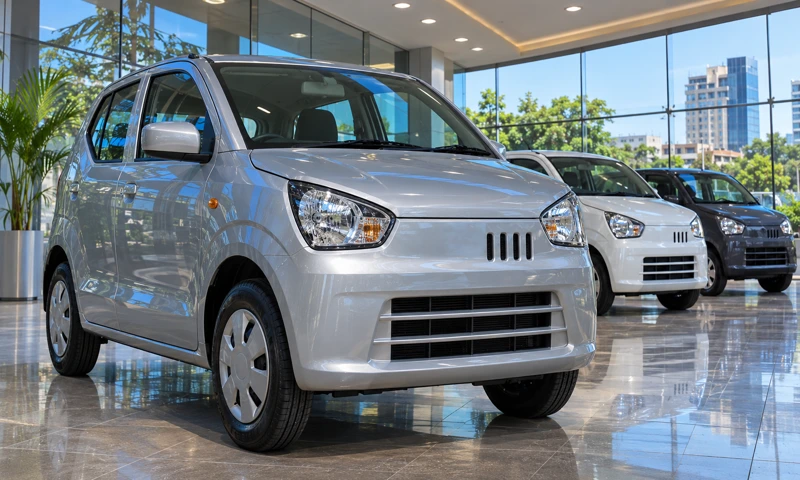
Pakistan’s October 2026 car sales rebounded after two months of slower buying, with the Suzuki Alto driving most of the recovery. A tally based on industry data put sales at 23,432 vehicles, up 63% from 14,406 in September and 41% from October 2025. The Pakistan Automotive Manufacturers Association (PAMA) uses a narrower passenger-car category. It recorded 21,635 sales, up 98% from September and 60% from a year earlier. The broader count, which includes light commercial vehicles, pickups and SUVs, reached 24,418, up 62% month on month and 41% year on year. Sazgar’s October figures were unavailable at publication. Its Haval and Tank models sold 2,474 units in September. Suzuki Alto accounts for nearly half of broader sales Suzuki Alto sales jumped from 3,354 to 11,363, a 239% monthly increase and the model’s strongest showing in at least three months. The Alto accounted for about 46.5% of the broader 24,418-vehicle total. Swift sales climbed from 858 to 3,214, while Cultus sales rose from 138 to 653. The Every advanced from 458 to 522, and the Fronx rose from 60 to 169. Pak Suzuki sold 15,921 vehicles, up 227% from September and 115% from a year earlier. Read More: Pakistan Car Sales Fall 26 Percent in February Amid Economic Pressure Toyota’s Corolla, Yaris and Corolla Cross slipped from 3,563 to 3,496 combined. The Fortuner and IMV range edged down from 579 to 577. Honda City and Civic sales fell from 2,021 to 1,933, while the BR-V and HR-V rose from 107 to 168. Hyundai Tucson sales rose from 51 to 67, while Santa Fe sales increased from 12 to 19. Elantra sales fell from 494 to 401, and the Sonata held at 17. Isuzu D-Max sales dropped from 37 to 29, while Honri-Ve electric car sales slipped from 42 to 36. Jetour jumped from 141 to 768, an increase of nearly 445%. Hybrid tax uncertainty and Auto Policy 2026–31 The previous auto policy expired in June 2026. Uncertainty over sales tax rates delayed invoicing for hybrid and plug-in hybrid vehicles. Tax clarification in September may have helped clear some delayed orders. PAMA said tax uncertainty still weighed on light commercial vehicles, jeeps and pickups. Sales in those segments fell 32% year on year in July through October, while passenger-car sales rose 48%. Read More: Pakistan Auto Industry Demands End to Rs3 Million Car Loan Cap to Boost Sales Some buyers who had waited for changes to prices, taxes or incentives may also have gone ahead with purchases. PAMA asked the Ministry of Industries for the official Auto Policy 2026–31 on November 10. Delays leave assemblers uncertain about inventory planning and buyers about when to purchase. Topline Securities expects new variants and additional brands to support sales. The next few months will show how much of October’s jump came from buyers finally placing postponed orders.

Italy Fines Meta $880 million Over Facebook Photo Access
Italy’s data protection authority fined Meta $880 million on Saturday over a Facebook feature that accessed Android users’ photo galleries without specific consent. The app accessed photos, videos and related metadata on Italian users’ phones. The regulator said Meta did so “without obtaining specific consent and without properly informing them”. The penalty targets a feature Facebook has offered since 2023. It draws on photos and videos stored on a user’s phone and suggests them as possible posts while they browse Facebook. The regulator said Facebook turned the feature on by default. It found that the consent process breached Italian law implementing the European Union’s ePrivacy Directive. How Facebook asked for gallery access Facebook used one app-wide permission to request access to a phone’s gallery for several functions. A generic notice about enabling other features appeared before that request. The authority said the wording gave users too little information to realise that granting access also enabled gallery suggestions. Read More: Meta Hit With Record $25 Billion Fine Over Facebook Privacy ‘Lies’ The authority gave Meta Platforms Ireland Limited 60 days to turn off the feature and change how it asks for permission. Meta must now make a separate, specific request for gallery suggestions. It must also explain that the feature accesses the phone’s photo gallery and show users how to switch it off. Why Italy imposed an €805 million fine The watchdog cited “the high number of people affected”. It pointed to roughly 20 million Android users in Italy when assessing the potential reach. It also weighed the duration of the infringement, “which is still ongoing for those who have not updated the app and for those who have already given their consent to the system”. The authority also cited “Meta’s lack of cooperation during the investigation”. Meta gave no immediate response on Saturday but later said it would appeal. A spokesperson said “we strongly disagree” with the regulator’s assessment “and the disproportionate level of the fine”. Meta’s Irish subsidiary also challenged the Italian authority’s jurisdiction during the proceedings. Read More: Meta Plans Camera-Free Smart Glasses Amid Privacy Backlash The fine ranks among the largest Italian authorities have imposed on a technology company. In 2021, Italy fined Amazon more than €1.1 billion for breaching competition law. An appeal later brought that penalty down to €752 million. Meta’s fine amounts to roughly 0.4% of its annual revenue. The company reported about $201 billion in revenue and $60.5 billion in net profit for 2025. The Italian decision follows a separate case in New Mexico. In late October, authorities there ordered Meta to pay $25 billion, a record penalty for the company. That case concerned findings that Meta misled state residents for more than a decade about how it used their data. Meta called the New Mexico penalty a “tax” on freedom of expression.

Sana Mir Makes History as She and Mohammad Yousaf Join PCB Hall of Fame
The Pakistan Cricket Board (PCB) has inducted batting great Mohammad Yousaf and former women’s captain Sana Mir into its Hall of Fame. The board announced its 2025 class on Sunday, November 15, 2026. Mir becomes the first woman cricketer to enter the PCB Hall of Fame. Mir qualified automatically under the PCB’s criteria after becoming the first Pakistani woman to enter the ICC Cricket Hall of Fame in 2025. A voting panel chose Yousaf. It included PCB Hall of Famer Zaheer Abbas, former Pakistan captain Ramiz Raja and former Test cricketer Bazid Khan. Former Pakistan women’s captain Urooj Mumtaz and cricket journalists and analysts Saleem Khaliq and Sohail Imran also voted. Mohammad Yousaf broke Viv Richards’ Test record Yousaf represented Pakistan from 1998 to 2010 and scored 17,300 runs in 381 international matches. He finished with 39 centuries and 97 half-centuries across formats. His most prolific year came in 2006, when he scored 1,788 Test runs and hit nine centuries. That tally broke Sir Vivian Richards’ 30-year-old world record for the most Test runs in a calendar year. Mir represented Pakistan from 2005 to 2019. The PCB credits her with 240 wickets and 2,432 runs in 226 international matches. She took over the captaincy in 2009 at the age of 23 and led Pakistan for eight years. Under her captaincy, Pakistan won Asian Games gold in 2010 and again in 2014. That second gold came in a year when Mir took 21 wickets in 11 one-day internationals, according to the ICC. In October 2018, Mir became the first Pakistani woman to top the ICC women’s ODI bowling rankings. The ICC says she consistently ranked among the top 20 ODI bowlers after taking over as captain. It also credits her with encouraging girls in Pakistan to take up cricket and advocating for women’s rights in the sport. Her ICC induction in 2025 recognised both her performances and her contribution to the growth of the women’s game. Yousaf and Mir join Abdul Qadir, AH Kardar, Fazal Mahmood, Hanif Mohammad, Imran Khan, Inzamam-ul-Haq and Javed Miandad. The roll also includes Misbah-ul-Haq, Mushtaq Mohammad, Saeed Anwar, Wasim Akram, Waqar Younis, Younis Khan and Zaheer Abbas. Abbas helped select Yousaf for the same Hall of Fame in which he already holds a place.

ChatGPT Can Now Shop for You. How Does It Pay Without Seeing Your Card Number?
OpenAI began rolling out ChatGPT Wallet on November 13, allowing its always-on AI agents, called dots, to make online purchases for users. OpenAI developed the feature with Visa, Mastercard and American Express. At launch, it works only in conversations with dots. Standard ChatGPT chats, Work and standalone Codex threads do not offer the wallet. Who can use ChatGPT Wallet? The initial rollout covers US ChatGPT Pro subscribers aged 18 and older. Users need an eligible US-issued card and a US billing address. OpenAI also lists eligible Chase cards, which only primary cardholders can add. Users can save a card through Wallet settings or start setup in a conversation with their dot. Their bank may ask them to verify the card during setup. How ChatGPT Wallet handles payments A dot can search for a product or hotel and take the user to checkout. Before it pays, the user reviews the merchant, items, total and selected card. Each transaction then requires a biometric check, such as Face ID or a fingerprint scan. OpenAI says users should check for the merchant’s order confirmation after checkout. Once the user approves, the payment network issues a token with a card number, security code and expiry date. The token applies to that specific transaction. The network charges the selected card without revealing its actual details to the agent or merchant. Customers retain existing card rewards and protections for eligible disputes. Merchants remain responsible for delivery, returns and customer service. “Our goal here is to really focus on merchants and our network partners and start building out a really great foundation that’s safe and easy to use,” Chaya Nayak, who leads product for monetisation and payments at OpenAI, told CNBC. OpenAI takes no cut of wallet transactions at launch. Purchases could eventually create a new source of revenue. The company says 1.2 billion people use ChatGPT weekly. It had nearly 100 million paying customers as of the third quarter, CNBC reported. The launch puts OpenAI alongside Google’s Universal Commerce Protocol and stablecoin-based payment tools from Coinbase and Circle. Merchant access remains a hurdle. Amazon and United Airlines currently block automated agents from making purchases on their platforms. OpenAI says its wallet can work with existing checkout systems where merchants allow agents and payment systems recognise their transactions. OpenAI expects users eventually to authorise purchases in advance by setting spending limits, product categories or time windows. The company has given no date for that feature. For now, even when a dot finds the item and handles checkout, the customer must approve each purchase individually.
Shehbaz and Asim Munir Top The Muslim 500 With Saudi and Turkish Leaders
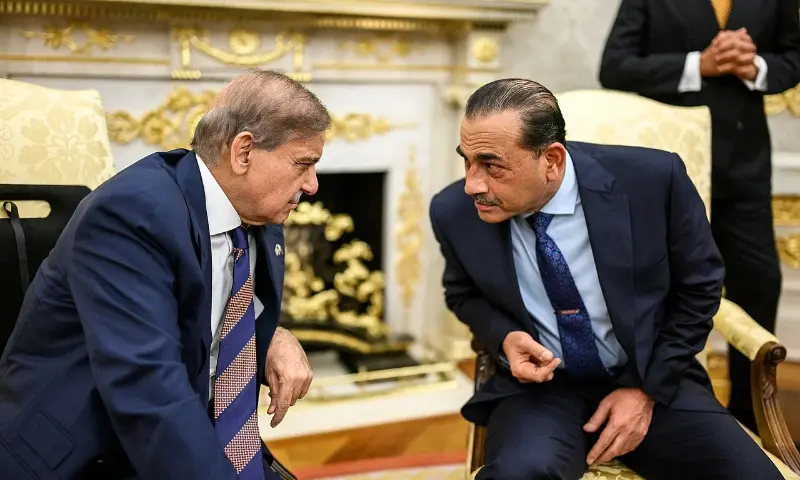
Prime Minister Shehbaz Sharif and Field Marshal Asim Munir share first place in the 2027 edition of The Muslim 500. Munir serves as Pakistan’s chief of defence forces and army chief. Saudi King Salman bin Abdulaziz and Crown Prince Mohammed bin Salman also share the top spot. Turkish President Recep Tayyip Erdoğan completes the group. The Royal Islamic Strategic Studies Centre in Amman, Jordan, has published the annual ranking since 2009. For the first time, the editors have put more than one person at No. 1. This year, they grouped five leaders into three entries representing Pakistan, Saudi Arabia and Türkiye. The editors cited the Makkah Joint Defence Agreement as the reason for the shared ranking. The three countries signed the pact in Makkah on August 7, 2026. Under the agreement, they consider an armed attack on one country an attack on all three. The report describes this as a ‘one for all, all for one’ approach to security. In particular, the editors highlighted Saudi financial resources, Turkish technology and manufacturing, and Pakistan’s military strength. The report also examined Pakistan’s efforts to stabilise its economy and manage regional security pressures. It noted Islamabad’s strategic partnership with Riyadh. At the same time, Pakistan kept diplomatic and border communication channels open with Tehran. The editors also noted Pakistan’s efforts to balance its ties with major powers. Iranian Supreme Leader Ayatollah Mojtaba Khamenei ranks fourth, followed by Jordan’s King Abdullah II in fifth. Meanwhile, Qatar’s Emir Sheikh Tamim bin Hamad Al-Thani ranks sixth. Pakistani scholar Sheikh Muhammad Taqi Usmani comes next at seventh. Further down, UAE President Sheikh Mohamed bin Zayed Al-Nahyan ranks 12th. Egyptian President Abdel Fattah Saeed El-Sisi ranks 22nd, while Maulana Tariq Jamil ranks 32nd. Footballer Mohamed Salah takes 39th place. Palestinian President Mahmoud Abbas ranks 45th, followed by Syrian interim President Ahmed Al-Sharaa at 46th. Meanwhile, New York City Mayor Zohran Mamdani ranks 49th. Political honourable mentions include Hamas leader Khalil Al-Hayya and former Pakistani prime minister Imran Khan. The editors also recognised London Mayor Sadiq Khan and US senator-elect Abdul El-Sayed. In other categories, they named Queen Rania Al-Abdullah, composer Sami Yusuf and Palestinian journalist Bisan Owda. Broadcaster Mehdi Hasan and comedian Bassem Youssef also received honourable mentions. The editors named Palestinian paediatrician Dr Hussam Abu Safiya Man of the Year. He documented attacks on Gaza’s medical facilities and appealed for international protection of its health infrastructure. After burying his son, he returned to his patients. The report says he spent more than 600 days in Israeli custody without charge or trial. The editors named Fatemeh Zahra Sheikhabadi Woman of the Year. She lost friends and teachers in a US strike on her school in Minab, Iran. After surviving the strike, she travelled to Geneva. There, she urged the UN Human Rights Council to “hear the voices of the children of Minab”.