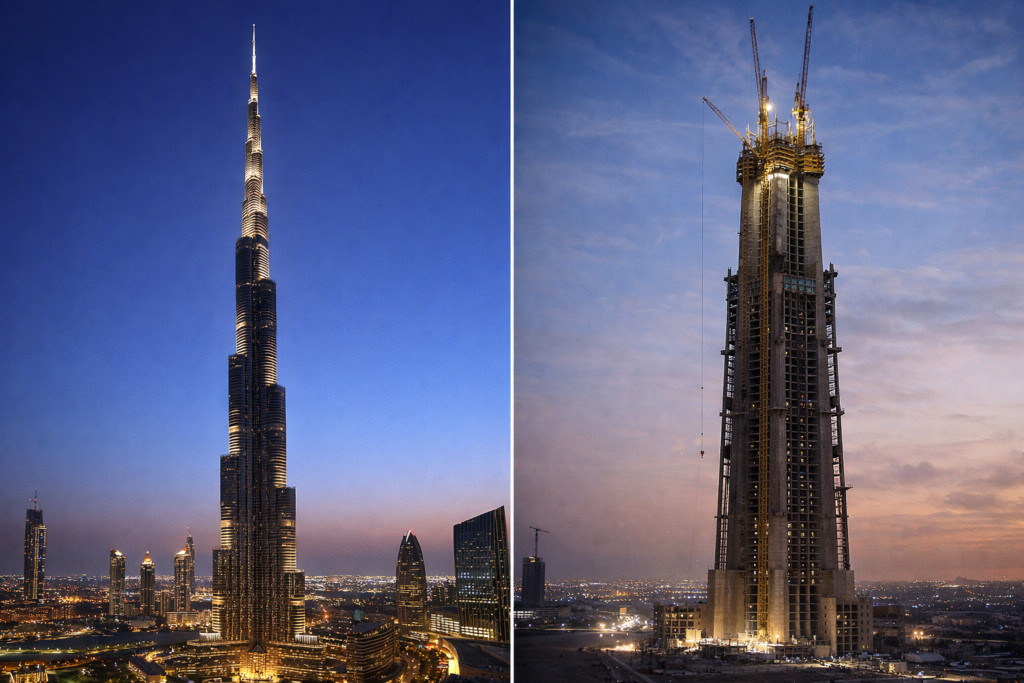
Burj Khalifa and Jeddah Tower are more than skyscrapers. They are giant receipts for ambition.
Dubai’s Burj Khalifa is the rare mega-tower that reached the finish line and then became a business model. It opened in January 2010 and stands 828 metres tall, a record it still holds. Its secret is not just height. It’s the way it survives wind. The tower uses a “buttressed core” structural approach tied to a three-wing layout, which helps it resist twisting and sway at extreme altitude. That engineering stability let Dubai sell the dream confidently: observation decks, a global landmark address, and endless tourism content.
Jeddah Tower was designed to go even bigger. The plan is a one-kilometre-class skyscraper, meant to rise at least 173 metres taller than Burj Khalifa, by the same design lineage: Adrian Smith and the team now known as Adrian Smith + Gordon Gill Architecture. The form is also about wind. A tapered, triangular footprint and sloped surfaces aim to reduce wind loads as the tower climbs.
But here’s where the stories split: engineering met money.
Burj Khalifa’s finances were painful during the global financial crisis, yet the project crossed the line and immediately became Dubai’s most powerful symbol. Jeddah Tower, meanwhile, became famous for stopping. Work stalled after major disruptions, including the period around Saudi Arabia’s anti-corruption crackdown, and the project’s timeline slid for years.
Now the tower is trying again. Reporting in the construction press says the build has resumed after a multi-year pause, with expectations moving toward a 2028 completion target. Recent coverage also notes construction progress restarting through 2023–2025 phases, with the core climbing again—proof that the idea isn’t dead, just delayed.
So what’s the real comparison? Burj Khalifa shows what happens when ambition gets matched with execution and monetization. Jeddah Tower shows the other truth: the taller you aim, the more you depend on uninterrupted funding, political stability, and contractors who can survive the long haul.
One tower is a finished icon. The other is a live test of whether vision can outlast financial reality.