

Pakistan’s Finance Minister Senator Muhammad Aurangzeb led a high-level delegation to Washington, DC, for intensive discussions with US Commerce Secretary Howard A. Lutnick aimed at enhancing bilateral trade and investment ties between the two countries. The meetings reflected both sides’ desire to expand economic cooperation beyond traditional areas and to explore new opportunities for mutual growth. The talks, held at the US Department of Commerce, brought together senior officials from Pakistan’s commerce and finance ministries, the Pakistani Ambassador to the United States, and key American counterparts. Both delegations discussed ways to strengthen trade linkages, address market access issues, and attract greater US investment into the Pakistani economy. A Focus on Investment and Emerging Sectors During the meeting, Aurangzeb and Lutnick highlighted promising sectors for collaboration, including information and communications technology (ICT), mining, minerals and energy, where both nations see significant growth potential. Aurangzeb expressed Pakistan’s interest in drawing US firms into these areas, saying the partnership could benefit from the US’s technological expertise and capital resources. Aurangzeb also appreciated the role of the US Chamber of Commerce in organising the upcoming US-Pakistan Trade and Investment Forum scheduled for March 31, 2026. He expressed hope that the office of the US Commerce Secretary would participate in the event, which is expected to attract leading companies and investors from both countries. The discussions build on months of ongoing negotiations and high-level engagements. Last year, Pakistan and the United States concluded a landmark trade deal aimed at reducing reciprocal tariffs, particularly on Pakistani exports, and broadening access to US markets. Officials described the agreement as a major step forward in economic cooperation, with potential to spur investment in energy, mining, IT and digital sectors. Economists say enhancing Pakistan-US trade ties could help reduce trade imbalances, create jobs, and boost exports of value-added products. The US remains one of Pakistan’s largest trading partners, with thousands of US companies already doing business in Pakistan or looking for opportunities in its large consumer market. Reform Agenda and Economic Stability Aurangzeb has repeatedly emphasised that continued economic reforms in taxation, energy and trade policy are central to making Pakistan a more attractive destination for foreign investment. Previously, he noted that both sides agreed to expand engagement beyond immediate trade issues and focus on longer-term investment opportunities that could be “a real game changer” for Pakistan’s economy. The Pakistani delegation’s visit coincides with broader efforts to strengthen strategic ties with the United States as part of a reset in diplomatic and economic relations. Recent visits by senior Pakistani officials have addressed issues ranging from joint investment projects to regional stability and security cooperation. The high-profile meetings in Washington signal both countries’ commitment to deepening economic partnership. Observers expect that the momentum generated by these talks will carry through to the upcoming trade forum at the end of March, potentially laying the groundwork for expanded bilateral investment and enhanced market access.
IMF Confirms Review Mission to Pakistan From February 25 After Economic Reform Gains
The International Monetary Fund (IMF) has welcomed Pakistan’s continued implementation of economic reforms and confirmed that a review mission will visit the country from February 25, 2026, to assess progress and discuss the next step under its financial support programme. IMF officials said the government’s policy efforts are stabilising the economy, curbing inflation and rebuilding investor confidence. The IMF is expected to begin formal discussions with Pakistani authorities in the last week of February as part of the third review under the Extended Fund Facility (EFF) and the second review under the Resilience and Sustainability Facility (RSF). These reviews determine the pace of future funding and policy adjustments under Pakistan’s ongoing IMF-supported programme. Read More: IMF, Pakistan Discuss Electricity Tariff Revisions with Focus on Protecting Households According to IMF spokesperson Julie Kozack, Pakistan’s fiscal performance has shown marked improvement under the EFF. She noted that the economy has posted a primary fiscal surplus of 1.3 percent of GDP for the fiscal year 2025, a key indicator that Pakistan is aligning with IMF-agreed targets. Kozack added that inflation has remained relatively contained while the country recorded its first current account surplus in 14 years. Focus Areas of the Review Mission The IMF mission will spend about two weeks in Pakistan, reviewing economic performance from July to December 2025. Officials will examine progress on key policy benchmarks, including tax reforms, energy sector restructuring, monetary policy implementation and foreign exchange reserve management. This in-depth assessment will guide recommendations for future reforms and disbursements. Officials will also discuss privatisation progress, including developments related to the Pakistan International Airlines (PIA), a critical element of structural reform under the IMF programme. Evaluators will analyse whether reforms have translated into tangible performance gains and compliance with agreed fiscal targets. Read More: Moody’s Revises Pakistan’s Banking Outlook to Stable: What It Means for the Economy The IMF’s latest Governance and Corruption Diagnostic Report has outlined a range of reform proposals aimed at increasing transparency, simplifying tax policy design, creating a level playing field in public procurement and improving asset declaration systems. Pakistan has responded with a 15-point action plan to address these issues and strengthen institutions. Background and Broader Context Pakistan first entered an IMF programme in September 2024 through a $7 billion Extended Fund Facility, aiming to stabilise its economy after years of macroeconomic instability. The country had faced a severe economic crisis between 2021 and 2024, marked by inflation spikes, foreign exchange shortages and rising public debt. Recent IMF reviews, including one completed in December 2025, endorsed Pakistan’s reform agenda and enabled the release of about $1.2 billion in funding. Read More: Pakistan Declares Export Emergency to Transform Economy Outlook and Expectations Economists say continued progress on reform benchmarks could unlock further IMF funds and build investor confidence. Officials expect enhanced macroeconomic resilience and improved fiscal discipline if Pakistan maintains its commitments during the upcoming review mission. The mission’s outcome could shape Pakistan’s economic policy priorities in the near term, influencing budget framing, tax strategies and structural reforms designed to support long-term growth and stability.
Gold Bullion Surge Boosts Pakistan’s Wealth to Over $10 Billion
Pakistan has seen the value of its gold reserves climb sharply, with the latest figures from the State Bank of Pakistan (SBP) showing that the country’s gold holdings are now valued at $10.374 billion as of January 2026. This marks a significant increase from just a few months ago and reflects broader trends in global bullion markets. According to the central bank, Pakistan currently holds 64.76 tonnes of gold in reserve. That equates to roughly 20.82 million ounces or about 5.5 million tolas, a traditional South Asian measure of weight. The value of these holdings jumped by $1.279 billion in January alone. Over the first seven months of the current fiscal year, the gold reserve value has increased by about $3.5 billion. To put this surge in perspective, the value of Pakistan’s gold was previously recorded at $6.84 billion in June 2025. The recent rise underscores how changes in global gold prices can rapidly influence the worth of stored bullion. Gold functions as a key component of a country’s financial reserves, especially during periods of economic uncertainty. Central banks around the world often hold gold to diversify risk and strengthen the backing of their currencies. Recent trends show many nations increasing gold holdings as a hedge against volatile financial markets and geopolitical tensions. While Pakistan’s gold holdings in physical terms have remained relatively stable for some time, their dollar valuation moves with global spot prices. For instance, recent fluctuations saw global gold prices dip and drop to around $4,010 per ounce in mid-February 2026, mirroring movements in domestic gold markets. That volatility also affects domestic jewelry and bullion trading. Local gold prices per tola have seen declines, influenced by the international trend. Still, analysts argue that higher reserve values overall reflect solid central bank positioning against longer-term risks. Globally, gold remains a cornerstone of reserve strategy. Countries like the United States, Germany, and Italy command the largest sovereign gold stocks, often measured in thousands of tonnes. While Pakistan’s 64.76 tonnes is modest compared to these giants, a valuation above $10 billion is a noteworthy milestone for its balance sheet. Going forward, the value of Pakistan’s gold reserves will continue to be closely watched by economists and policymakers. With global markets responding to central bank demand and economic uncertainty, gold is likely to remain a vital part of Pakistan’s reserve structure.
PTCL Beats Competition to Lead Broadband Rankings
Pakistan Telecommunication Company Limited (PTCL) has been recognised as home to the best fixed internet network in Pakistan, according to the Ookla® Speedtest Connectivity Report for the second half of 2025. This achievement highlights PTCL’s growing strength in broadband services and its continued efforts to improve connectivity across the country. The report shows that PTCL’s Flash Fiber recorded the highest overall Speedtest Connectivity Score among fixed internet service providers (ISPs) in the country, with a score of 61.73, making it the top-performing fixed network during the study period. Although another ISP, Transworld, led in pure speed performance with a median download speed of 34.86 Mbps and upload speed of 30.5 Mbps, PTCL’s balanced performance across key metrics earned it the highest overall rating for network quality and reliability. Ookla’s evaluation covers millions of real-world tests conducted by users across Pakistan. It measures not only raw download and upload speeds but also overall consistency, latency, and user experience. PTCL’s Flash Fiber stood out for delivering dependable internet performance for everyday activities such as video streaming, online work, gaming, and browsing. The report also highlights other achievements in Pakistan’s connectivity landscape. Zong led mobile networks for gaming performance, while cities like Islamabad recorded the fastest fixed median download speeds among urban centres nationwide. PTCL’s broadband portfolio includes a range of high-speed services with options such as GPON fiber optic connectivity, VDSL, and DSL connections that offer customers both high performance and flexibility. These services cater to households, businesses, and online gamers with packages supporting up to 100 Mbps speeds and unlimited data plans. This recognition from Ookla comes as PTCL continues to evolve as a key telecom player in Pakistan. Beyond fixed broadband, PTCL also manages a wide network of telecommunication services that include Smart TV, voice services, and enterprise digital solutions. The company has long played a central role in building connectivity infrastructure nationwide. Experts believe that this benchmark achievement can boost consumer confidence in fixed broadband and encourages further investment in fiber infrastructure across Pakistan. As internet usage grows for remote work, education, and business, networks such as PTCL Flash Fiber will remain crucial for the country’s digital development.
Moody’s Revises Pakistan’s Banking Outlook to Stable: What It Means for the Economy
Global credit rating agency Moody’s Investors Service has revised its outlook on Pakistan’s banking sector from positive to stable, highlighting the country’s gradually recovering economy and more balanced fiscal and external positions. The move comes amid broader improvements in economic indicators but also underscores ongoing challenges facing Pakistan’s financial system. In its February 2026 update, Moody’s said that the banking sector’s operating environment continues to recover, but the improvement is cautious and incremental rather than rapid. “We have changed our outlook on Pakistan’s banking system to stable from positive,” Moody’s said, signalling a less optimistic trajectory than before. Moody’s forecasted real GDP growth of about 3.5 percent in 2026, an improvement from 3.1 percent in 2025, supported by ongoing structural reforms and easing macroeconomic pressures. Despite this, the agency noted that financial performance will likely remain stable but not robust, as banks still face stress from asset quality issues and profitability constraints. Why the Change Matters The shift from positive to stable outlook does not indicate a downgrade in rating, but it means that Moody’s now perceives less acceleration in economic momentum and greater uncertainty about rapid improvement. A positive outlook suggests that future upgrades are more likely, while a stable outlook implies that the current assessment is expected to remain steady over the next one to two years. Moody’s highlighted the close link between banks and the government since Pakistani banks hold a large share of government securities, which are sensitive to the sovereign’s credit strength. Any stress in public finances could therefore directly affect the financial sector’s performance. Economic Context The revised outlook comes against a backdrop of gradual macroeconomic stabilization after years of crisis. Pakistan endured a severe economic downturn from 2021 to 2024, marked by high inflation, currency depreciation, and shrinking foreign exchange reserves. By mid-2025, inflation had slowed significantly from double-digit peaks, and GDP growth returned to positive territory thanks to a combination of monetary easing and structural reforms. Despite these gains, persistent fiscal vulnerabilities and external pressures have restrained more optimistic projections. According to data from the State Bank of Pakistan, the country continued to record a current account deficit in late 2025 and early 2026, and foreign direct investment remained subdued. What Experts Say Economists say Moody’s shift reflects a cautious but realistic assessment of Pakistan’s economic trajectory. Komal Kenneth Shakeel, an economist and Head of Partnerships at Ignite, described the move by Moody’s not as a downgrade cycle but as “a signal that volatility has eased without a strong growth push behind it.” That, she added, means the banking sector is expected to perform steadily but not expand rapidly unless structural reforms gain momentum. Financial analysts emphasise that a stable outlook still offers comfort compared with a negative outlook, which signals deterioration. Stable conditions can help maintain investor confidence, drawing some capital flows and encouraging banks to strengthen their balance sheets. Importance for Pakistan’s Economy Moody’s assessment is significant for Pakistan’s broader economy. The banking sector plays a central role in financing private investment, supporting business activity, and underpinning confidence in financial markets. A stable outlook may help contain borrowing costs and prevent sudden capital outflows, even if it does not immediately unlock cheaper credit or a surge in foreign investment. In a global context where emerging markets compete for investor attention, maintaining a stable rating outlook can reduce the risk of sudden market volatility. Economists say that continued compliance with international financial programmes, including the International Monetary Fund (IMF) Extended Fund Facility, will be essential to bolster sentiment and potentially move the outlook back to positive or higher in the future.

Copper’s Global Boom Is Here: Can Pakistan Turn Reko Diq Into a Billion Dollar Export Engine?
Global demand for copper is accelerating at an unprecedented pace, driven by the rapid expansion of electric vehicles, renewable energy infrastructure, power grids, and data centres supporting artificial intelligence. Industry analysts warn that without major new mining projects, the world could face a severe copper supply deficit within the next two decades — a development that has pushed long-term price forecasts sharply higher. According to S&P Global, global copper demand is expected to increase by nearly 50% by 2040, reaching more than 42 million tonnes annually. The consultancy has cautioned that supply growth is lagging behind demand, potentially creating a shortfall of over 10 million tonnes per year if new projects do not come online in time. This imbalance is already influencing prices, with Goldman Sachs projecting copper prices could rise to $15,000 per tonne by the mid-2030s, compared to current levels that hover around $9,000–$10,000 per tonne. Why Copper Demand Is Surging Copper’s importance lies in its unmatched conductivity and durability. Electric vehicles require up to four times more copper than conventional cars, while solar and wind power systems depend heavily on copper wiring. Power grid upgrades, particularly in Asia, are also copper-intensive. The Asia-Pacific region, led by China, is expected to account for nearly 60% of incremental copper demand growth through 2040. Pakistan’s Copper Potential Against this global backdrop, Pakistan finds itself in a potentially advantageous position. The country hosts one of the world’s largest undeveloped copper-gold deposits at Reko Diq, located in Balochistan’s Chagai district. According to feasibility data released by OGDCL, the project contains an estimated 13.1 million tonnes of copper and 17.9 million ounces of gold on a 100% basis. The project is being developed by Barrick Gold in partnership with the Government of Pakistan and the Government of Balochistan. Phase-1 production is targeted for 2028, with expected annual output of around 200,000 tonnes of copper, while Phase-2 could double that capacity. What Experts Say Pakistan’s Finance Minister Muhammad Aurangzeb has publicly underscored the strategic importance of copper for the country’s future. Speaking at a policy forum last year, he said: “Copper is going to play the most critical role in the global energy transition. Copper is to Pakistan what nickel has been to Indonesia.” Similarly, Mark Bristow, President and CEO of Barrick Gold, has repeatedly highlighted Reko Diq’s long-term value. In an official statement following the project’s feasibility update, Bristow said: “Reko Diq is a world-class copper-gold asset with the potential to generate significant economic benefits for Pakistan over many decades, provided it is developed responsibly and sustainably.” Pakistani economists argue that if managed well, copper exports could diversify Pakistan’s export base beyond textiles. Analysts have noted that mineral exports could help stabilise foreign exchange inflows and reduce balance-of-payments pressure over the long term. Can Copper Change Pakistan’s Economic Trajectory? Experts caution that mineral wealth alone is not enough. Security conditions, infrastructure development, transparent governance, and local value addition will determine how much Pakistan truly benefits. However, with global copper demand structurally rising and supply constrained, Pakistan’s timing could be favourable. If projects like Reko Diq progress as planned, Pakistan could emerge as a significant supplier in a market where copper is fast becoming one of the world’s most strategic metals — potentially reshaping the country’s export profile in the coming decades.
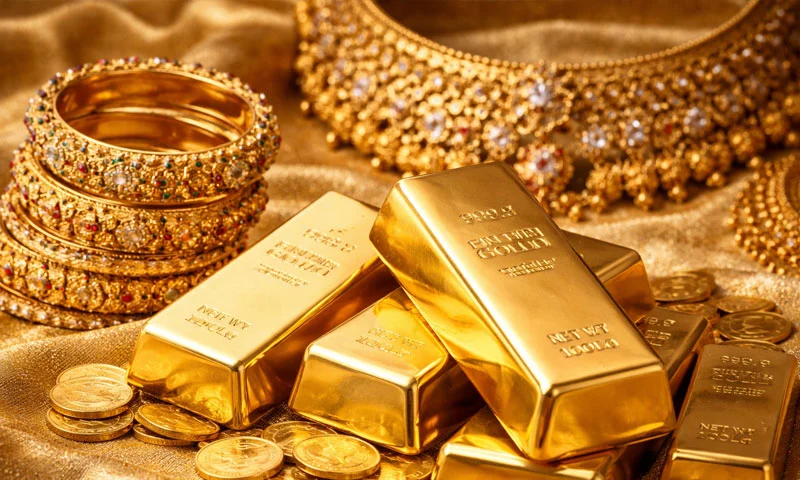
Gold Prices Crash in Pakistan: Tola Falls by Rs35,500 in a Day
Gold prices in Pakistan experienced a significant drop on Friday, with the local bullion market seeing values fall sharply from recent highs amid broader declines in international gold prices. The price of 24-karat gold per tola fell to Rs537,362 after a Rs35,500 decrease during the day, according to the All-Pakistan Gems and Jewellers Sarafa Association (APGJSA). Similarly, the 10-gram rate slipped to Rs460,701 following a Rs30,435 drop. The sharp decline followed a period of strong gains earlier in the week when gold prices had surged to record levels in Pakistan’s domestic market, breaking the Rs570,000 per tola barrier as bullion rallied. On Thursday, gold had reached around Rs572,862 per tola, but profit-taking and shifts in global market conditions triggered a swift reversal. Global Market Influences and Price Drivers Internationally, gold also faced downward pressure. The international rate of gold declined by $355 to about $5,150 per ounce, with spot prices losing nearly 4% as investors reacted to expectations of tighter monetary policy and profit-taking after extended record rallies. Global markets earlier saw gold hit record highs, with prices exceeding $5,500 an ounce on strong demand as investors sought safe-haven assets amid economic uncertainty and geopolitical tensions. However, late-week selling pressure emerged as participants booked profits and reacted to news, causing prices to ease back. Analysts have pointed out that gold’s recent volatility reflects a tug-of-war between strong long-term demand and short-term market dynamics. UBS, for example, raised its gold forecasts for 2026, projecting prices could climb toward $6,200 per ounce, even as prices remain volatile in the near term. Impact on Pakistan’s Local Market In Pakistan, gold prices remain closely tied to international trends, the strength of the Pakistani rupee, and investor sentiment. When global bullion weakens, local prices typically follow suit, even if the world price remains historically elevated. Domestic jewellers and traders monitor both global spot prices and local demand to set market rates each day. The recent drop comes after a period of notable price swings in the local market. Just weeks earlier, gold had declined by Rs2,700 per tola in a previous downturn, showing persistent volatility in the sector. Silver prices also mirrored the downward momentum on Friday, with silver rates falling sharply in tandem with gold due to similar profit-booking and market repositioning by investors. What This Means for Investors Although the recent slide marks a notable correction, gold prices remain well above historical averages. Analysts say that price volatility is not unusual after rapid rallies, and investors often see such retreats as part of normal market cycles. With geopolitical tensions and economic uncertainties still present, gold continues to be regarded as a key safe-haven asset for both retail and institutional investors.
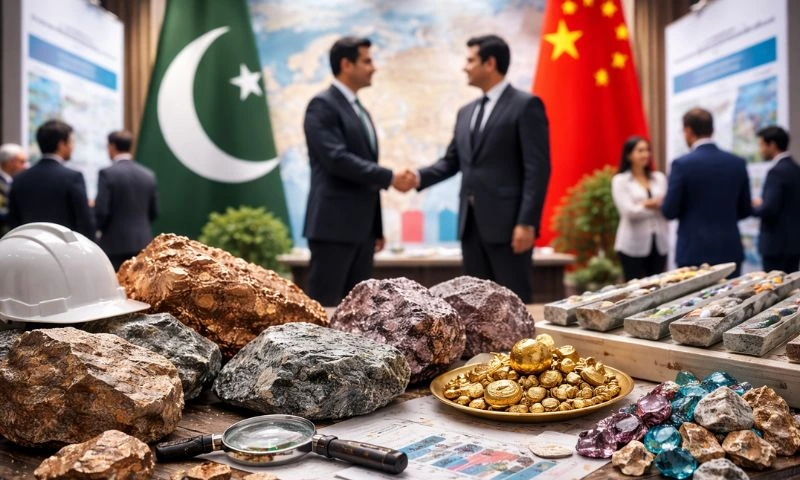
Pakistan Invites Chinese Companies to Pakistan Minerals Investment Forum 2026
Pakistan has formally invited Chinese companies and investors to take part in the upcoming Pakistan Minerals Investment Forum (PMIF) 2026, as the country aims to expand foreign investment in its vast but under-developed mineral sector. The invitation was extended during the Pak–China Mineral Cooperation Forum in Islamabad, where ministers and industry leaders highlighted deepening bilateral cooperation to unlock economic potential. The PMIF 2026 is scheduled for April 8–9, 2026 in Islamabad and will serve as a focused platform for global investors to engage directly with policymakers, regulators and project sponsors in Pakistan’s mining value chain. Minister for Petroleum Ali Pervaiz Malik formally invited Chinese firms and delegates, encouraging them to participate through a country pavilion showcasing mining capabilities, technologies, and equipment. “I extend a formal invitation to all the Chinese companies and delegates present here to participate in the Pakistan Mineral Investment Forum 2026,” Malik said, noting that the forum will support structured engagement with policymakers and industry stakeholders. The federal government underscored the huge potential of Pakistan’s mineral sector, noting that mineral exports could reach USD 6–8 billion annually by the end of the decade through value addition and processing. Planning and Development Minister Ahsan Iqbal said such growth would depend on partnerships that move beyond raw extraction to include downstream value chains, refining and export-oriented industrial clusters. Officials presented Pakistan as richly endowed with strategic resources such as copper, gold, coal, gemstones, rare earth elements and other critical minerals. Still, development of these resources has lagged due to infrastructure gaps, regulatory challenges and limited value-addition capacity. At the cooperation forum, Pakistan and China also launched the ‘Pak–China E-Mining Platform’, a digital initiative designed to boost transparency and ease collaboration between authorities and investors. The platform is intended to improve information sharing, project coordination and efficiency in developing the mineral sector. Chinese Ambassador to Pakistan Jiang Zaidong reaffirmed Beijing’s interest in investing in Pakistan’s mining sector and highlighted China’s strengths in capacity building, technology transfer and sustainable mining practices. He said that long-term cooperation could bring jobs, technology, and development while strengthening industrial linkages. The forum drew participation from more than 70 Chinese companies, over 100 Pakistani firms and about 800 participants, reflecting strong interest on both sides. Government officials emphasised policy stability, regulatory reforms, and facilitation measures to enhance the ease of doing business for foreign investors. The invitation to China at PMIF 2026 signals Pakistan’s push to transform its mineral sector into a major driver of economic growth and export competitiveness, aligning with its broader strategy of attracting foreign direct investment and positioning the country as a key player in the global mining economy.
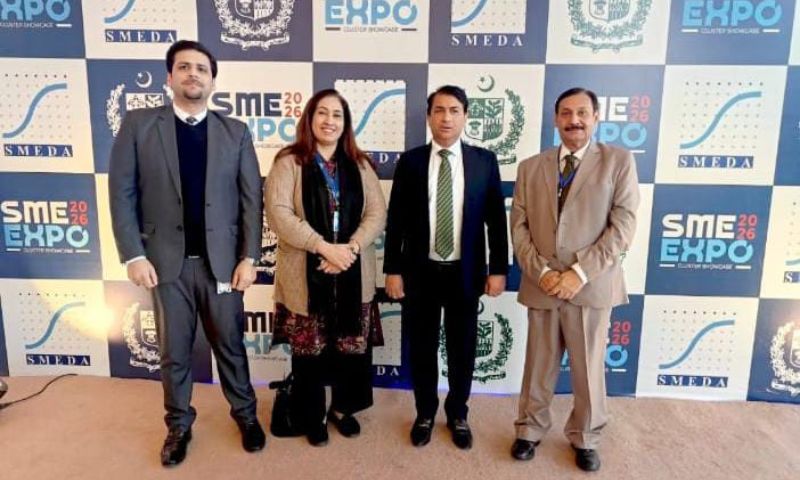
Powering Pakistan’s SMEs: Khushhali Bank’s Business Solutions Shine at Expo
Khushhali Microfinance Bank Limited emerged as one of the standout exhibitors at the SME Made in Pakistan Cluster Showcase Expo 2026, presenting a comprehensive suite of small-business solutions tailored to the needs of Pakistan’s growing SME sector. The expo, organised by the Small and Medium Enterprise Development Authority (SMEDA), brought together leading institutions, platforms, and practitioners working to strengthen small and medium enterprises across the country. With a proven track record and a large, diverse SME client base, Khushhali Microfinance Bank drew significant attention for its Khushhali Karobari Loans portfolio. The programme is designed with multiple categories to address varying business sizes and operational requirements, making it accessible to entrepreneurs across rural, urban, and semi-urban markets. Speaking at the event, Saqib Hussain, Regional Business Head at Khushhali Microfinance Bank, emphasised the bank’s approach to SME financing. “At Khushhali Microfinance Bank, our foremost priority when it comes to SMEs is stability and growth derived with simple tools and methods that help business owners scale their enterprises without risking their assets.” The bank’s exhibit highlighted several flagship offerings within the Karobari Loans portfolio. These included the Running Finance Loan, positioned as a practical solution for day-to-day cash-flow management and working capital continuity; Commercial Vehicle Financing, aimed at enabling expansion through improved logistics, mobility, and distribution capacity; and the Solar Loan for Small Businesses, which supports cost efficiency, energy independence, and long-term operational sustainability. Visitors to the expo responded strongly to these solutions, noting their relevance to real-world SME challenges such as rising energy costs, supply-chain constraints, and limited access to flexible credit. The emphasis on practical financing tools reflected a broader shift in Pakistan’s SME ecosystem toward resilience, efficiency, and sustainable growth. Commenting on the portfolio’s impact, Sadaf Arshad Rana, Senior Area Manager at Khushhali Microfinance Bank, said: “Our Karobari Loans are a testament to our understanding and connection with our customers across a diverse demographic, delivering excellent results and secure growth options across various SME industries.” Pakistan’s SME sector contributes a significant share to employment and economic activity, yet access to tailored financial services remains a challenge for many entrepreneurs. Institutions like Khushhali Microfinance Bank play a critical role by offering niche products, advisory support, and financing models aligned with local business realities. By participating in the Made in Pakistan Cluster Showcase Expo 2026, Khushhali Microfinance Bank reinforced its position as a robust ally of the SME sector. Through continued innovation, targeted lending, and on-ground engagement, the bank aims to support sustainable enterprise growth and strengthen the backbone of Pakistan’s economy.
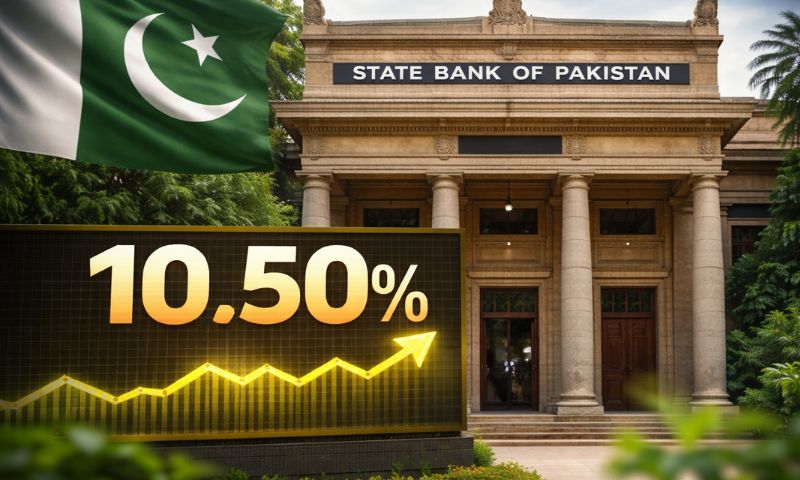
Pakistan’s Central Bank Keeps Key Interest Rate Unchanged Despite Inflation Ease
The State Bank of Pakistan (SBP) surprised markets by keeping its key policy interest rate unchanged at 10.50 percent in its first Monetary Policy Committee (MPC) meeting of 2026. The decision, announced on January 26, 2026, came despite widespread expectations that the central bank would cut rates to stimulate economic activity and lower borrowing costs. The MPC, chaired by SBP Governor Jameel Ahmad, reviewed recent economic data before maintaining the rate, noting that headline inflation stood at 5.6 percent year-on-year in December 2025, comfortably within the SBP’s target range of 5 to 7 percent. However, the committee also highlighted that core inflation remained elevated at around 7.4 percent, suggesting persistent price pressures in non-food sectors. Governor Ahmad said the MPC expected inflation and external accounts to remain broadly stable. He added that economic activity continues to gain pace, supported by stronger performance in large-scale manufacturing and domestic-oriented sectors. The SBP also pointed to resilient remittances and softer global commodity prices as factors that helped cushion economic pressures and keep the current account deficit relatively contained. Market analysts had widely anticipated a rate cut heading into the meeting. A recent survey by financial research firms showed that a significant portion of economists and traders expected the MPC to reduce the rate by between 25 and 100 basis points to further support growth and investment. Many believed that a rate reduction would reduce the cost of borrowing for businesses and consumers, providing momentum to sectors such as housing, manufacturing, and agriculture. Instead, the SBP decided to hold steady. Analysts said the unchanged policy rate reflected the MPC’s cautious outlook, focused on consolidating recent economic gains while guarding against upside inflation risk. Some observers pointed to the improvement in GDP growth projections — which analysts see trending toward the upper half of the government’s estimated 3.25–4.25 percent range for the fiscal year — as underpinning confidence in a stable monetary stance. The Monetary Policy Committee has decided to keep the policy rate unchanged at 10.5 percent in its meeting held on January 26, 2026. For details: https://t.co/IyaTFO6mbh#SBPMonetaryPolicy pic.twitter.com/bWLBgkRliZ — SBP (@StateBank_Pak) January 26, 2026 The SBP’s rate decision follows a surprise reduction of 50 basis points to 10.50 percent in December 2025, which marked the first cut after a long period of steady interest rates. Since mid-2024, the SBP has eased monetary policy significantly, trimming its policy rate from a peak of 22 percent as inflation pressures eased and macroeconomic stability improved. While the unchanged rate was a disappointment to some business groups and borrowers, many economists believe the decision strikes a balance between supporting growth and maintaining price stability. The SBP will review conditions again at its next MPC meeting, scheduled for March 9, 2026.
